
How to Choose Eddy Current Testing for Nickel Alloy Tubes: A Buyer’s Guide
Worried about hidden flaws in nickel alloy tubes? Eddy current testing can be a useful inspection method, but it is not a magic guarantee. The right test setup depends on the alloy grade, tube dimensions, wall thickness, surface condition, defect type, calibration method, acceptance criteria, and final application.
Choosing the right eddy current testing method for nickel alloy tubes means understanding the material, tube size, inspection standard, flaw type, project risk, and report requirements. Eddy-current testing is a non-destructive testing method for conductive materials. It can detect and characterize surface and near-surface flaws by measuring signal changes caused by electrical conductivity, magnetic permeability, geometry, and defects.
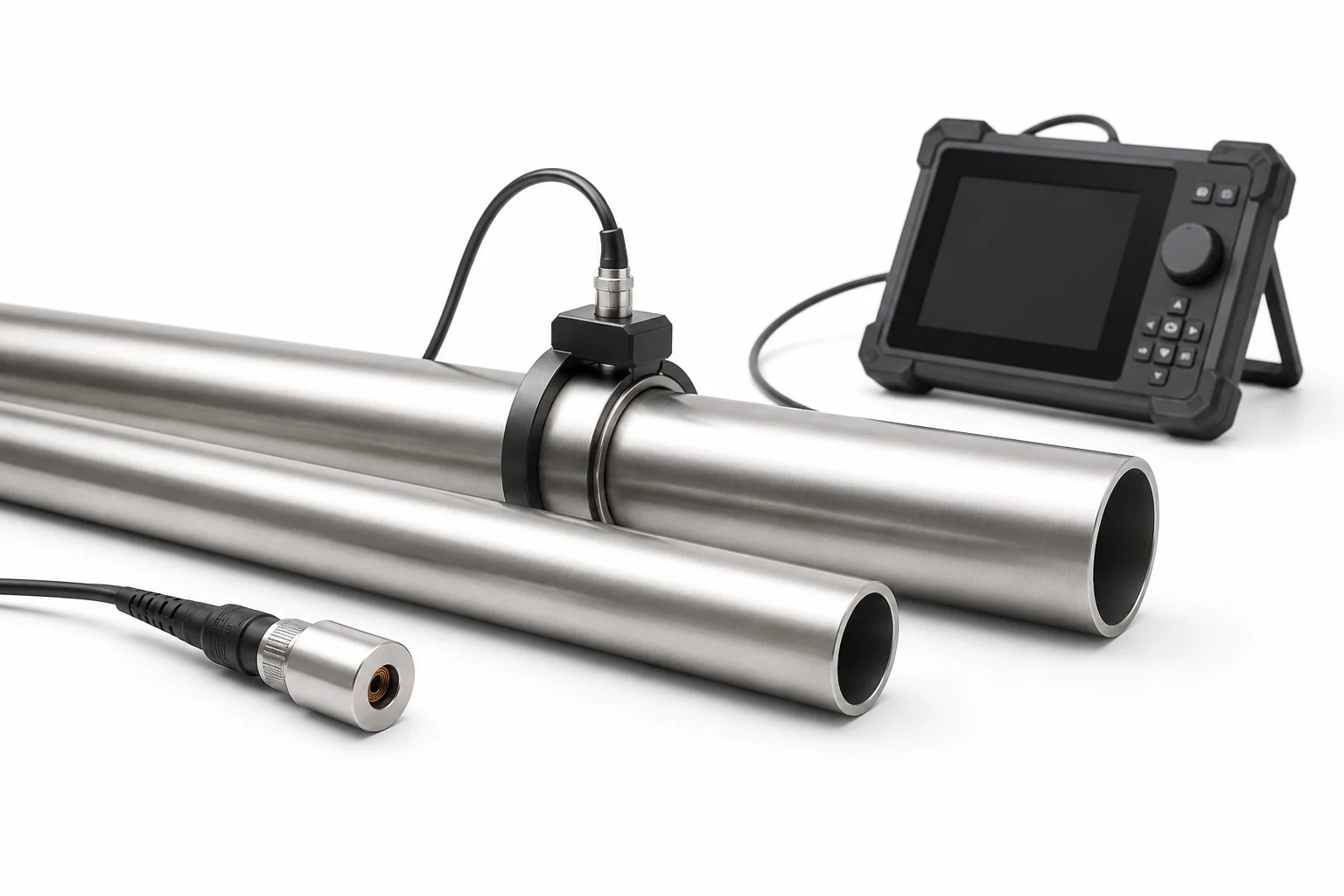
When we manufacture nickel alloy tubes, customers often ask whether eddy current testing can prove that every tube is “perfect.” A better question is:
> Does this eddy current test match the alloy, tube size, flaw type, standard, calibration method, and acceptance criteria required by my project?
For nickel alloy tubes used in heat exchangers, chemical processing, marine systems, oil and gas equipment, power generation, or other demanding applications, eddy current testing can be an important part of quality control. However, buyers should understand what the test can detect, what it may miss, and what information should appear in the inspection report.
Quick Checklist: What Should Buyers Confirm Before Eddy Current Testing?
Before requesting eddy current testing for nickel alloy tubes, buyers should confirm the following points with the supplier.
| Item to Confirm | Why It Matters |
|---|---|
| Alloy Grade | Different nickel alloys may have different electrical conductivity and magnetic permeability |
| UNS Number | Confirms exact material identity, such as UNS N06625, N06600, N08825, N04400 |
| Tube Standard | ASTM, ASME, EN, ISO, or customer specification may define inspection requirements |
| Tube OD and Wall Thickness | Affects probe selection, fill factor, frequency and penetration depth |
| Surface Condition | Roughness, scale, dents, scratches or contamination may affect signal quality |
| Defect Type of Concern | Cracks, pits, wall thinning, laps, seams or corrosion may require different methods |
| Required Sensitivity | Must be based on reference standards, artificial defects and acceptance criteria |
| Calibration Standard | Reference tube or calibration standard should match material, size and defect type as closely as possible |
| Inspection Speed | Should be validated so sensitivity is not sacrificed for speed |
| Operator Qualification | NDT personnel should be qualified according to relevant standards or customer requirements |
| Inspection Report | Should include method, equipment, calibration, reference defects, acceptance criteria and results |
| Complementary Tests | UT, hydrostatic test, PMI, dimensional inspection or visual inspection may still be required |
A request such as “100% eddy current test” is not enough by itself. Buyers should define what the test is looking for, how the test is calibrated, and what acceptance criteria apply.
Why Is There No Single “Best” Eddy Current Test for Nickel Alloy Tubes?
Many buyers ask for “the best” eddy current test. In reality, there is no single best test for every nickel alloy tube.
The most suitable eddy current test depends on alloy properties, tube diameter, wall thickness, surface condition, frequency, probe design, defect type, and acceptance criteria. Electrical conductivity and magnetic permeability affect eddy current response, while frequency affects penetration depth.
In eddy current testing, an alternating current in a probe coil creates an alternating magnetic field. When the coil is near a conductive material, eddy currents are induced in the material. Changes in conductivity, permeability, tube geometry or defects can change the probe signal.
This means a test setup that works well for one nickel alloy tube may not be suitable for another.
For example:
- Inconel 600, Inconel 625, Inconel 718, Alloy 825 and Monel 400 may respond differently because their electrical and magnetic properties are not identical.
- Thin-wall tubes and thick-wall tubes may require different frequency selection.
- Small-diameter tubes and large-diameter tubes may require different probe design.
- Surface cracks, pits, wall thinning and subsurface indications may require different test strategies.
- Rough surfaces or poor straightness may create signal noise that makes small flaws harder to detect.
Key Factors That Change Eddy Current Testing
| Factor | Impact on Eddy Current Testing | Buyer Question |
|---|---|---|
| Nickel Alloy Type | Changes electrical conductivity and magnetic permeability | Has the test been set up for this exact alloy grade? |
| Tube Diameter | Affects probe size, fill factor and signal stability | Does the probe match the tube OD or ID? |
| Wall Thickness | Affects penetration depth and sensitivity | Is the frequency suitable for this wall thickness? |
| Surface Condition | Roughness, dents, scale or scratches may create noise | Is the surface condition acceptable for ET? |
| Flaw Type | Surface cracks, pits and wall loss may require different setups | What defect type is the inspection designed to detect? |
| Flaw Orientation | Longitudinal and transverse flaws may respond differently | Does the probe arrangement match the critical flaw direction? |
| Inspection Speed | Speed can affect signal quality if not controlled | Was sensitivity validated at production speed? |
| Calibration Standard | Reference defects define what the equipment is adjusted to detect | Does the calibration tube match my order? |
The purpose of eddy current testing is not to create a generic “pass” statement. The purpose is to detect relevant indications according to a defined inspection method and acceptance level.
How Do Frequency, Conductivity and Permeability Affect the Test?
Eddy current testing is strongly affected by physics. Buyers do not need to become NDT engineers, but they should understand the basics before comparing supplier claims.
Eddy current penetration depth is affected by frequency, electrical conductivity and magnetic permeability. Higher frequency generally improves sensitivity to surface indications but reduces penetration depth. Lower frequency may increase penetration depth but may reduce sensitivity to small surface defects.
This is why one test setting cannot automatically cover every defect at every depth.
Frequency Selection in Simple Terms
| Frequency Choice | General Effect | Possible Use |
|---|---|---|
| Higher Frequency | More sensitive to surface and near-surface flaws, lower penetration | Fine surface cracks, shallow defects, thin-wall tubes |
| Lower Frequency | Deeper penetration, often lower surface sensitivity | Thicker walls, deeper indications, wall loss evaluation |
| Multi-Frequency / Sweep Frequency | Uses more than one frequency to separate variables | Tubing inspection where geometry, support plates or material variation may affect signals |
| Saturation Eddy Current | Uses magnetic saturation to reduce permeability effects | Partially magnetic materials such as some nickel alloys or duplex alloys |
Sweep frequency eddy current testing collects data over a range of frequencies. Depth information can be obtained because eddy current penetration varies with frequency.
For some partially magnetic tube materials, conventional eddy current testing may not be enough. Tubular NDT explains that conventional eddy current testing is generally used for non-ferromagnetic tubing, while saturation eddy current methods may be used for partially magnetic materials such as some nickel alloys and duplex alloys.
What Does “100% Eddy Current Inspected” Really Mean?
Many suppliers write “100% eddy current inspected” in quotations, MTRs or inspection reports. This sounds reassuring, but buyers should understand what it means and what it does not mean.
“100% eddy current inspected” usually means every tube passed through the inspection process. It does not automatically mean every possible defect can be found. Detection depends on calibration, defect size, defect orientation, signal-to-noise ratio, surface condition, operator skill, equipment setup and acceptance criteria.
Supplier Claim vs Buyer Verification
| Supplier Claim | What It May Mean | What Buyers Should Ask |
|---|---|---|
| “100% ET inspected” | Every tube was tested by ET equipment | What defect types and sizes was the test designed to detect? |
| “High sensitivity test” | Equipment was adjusted to detect a small reference indication | What reference defect was used for calibration? |
| “Detects 0.005 inch flaw” | Sensitivity may be based on a specific artificial defect | Was this validated on my alloy, tube size and surface condition? |
| “Meets standard” | The supplier follows a named procedure or specification | Which standard, version, acceptance level and report format apply? |
| “High-speed inspection” | Production inspection can be fast | Was sensitivity confirmed at the actual inspection speed? |
| “Advanced digital ET equipment” | Modern equipment is used | Who operates it, how is it calibrated and how are indications evaluated? |
Buyers should not reject a supplier simply because the explanation is technical. But they should be cautious if the supplier cannot explain calibration, reference standards, acceptance criteria or report content.
What Should Be Included in an Eddy Current Testing Report?
A useful eddy current testing report should do more than say “pass.” It should provide enough information for the buyer, quality department or project engineer to understand what was inspected and how.
Eddy Current Testing Report Checklist
| Report Item | What to Check |
|---|---|
| Material Grade | Inconel 625, Inconel 600, Alloy 825, Monel 400, etc. |
| UNS Number | N06625, N06600, N08825, N04400, etc. |
| Tube Size | OD, wall thickness, length and quantity |
| Applicable Standard | ASTM, ASME, EN, ISO, customer specification or internal procedure |
| Inspection Method | Conventional ET, multi-frequency ET, saturation ET, ECA or other method |
| Equipment Information | Instrument model, probe type, coil type where applicable |
| Calibration Standard | Reference tube, artificial defects, notch size, hole size or other reference indications |
| Frequency / Settings | Frequency or frequency range, gain, phase, filtering where applicable |
| Acceptance Criteria | Reject level, alarm level, customer specification or standard requirement |
| Inspection Coverage | Full length, end zones excluded or included, ID/OD inspection method |
| Operator Qualification | NDT level or qualification system if required |
| Result Summary | Accepted quantity, rejected quantity, repaired or re-tested quantity |
| Report Date and Signature | Inspector, QA approval and document traceability |
Nondestructive testing includes eddy current testing among common NDT methods. ISO 9712 is commonly used for qualification and certification principles for personnel performing industrial NDT, including eddy current testing. For critical projects, buyer requirements may specify NDT personnel qualification level and report format.
How Does ASTM B444 Relate to Nickel Alloy Tube Inspection?
For nickel alloy seamless pipe and tube such as UNS N06625, the product standard can also define inspection expectations.
ASTM B444 covers UNS N06625 and related nickel-chromium-molybdenum-niobium alloys and nickel-chromium-molybdenum-silicon alloys in cold-worked seamless pipe and tube form. The ASTM abstract states that pipe or tube shall undergo hydrostatic testing and be examined with a nondestructive electric test as prescribed.
For buyers, this means ASTM B444 is useful because it does not only define the alloy and product form. It also helps define required testing and acceptance expectations for the pipe or tube.
What Buyers Should Confirm in ASTM-Based Orders
| Item | Why It Matters |
|---|---|
| Exact Standard | ASTM B444, ASME SB444, or customer specification |
| UNS Number | Example: UNS N06625 |
| Grade / Heat Treatment | Annealed Grade 1 or solution annealed Grade 2 where applicable |
| Tube Size | OD, wall thickness and length |
| Nondestructive Electric Test | Confirm method, coverage and report requirements |
| Hydrostatic Test | Confirm whether required and included |
| MTR / MTC | Confirm chemical and mechanical properties |
| Heat Number | Confirm traceability between material and certificate |
| Surface Finish | Confirm pickled, polished, bright annealed or other finish |
| Acceptance Criteria | Confirm project-specific requirements if stricter than the standard |
If a buyer only says “Inconel 625 tube with eddy current test,” suppliers may quote different scopes. A clearer request is:
> ASTM B444 UNS N06625 seamless tube, specified OD and wall thickness, required heat treatment condition, MTR with heat number traceability, hydrostatic test if required, and nondestructive electric test report according to the applicable specification.
What Defects Can Eddy Current Testing Help Detect?
Eddy current testing is useful, but it should be connected to the defects that matter for the application.
Common Indications in Tube Inspection
| Indication Type | ET Usefulness | Notes for Buyers |
|---|---|---|
| Surface Cracks | Often useful when properly calibrated | Sensitivity depends on orientation, size and surface condition |
| Near-Surface Flaws | Often useful | Depth capability depends on frequency and material |
| Pitting | Useful in many tubing applications | Detection and sizing depend on pit geometry and setup |
| Wall Thinning / Corrosion | Can be detected in some tubing applications | Sizing may require complementary methods |
| Conductivity Variation | Useful for material sorting or condition changes | Must be distinguished from harmful defects |
| Magnetic Permeability Variation | May create signal noise or non-relevant indications | Saturation ET may be needed for some materials |
| Deep Internal Defects | Limited for conventional ET | UT or other NDT may be more suitable |
Eddy current testing is most powerful when the defect type is clearly defined. If the project is concerned about deep internal defects, weld defects, pressure leakage or internal discontinuities, buyers should ask whether ET alone is enough.
When Is Eddy Current Testing Not Enough?
A common procurement mistake is assuming one test can cover all quality risks. Eddy current testing is important, but it may need to be combined with other inspections.
Complementary Inspection Methods
| Inspection Method | What It Helps Check |
|---|---|
| Visual Inspection | Surface defects, dents, scratches, marking and packaging |
| Dimensional Inspection | OD, wall thickness, length, straightness and tolerance |
| PMI Test | Material grade verification and mix-up prevention |
| Hydrostatic Test | Pressure integrity of tubes and pipes |
| Ultrasonic Testing | Internal defects or wall thickness depending on setup |
| Eddy Current Testing | Surface and near-surface indications in conductive materials |
| Penetrant Testing | Surface-breaking cracks on accessible surfaces |
| Radiographic Testing | Internal flaws in certain welds or components |
| MTR / MTC Review | Chemical and mechanical properties for the batch |
| Heat Number Traceability | Links physical tube to certificate and production records |
A strong quality plan usually combines document review, material identification, dimensional inspection, surface inspection and NDT.
What Risks Does Eddy Current Testing Help Reduce?
Eddy current testing should be viewed as a risk-control tool, not just a line item in a quotation.
For nickel alloy tubes used in critical equipment, eddy current testing can help reduce the risk of accepting tubes with relevant surface or near-surface defects. It can support quality control, project acceptance and safer operation when properly specified, calibrated and documented.
Risks Reduced by Proper ET Planning
| Risk Category | How ET Helps | Important Limitation |
|---|---|---|
| Material Rejection | Detects relevant indications before shipment or use | Acceptance criteria must be clear |
| Leakage Risk | Helps find cracks, pits or wall-related indications | Hydrostatic testing may still be required |
| Downtime Risk | Reduces chance of installing defective tubes | ET cannot predict all service conditions |
| Safety Risk | Supports inspection of tubes used in pressure or chemical service | Critical systems may require multiple NDT methods |
| Documentation Risk | Provides inspection record for QA and project files | Report must include method and calibration details |
| Supplier Comparison Risk | Helps compare inspection scope between quotes | “ET included” is not enough without details |
| Hidden Cost Risk | Helps avoid rework, replacement or dispute after delivery | Test cost should be compared with failure and rejection risk |
The cost of ET should be compared with the risk of missed defects, rejected shipment, delayed installation, leakage, rework or replacement.
What Should Buyers Ask Suppliers Before Ordering ET Nickel Alloy Tubes?
Before ordering nickel alloy tubes with eddy current testing, buyers should ask specific questions.
Supplier Questions
| Question | Why It Matters |
|---|---|
| Which ET method will be used? | Conventional ET, multi-frequency ET, saturation ET or another method may apply |
| What standard or procedure will the test follow? | Confirms inspection basis |
| What reference standard will be used? | Shows how the system is calibrated |
| What artificial defect size is used for calibration? | Helps judge sensitivity |
| Does the reference standard match my alloy and tube size? | Improves relevance of calibration |
| What defect types can this setup detect? | Avoids assuming ET covers every risk |
| What are the limitations of this test? | Shows supplier transparency |
| Is the operator qualified? | Supports confidence in test execution |
| Will I receive an ET report? | Needed for project documentation |
| Are rejected tubes removed from the shipment? | Confirms quality control process |
| Is hydrostatic test also required? | Important for pressure-related use |
| Is UT, PMI or third-party inspection required? | Determines whether ET alone is enough |
A good supplier should be able to explain not only that ET is available, but how the test is performed and what it is intended to detect.
How Can Emily PIPE Support Nickel Alloy Tube Buyers?
Emily PIPE supplies nickel alloy tubes, nickel alloy bars, titanium alloy tubes and titanium alloy bars for global industrial applications. For nickel alloy tube buyers, we can help review inspection requirements before production and shipment.
We can support customers with:
- material grade confirmation
- UNS number confirmation
- ASTM / ASME / EN / ISO standard review
- tube OD, wall thickness and tolerance review
- heat treatment condition confirmation
- MTR / MTC and heat number traceability
- eddy current testing when required
- hydrostatic testing when required
- ultrasonic testing, PMI or dimensional inspection when required
- third-party inspection support
- export packaging and documentation
We recommend defining eddy current testing requirements before placing the order, not after the tubes are finished. This helps avoid misunderstanding between buyer, supplier and end user.
Conclusion
Choosing eddy current testing for nickel alloy tubes is not about asking for the “best” test. It is about choosing the right inspection method for the alloy grade, tube dimensions, wall thickness, surface condition, defect type, project standard and application risk.
Buyers should not rely only on phrases like “100% ET inspected” or “high sensitivity test.” They should confirm the test method, calibration standard, frequency or setup, defect type, acceptance criteria, operator qualification and inspection report.
The safest approach is to combine eddy current testing with clear purchase specifications, MTR/MTC review, heat number traceability, dimensional inspection, surface inspection and any complementary NDT required by the project.
If you are sourcing nickel alloy tubes and need eddy current testing, you can send us your material grade, UNS number, tube size, standard, application environment, required defect sensitivity, and documentation requirements. Our team can help review the inspection scope and provide a quotation based on your real project needs.