
How Does Heat Treatment Affect Alloy Tube Corrosion Resistance?
Choosing the right alloy tube is not only about selecting the correct material grade. For nickel alloy tubes and titanium alloy tubes, heat treatment condition can also affect microstructure, mechanical properties, residual stress, corrosion behavior, fabrication performance and long-term service reliability.
Many buyers focus first on:
- Alloy grade
- UNS number
- OD and wall thickness
- ASTM / ASME / EN standard
- Seamless or welded tube
- Price and delivery time
These points are important, but they do not always answer one critical question:
Is the alloy tube supplied in the right heat treatment condition for the actual service environment?
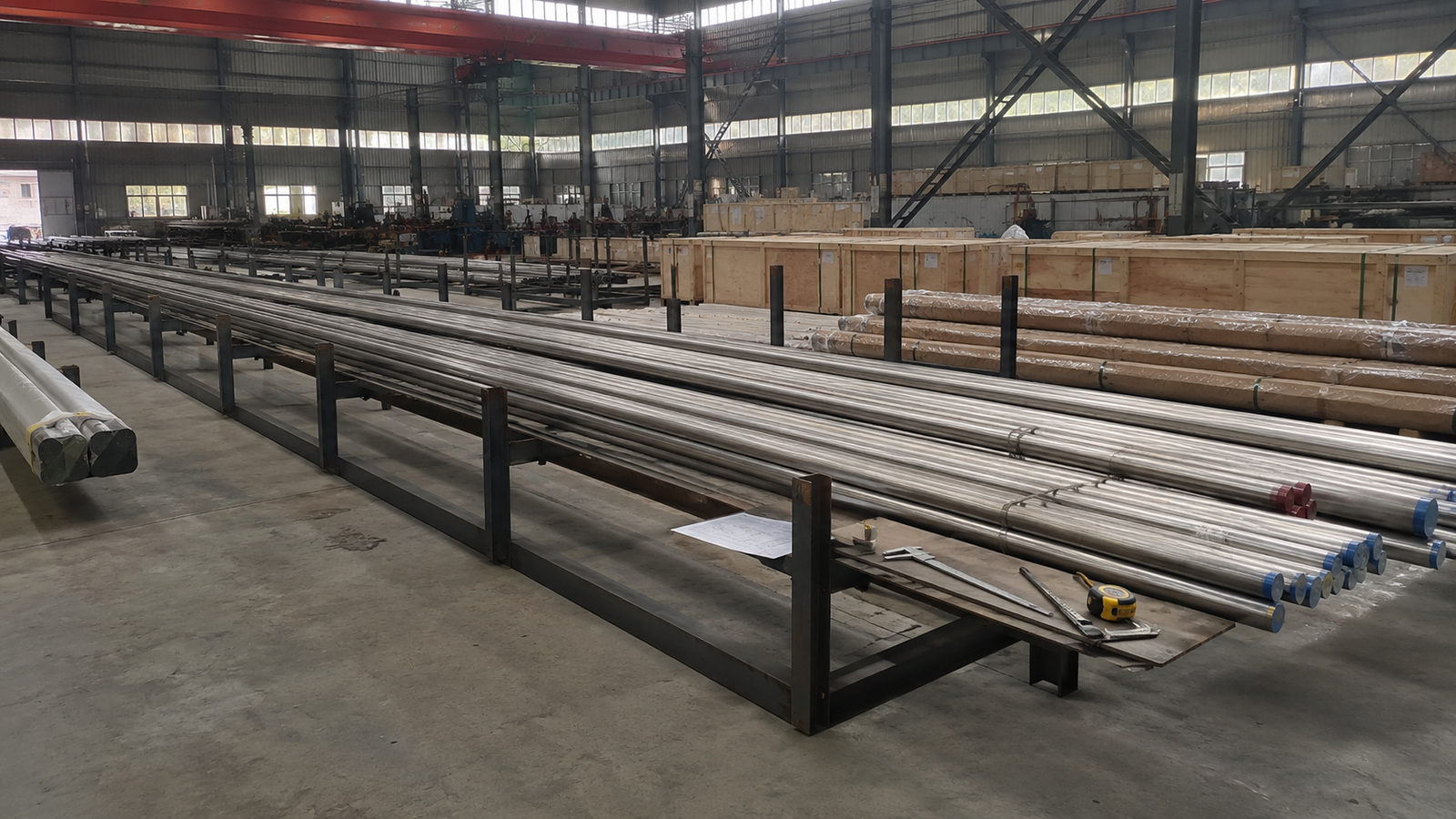
Heat treatment can influence grain structure, phase distribution, precipitates, residual stress and sometimes surface condition. These factors may affect corrosion mechanisms such as intergranular corrosion, pitting corrosion, crevice corrosion, stress corrosion cracking, hydrogen-related cracking or high-temperature oxidation.
However, heat treatment should not be viewed in isolation. Corrosion resistance also depends on alloy composition, service media, temperature, pressure, surface finish, welding condition, contamination, stress level, inspection method and maintenance conditions.
This guide explains how heat treatment may affect alloy tube corrosion resistance and what buyers should confirm before ordering nickel alloy tubes or titanium alloy tubes.
Quick Answer: Does Heat Treatment Affect Corrosion Resistance?
Yes, heat treatment can affect corrosion resistance, but the effect depends on the alloy and the service environment.
For some nickel alloys, solution annealing may help dissolve harmful precipitates or reduce segregation effects, supporting resistance to intergranular corrosion in certain conditions. For precipitation-hardenable nickel alloys, aging may increase strength but can also change phase distribution and mechanical behavior. For titanium alloys, stress relief, annealing, solution treatment or aging may affect residual stress, alpha/beta phase distribution and mechanical properties.
ASM describes heat treatment of wrought nickel alloys across solid-solution and precipitation-hardening alloy families. Source: ASM — Heat Treatment of Wrought Nickel Alloys
ASM also explains that common heat treatments for titanium alloys include stress relief, annealing, solution treating, aging, quenching and age hardening. Source: ASM — Heat Treating of Titanium and Titanium Alloys
Buyer Takeaway
There is no universal “best” heat treatment for all alloy tubes. The right condition depends on alloy grade, tube standard, corrosion environment, temperature, stress level, welding condition and inspection requirement.
Why Is There No Universal Best Heat Treatment?
A heat treatment that is suitable for one alloy may be unsuitable for another. Even within the same alloy family, the correct condition may change according to service temperature, fabrication process and corrosion environment.
Why One Heat Treatment Cannot Fit All
| Factor | Why It Changes the Heat Treatment Decision |
|---|---|
| Alloy grade | Alloy 625, Alloy 718, Alloy C-276, Alloy 825, Grade 2 titanium and Grade 5 titanium respond differently to heat treatment. |
| Product form | Tube, pipe, bar, plate and forging may have different processing history and standard requirements. |
| Tube type | Seamless, welded, welded/cold worked and heat exchanger tubes may have different inspection and heat treatment requirements. |
| Service media | Chlorides, acids, caustic, seawater, H₂S, oxidizing media and reducing media create different corrosion risks. |
| Temperature | High-temperature service may require creep resistance, phase stability or oxidation resistance. |
| Mechanical stress | Tensile stress and residual stress may increase stress corrosion cracking risk in susceptible environments. |
| Welding | Welding may introduce heat-affected zones, residual stress, sensitization risk or surface contamination. |
| Surface condition | Pickling, polishing, oxide scale, contamination and cleaning affect corrosion behavior. |
| Inspection requirement | Critical projects may require ASTM G28, ASTM G48, NDT, PMI or third-party inspection. |
Buyer Takeaway
Instead of asking “What is the best heat treatment?”, buyers should ask: What heat treatment condition is required for this alloy, this standard and this service environment?
How Do Common Heat Treatments Affect Alloy Tubes?
Different heat treatments are used for different purposes. Some improve ductility. Some reduce residual stress. Some support corrosion resistance. Some increase strength. Some are required by product standards.
Common Heat Treatment Terms
| Heat Treatment | General Purpose | Possible Corrosion / Performance Relevance |
|---|---|---|
| Annealing | Reduces cold-work effects, improves ductility and workability. | May improve fabrication performance and reduce residual stress-related risk. |
| Solution annealing / solution treatment | Dissolves certain phases or precipitates into the matrix, followed by controlled cooling. | May support corrosion resistance or prepare precipitation-hardenable alloys for aging. |
| Aging / precipitation hardening | Forms controlled precipitates to increase strength and hardness. | Can improve strength and high-temperature performance, but must be controlled to avoid unwanted property trade-offs. |
| Stress relieving | Reduces residual stresses after cold work, welding or forming. | May reduce stress-related cracking risk but does not guarantee corrosion immunity. |
| Stabilization treatment | Controls certain phases or carbide behavior in specific alloys. | May help reduce sensitization-related issues in selected materials. |
| Beta annealing / special titanium heat treatment | Used for certain titanium alloys to control alpha/beta microstructure. | May be required by aerospace or customer-specific specifications. |
Buyer Takeaway
The same word may not mean the same final performance for every alloy. Always connect heat treatment condition with the exact alloy grade and product standard.
How Can Heat Treatment Influence Intergranular Corrosion?
Intergranular corrosion occurs preferentially along grain boundaries. It is often linked to grain boundary chemistry, precipitation, sensitization or local depletion of corrosion-resistant elements.
In some nickel-rich chromium-bearing alloys, unsuitable thermal exposure may create grain boundary precipitates or depleted zones that increase susceptibility to intergranular attack. Proper solution annealing may help dissolve certain harmful phases or restore a more uniform microstructure, depending on the alloy and condition.
ASTM G28 is a standard test method for detecting susceptibility to intergranular corrosion in wrought, nickel-rich, chromium-bearing alloys. Source: ASTM G28
Intergranular Corrosion Buyer Questions
| Question | Why It Matters |
|---|---|
| Is the alloy susceptible to intergranular corrosion in this environment? | Some alloys and conditions are more sensitive than others. |
| Is solution annealing required by the standard or project? | May be important for some nickel alloy tubes. |
| Was the tube exposed to sensitizing temperatures? | Welding or improper heat treatment may change grain boundary behavior. |
| Is ASTM G28 testing required? | Critical chemical processing projects may specify it. |
| Is post-weld heat treatment or cleaning required? | Welding can change microstructure and surface condition. |
| Does the MTC show the correct condition? | Confirms whether annealed, solution annealed or aged condition was supplied. |
Buyer Takeaway
If intergranular corrosion is a concern, buyers should not only check the alloy grade. They should confirm heat treatment condition, welding condition, corrosion testing requirement and inspection documents.
How Can Heat Treatment Influence Pitting and Crevice Corrosion?
Pitting and crevice corrosion are localized corrosion mechanisms. They are often affected by alloy chemistry, chloride content, temperature, surface condition, crevice geometry, deposits, passive film stability and environmental conditions.
Heat treatment may influence pitting or crevice corrosion indirectly by changing phase distribution, segregation, precipitates, surface oxide condition or local chemistry. However, alloy composition and service environment are usually the primary drivers.
ASTM G48 is used for pitting and crevice corrosion resistance testing of stainless steels and related alloys by use of ferric chloride solution. Source: ASTM G48
Nickel Institute explains that molybdenum and nitrogen increase resistance to pit initiation in the presence of chlorides, while nickel helps reduce the rate at which pitting and crevice corrosion propagate. Source: Nickel Institute — The Nickel Advantage
TIMET notes that titanium generally has excellent resistance to neutral chloride solutions, while crevice corrosion can be a limiting factor in aqueous chloride environments. Source: TIMET — Corrosion Resistance of Titanium
Pitting / Crevice Corrosion Buyer Questions
| Question | Why It Matters |
|---|---|
| Is chloride present? | Chloride environments often increase localized corrosion risk. |
| Is there a crevice, deposit or stagnant zone? | Crevice geometry can make corrosion more severe. |
| Is the surface pickled, polished, cleaned or contaminated? | Surface condition affects passive film stability. |
| Is ASTM G48 or another corrosion test required? | Useful for critical localized corrosion projects. |
| Is the selected alloy suitable for the actual media? | Alloy grade matters more than generic material family. |
| Was oxide scale removed after heat treatment? | Surface oxides or contamination may affect performance. |
Buyer Takeaway
For pitting and crevice corrosion, heat treatment is only one part of the risk picture. Buyers should also confirm alloy chemistry, surface finish, chloride level, temperature, crevice design and corrosion testing.
How Can Heat Treatment Influence Stress Corrosion Cracking?
Stress corrosion cracking, or SCC, usually requires three factors:
- A susceptible material
- A specific corrosive environment
- Tensile stress, including applied stress or residual stress
TWI explains that stress corrosion cracking is crack propagation in a corrosive environment and can occur as intergranular or transgranular cracking. Source: TWI — Stress Corrosion Cracking
Heat treatment may influence SCC risk by changing residual stress, strength level, hardness, phase distribution or microstructure. Stress relieving can reduce residual stress, but it does not make a material immune to SCC. The environment and alloy selection still matter.
SCC Buyer Questions
| Question | Why It Matters |
|---|---|
| Is the service environment known to cause SCC? | Chlorides, caustic, H₂S or other media may be critical. |
| Is residual stress present from drawing, welding or bending? | Residual tensile stress can contribute to SCC risk. |
| Is stress relieving required after fabrication? | May be required by project or engineering specification. |
| Is the strength or hardness too high for sour service? | Some sour service standards control material condition and hardness. |
| Is ISO 15156 / NACE MR0175 required? | Important for H₂S-containing oil and gas environments. |
| Is post-weld cleaning or pickling required? | Surface contamination may influence localized corrosion. |
ISO 15156-1 gives requirements and recommendations for selecting and qualifying metallic materials for service in H₂S-containing environments in oil and gas production and natural gas sweetening plants. Source: ISO 15156-1:2020
Buyer Takeaway
Stress relief may reduce one SCC risk factor: residual stress. But SCC control still requires correct alloy selection, environmental review, hardness/strength control, fabrication review and project-specific testing.
What About Hydrogen-Related Cracking?
Hydrogen-related cracking or embrittlement can occur in certain materials and environments when hydrogen enters the metal and affects mechanical behavior. The risk depends on alloy, strength level, hardness, processing history, cathodic protection, acid exposure, H₂S environment and service conditions.
For sour oil and gas service, ISO 15156 / NACE MR0175 is often used to guide selection of cracking-resistant materials in H₂S-containing environments.
Hydrogen-Related Risk Factors
| Factor | Why It Matters |
|---|---|
| H₂S environment | Sour service may require ISO 15156 / NACE MR0175 review. |
| High strength / hardness | Some cracking risks increase with higher strength or hardness. |
| Residual stress | Can increase cracking susceptibility in some environments. |
| Cathodic protection | May increase hydrogen charging risk if not controlled. |
| Pickling / acid cleaning | Poorly controlled acid exposure may introduce hydrogen. |
| Heat treatment condition | May affect hardness, strength and microstructure. |
Buyer Takeaway
For sour service or hydrogen-sensitive applications, do not rely only on alloy name. Confirm ISO 15156 / NACE requirements, hardness limits, heat treatment condition, service parameters and required testing.
How Do Nickel Alloy Tubes Differ From Titanium Alloy Tubes?
Nickel alloys and titanium alloys are both used for corrosion-resistant applications, but they respond differently to heat treatment and corrosion environments.
Nickel Alloy Tubes
Nickel alloys may be solid-solution strengthened or precipitation hardenable. Some are selected mainly for corrosion resistance. Others are selected for high strength or high-temperature service.
ASTM B444 covers UNS N06625 and related nickel alloy seamless pipe and tube. It states that UNS N06625 products are furnished as Grade 1 annealed or Grade 2 solution annealed, with Grade 2 normally used above 1100°F / 593°C when resistance to creep and rupture is required. Source: ASTM B444
ASTM B704 covers welded nickel alloy boiler, heat exchanger and condenser tubes, including manufacturing, chemical composition, mechanical properties and dimensional requirements. Source: ASTM B704
Titanium Alloy Tubes
Titanium and titanium alloys often depend on a stable passive oxide film for corrosion resistance. Heat treatment may affect alpha/beta structure and mechanical properties, while surface condition and contamination can also matter.
ASTM B338 covers seamless and welded titanium alloy tubes for surface condensers, evaporators and heat exchangers. Source: ASTM B338
Comparison Table
| Item | Nickel Alloy Tubes | Titanium Alloy Tubes |
|---|---|---|
| Common corrosion strengths | Acids, chlorides, high-temperature environments, reducing/oxidizing media depending on grade. | Seawater, neutral chlorides and oxidizing environments depending on grade and conditions. |
| Heat treatment response | Solid-solution alloys and precipitation-hardenable alloys behave differently. | Alpha, alpha-beta and beta titanium alloys respond differently. |
| Common heat treatments | Annealing, solution annealing, aging, stress relieving, stabilization. | Stress relief, annealing, solution treatment, aging, beta annealing for selected alloys. |
| Key corrosion concerns | IGC, pitting, crevice corrosion, SCC, sour service cracking, oxidation depending on environment. | Crevice corrosion in certain chloride environments, hydrogen-related concerns, hot salt corrosion in some conditions. |
| Buyer focus | Correct grade, heat treatment, corrosion test, NDT, MTC and application review. | Correct grade, heat treatment, surface cleanliness, crevice design, ASTM B338 and application review. |
Buyer Takeaway
Nickel alloy and titanium alloy tubes should not be evaluated with the same heat treatment logic. The alloy system and service environment must guide the decision.
What Operational Conditions Should Guide Heat Treatment Selection?
The correct heat treatment condition should be selected according to the real operating envelope, not only the material grade.
Service Conditions to Review
| Operational Condition | Why It Matters |
|---|---|
| Temperature | Affects phase stability, creep, oxidation, sensitization and thermal cycling. |
| Pressure | Affects wall thickness, strength and inspection requirements. |
| Chemical media | Determines whether general corrosion, pitting, crevice corrosion or SCC is likely. |
| Chloride level | Important for pitting, crevice corrosion and SCC risk. |
| pH | Acidic or alkaline media can change corrosion mechanism. |
| H₂S / sour service | May require ISO 15156 / NACE MR0175 review. |
| Oxygen / oxidizing conditions | Important for passive film stability and high-temperature oxidation. |
| Mechanical stress | Influences SCC, fatigue and creep risk. |
| Vibration / cyclic loading | May require fatigue-focused material and heat treatment review. |
| Welding / bending / forming | May introduce residual stress and heat-affected zones. |
| Cleaning / pickling / passivation | Surface condition can affect corrosion performance. |
| Maintenance cycles | Cleaning chemicals or shutdown conditions may be more severe than normal service. |
Buyer Takeaway
A tube that performs well in one environment may fail in another. Always provide service temperature, pressure, chemical media, chloride level, pH, stress condition and fabrication process when asking for material selection support.
What Should Buyers Ask Suppliers About Heat Treatment?
A supplier should not only say “heat treated” or “solution annealed.” Buyers should request measurable information.
Supplier Questions
| Question | Why It Matters |
|---|---|
| Which standard and condition will be supplied? | Confirms ASTM, ASME, EN, AMS or customer drawing basis. |
| Is the material annealed, solution annealed, aged or stress relieved? | Avoids confusion between different conditions. |
| Is the heat treatment required by the standard or by the project? | Some conditions are standard requirements; others are customer-specific. |
| Can heat treatment records be provided if required? | Critical projects may need furnace cycle records. |
| What mechanical properties will be reported? | Tensile strength, yield strength, elongation and hardness may verify condition. |
| Is corrosion testing required? | ASTM G28, ASTM G48 or customer-specific testing may be required. |
| Is NDT required? | UT, ET, hydrostatic, pneumatic or PMI may apply depending on standard and application. |
| How is surface oxide or contamination controlled after heat treatment? | Surface condition can influence corrosion resistance. |
| Can EN 10204 3.1 MTC/MTR be provided? | Confirms heat number, batch test results and order compliance. |
| Can third-party inspection be arranged? | Useful for high-risk projects or end-user requirements. |
EN 10204 Type 3.1 inspection certificates provide actual test results from the material lot supplied and are endorsed by a manufacturer’s representative independent from manufacturing. Source: EN 10204 Type 3.1 Inspection Certificates
Buyer Takeaway
Documentation should match the project risk. For ordinary orders, MTC/MTR may be enough. For critical corrosion service, additional heat treatment records, corrosion tests, NDT reports or third-party inspection may be required.
What Tests and Reports May Support Corrosion Resistance?
Not every project needs every test. But buyers should know which documents may be relevant.
Useful Documents and Tests
| Document / Test | What It Helps Verify |
|---|---|
| MTC / MTR | Chemical composition, mechanical properties, heat number, standard and material condition. |
| EN 10204 3.1 certificate | Batch-specific test results and compliance with the order. |
| Heat treatment record | Temperature, holding time, cooling method and furnace batch if required. |
| ASTM G28 | Susceptibility to intergranular corrosion in wrought nickel-rich chromium-bearing alloys. |
| ASTM G48 | Pitting and crevice corrosion resistance in ferric chloride solution for stainless steels and related alloys. |
| NDT report | UT, ET, hydrostatic, pneumatic or other test results. |
| PMI report | Positive material identification to verify alloy grade. |
| Dimensional report | OD, wall thickness, length, ovality and straightness. |
| Surface inspection report | Pickled, polished, cleaned, oxide-free or customer-required surface condition. |
| Microstructure report | Grain size, phase distribution or metallographic confirmation when required. |
| Third-party inspection report | Independent verification for critical projects. |
Buyer Takeaway
MTC/MTR proves important material information, but it may not prove corrosion resistance by itself. If corrosion performance is critical, define the required corrosion test and acceptance criteria before production.
Buyer Checklist: What to Confirm Before Ordering Alloy Tubes
| RFQ Item | What to Provide or Ask |
|---|---|
| Material grade | Alloy 625, Alloy 718, Alloy C-276, Alloy 825, Titanium Grade 2, Titanium Grade 5, etc. |
| UNS number | N06625, N07718, N10276, N08825, R50400, R56400, etc. |
| Tube standard | ASTM B444, ASTM B704, ASTM B338, ASTM B163, ASME, EN, AMS or customer drawing. |
| Tube type | Seamless, welded, welded/cold worked, heat exchanger tube, capillary tube, custom tube. |
| Heat treatment condition | Annealed, solution annealed, aged, stress relieved, stabilized or customer-specified condition. |
| Service environment | Temperature, pressure, chemical media, chloride level, pH, H₂S, seawater, acid, caustic, oxygen. |
| Corrosion mechanism concern | IGC, pitting, crevice corrosion, SCC, hydrogen-related cracking, oxidation, erosion corrosion. |
| Fabrication process | Welding, bending, forming, machining, heat treatment after fabrication. |
| Surface condition | Pickled, polished, bright annealed, oxide-free, cleaned, capped, passivated if required. |
| Mechanical properties | Tensile strength, yield strength, elongation, hardness, creep/rupture if required. |
| Corrosion testing | ASTM G28, ASTM G48, ISO 15156 qualification or customer-specific test. |
| NDT | UT, ET, hydrostatic, pneumatic, PMI or third-party inspection. |
| Certificate | EN 10204 3.1 / 3.2, MTC/MTR, heat number traceability, inspection reports. |
| Packing | End caps, moisture protection, surface protection and export packaging. |
Example RFQ Message
We need Alloy 625 seamless tubes, UNS N06625, per ASTM B444. Required condition: please confirm Grade 1 annealed or Grade 2 solution annealed based on our service temperature and corrosion environment. Size: OD 25.4 mm × WT 2.11 mm × length 6000 mm. The tubes will be used in a chloride-containing chemical process system and welded into the final assembly. Please confirm heat treatment condition, mechanical properties, hardness if available, corrosion testing option such as ASTM G28 or G48 if applicable, EN 10204 3.1 MTC, heat number traceability, NDT availability, dimensional inspection report, surface condition, lead time, MOQ and export packing.
For titanium tubes:
We need Titanium Grade 2 seamless tubes, UNS R50400, per ASTM B338. The tubes will be used in a seawater heat exchanger. Please confirm tube condition, OD and wall tolerance, straightness, surface condition, hydrostatic / pneumatic / UT test options, EN 10204 3.1 MTC, heat number traceability, packing method and delivery time.
Common Mistakes When Specifying Heat Treatment for Alloy Tubes
1. Assuming Alloy Composition Is Everything
Alloy chemistry is critical, but heat treatment, surface condition, welding and service environment can also affect performance.
2. Asking for “Best Heat Treatment”
There is no universal best heat treatment. The correct choice depends on alloy, standard and application.
3. Confusing Annealed and Solution Annealed
These terms may have different meanings depending on the alloy and standard. Always confirm the exact condition.
4. Assuming Aging Always Improves Performance
Aging may increase strength in precipitation-hardenable alloys, but it may also change ductility, hardness and corrosion behavior.
5. Ignoring Residual Stress
Residual stress from cold working, welding or bending may contribute to SCC risk in susceptible environments.
6. Ignoring Surface Oxide and Contamination
Heat treatment can create oxide scale or surface contamination if not properly controlled and cleaned.
7. Not Defining Corrosion Testing
If ASTM G28, ASTM G48, ISO 15156 or other testing is required, it should be defined before production.
8. Treating MTC as Complete Proof
MTC/MTR is important, but it may not include full heat treatment cycle, corrosion test results or surface inspection details.
9. Not Sharing Service Environment
A supplier cannot recommend the right material condition without knowing the real media, temperature, pressure and stress condition.
10. Choosing Only by Price
A lower price may not save money if the tube fails corrosion testing, causes downtime or requires replacement.
FAQ: Heat Treatment and Alloy Tube Corrosion Resistance
1. Does heat treatment always improve corrosion resistance?
No. Heat treatment can improve, reduce or have limited effect on corrosion resistance depending on the alloy, process and environment.
2. What is solution annealing?
Solution annealing heats an alloy to dissolve certain phases or precipitates into the matrix, followed by controlled cooling. It may support corrosion performance or prepare the alloy for aging.
3. What is aging?
Aging, also called precipitation hardening, forms controlled precipitates to increase strength and hardness in precipitation-hardenable alloys.
4. What is stress relieving?
Stress relieving reduces residual stress from cold work, welding or forming. It may reduce stress-related cracking risk but does not guarantee corrosion immunity.
5. What is ASTM G28?
ASTM G28 is a test method used to detect susceptibility to intergranular corrosion in wrought nickel-rich chromium-bearing alloys.
6. What is ASTM G48?
ASTM G48 is used to evaluate pitting and crevice corrosion resistance of stainless steels and related alloys in ferric chloride solution.
7. Is ISO 15156 required for all alloy tubes?
No. ISO 15156 / NACE MR0175 is relevant to metallic materials used in H₂S-containing oil and gas production environments.
8. Does ASTM B444 specify heat treatment condition?
For UNS N06625, ASTM B444 includes Grade 1 annealed and Grade 2 solution annealed conditions, with different service temperature considerations.
9. Does MTC show heat treatment?
MTC/MTR may show heat treatment condition and test results, but it may not include the full time-temperature cycle unless requested.
10. What should buyers include in an RFQ?
Buyers should include alloy grade, UNS number, tube standard, size, heat treatment condition, service environment, corrosion concern, inspection requirement, certificate requirement and surface condition.
Conclusion
Heat treatment is not just a production step. For alloy tubes, it can influence microstructure, mechanical properties, residual stress, corrosion risk and application suitability.
But heat treatment alone does not determine corrosion resistance. The correct choice must be based on alloy grade, service media, temperature, pressure, stress level, surface condition, welding process, inspection requirement and applicable standards.
For buyers, the safest approach is to connect heat treatment with the real operating environment. Before ordering nickel alloy tubes or titanium alloy tubes, confirm the alloy grade, UNS number, tube standard, heat treatment condition, corrosion mechanism, mechanical property requirement, surface condition, MTC/MTR, NDT, corrosion testing and documentation requirements.
Emily PIPE supplies nickel alloy tubes, nickel alloy bars, titanium alloy tubes and titanium alloy bars for global industrial applications. If you are preparing an alloy tube project and need help confirming heat treatment condition, corrosion resistance, inspection reports or export requirements, you can send your material grade, UNS number, size, standard, service environment and certificate requirement for technical review and quotation.