
How Does Annealed Condition Affect Titanium Bar Performance?
When buying titanium bars, many buyers focus first on the material grade and size:
- Titanium Grade 2 bar
- Titanium Grade 5 bar
- Ti-6Al-4V round bar
- ASTM B348 titanium bar
- OD, length and tolerance
These details are important, but they are not enough for every project. The annealed condition can also affect how the titanium bar performs during machining, bending, forming, welding, assembly and final service.
Annealed condition in titanium bars refers to a heat treatment condition designed to control microstructure and properties. Depending on the titanium grade, product form, previous cold work, annealing temperature, holding time and cooling method, annealing can influence ductility, strength, hardness, residual stress, machinability and dimensional stability.
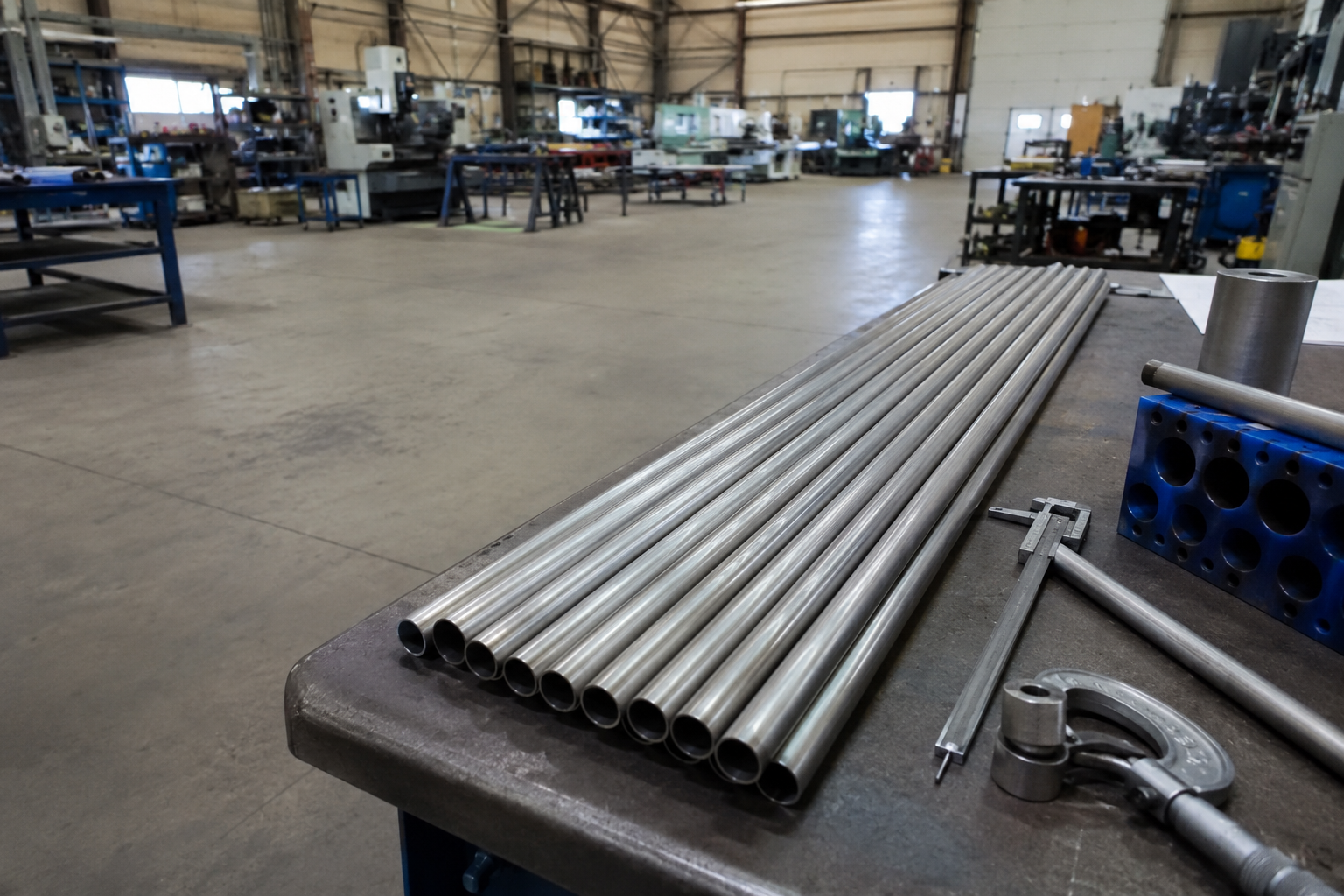
For industrial buyers, the key question is not only “Is this titanium bar annealed?” A better question is: Does this annealed titanium bar meet the mechanical properties, hardness range, fabrication needs, standard, certificate and service requirements of my project?
This guide explains how annealed condition affects titanium bar performance and what buyers should confirm before placing an order.
Quick Answer: What Does Annealed Condition Mean in Titanium Bars?
Annealing is a heat treatment used to modify the microstructure and properties of titanium and titanium alloys. It is often used to reduce the effects of cold work, improve ductility, improve dimensional stability, reduce residual stress or prepare material for further processing.
ASM describes common heat treating processes for titanium alloys, including stress-relief, annealing, solution treating, aging, quenching and age hardening. Source: ASM — Heat Treating of Titanium and Titanium Alloys
ASTM B348 covers titanium and titanium alloy bars and billets in annealed condition, with requirements for chemical composition and tensile properties. Source: ASTM B348 — Titanium and Titanium Alloy Bars and Billets
Simple Explanation
| Term | What It Means for Buyers |
|---|---|
| Titanium bar | Solid round, flat, square or billet form used for machining, forging, fasteners, components or structural parts. |
| Annealed condition | Heat-treated condition usually used to improve ductility, workability and property consistency. |
| Stress relieved | Heat treatment mainly used to reduce residual stress, often after forming, welding or machining. |
| Recrystallized structure | A microstructure that may form after sufficient heat treatment following cold work. |
| Mechanical properties | Tensile strength, yield strength, elongation, reduction of area and sometimes hardness. |
| MTC / MTR | Material certificate showing heat number, chemistry, mechanical properties, standard and sometimes heat treatment condition. |
Buyer Takeaway
“Annealed” is not just a word on a datasheet. It is a material condition that should be connected to the alloy grade, standard, mechanical properties and final application.
Why Does Annealed Condition Matter for Titanium Bar Purchasing?
The same titanium grade can behave differently depending on prior processing and heat treatment. For example, a cold-worked titanium bar, annealed titanium bar and stress-relieved titanium bar may have different strength, ductility, hardness and machining behavior.
Annealed Condition May Affect
| Property / Factor | Why Buyers Should Care |
|---|---|
| Ductility | Important for bending, forming, flaring, forging and fabrication. |
| Strength | Important for load-bearing parts, fasteners, shafts and structural components. |
| Hardness | Affects machining behavior, tool wear, forming force and inspection acceptance. |
| Residual stress | May affect distortion during machining, welding or later heat exposure. |
| Microstructure | Influences strength, ductility, toughness, fatigue response and stability. |
| Machinability | Annealing may improve machinability in some cases, but titanium remains difficult to machine. |
| Dimensional stability | Important when bars will be precision machined or used in tight-tolerance parts. |
| Surface finish after machining | Affected by hardness, microstructure, cutting tools, coolant and machining parameters. |
| Final application suitability | Annealed condition may be suitable for one project but not another. |
TIMET’s titanium design and fabrication handbook notes that heat treatment of titanium fabrications is not normally necessary, but annealing may be necessary after severe cold work if restoration of ductility or improved machinability is desired. It also notes that stress relief may be used after severe forming or welding to reduce cracking or distortion risk. Source: TIMET — Titanium Design and Fabrication Handbook
Buyer Takeaway
Annealed titanium is often selected when ductility, fabrication and property consistency matter. However, the buyer should still confirm whether annealed condition matches the final strength, hardness and service requirements.
Is “Annealed” a Single Fixed Condition?
No. “Annealed” should not be treated as one universal condition for all titanium bars.
Annealed condition can vary depending on:
- Titanium grade
- Commercially pure titanium vs titanium alloy
- Alpha, alpha-beta or beta alloy type
- Bar diameter and product form
- Prior hot working or cold working
- Annealing temperature
- Holding time
- Cooling method
- Customer standard or drawing
- Required mechanical properties
NASA technical material on titanium heat treatment notes that annealing heat treatments may involve specific temperature ranges, holding times and cooling practices, and that time, temperature and cooling rate affect final results. Source: NASA — Heat Treatment of Titanium and Titanium Alloys
Why This Matters
A buyer may write:
Titanium Grade 5 bar, annealed
But for a real order, the supplier may still need to confirm:
- ASTM B348 or another product standard?
- Ti-6Al-4V / UNS R56400?
- Required tensile strength and yield strength?
- Required elongation?
- Required hardness range?
- Diameter and tolerance?
- Machining or forming application?
- Any additional heat treatment after machining?
- EN 10204 3.1 certificate?
- Third-party inspection?
Buyer Takeaway
Do not assume that every “annealed titanium bar” has the same performance. Confirm the grade, standard, mechanical properties and actual test results.
How Does Annealing Affect Strength and Ductility?
Annealing is often used to restore ductility and reduce cold-work effects. If titanium has been cold worked, drawn, rolled or heavily formed, annealing can help produce a more workable condition.
However, there is usually a trade-off. Increased ductility may come with lower strength compared with heavily cold-worked material. The exact result depends on the titanium grade and heat treatment process.
General Effect of Annealing
| Property | Cold-Worked / Harder Condition | Annealed Condition |
|---|---|---|
| Tensile strength | Usually higher | Often lower than cold-worked condition |
| Yield strength | Usually higher | Often lower than cold-worked condition |
| Ductility / elongation | Usually lower | Often higher |
| Hardness | Usually higher | Often lower |
| Residual stress | May be higher | Often reduced |
| Formability | May be limited | Often improved |
| Machining response | May be harder / more stressed | May be more stable or workable, depending on alloy and parameters |
ASTM E8/E8M covers tension testing of metallic materials and includes determination of yield strength, tensile strength, elongation and reduction of area. Source: ASTM E8/E8M — Tension Testing of Metallic Materials
Important Caution
Annealing does not automatically make a titanium bar “better.” It changes the property balance. A softer, more ductile bar may be easier to form, but it may not provide the highest strength required for some structural or aerospace-related applications.
Buyer Takeaway
Buyers should not only ask for “annealed.” They should confirm actual tensile strength, yield strength and elongation from the MTC/MTR or mechanical test report.
How Does Annealing Affect Hardness?
Hardness is often used as a quick indicator of material condition, but it should not be the only acceptance criterion.
Annealed titanium bars often have lower hardness than cold-worked or higher-strength conditions. This can help forming and may improve some machining operations. However, hardness alone does not prove full performance.
ASTM E18 covers Rockwell hardness testing of metallic materials and provides a standardized method for determining Rockwell and superficial Rockwell hardness. Source: ASTM E18 — Rockwell Hardness of Metallic Materials
Why Hardness Matters
| Buyer Concern | Why Hardness Is Relevant |
|---|---|
| Machining | Hardness may affect cutting force, tool wear and surface finish. |
| Forming | Lower hardness may make bending or forming easier. |
| Inspection | Some projects specify hardness range as part of acceptance. |
| Material condition | Hardness can help confirm whether the bar is consistent with the ordered condition. |
| Repeatability | Batch-to-batch hardness consistency may help production planning. |
Important Caution
Hardness should be read together with tensile properties, elongation, microstructure, standard and application requirements. A low hardness value does not automatically mean the material will machine perfectly or perform well in service.
Buyer Takeaway
For precision machining or forming, buyers may request a hardness report, but should also review tensile properties and intended manufacturing process.
How Does Annealing Affect Machinability and Surface Finish?
Titanium is known as a difficult-to-machine material. Annealing may improve machinability in some cases by reducing hardness, reducing residual stress or improving ductility. But machining performance still depends on many factors.
Machining Factors
| Factor | Why It Matters |
|---|---|
| Hardness | Affects cutting resistance and tool wear. |
| Microstructure | May influence chip formation, surface finish and tool life. |
| Residual stress | May cause distortion during machining. |
| Thermal conductivity | Titanium’s low thermal conductivity can concentrate heat near the cutting edge. |
| Chemical reactivity | Titanium can react with tool materials at cutting temperatures. |
| Cutting tools | Tool material, coating and geometry strongly affect results. |
| Coolant | Proper cooling and lubrication are important. |
| Cutting speed and feed | Aggressive parameters may increase tool wear or surface damage. |
| Final tolerance | Precision parts may require stable material condition. |
A review on titanium alloy machinability notes that titanium alloys are difficult to machine due to factors such as low thermal conductivity, low elastic modulus, high hardness at elevated temperature and high chemical reactivity. Source: Review on Machinability of Titanium Alloys
What Buyers Should Avoid
Buyers should avoid saying:
Annealed titanium is always easy to machine.
A better statement is:
Annealed condition may help machinability or dimensional stability in some cases, but titanium machining still depends on alloy grade, hardness, microstructure, tool selection, coolant and cutting parameters.
Buyer Takeaway
When machining is important, share the machining process with the supplier. Ask for hardness, mechanical properties and trial samples if the part is high-value or difficult to machine.
How Does Microstructure Matter in Annealed Titanium Bars?
Annealing can change titanium microstructure. Depending on alloy type and processing history, it may affect recrystallization, grain size, alpha/beta phase distribution and residual stress.
For buyers, microstructure is usually not required for every order. However, it can matter in critical applications such as aerospace-related components, medical-related components, high-cycle fatigue parts, pressure components, or parts requiring severe forming.
Microstructure-Related Buyer Questions
| Question | When It Matters |
|---|---|
| Is grain size controlled? | Critical forming, fatigue, aerospace-related or customer-drawing requirements. |
| Is microstructure report required? | High-risk parts or strict project specifications. |
| Was the bar cold worked before annealing? | Previous processing affects final structure and properties. |
| Is the alloy alpha, alpha-beta or beta titanium? | Heat treatment response differs by alloy family. |
| Will the bar be heat treated again after machining? | Later heat treatment may change properties. |
| Is ASTM E112 grain size measurement required? | If the drawing or customer specification requires grain size reporting. |
ASTM E112 covers procedures for estimating and expressing average grain size in metals. Source: ASTM E112 — Determining Average Grain Size
Buyer Takeaway
For ordinary titanium bar purchases, MTC and mechanical properties may be enough. For critical components, buyers may also request microstructure or grain size reports.
What Should Buyers Ask Suppliers About Annealed Titanium Bars?
Datasheets are useful, but they do not always answer order-specific questions. Buyers should connect the annealed condition with the real application.
Supplier Questions
| Question | Why It Matters |
|---|---|
| Which standard applies? | ASTM B348, AMS, ASME, EN or customer drawing may define different requirements. |
| What grade and UNS number are supplied? | Titanium Grade 2 and Grade 5 behave very differently. |
| Is the bar annealed, stress relieved or another condition? | Avoids confusion between different heat treatment purposes. |
| What are the actual mechanical properties? | Tensile strength, yield strength and elongation confirm performance. |
| Can hardness be reported? | Useful for machining, forming or inspection control. |
| Is the material suitable for bending/forming? | Annealed condition may help, but forming requirements should be confirmed. |
| Is the material suitable for precision machining? | Ask for hardness and trial samples if machining is critical. |
| Can heat treatment records be provided? | Important for critical projects, not always standard for every order. |
| Is microstructure or grain size report available? | Useful for aerospace-related, medical-related or fatigue-sensitive projects. |
| Can EN 10204 3.1 MTC/MTR be provided? | Confirms batch-specific test results and traceability. |
| Is third-party inspection available? | Useful for high-value or critical projects. |
EN 10204 Type 3.1 inspection certificates provide actual test results from the supplied material lot and are endorsed by the manufacturer’s representative independent from manufacturing. Source: EN 10204 Type 3.1 Inspection Certificates
Buyer Takeaway
The supplier should be able to explain what “annealed” means for the ordered titanium grade, standard and application.
Common Titanium Bar Grades and Annealed Condition Considerations
Different titanium grades have different annealing and application considerations.
| Grade / Alloy | Common Buyer Concern |
|---|---|
| Titanium Grade 1 | High ductility and formability; often used where maximum formability is needed. |
| Titanium Grade 2 / UNS R50400 | Common commercially pure titanium grade with good balance of strength, ductility and corrosion resistance. |
| Titanium Grade 5 / Ti-6Al-4V / UNS R56400 | Higher-strength alpha-beta titanium alloy; annealed condition is common, but heat treatment and mechanical properties should be confirmed. |
| Titanium Grade 7 | Palladium-containing titanium grade for improved corrosion resistance in certain environments. |
| Titanium Grade 9 / Ti-3Al-2.5V | Often used where moderate strength, formability and corrosion resistance are needed. |
| Titanium Grade 23 / Ti-6Al-4V ELI | Medical-related or high-toughness applications may require stricter documentation and customer validation. |
TIMETAL 6-4 technical data notes that Ti-6Al-4V provides properties in both annealed and heat-treated conditions, and lists different heat treatment routes. Source: TIMETAL 6-4 Properties
Buyer Takeaway
Do not specify only “titanium bar.” Confirm grade, UNS number, standard, annealed condition, mechanical property requirement and final application.
Buyer Checklist: What to Confirm Before Ordering Annealed Titanium Bars
| RFQ Item | What to Provide or Ask |
|---|---|
| Material grade | Titanium Grade 2, Grade 5, Grade 7, Grade 9, Grade 23, etc. |
| UNS number | R50400, R56400, R52400, R56320, R56401, etc. |
| Product form | Round bar, flat bar, square bar, billet, forged bar, machined blank. |
| Standard | ASTM B348, ASME SB348, AMS, EN, ISO or customer drawing. |
| Condition | Annealed, stress relieved, solution treated, aged, customer-specified condition. |
| Size | Diameter, width, thickness, length, tolerance. |
| Mechanical properties | Tensile strength, yield strength, elongation, reduction of area. |
| Hardness | Required hardness range or hardness report if needed. |
| Microstructure | Grain size or microstructure report if required. |
| Application | Machining, bending, forming, medical-related, aerospace-related, chemical, marine, structural. |
| Fabrication process | CNC machining, drilling, threading, bending, forging, welding, heat treatment after machining. |
| Service environment | Temperature, pressure, corrosion media, seawater, chloride, acid, fatigue load. |
| Certificate | EN 10204 3.1 MTC/MTR, heat number traceability, mechanical report. |
| Additional inspection | Hardness test, UT, PMI, dimensional report, third-party inspection. |
| Samples | Trial sample if machining, forming or validation is critical. |
| Packing | Surface protection, end protection, moisture protection, export wooden case. |
Example RFQ Message
We need Titanium Grade 5 round bars, UNS R56400, per ASTM B348. Required condition: annealed. Size: diameter 30 mm × length 3000 mm. The bars will be CNC machined into high-strength components. Please confirm tensile strength, yield strength, elongation, hardness range, heat treatment condition, EN 10204 3.1 MTC, heat number traceability, dimensional tolerance, surface condition, UT availability, sample availability, lead time, MOQ and export packing.
For Grade 2:
We need Titanium Grade 2 bars, UNS R50400, per ASTM B348, annealed condition. The material will be used for formed and machined parts in a corrosive environment. Please confirm mechanical properties, elongation, hardness if available, MTC, surface condition, dimensional tolerance and whether trial samples can be supplied.
Common Mistakes When Buying Annealed Titanium Bars
1. Treating “Annealed” as One Fixed Condition
Annealed condition can vary by grade, standard, processing history and heat treatment route.
2. Ordering Only by Grade
“Titanium Grade 5 bar” is not enough for every project. Buyers should also confirm condition, standard, mechanical properties and hardness.
3. Assuming Annealed Means Highest Strength
Annealed condition often improves ductility, but it may not provide the highest possible strength.
4. Assuming Annealed Means Easy Machining
Annealing may help machinability in some cases, but titanium remains difficult to machine and requires proper tools, coolant and cutting parameters.
5. Ignoring Hardness
Hardness can affect machining, forming and inspection acceptance.
6. Ignoring Microstructure
Microstructure may matter for fatigue-sensitive, aerospace-related, medical-related or customer-drawing-controlled parts.
7. Not Checking the MTC/MTR
The material certificate should match the ordered grade, standard, heat number and mechanical properties.
8. Not Sharing the Application
Suppliers cannot judge whether annealed condition is suitable without knowing the fabrication process and service environment.
9. Not Requesting Trial Samples
For difficult machining, bending or validation projects, samples may help avoid full-batch problems.
10. Choosing Only by Lowest Price
A lower price may not save money if the bar causes machining difficulty, forming cracks, inspection rejection or replacement.
FAQ: Annealed Titanium Bars
1. What does annealed titanium bar mean?
It means the titanium bar has been heat treated to achieve a specified condition, often with improved ductility, reduced cold-work effects and more suitable properties for fabrication or service.
2. Is annealed titanium softer?
Annealed titanium is often softer than cold-worked or hardened conditions, but exact hardness depends on grade, prior processing and heat treatment.
3. Does annealing reduce strength?
It may reduce strength compared with cold-worked condition, while improving ductility. Buyers should confirm actual tensile strength and yield strength from the MTC or mechanical report.
4. Does annealing improve machinability?
It may help in some cases by reducing hardness or residual stress, but titanium machining still depends on alloy grade, microstructure, tool selection, coolant and cutting parameters.
5. Is annealed titanium always better for bending?
Annealed condition is often preferred for bending or forming, but bending performance also depends on grade, bar size, bend radius, surface condition and process design.
6. What standard applies to titanium bars?
ASTM B348 is a common standard for titanium and titanium alloy bars and billets. Other standards such as AMS, ASME, EN or customer drawings may also apply.
7. Should buyers ask for hardness reports?
Hardness reports are useful when machining, forming or inspection acceptance depends on hardness. They may not be required for every order.
8. Should buyers ask for microstructure reports?
Microstructure or grain size reports are usually required only for critical applications or when specified by drawing, standard or end user.
9. Does MTC show annealed condition?
MTC/MTR may show material grade, heat number, standard, chemical composition, mechanical properties and sometimes heat treatment condition. For critical projects, buyers may request additional heat treatment records.
10. What should buyers include in an RFQ?
Buyers should include grade, UNS number, standard, size, tolerance, condition, mechanical properties, hardness requirement, application, fabrication process, certificate requirement and inspection requirement.
Conclusion
Annealed condition has a real impact on titanium bar performance. It can influence ductility, strength, hardness, residual stress, machinability, microstructure and dimensional stability.
For buyers, the safest approach is not to rely only on the word “annealed.” Confirm the titanium grade, UNS number, standard, mechanical properties, hardness range, certificate, heat number traceability, fabrication process and final application.
Emily PIPE supplies titanium alloy tubes, titanium alloy bars, nickel alloy tubes and nickel alloy bars for global industrial applications. If you are preparing a titanium bar project and need help confirming annealed condition, mechanical properties, machining suitability or inspection requirements, you can send your grade, UNS number, size, standard, application environment, certificate requirement and drawing for technical review and quotation.