
How to Evaluate an Alloy Tube and Bar Supplier: A Practical Guide
Choosing an alloy tube and bar supplier is not only about comparing prices or checking a list of machines. For nickel alloy and titanium alloy materials, supplier capability should be evaluated through process control, quality documentation, testing methods, traceability, customization support, and communication.
A supplier may have advanced equipment, but equipment alone does not guarantee that the final material will match your application requirements. Buyers should understand how the supplier controls production, verifies quality, manages documentation, and responds when project requirements are more specific than standard stock supply.
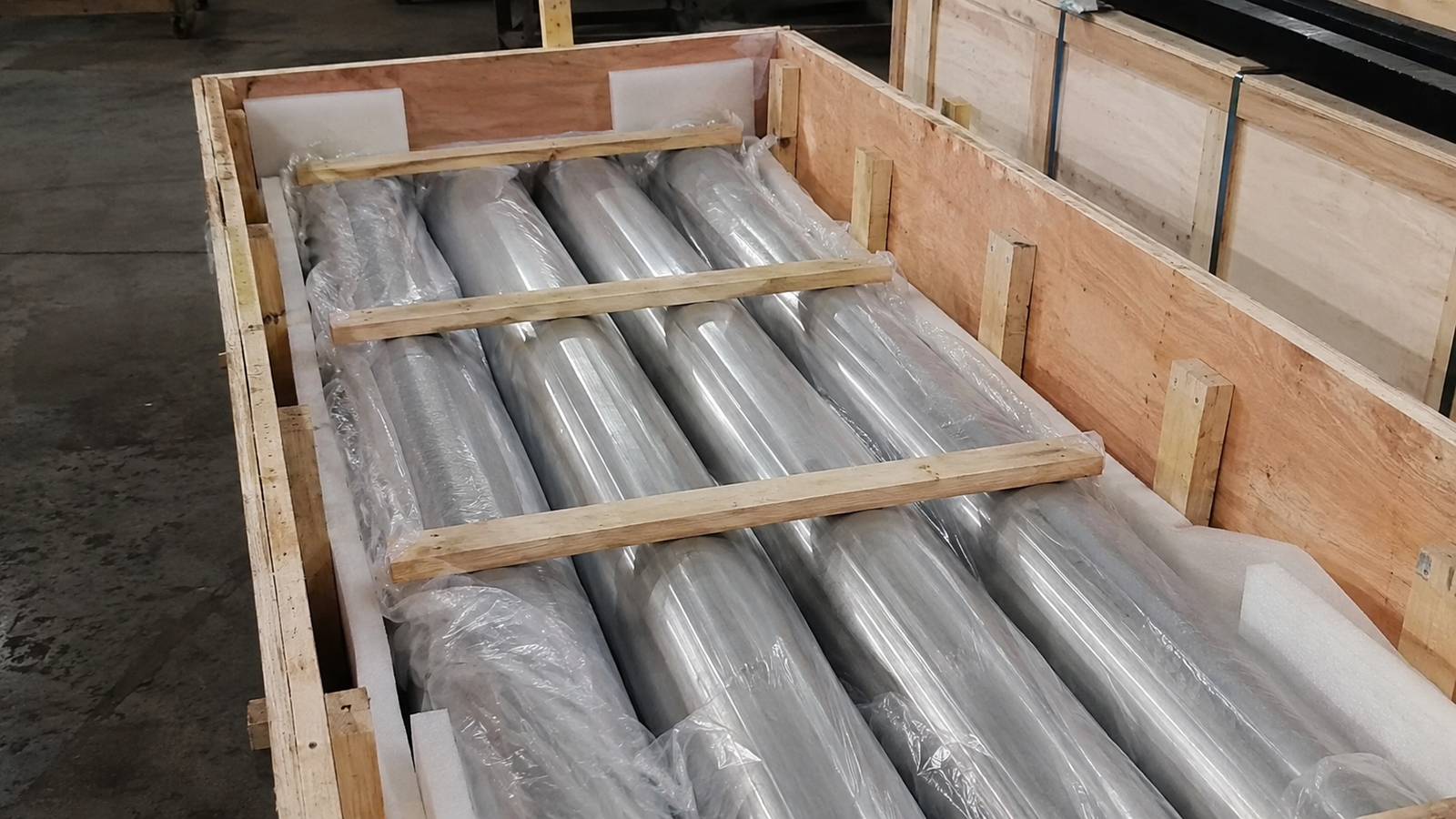
This article explains how buyers can evaluate alloy tube and bar suppliers in a more practical way. The goal is not to make supplier selection complicated, but to help buyers ask better questions before confirming an order.
Is Having the Right Equipment Enough for an Alloy Supplier?
Having the right equipment is important, but it is only one part of supplier capability. What matters more is how the supplier uses that equipment, controls each production step, records inspection results, and prevents non-conforming material from moving forward.
The ISO 9001 process approach emphasizes that processes should operate as an integrated system. This is useful for alloy procurement because material quality depends on multiple connected steps, such as raw material control, melting or billet preparation, forging, rolling, drawing, heat treatment, pickling, straightening, inspection, marking, and packaging.
For example, a cold drawing machine may be important for producing tubes or bars with better dimensional control. However, the buyer should also understand how the supplier controls drawing reduction, die condition, lubrication, intermediate annealing, straightness, surface finish, and final inspection.
What Buyers Should Ask Beyond the Equipment List
| Supplier Capability | Useful Questions to Ask |
|---|---|
| Process flow | Can the supplier explain the full production route from raw material to finished product? |
| Process control | Are key parameters such as heat treatment temperature, drawing reduction, straightening, or surface treatment documented? |
| Inspection points | Which checks are performed during production, not only at the final stage? |
| Operator competence | Are production and inspection personnel trained for the specific alloy and process? |
| Equipment maintenance | Is there a maintenance plan for critical production and testing equipment? |
| Calibration | Are measuring and testing instruments regularly calibrated? |
| Non-conforming material control | How does the supplier isolate, review, and correct non-conforming material? |
For repeat orders or critical parts, buyers may also ask whether the supplier uses statistical process control. ASQ defines statistical process control as the use of statistical techniques to control a process or production method. This kind of process thinking is often more useful than simply knowing that a supplier owns a certain machine.
How Do Supplier Capabilities Match Your Project Needs?
There is no universal “best” alloy supplier for every project. The right supplier depends on the material grade, product form, required standard, tolerance, surface condition, testing level, application environment, and documentation requirement.
A supplier that is suitable for general industrial stock may not be suitable for aerospace, medical, nuclear, offshore, or pressure equipment applications. At the same time, a highly specialized supplier may not always be the most economical choice for a simple, non-critical requirement.
Start with Your Own Application Requirements
Before evaluating the supplier, buyers should first define the project requirements clearly.
| Buyer Requirement | Why It Matters |
|---|---|
| Material grade and UNS number | Prevents confusion between similar alloy names or grades |
| Product form | Tube, pipe, round bar, flat bar, billet, wire, or custom shape may require different processes |
| Standard | ASTM, ASME, AMS, ISO, EN, DIN, or project-specific specification |
| Dimension and tolerance | Determines whether the supplier can meet machining, assembly, or welding needs |
| Surface condition | Pickled, polished, bright annealed, ground, peeled, or turned surfaces require different capabilities |
| Heat treatment condition | Affects mechanical properties, corrosion performance, and dimensional stability |
| Testing requirement | Chemical analysis, tensile test, hardness, PMI, UT, ECT, hydrostatic test, or third-party inspection |
| Application environment | Temperature, corrosion medium, pressure, stress, vibration, wear, or cleanliness requirement |
For example, ASTM B444 for nickel-chromium-molybdenum-columbium alloy pipe and tube includes requirements such as tensile testing, hydrostatic testing, and nondestructive electric testing. ASTM B348 covers titanium and titanium alloy bars and billets, including chemical composition and tensile property requirements.
This shows why supplier capability should be checked against the actual product standard and order requirement, not only against a general statement such as “we can supply nickel alloy tubes” or “we can produce titanium bars.”
How Can Buyers Verify Supplier Production Claims?
Supplier claims should be supported by documents, process explanations, inspection records, and, when appropriate, audits or third-party verification. This does not mean the buyer should distrust every supplier. It simply means technical procurement needs evidence.
A supplier’s website or quotation may mention many capabilities, but buyers should check whether those capabilities are relevant to the specific material order.
Documents and Evidence Worth Reviewing
| Evidence | What to Check |
|---|---|
| ISO 9001 certificate | Whether the quality management system scope is relevant to the supplied products |
| Industry certificates | AS9100, Nadcap, PED, or other certificates only when required by the application |
| Material Test Report / MTR | Heat number, chemical composition, mechanical properties, standard, test results |
| EN 10204 certificate | Whether the inspection document type matches the buyer’s requirement |
| Quality Control Plan / QCP | Production steps, control points, inspection methods, acceptance criteria |
| Process flow chart | How raw material becomes the finished tube or bar |
| Calibration records | Whether measuring and testing equipment is controlled |
| NDT records | Whether UT, ECT, or other NDT results are traceable to the batch or pieces supplied |
| Third-party inspection report | Independent verification if required by the project or buyer |
EN 10204 specifies types of inspection documents supplied to purchasers for metallic products according to the order requirements. For many alloy orders, buyers may request EN 10204 3.1 or 3.2 depending on the project risk and approval process.
It is also important to separate system certification from batch-specific verification. ISO 9001 can support quality management, but it does not replace a material test report, heat number traceability, dimensional inspection, or required NDT results for a specific order.
What Quality Control Procedures Should Buyers Ask About?
Quality control is not only final inspection. For alloy tubes and bars, quality depends on how the supplier controls raw material, production, heat treatment, surface treatment, testing, marking, and packing.
A useful supplier discussion should go beyond the question “Do you have testing equipment?” A better question is: “Which tests are performed for this material, according to which standard, and how are the results recorded and traced?”
Key QC Areas for Alloy Tube and Bar Orders
| QC Area | Practical Questions |
|---|---|
| Raw material control | How are billets, ingots, or semi-finished products verified before production? |
| Heat number traceability | Can each tube or bar be traced to a heat or batch number? |
| Chemical analysis | Is composition verified by heat, batch, or product sample? |
| Mechanical testing | Are tensile, yield, elongation, hardness, or impact tests required? |
| Dimensional inspection | How are OD, wall thickness, length, straightness, ovality, or bar diameter checked? |
| Surface inspection | How are scratches, cracks, dents, oxide scale, or contamination controlled? |
| NDT | Is UT, ECT, hydrostatic testing, or other NDT required by the standard or order? |
| Final review | Who reviews the inspection documents before shipment? |
The American Society for Nondestructive Testing explains that eddy current testing uses electromagnetic induction to detect flaws in conductive materials, and ultrasonic testing uses high-frequency sound waves to detect and measure discontinuities in industrial components. ASNT NDT methods can help buyers understand why the selected test method should match the product form and defect risk.
For testing laboratories, ISO/IEC 17025 specifies requirements for competence, impartiality, and consistent operation. This is useful when buyers need higher confidence in test results or third-party laboratory verification.
How Should Buyers Evaluate Customization Capability?
Customization is not only about saying “yes” to a special size. A capable supplier should be able to evaluate whether the requested grade, tolerance, surface finish, length, heat treatment, testing, and delivery schedule are realistic.
For alloy tubes and bars, customization often affects cost, lead time, yield, inspection method, and minimum order quantity. A reliable supplier should explain these trade-offs clearly.
Customization Points to Confirm
| Custom Requirement | What to Confirm |
|---|---|
| Non-standard size | Can the supplier produce it directly, or does it require new tooling or special production? |
| Tight tolerance | What process is used to achieve the tolerance: cold drawing, grinding, peeling, turning, or straightening? |
| Fixed length | Can the supplier cut to length while controlling end condition and material loss? |
| Special surface finish | Is polishing, grinding, bright annealing, pickling, or coating available? |
| Special heat treatment | Can the supplier control atmosphere, temperature uniformity, and cooling conditions? |
| Special testing | Can the required NDT, mechanical testing, PMI, or third-party inspection be arranged? |
| Small quantity | Is stock available, or does the order require mill production and MOQ? |
| Drawing-based supply | Can the supplier review drawings and identify unclear tolerances or missing requirements? |
Buyers should be cautious when a supplier accepts every custom requirement without asking technical questions. In many cases, a good supplier will ask about the application, tolerance, inspection method, and final use before confirming feasibility.
What Role Do Industry Certifications Play?
Industry certifications can be useful, but they should be understood correctly. A certificate does not automatically prove that every product batch is suitable for every application. It shows that a supplier, process, or system has been assessed against specific requirements.
For aerospace and defense supply chains, IAQG 9100 standardizes quality management system requirements and can be used at different levels of the supply chain. Nadcap focuses on critical process accreditation, including areas such as nondestructive testing, heat treating, chemical processing, materials testing laboratories, and measurement and inspection.
How to Read Certifications Carefully
| Certificate Type | What Buyers Should Check |
|---|---|
| ISO 9001 | Does the scope cover the relevant products and processes? |
| AS9100 / EN9100 | Is the order related to aviation, space, or defense supply requirements? |
| Nadcap | Does the accreditation cover the specific process needed, such as heat treatment or NDT? |
| PED or pressure-related approval | Is it required for the final pressure equipment or project? |
| Laboratory accreditation | Are test results produced by a competent internal or external laboratory? |
| Certificate validity | Is the certificate current, and is the issuing body credible? |
| Scope details | Does the certificate cover the exact product, site, and process involved in your order? |
A useful rule is simple: do not only ask whether the supplier “has a certificate.” Ask whether the certificate scope applies to your order.
Beyond Production: What Makes a Supplier More Reliable?
Production capability is important, but supplier reliability also depends on communication, consistency, corrective action, documentation discipline, and willingness to discuss technical limits.
ASQ defines supplier quality management as a system where supplier quality is managed through a proactive and collaborative approach. ASQ supplier quality management is a useful concept for alloy procurement because the buyer and supplier often need to clarify technical details together before production.
Practical Signs of a More Reliable Supplier
| Reliability Factor | What It Looks Like in Practice |
|---|---|
| Consistent documentation | Quotations, MTRs, packing lists, and certificates are clear and traceable |
| Realistic answers | The supplier explains limitations instead of accepting every request immediately |
| Technical communication | The supplier asks about application, standard, tolerance, testing, and certificate needs |
| Corrective action | If a problem occurs, the supplier investigates cause and proposes a practical solution |
| Production transparency | The supplier can share process flow, inspection points, and progress updates when needed |
| Delivery discipline | Lead time, packing method, shipping documents, and Incoterms are confirmed clearly |
| Customization support | The supplier can discuss feasible alternatives when the requested specification is difficult |
| Long-term consistency | Repeat orders show stable quality, communication, and delivery performance |
For technical alloy procurement, the most useful supplier is not always the one with the longest equipment list. It is often the one that can connect production capability with your real application requirement.
Practical Supplier Evaluation Checklist
Before choosing an alloy tube and bar supplier, buyers can review the following checklist:
- Does the supplier understand nickel alloy or titanium alloy processing, not just general metal trading?
- Can the supplier explain the production route from raw material to finished product?
- Are process controls documented for heat treatment, drawing, rolling, straightening, surface treatment, and inspection?
- Does the supplier provide traceable MTRs and heat number records?
- Are dimensional tolerances, surface finish, and testing requirements clearly confirmed?
- Does the supplier understand the product standard, such as ASTM, ASME, AMS, ISO, EN, or DIN?
- Can the supplier provide EN 10204 3.1 or 3.2 certificates if required?
- Are NDT methods such as UT, ECT, or hydrostatic testing available when required by the order?
- Does the supplier’s certificate scope match the product and process involved?
- Can the supplier support custom sizes, fixed lengths, special surfaces, or drawing-based requirements realistically?
- Does the supplier communicate clearly about MOQ, lead time, inspection, packaging, and logistics?
- If a problem occurs, does the supplier have a clear corrective action process?
Conclusion
Evaluating an alloy tube and bar supplier requires more than checking equipment photos or comparing quotations. Buyers should look at process control, quality management, batch documentation, testing capability, traceability, customization support, and communication.
For nickel alloy and titanium alloy materials, the right supplier should be able to explain not only what they can produce, but how they control the process and how their capability matches your actual application requirements.
A practical supplier evaluation process can help buyers reduce misunderstandings, avoid unnecessary rework, and make better-informed purchasing decisions. When the material will be used in a demanding environment, it is worth asking detailed questions before confirming the order.