
Corrosion-Resistant Tubes and Bars for Semiconductor Wet Benches
Selecting corrosion-resistant tubes and bars for semiconductor wet benches is not only about choosing a strong metal or a familiar alloy grade. The material must be reviewed against the actual chemical environment, temperature, concentration, surface condition, contamination sensitivity, documentation requirements, and long-term maintenance needs.
In some high-purity wet chemical systems, non-metallic materials may be preferred for direct chemical contact. In other areas, metallic tubes and bars may be considered for compatible piping sections, heat exchange areas, support structures, frames, fixtures, machined parts, utility lines, drain-related parts, or pressure-containing components. The correct choice depends on where the material is used and what it will contact.
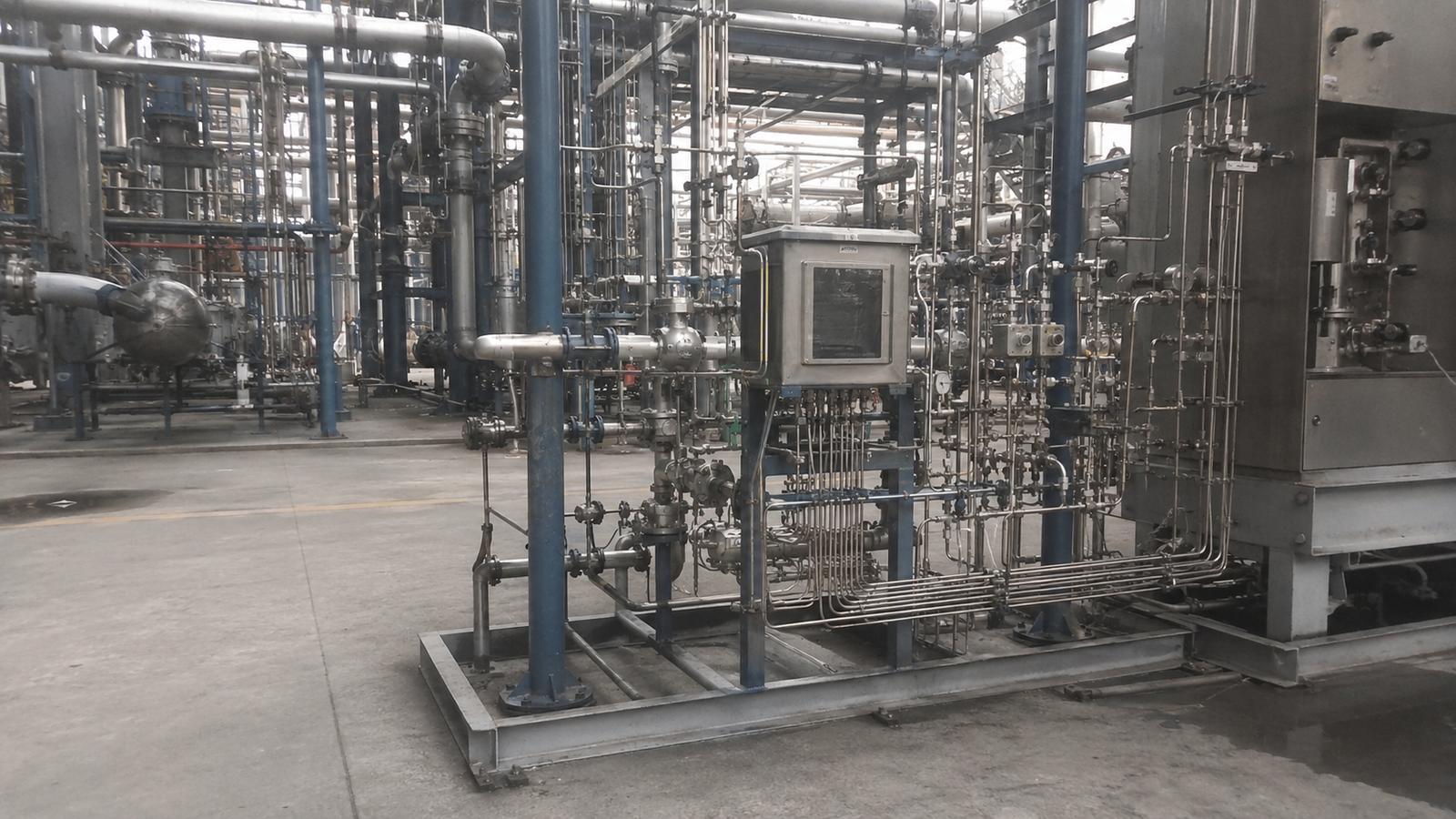
There is no single “best” corrosion-resistant material for every wet bench application. A more practical approach is to define the actual process conditions first, then match the alloy grade, product form, surface condition, inspection documents, and supplier capability to that specific use case.
Is There One Best Corrosion-Resistant Material for Wet Benches?
There is no universal material that works for every semiconductor wet bench environment.
Wet benches may involve acids, alkaline cleaners, oxidizers, etchants, solvents, ultrapure water, rinsing steps, elevated temperature, pressure, flow, and strict contamination control. A material that performs well in one chemical environment may not be suitable in another.
SEMI Liquid Chemicals standards include topics related to liquid chemicals, materials used to contain and transport them, contamination issues, chemical distribution systems, and component performance. This is a useful reminder that wet chemical systems should be evaluated as a complete process environment, not only as a simple material comparison.
Process Details Buyers Should Confirm
| Process Detail | Why It Matters |
|---|---|
| Chemical type | Different acids, alkalis, oxidizers, fluorides, solvents, or mixed chemistries affect material behavior differently. |
| Chemical concentration | A material may behave differently at low and high concentrations. |
| Operating temperature | Higher temperature may change corrosion rate, surface stability, and mechanical performance. |
| Exposure time | Short exposure, intermittent exposure, and continuous immersion may require different review. |
| Flow condition | Stagnant liquid, high velocity flow, turbulence, or particles may affect corrosion and erosion. |
| Pressure and stress | Pressure, vibration, and tensile stress may increase the risk of cracking or leakage. |
| Surface cleanliness | Contamination-sensitive areas may require special cleaning, handling, and packaging. |
| Contact location | Direct process contact, support structure, utility line, drain, exhaust, or fixture use may require different materials. |
AMPP notes that no material is resistant to all corrosive situations and that materials selection is critical to preventing many types of failures. AMPP material selection factors ISO 21457 also identifies corrosion mechanisms and parameters to be evaluated when selecting materials for piping and equipment. ISO 21457 materials selection guidance
This is why asking “Which material is best?” is usually less useful than asking “Which material is suitable for this exact chemistry, temperature, concentration, surface requirement, and risk level?”
How Should Buyers Interpret Material Data for Wet Bench Applications?
Material data sheets are useful, but they should not be treated as complete proof of suitability.
A data sheet may show typical chemical composition, tensile strength, hardness, or general corrosion resistance. However, wet bench applications often depend on specific combinations of chemistry, temperature, concentration, crevices, flow, surface finish, and contamination control.
What to Look for Beyond Basic Data
| Data Item | What Buyers Should Ask |
|---|---|
| Corrosion resistance | Is the data relevant to the actual chemical mixture, concentration, and temperature? |
| Localized corrosion | Is pitting, crevice corrosion, or stress corrosion cracking a possible risk? |
| Surface finish | Is the surface suitable for cleaning, sealing, particle control, or chemical contact? |
| Chemical composition | Are key elements and impurities controlled according to the specified standard? |
| Mechanical properties | Are strength, elongation, hardness, and pressure-related requirements suitable for use? |
| Heat treatment condition | Does the delivered condition match the required performance and fabrication process? |
| Weldability | Will welds and heat-affected zones remain acceptable in the service environment? |
| Product standard | Does the material follow the correct ASTM, ASME, ISO, EN, or project specification? |
For example, PREN may be useful when comparing some stainless steels for chloride-related pitting resistance, but it should not replace chemical compatibility data, application testing, or project-specific corrosion review. Nickel alloys, titanium alloys, and stainless steels can behave differently depending on the exact chemistry and service condition.
The key point is simple: material data should be connected to the real wet bench environment, not read in isolation.
Which Tube and Bar Standards May Be Relevant?
The correct standard depends on the alloy grade, product form, and application. Buyers should avoid ordering only by material name, because “titanium tube” or “nickel alloy bar” is not specific enough for technical procurement.
Examples of Product Standards to Review
| Product Type | Example Standard | What It Helps Define |
|---|---|---|
| Titanium alloy tube | ASTM B338 | Seamless and welded titanium alloy tubes for condensers, evaporators, and heat exchangers |
| Nickel alloy seamless pipe and tube | ASTM B622 | Seamless nickel and nickel-cobalt alloy pipe and tube |
| Nickel-chromium-molybdenum alloy rod | ASTM B574 | Low-carbon nickel-chromium-molybdenum alloy rods for general corrosive service |
| Nickel rod and bar | ASTM B160 | Nickel 200, Nickel 201, and related nickel rods and bars |
| Nickel-iron-chromium-molybdenum-copper rod and bar | ASTM B425 | Alloy 825 and related hot-finished and cold-drawn rod/bar forms |
| Metallic inspection documents | BS EN 10204 | Inspection documents for metallic products |
These standards can help define chemical composition, mechanical properties, product form, dimensions, testing, and inspection requirements. However, they do not replace chemical compatibility review for a specific wet bench process.
Why Do Surface Finish and Cleanliness Matter?
For wet bench applications, surface condition can be as important as alloy grade.
A rough or damaged surface may retain particles, process residues, cleaning chemicals, or corrosion products. In contamination-sensitive areas, this can create problems even when the base alloy is correct.
SEMI notes that controlling particle contamination on processing equipment components has become an important quality requirement for equipment users. Particle contamination control in semiconductor equipment ISO 14644-1 also classifies cleanrooms and clean zones by airborne particle concentration, showing the broader importance of contamination control in clean environments. ISO 14644 cleanroom particle classification
Surface and Cleanliness Items to Confirm
| Requirement | What to Specify |
|---|---|
| Surface roughness | Ra value or other measurable surface texture requirement if needed |
| Surface treatment | Pickling, polishing, grinding, passivation, electropolishing, or other process |
| Internal surface | Important for tubes carrying fluids or requiring cleanability |
| Cleaning method | Degreasing, rinsing, drying, passivation, or special cleaning |
| Particle control | Whether particle testing or cleanliness verification is required |
| Packaging | Capped ends, sealed bags, protective wrapping, moisture protection, or clean packaging |
| Handling | Gloves, clean tools, dedicated containers, or contamination control instructions |
For stainless steel, ASTM B912 covers passivation by electropolishing for stainless steel alloys. This standard should not be applied automatically to all nickel or titanium alloys, but it shows why surface treatment requirements should be stated clearly rather than assumed.
How Can Supplier Material Claims Be Verified?
Supplier statements should be supported by batch-specific documents and clear inspection records.
A general data sheet can help with early comparison, but it is not the same as a material test report for the actual supplied material. For tubes and bars used in wet bench-related applications, buyers should confirm grade, heat number, chemical composition, mechanical properties, surface condition, dimensions, testing, and certificate type.
Documents and Records to Request
| Document or Record | Why It Matters |
|---|---|
| Material Test Report / MTR | Helps verify chemical composition, mechanical properties, heat number, and standard |
| EN 10204 certificate | Defines the inspection document type required for the order |
| Heat number or lot number | Supports traceability if a technical issue appears later |
| Dimensional inspection report | Confirms OD, wall thickness, bar diameter, length, straightness, or tolerance |
| Surface finish report | Useful when Ra or special finish is specified |
| PMI report | Helps confirm alloy identification when required |
| NDT report | UT, ECT, hydrostatic test, or other inspection if required by standard or order |
| Cleaning or passivation record | Important when cleanliness or surface treatment is specified |
| Packaging record | Helps confirm that material protection requirements were followed |
BS EN 10204 is used for inspection documents that authenticate materials, and BSI notes that manufacturers are often expected to prove that products meet required chemical and mechanical properties.
ISO 9001 can support a supplier’s quality management system, but it does not replace batch-specific material documentation. ISO 9001 in the supply chain explains that buyers should clearly define their needs and expectations, including product specifications, drawings, standards, or other requirements.
If laboratory testing is important, ISO/IEC 17025 specifies requirements for laboratory competence, impartiality, and consistent operation.
What Risks Should Buyers Consider?
Material selection risks in semiconductor wet benches are not limited to visible corrosion. The material may also affect contamination control, documentation approval, maintenance, cleaning, replacement, and operational stability.
Common Risks in Tube and Bar Selection
| Risk | How It May Appear | How to Reduce the Risk |
|---|---|---|
| Chemical incompatibility | Corrosion, pitting, cracking, leakage, or surface degradation | Confirm exact chemistry, concentration, temperature, and exposure condition |
| Contamination | Metallic ions, particles, residues, or corrosion products | Specify surface finish, cleaning, packaging, and material documentation |
| Documentation gaps | Material cannot pass incoming inspection or internal approval | Confirm MTR, heat number, certificate type, and inspection records before shipment |
| Surface damage | Scratches, dents, embedded particles, or rough internal surface | Define surface and packaging requirements clearly |
| Poor fit-up | Tube or bar size does not match fabrication or assembly needs | Confirm tolerance, length, straightness, and end condition |
| Supply delay | Special grade, size, or finish is not available quickly | Check MOQ, lead time, stock, and production route early |
| Higher long-term cost | Rework, cleaning, replacement, downtime, or requalification | Compare total cost, not only initial purchase price |
A lower material price may not reduce the real cost if the material requires rework, creates inspection delays, or cannot meet the process requirement. The NIST Life Cycle Cost Manual provides a general framework for understanding life-cycle cost methodology, which is useful when evaluating purchase price together with future maintenance, replacement, and operational costs.
Practical Checklist Before Ordering Tubes and Bars for Wet Benches
Before ordering corrosion-resistant tubes or bars for semiconductor wet benches, buyers can review the following checklist:
- Where will the tube or bar be used in the wet bench or related system?
- Will it directly contact chemicals, ultrapure water, exhaust, drain flow, or only act as a support or machined part?
- What chemicals, concentrations, temperatures, and pressures are involved?
- Are oxidizers, fluorides, chlorides, mixed acids, or alkaline cleaners present?
- Is metal the correct material for this location, or should non-metallic materials also be reviewed?
- What alloy grade and product standard are required?
- Is seamless or welded tube acceptable for this application?
- What surface roughness, surface treatment, and cleaning requirements are needed?
- Are special packaging, capped ends, sealed bags, or contamination-control handling required?
- What documents are required: MTR, EN 10204 3.1, third-party inspection, PMI, NDT, or surface report?
- Is heat number traceability required?
- Can the supplier meet the required size, tolerance, length, surface condition, and delivery schedule?
- Has the material been reviewed against real process risks, not only general corrosion resistance?
- Has total cost been considered, including testing, cleaning, packaging, rework, and replacement risk?
Conclusion
Choosing corrosion-resistant tubes and bars for semiconductor wet benches requires more than selecting a familiar alloy grade.
Buyers should first define where the material will be used, what chemicals it may contact, how sensitive the process is to contamination, and what documentation is needed for inspection and approval. Material selection should consider process chemistry, temperature, concentration, localized corrosion, surface finish, cleanliness, traceability, and supplier quality control.
There is no single material that fits every wet bench application. A more reliable approach is to define the process conditions first, then match the alloy, product form, surface condition, certificate requirements, and supplier capability to the actual use case.
When the application is sensitive to corrosion or contamination, it is worth discussing the process environment, drawing, surface requirements, and inspection documents with the supplier before confirming the order.