
How to Choose Corrosion-Resistant Materials for Food Processing Equipment
Choosing materials for food processing equipment is not simply about finding one “food-grade” material. In real production lines, food-contact parts may face acids, salts, sugars, fats, proteins, cleaning chemicals, sanitizers, heat, pressure, abrasion, and repeated cleaning cycles.
A suitable material should be selected according to the actual food product, processing method, cleaning regime, temperature, surface finish, hygienic design requirement, and documentation needs.
FDA 21 CFR 117.40 states that food-contact surfaces must be corrosion-resistant when in contact with food, made of nontoxic materials, and designed to withstand the environment of intended use, the action of food, cleaning compounds, sanitizing agents, and cleaning procedures. This means material selection should be connected to the real application, not only to a general material grade.
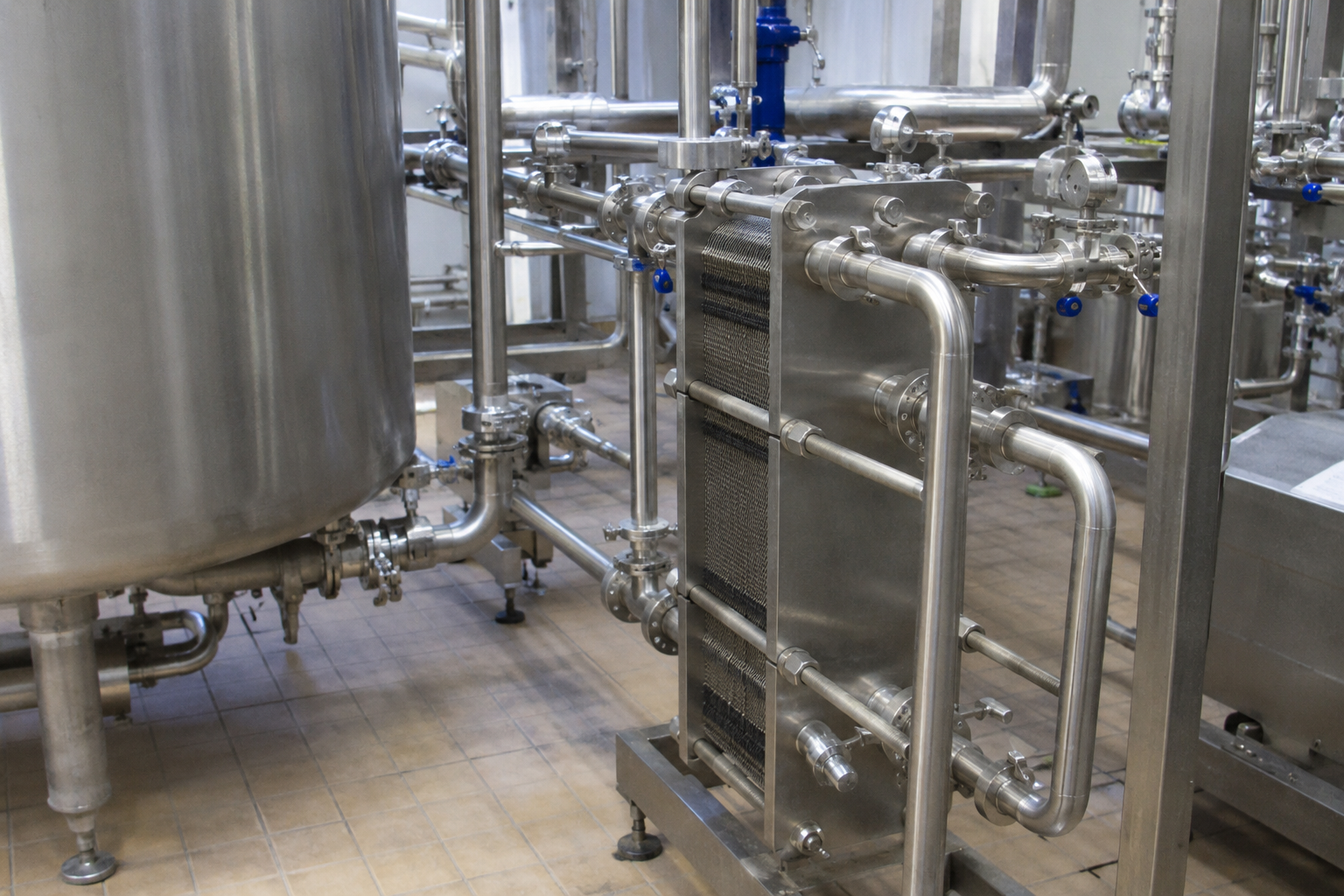
For buyers, engineers, and equipment manufacturers, the better question is not “What is the best food-contact material?” The better question is “Which material is suitable for this food product, this cleaning cycle, this temperature, this surface finish, and this hygiene requirement?”
Why There Is No Universal Best Material for Food Processing Equipment
There is no single best material for every food processing application. A tomato sauce line, dairy system, seafood processing line, beverage system, meat processing line, confectionery line, and oil or fat processing system may all create different corrosion and cleaning challenges.
For example:
- Acidic foods such as tomato, vinegar, citrus, or fermented products may create acid corrosion concerns.
- Salt-containing foods, brines, seafood, and processed meats may increase chloride-related pitting and crevice corrosion risk.
- Dairy systems may involve repeated alkaline and acid cleaning cycles.
- Sugars and fats may leave residues that require effective cleaning and hygienic design.
- High-temperature processing may accelerate corrosion reactions.
- Abrasive particles or slurries may damage protective surface films.
- Chlorine-containing sanitizers or oxidizing cleaners may affect stainless steel surfaces if not properly controlled.
3-A Sanitary Standards specify criteria for the design and fabrication of equipment that comes into contact with food. Their purpose includes protecting food from contamination and ensuring product-contact surfaces can be mechanically cleaned or inspected. You can review 3-A’s explanation here: A Primer for 3-A Standards and Practices.
This is why material selection should be scenario-driven.
Key Process Conditions to Confirm
Before choosing a material for food processing equipment, buyers should define the actual operating environment.
| Factor | What to Confirm | Why It Matters |
|---|---|---|
| Food composition | Acid, salt, sugar, fat, protein, alcohol, enzymes, or mixed ingredients | Determines corrosion and cleaning risk |
| pH level | Acidic, neutral, alkaline, or variable pH | Affects corrosion behavior and cleaning compatibility |
| Chloride content | Brine, salt, seafood, processed meat, chloride-containing water or cleaners | May increase pitting and crevice corrosion risk |
| Temperature | Normal processing temperature, peak temperature, cleaning temperature | Higher temperature may accelerate corrosion and metal release |
| Cleaning regime | CIP, COP, manual cleaning, caustic wash, acid rinse, sanitizer | Cleaning chemicals may be more aggressive than the food itself |
| Sanitizer type | Chlorine-based, oxidizing, quaternary ammonium, peracetic acid, or steam | Must be compatible with the selected material |
| Flow condition | Stagnant, high-flow, turbulent, abrasive, or slurry service | Affects erosion, deposits, and localized corrosion |
| Surface finish | Polished, electropolished, passivated, roughness requirement | Supports cleanability and sanitary acceptance |
| Fabrication | Welding, bending, machining, forming, or assembly | Welds and crevices can become corrosion or hygiene risks |
| Documentation | MTC, heat number, surface report, food-contact compliance, inspection record | Supports traceability and project verification |
A material request such as “food-grade stainless steel” is usually not enough. The supplier needs the process conditions to recommend a suitable material.
Why Food Composition Matters
Different foods create different corrosion risks.
Food Protection Trends notes that most stainless steel used in food equipment fabrication is 300-series austenitic stainless steel. It also explains that type 316 has higher nickel and molybdenum levels than 304 and is generally considered a higher grade material for food-contact surfaces because of enhanced corrosion resistance. The same article also notes that 3-A requires metal used for food-contact surfaces to be at least as corrosion-resistant as 304 stainless steel under the conditions of intended use.
You can review the article here: Characteristics of Food Contact Surface Materials: Stainless Steel.
However, 304 or 316 should not be selected blindly. The correct grade depends on the actual food and cleaning condition.
| Food / Process Type | Main Risk | Material Selection Note |
|---|---|---|
| Tomato, citrus, vinegar, fermented foods | Organic acid corrosion | Check pH, temperature, exposure time, and cleaning chemicals |
| Seafood, brine, processed meat | Chloride-related pitting or crevice corrosion | Check chloride level, stagnant zones, and surface finish |
| Dairy processing | Protein/fat residues and repeated CIP cycles | Check cleanability, surface finish, and CIP chemical compatibility |
| Beverage and brewing | Organic acids, CO₂, cleaning chemicals | Check pH, sanitation cycle, and weld quality |
| Sugar processing | Deposits, cleaning difficulty, possible fermentation acidity | Check cleaning method and dead zones |
| Oils and fats | Residues, cleaning agents, thermal exposure | Check cleaning chemistry and surface finish |
| Slurry or particle-containing food | Abrasion and erosion | Check wear resistance and surface condition |
For special corrosive cases, nickel alloys or titanium alloys may be considered, but they should not be treated as universal replacements for stainless steel.
Datasheet Values Are Only the Starting Point
Material datasheets are useful, but they do not fully represent real food processing conditions. A datasheet may show general corrosion resistance, tensile strength, elongation, hardness, or temperature range. These values must be interpreted according to the real process.
A Lund University study on the effects of food processing conditions on local corrosion of 316L stainless steel found that chloride concentration had the largest impact on pitting potential, followed by temperature. You can review it here: Effects of Food Processing Conditions on Local Corrosion of Stainless Steel.
This supports an important point: material performance depends on combined conditions, not one isolated parameter.
Datasheets may not fully show:
- Mixed acids, salts, sugars, fats, proteins, and cleaning chemicals
- Changes in pH during production or cleaning
- Temperature cycling during processing
- Chlorides from water, salt, food, or sanitizer
- Stagnant zones and crevices
- Weld heat-affected zones
- Surface roughness and surface damage
- Repeated cleaning cycles
- Biofilm risk and hygiene design
- Metal migration under repeated cleaning conditions
Use datasheets as the starting point, then verify them against the actual process.
Cleaning Cycles Can Be More Aggressive Than the Food
In many food plants, the cleaning process may be more aggressive than the food product itself. CIP or sanitation may involve caustic cleaners, acid rinse, oxidizing sanitizers, elevated temperatures, and repeated exposure.
A KTH study on repeated cleaning of 316L stainless steel in food-contact applications notes that high applied temperature, different pH values of cleaning agents, and chloride ions from tap water or disinfectants can create a potentially corrosive environment. It also states that improper cleaning procedures could increase susceptibility to localized corrosion such as pitting and affect metal migration. You can review it here: The Influence of Repeated Cleaning on the Corrosion and Metal Migration of 316L Stainless Steel in Food Contact Applications.
When evaluating materials, buyers should confirm:
- Caustic concentration
- Acid concentration
- Sanitizer type
- Chloride level in water or chemicals
- Cleaning temperature
- Cleaning duration
- Cleaning frequency
- Rinse quality
- Passivation or repassivation requirement
- Whether the equipment has crevices, weld defects, or dead zones
This helps prevent selecting a material that survives the food product but fails during cleaning.
Why Surface Finish and Hygienic Design Matter
Surface finish is not just a visual requirement. It can affect cleanability, corrosion initiation, bacterial attachment risk, and inspection acceptance.
A review on bacterial attachment and biofilm formation notes that surface roughness can increase the surface area available for bacterial attachment and provide a scaffold for adhesion. You can review the source here: Implication of Surface Properties, Bacterial Motility, and Hydrodynamic Conditions on Bacterial Surface Sensing and Their Initial Adhesion.
However, surface finish alone does not guarantee food safety. It must work together with hygienic design, correct welding, drainage, cleaning validation, maintenance, and inspection.
Buyers should confirm:
- Required Ra value
- Polished or electropolished surface
- Passivation requirement
- Weld surface quality
- No cracks, pits, laps, or embedded contamination
- No unnecessary crevices or sharp internal corners
- Drainability
- Accessibility for cleaning and inspection
- End protection and hygienic packaging
A smooth surface with poor equipment design can still be difficult to clean. A good material with poor welding or rough internal surfaces may still create hygiene and corrosion risks.
How to Think About Material Options
The following table is only a starting point for technical discussion. Final material selection should be based on food composition, cleaning regime, temperature, surface finish, hygienic design, and applicable standards.
| Material Family | Why Buyers May Consider It | Important Caution |
|---|---|---|
| 304 / 304L stainless steel | Commonly used in general food equipment and less aggressive environments | May not be enough for high chloride, aggressive cleaners, or severe acidic service |
| 316 / 316L stainless steel | Often selected for better corrosion resistance than 304 in many food-contact applications | Still vulnerable under some chloride, high-temperature, acidic, crevice, or cleaning conditions |
| Duplex stainless steel | May be considered for higher chloride or strength requirements | Welding, temperature limits, surface finish, and hygienic design must be checked |
| High-alloy stainless steels | May be considered when 316L is not enough | Cost, availability, fabrication and validation needs must be reviewed |
| Nickel alloys | May be considered for special acids, aggressive cleaning chemicals, or severe corrosion cases | Not automatically “food-grade”; media compatibility, metal release, cleanability, cost, and documentation must be checked |
| Titanium alloys | May be considered for selected chloride or oxidizing wet environments | Reducing acids, galling, cleaning compatibility, cost, and fabrication need review |
| Non-metallic materials | May be used in seals, gaskets, liners, or selected parts | Must meet food-contact, temperature, chemical, and cleaning requirements |
A higher alloy is not always the better answer. The most suitable material is the one that meets the application risk without unnecessary over-engineering.
How to Verify Supplier Claims
Supplier claims such as “food-grade,” “corrosion-resistant,” or “suitable for food equipment” should be verified with documents and application details.
Ask suppliers these questions:
- Which material grade and standard are supplied?
- Can you provide MTC / MTR for the specific heat number?
- Can the material be traced back to the batch or melt?
- Is the material suitable for the intended food, pH, chloride level, temperature, and cleaning chemicals?
- What surface finish can be supplied?
- Can you provide surface roughness reports if required?
- Can you support passivation or electropolishing documentation if required?
- Can you provide PMI testing?
- Can you provide UT, PT, eddy current, hydrostatic, or pressure testing if required?
- Can you provide third-party inspection?
- Can you support 3-A, FDA, ASTM, EN, ISO, or customer-specific documentation requirements?
- Can you explain the limitations of the proposed material?
3-A SSI explains that 3-A standards specify criteria for the design and fabrication of food-contact equipment and that 3-A standards are widely used as sanitary criteria for dairy and food processing equipment. You can review the explanation here: 3-A Standards and Practices.
A reliable supplier should be willing to discuss both the strengths and limitations of the material.
What Documents Should Buyers Request?
For food processing equipment materials, buyers may request:
- Material Test Certificate / Mill Test Report
- Heat number or batch number traceability
- Chemical composition report
- Mechanical properties report
- Surface finish report if required
- PMI report if required
- UT / PT / eddy current testing report if required
- Hydrostatic or pressure test report if required
- Passivation or electropolishing documentation if required
- Food-contact compliance statement if required
- 3-A or project-specific documentation if applicable
- Third-party inspection report if required
- Packing and marking records
For metallic products, EN 10204 Type 3.1 and Type 3.2 inspection documents are often used to define inspection documentation. Type 3.1 provides specific inspection results and is validated by the manufacturer’s authorized inspection representative independent of manufacturing. Type 3.2 adds validation by the manufacturer’s authorized inspection representative and the purchaser’s authorized inspection representative or a designated inspector, depending on the requirement. You can review the EN 10204 preview here: EN 10204 Inspection Documents.
Buyers should still check whether the certificate matches the physical material: heat number, grade, size, standard, test values, surface condition, quantity, marking, and purchase order.
What Testing and Inspection May Be Useful?
Testing depends on product form, application risk, customer specification, and applicable standards.
| Test / Inspection | Purpose |
|---|---|
| Chemical analysis | Confirms alloy composition |
| Mechanical testing | Confirms strength, elongation, hardness, or other required properties |
| PMI testing | Helps verify alloy identity and major elements |
| Dimensional inspection | Confirms OD, ID, wall thickness, thickness, length, tolerance, and straightness |
| Visual inspection | Checks cracks, pits, scratches, dents, scale, and contamination |
| Surface roughness testing | Confirms Ra value when specified |
| Ultrasonic testing | Helps detect internal discontinuities in suitable products |
| Liquid penetrant testing | Helps reveal surface-breaking defects |
| Eddy current testing | Often used for tube surface or near-surface discontinuity checks |
| Hydrostatic / pressure testing | Helps verify pressure integrity when required |
| Third-party inspection | Adds independent verification for critical projects |
ASNT explains that ultrasonic testing uses high-frequency sound waves to detect and measure discontinuities in industrial components, while liquid penetrant testing reveals surface discontinuities in solid, nonporous materials. You can review these methods here: ASNT Ultrasonic Testing and ASNT Liquid Penetrant Testing.
How to Evaluate Long-Term Cost
The lowest purchase price is not always the lowest total cost. For food processing equipment, the real cost may include cleaning difficulty, production interruption, premature replacement, corrosion repair, rejected product, extra maintenance, inspection, revalidation, and customer complaints.
NIST research on manufacturing maintenance shows that unplanned downtime and defects are important cost factors, and that companies using more preventive and predictive maintenance had less unplanned downtime and fewer defects in survey results. You can review the report here: Maintenance Costs and Advanced Maintenance Techniques in Manufacturing Machinery.
When comparing materials, buyers should consider:
- Initial material cost
- Fabrication and welding cost
- Surface finishing cost
- Cleaning and sanitation cost
- Inspection and documentation cost
- Expected service life
- Risk of corrosion or contamination
- Maintenance frequency
- Replacement difficulty
- Downtime consequence
- Compliance and audit requirements
- Lead time and availability
A higher-grade material may be economical if it reduces corrosion risk, cleaning difficulty, and replacement frequency. A lower-cost material may be acceptable if the application risk is low. The decision should be based on total risk, not only the material price.
Practical RFQ Checklist for Food Processing Equipment Materials
Before sending an inquiry, buyers can prepare the following information:
- Application industry and equipment type
- Food-contact or non-food-contact service
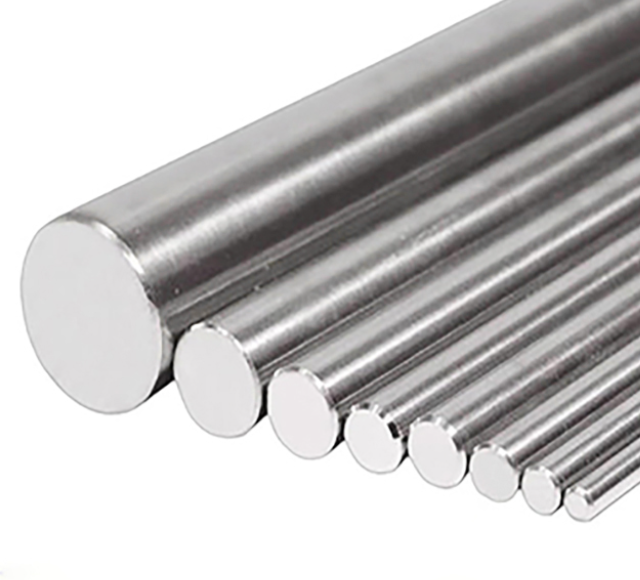
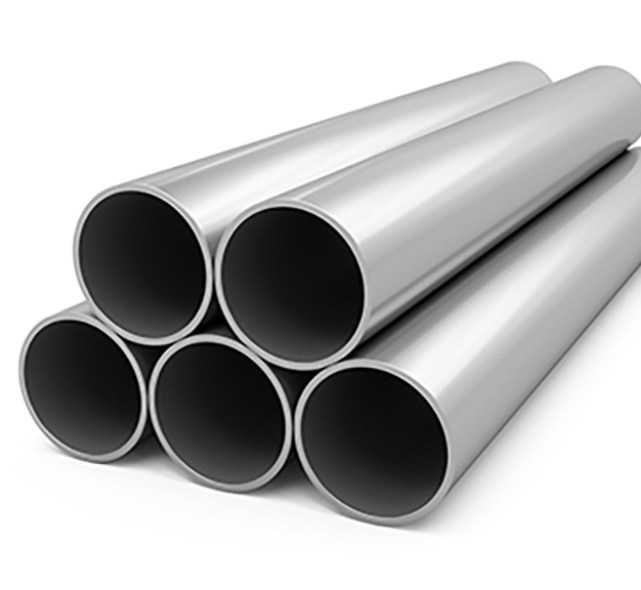
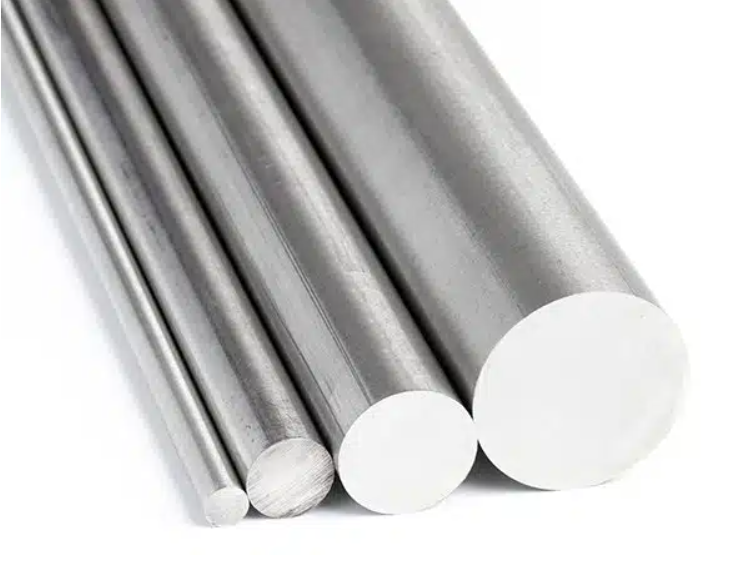
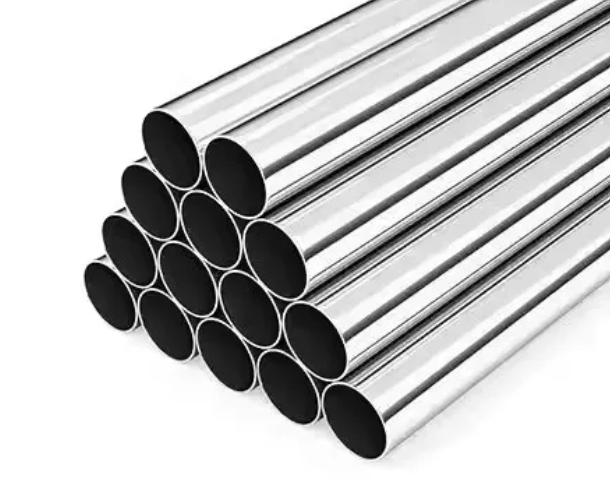
- Product form: tube, pipe, bar, plate, fitting, machined part, or custom component
- Required material grade and UNS number if known
- Required standard: ASTM, ASME, EN, ISO, 3-A, FDA-related requirement, or customer specification
- Size, tolerance, length, wall thickness, or machining allowance
- Food product composition
- pH, chloride level, salt content, acid concentration, sugar/fat/protein content, or other relevant chemistry
- Operating temperature and pressure
- Cleaning method: CIP, COP, manual cleaning, caustic wash, acid rinse, sanitizer, steam, or hot water
- Cleaning chemical concentration and temperature
- Surface finish and Ra requirement
- Passivation or electropolishing requirement
- Welding, fabrication, or machining requirement
- Required certificate type, such as EN 10204 3.1 or 3.2
- Required testing: PMI, UT, PT, eddy current, hydrostatic, dimensional, surface roughness, or third-party inspection
- Packing, marking, cleanliness, and delivery requirements
A clear RFQ helps the supplier recommend the correct material, surface condition, inspection scope, and documentation package.
Conclusion
Choosing corrosion-resistant materials for food processing equipment requires a scenario-based approach. The best material depends on food composition, pH, chloride content, temperature, cleaning chemicals, surface finish, hygienic design, fabrication method, inspection, and documentation requirements.
There is no universal “best” food-contact material. Buyers should verify the real process conditions, review standards and documentation, check supplier claims, and evaluate total lifecycle risk before ordering.
When material selection, surface finish, cleanability, testing, and traceability are confirmed in advance, food processing equipment is more likely to support stable operation, easier sanitation, and better long-term risk control.