
How to Choose Materials for Aerospace Hot-Section Components
Selecting materials for aerospace hot-section components is not only about finding a metal with a high temperature rating. Hot-section parts may face high temperature, thermal cycling, creep, fatigue, oxidation, hot corrosion, vibration, pressure, coating requirements, machining constraints, and strict documentation review.
A material that looks suitable on a datasheet may still create problems if the test conditions do not match the real operating environment. For hot-section applications, the key question is not simply, “What is the maximum temperature?” A better question is:
How will this material behave under the actual combination of temperature, stress, time, atmosphere, cycles, manufacturing route, and inspection requirements?
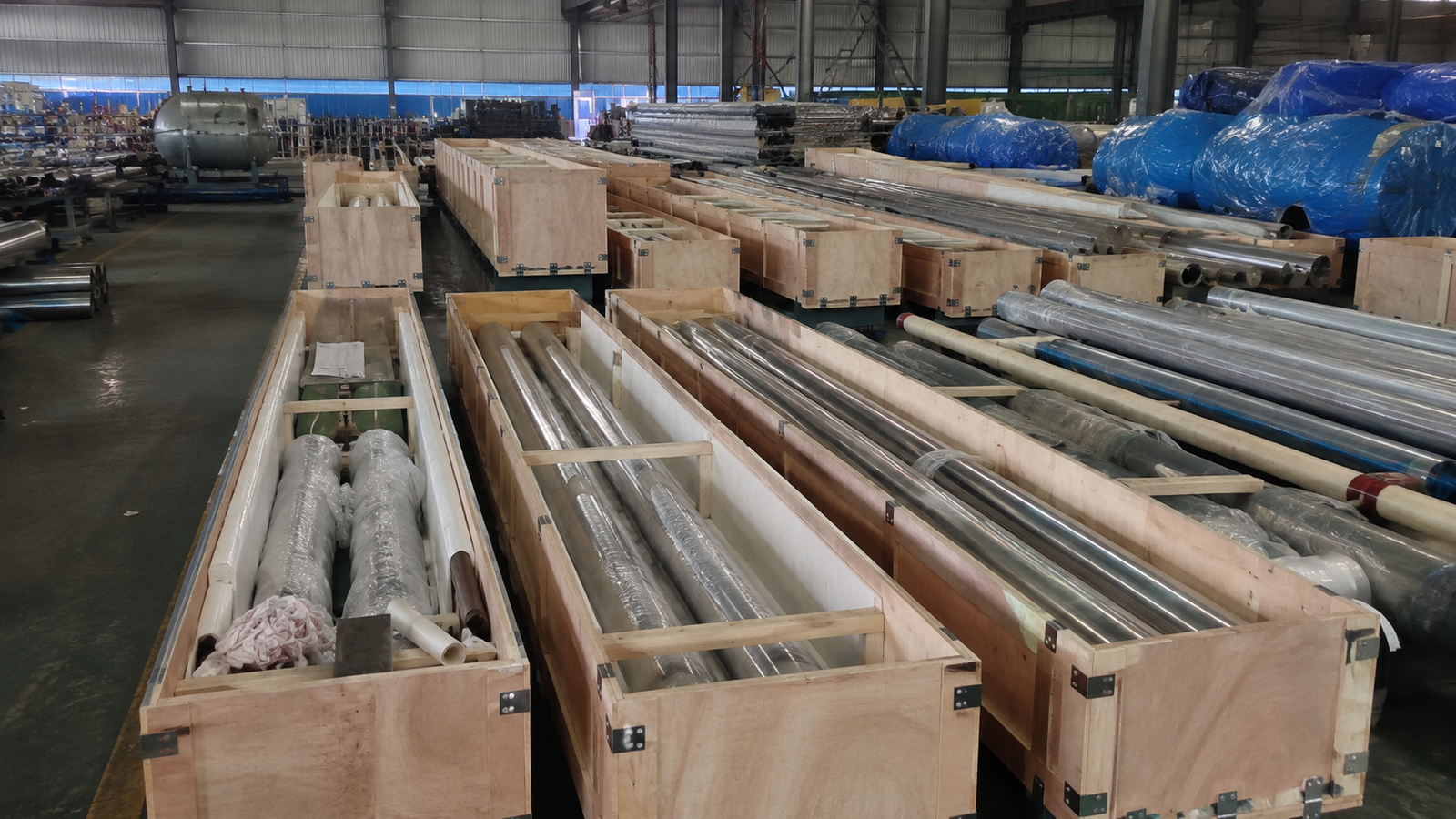
For aerospace buyers, engineers, prototype manufacturers, and equipment suppliers, material selection should be treated as part of engineering risk control. The goal is not to find one universal hot-section alloy. The goal is to match the alloy, product form, heat treatment condition, surface condition, test data, supplier quality, and documentation to the specific component and service scenario.
Why Hot-Section Material Selection Is Different
Aerospace hot-section components operate in one of the most demanding material environments. They may be exposed to elevated temperature, repeated start-stop cycles, gas flow, oxidation, combustion by-products, vibration, and sustained mechanical loads.
This makes hot-section material selection different from general high-temperature material selection.
A material may have good room-temperature tensile strength but poor creep resistance at service temperature. Another material may resist oxidation but lack fatigue strength under repeated thermal cycling. A third material may have strong high-temperature performance but create difficulties in machining, welding, coating, or inspection.
Hot-Section Conditions Buyers Should Define
| Condition | Why It Matters |
|---|---|
| Peak temperature | Determines whether the material can remain stable during the hottest part of service. |
| Average operating temperature | Long-term exposure may affect creep, oxidation, and microstructure. |
| Temperature cycling | Rapid heating and cooling may create thermal fatigue or cracking risk. |
| Hold time at temperature | Longer exposure can increase creep and oxidation risk. |
| Mechanical load | Rotating, static, clamped, or pressure-loaded parts experience different stress conditions. |
| Vibration and cyclic stress | Repeated stress may make fatigue performance more important than static strength. |
| Combustion or exhaust environment | Oxidation, sulfidation, fuel contaminants, salts, or corrosive species may change material behavior. |
| Coating or surface treatment | Some components need coatings or surface treatments that must be compatible with the base alloy. |
| Manufacturing route | Forging, rolling, machining, casting, welding, or heat treatment may affect final performance. |
| Inspection and certification | Aerospace projects may require strict MTRs, traceability, NDT, and receiving inspection. |
NASA notes that with increasing temperature, materials can plastically deform under load, a process known as creep, and that creep can place severe limits on high-temperature structural material performance. NASA nickel-based superalloy creep research
This is why maximum temperature alone is not enough. A hot-section material must be evaluated under the load, time, and environment it will actually experience.
Why One Simple Number Is Not Enough
Many material comparisons begin with one attractive number: maximum service temperature, melting point, tensile strength, hardness, or oxidation rating.
These values can be useful, but they do not tell the full story.
For hot-section components, a single number may hide important risks. Melting point does not equal usable service temperature. Room-temperature tensile strength does not prove high-temperature creep resistance. General oxidation resistance does not prove resistance to hot corrosion in a specific combustion environment.
Common One-Number Mistakes
| Single Number | Why It Can Mislead Buyers |
|---|---|
| Melting point | A material may deform, creep, oxidize, or lose strength far below its melting point. |
| Maximum service temperature | This value may depend on stress level, exposure time, atmosphere, and safety margin. |
| Room-temperature tensile strength | Hot-section parts usually require high-temperature data, not only room-temperature data. |
| Hardness | Hardness does not prove fatigue resistance, creep life, or oxidation behavior. |
| General corrosion resistance | Hot corrosion and oxidation depend on temperature, atmosphere, deposits, and contaminants. |
| Published fatigue data | Test conditions may not match actual stress ratio, surface finish, temperature, or environment. |
| Supplier “high-temperature alloy” claim | The claim must be checked against standards, test data, heat treatment, and application context. |
ASTM E139 covers creep, creep-rupture, and stress-rupture testing of metallic materials. ASTM E466 covers axial force-controlled fatigue testing for metallic materials. These test methods show why different performance questions require different test data. ASTM E139 creep and rupture testing and ASTM E466 fatigue testing
A material may perform well in a short-term tensile test but behave differently under long-term load at high temperature. That difference is exactly why creep and fatigue data matter for hot-section decisions.
What Properties Should Buyers Review?
Aerospace hot-section material selection should start with the component’s function and failure mode.
A rotating part, support bracket, combustor-related component, exhaust-related part, fastener, spacer, test coupon, or prototype part will not need the same material priorities. Buyers should define the main risk first, then evaluate the material.
Key Material Properties for Hot-Section Components
| Property | Why It Matters |
|---|---|
| High-temperature strength | Helps the material carry load at elevated temperature. |
| Creep resistance | Important when the part is under sustained stress at high temperature. |
| Fatigue resistance | Important when the part experiences repeated mechanical or thermal cycles. |
| Thermal fatigue resistance | Important during rapid heating and cooling. |
| Oxidation resistance | Important in hot air, combustion, or exhaust environments. |
| Hot corrosion resistance | Important when salts, sulfur, fuel contaminants, or aggressive deposits are present. |
| Microstructural stability | Heat exposure can change phases, precipitates, or grain boundary behavior. |
| Stress relaxation resistance | Important for fasteners, clamps, springs, and load-retaining parts. |
| Coating compatibility | Some hot-section parts rely on coatings that must work with the base alloy. |
| Machinability | Prototype and precision parts may require stable machining behavior. |
| Weldability or joinability | Relevant when the part will be welded, brazed, or assembled. |
| Inspection response | NDT, dimensional inspection, and surface inspection may affect acceptance. |
| Traceability | Required for quality control, receiving inspection, and root-cause analysis. |
For example, a nickel alloy used for a high-temperature loaded part may need creep and oxidation data. A titanium alloy used in a lower-temperature structural area may need strength-to-weight, fatigue, fracture toughness, and temperature-limit review. A high-temperature fastener may need stress relaxation data, surface condition control, and correct heat treatment.
The material should be selected for the actual component role, not only for the alloy family name.
Which Alloy Families May Be Considered?
No alloy family is automatically suitable for every aerospace hot-section application.
Nickel-based superalloys, titanium alloys, stainless alloys, cobalt alloys, and other high-temperature materials all have different strengths and limits. In many hot-section applications, nickel-based superalloys are considered because of their high-temperature strength, creep resistance, oxidation resistance, and microstructural stability. Titanium alloys may be considered in aerospace structures where strength-to-weight ratio is important, but many titanium alloys have temperature limitations and must be evaluated carefully before use near hotter zones.
General Material Families for Review
| Material Family | Possible Use Consideration | Important Caution |
|---|---|---|
| Nickel-based superalloys | May be reviewed for high-temperature strength, creep resistance, oxidation resistance, and engine-related parts | Grade, heat treatment, product form, coating, and service temperature must be checked carefully |
| Alloy 718 / UNS N07718 | May be reviewed for high-strength aerospace components and some elevated-temperature applications | Heat treatment condition, aging, creep limit, and specification must be confirmed |
| Alloy 625 / UNS N06625 | May be reviewed where oxidation resistance, corrosion resistance, or high-temperature strength is required | Not a universal hot-section alloy; creep and strength requirements must be checked |
| Alloy 600 / UNS N06600 | May be reviewed for some high-temperature oxidation-resistant services | Strength, creep, and specific hot-section demands must be verified |
| Titanium alloys such as Ti-6Al-4V | May be reviewed where strength-to-weight ratio is important and temperature limits are acceptable | Not suitable for all hot-section environments; temperature, oxidation, and fire risk must be considered |
| Titanium aluminides | May be considered in some advanced aerospace applications where low density and high-temperature capability are important | Availability, processing, inspection, and customer specification requirements can be complex |
| Stainless and precipitation-hardening stainless alloys | May be reviewed for moderate-temperature aerospace components, fasteners, or support parts | May not meet severe creep, oxidation, or hot corrosion requirements |
| Cobalt-based alloys | May be reviewed in some wear, heat, or oxidation-related applications | Cost, availability, machining, and specification requirements must be evaluated |
SAE AMS5662 is an example of an aerospace material specification for corrosion- and heat-resistant nickel alloy bars, forgings, and rings in the solution-treated condition. SAE AMS5662 nickel alloy aerospace specification
ASTM B446 covers certain nickel-chromium-molybdenum alloy rod and bar products, including heat treatment, tensile properties, and dimensional requirements. ASTM B446 nickel alloy rod and bar requirements
These standards are useful because they show that a purchase order should define the material form, standard, condition, and testing requirement—not only the alloy name.
How Should Buyers Check Supplier Claims?
Supplier data should be read carefully. A headline number in a brochure is not the same as application-specific evidence.
For aerospace hot-section materials, buyers should ask how the data was generated. A material may have impressive strength at a certain temperature, but the test may have been performed under conditions that do not match the real component environment.
Questions Behind the Numbers
| Supplier Claim | What Buyers Should Ask |
|---|---|
| “High-temperature resistant” | At what temperature, for how long, under what stress, and in what atmosphere? |
| “Excellent creep resistance” | Was creep or rupture testing performed? What stress, time, and temperature were used? |
| “Good fatigue life” | What fatigue test method, stress ratio, surface finish, temperature, and specimen geometry were used? |
| “Oxidation resistant” | Was the test in air, combustion gas, salt-containing environment, or another atmosphere? |
| “Aerospace grade” | Which exact standard, customer specification, certificate type, and inspection records support this? |
| “Heat-treated material” | What heat treatment cycle, furnace control, and certificate evidence are available? |
| “Fully traceable” | Can heat number, batch number, mill certificate, and delivered material marking be matched? |
| “Tested material” | Who performed the test, what method was used, and is the laboratory qualified if required? |
A general datasheet helps with early comparison. A Material Test Report or Material Test Certificate helps verify the actual supplied batch. For critical aerospace projects, the MTR/MTC should be checked against the purchase order, drawing, applicable standard, and customer requirement.
What to Review in an MTR / MTC
| MTR / MTC Item | Why It Matters |
|---|---|
| Material grade and UNS / alloy designation | Confirms that the supplied alloy matches the order. |
| Product standard | Shows whether the material was supplied to ASTM, AMS, EN, ASME, or customer specification. |
| Heat number / lot number | Supports traceability. |
| Chemical composition | Confirms alloying elements and impurity limits. |
| Mechanical properties | Confirms tensile strength, yield strength, elongation, hardness, or other required values. |
| Heat treatment condition | Critical for creep, strength, microstructure, machining, and service behavior. |
| Product form | Confirms bar, rod, plate, tube, forging stock, or other form. |
| Size and tolerance | Confirms dimensions relevant to machining and assembly. |
| NDT results | Useful when ultrasonic testing or other inspection is required. |
| Surface condition | Important for fatigue, coating, machining, and inspection. |
| Certificate type | EN 10204 3.1 or other certificate type may be required. |
| Inspection authority | Shows whether data comes from the mill, manufacturer, supplier, third party, or lab. |
BS EN 10204 inspection documents are commonly used to authenticate materials and support proof of chemical and mechanical properties.
If independent testing is needed, ISO/IEC 17025 laboratory competence can help buyers assess whether the testing or calibration laboratory operates competently and consistently.
Why Process Control and Accreditation Matter
For hot-section materials, the material grade is only one part of the decision. Processing can be just as important.
Melting, remelting, forging, rolling, heat treatment, surface finishing, machining, coating, and inspection may all influence final performance. In aerospace supply chains, certain processes may require special approval or accreditation depending on customer requirements.
Process Factors to Confirm
| Process Factor | Why It Matters |
|---|---|
| Melting and remelting route | May affect cleanliness, inclusion level, segregation, and consistency. |
| Forging or rolling reduction | Influences grain structure and internal soundness. |
| Heat treatment | Controls microstructure, precipitates, stress relief, strength, and creep behavior. |
| Cooling and aging | Important for precipitation-strengthened alloys such as Alloy 718. |
| NDT | Helps identify internal defects or discontinuities when required. |
| Surface finishing | Surface condition can influence fatigue, oxidation, coating behavior, and inspection. |
| Coating or chemical processing | May affect oxidation, hot corrosion, surface protection, or compatibility. |
| Material testing | Confirms mechanical, chemical, microstructural, or special properties. |
| Marking and segregation | Prevents material mix-up. |
| Packaging and handling | Protects surface condition, marking, and traceability during shipment. |
The Nadcap program covers aerospace critical process accreditations such as Heat Treating, Nondestructive Testing, Chemical Processing, Materials Testing Laboratories, and Measurement & Inspection. Nadcap critical process accreditation
AS9100 is also relevant in aerospace supply chains because it standardizes quality management system requirements for aviation, space, and defense organizations. AS9100 aerospace quality management
These systems do not automatically prove that one batch of material is suitable for one hot-section component. But they can be important parts of supplier qualification and process control when required by the project.
What Can Happen When the Material Is Poorly Matched?
A poorly matched material may not fail immediately. In many aerospace hot-section applications, problems appear gradually through creep deformation, thermal fatigue cracking, oxidation loss, hot corrosion, coating degradation, dimensional change, or shortened inspection interval.
The true cost of a material mismatch may include more than the purchase price.
Possible Consequences of Poor Material Selection
| Consequence | How It May Appear |
|---|---|
| Creep deformation | Component slowly changes shape under sustained load at high temperature. |
| Thermal fatigue cracking | Repeated heating and cooling creates cracks or surface damage. |
| Oxidation loss | Surface scale growth or material loss reduces section thickness or surface quality. |
| Hot corrosion | Aggressive deposits or combustion by-products accelerate damage. |
| Stress relaxation | Fasteners, clamps, or load-retaining parts lose preload or holding force. |
| Coating failure | Base alloy and coating system may not work together as expected. |
| Machining or inspection problems | Material condition or defects create scrap, rework, or delayed approval. |
| Documentation rejection | Missing MTRs, traceability, or certificate mismatch delays receiving inspection. |
| Redesign or retesting | Prototype or test program may need extra validation. |
| Supplier requalification | New source approval may add schedule and cost risk. |
The FAA’s AC 20-154A focuses on receiving inspection systems for aircraft parts and materials and highlights traceability, inspection, identification, and preventing unsuitable articles or materials from entering inventories. FAA receiving inspection guidance
For aerospace material buyers, this reinforces a practical point: material control should not start after a problem occurs. It should start before the purchase order is placed.
What Should Buyers Ask Their Material Supplier?
A strong supplier conversation should go beyond price, stock, and delivery time.
For aerospace hot-section materials, the buyer should provide the supplier with the component function, approximate temperature range, load condition, environment, standard, product form, heat treatment requirement, inspection requirement, and certificate requirement.
Supplier Questions to Ask
| Question | Why It Matters |
|---|---|
| What exact standard and condition can you supply? | Prevents confusion between similar grades, conditions, and product forms. |
| Can you provide batch-specific MTR/MTC? | Verifies chemistry, mechanical properties, heat number, and standard. |
| Can the heat number be traced to the delivered material? | Supports receiving inspection and root-cause analysis. |
| What heat treatment condition is supplied? | Critical for strength, creep, fatigue, and machining behavior. |
| Is additional testing available if required? | Useful for UT, PMI, mechanical retest, microstructure, or third-party inspection. |
| Are special process approvals required? | Nadcap or customer approvals may be needed for heat treatment, NDT, coating, or testing. |
| What is the typical lead time and repeat-order availability? | Supports prototype, spare part, and production planning. |
| How is the material marked and packed? | Helps prevent mix-up, surface damage, and traceability loss. |
| What happens if non-conformance is found? | A clear process reduces delay and dispute risk. |
| Can you support technical communication before order confirmation? | Early clarification helps avoid ordering the wrong material or document package. |
A supplier that only sends a price without asking about the application may still be useful for simple stock purchases. But for aerospace hot-section materials, technical communication and documentation quality are often part of the value.
Practical Checklist Before Selecting Hot-Section Materials
Before confirming materials for aerospace hot-section components, buyers can review the following checklist:
- What is the component function?
- Is it rotating, static, structural, sealing-related, fastener-related, thermal, or prototype-only?
- What is the peak temperature?
- What is the average operating temperature?
- How long does the part stay at high temperature?
- Will the part experience start-stop or rapid thermal cycling?
- What mechanical loads are present: tensile, compressive, torsional, centrifugal, vibration, or preload?
- Is creep resistance required?
- Is fatigue or thermal fatigue a major risk?
- Is oxidation, sulfidation, hot corrosion, or fuel/exhaust contamination a concern?
- Is coating compatibility required?
- What alloy family should be reviewed: nickel superalloy, titanium alloy, stainless alloy, cobalt alloy, or another material?
- What exact grade, UNS number, standard, and product form are required?
- What heat treatment condition is required?
- What MTR/MTC and certificate type are required?
- Is EN 10204 3.1, third-party inspection, or customer-specific documentation needed?
- Is UT, PMI, microstructure review, creep test, fatigue test, or additional laboratory testing required?
- Are Nadcap, AS9100, or OEM approvals required for any process?
- Can the supplier maintain heat number traceability?
- Can the supplier support repeat orders with consistent quality and documentation?
Conclusion
Choosing materials for aerospace hot-section components requires more than comparing maximum temperature ratings or basic mechanical properties.
The right material depends on temperature, stress, time, thermal cycling, oxidation, hot corrosion, creep, fatigue, coating compatibility, manufacturing route, inspection requirements, and supplier quality control.
There is no single best alloy for every hot-section application. A better selection process starts with the real operating scenario, then checks material properties, standards, heat treatment, MTRs, test data, traceability, and supplier capability.
When the component is exposed to high temperature, repeated cycling, load, or aggressive environments, material selection should be handled as an engineering risk-control process—not only as a purchasing decision.