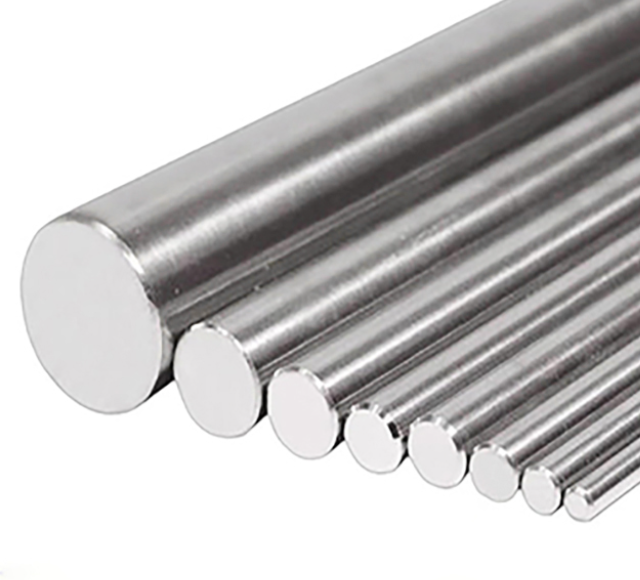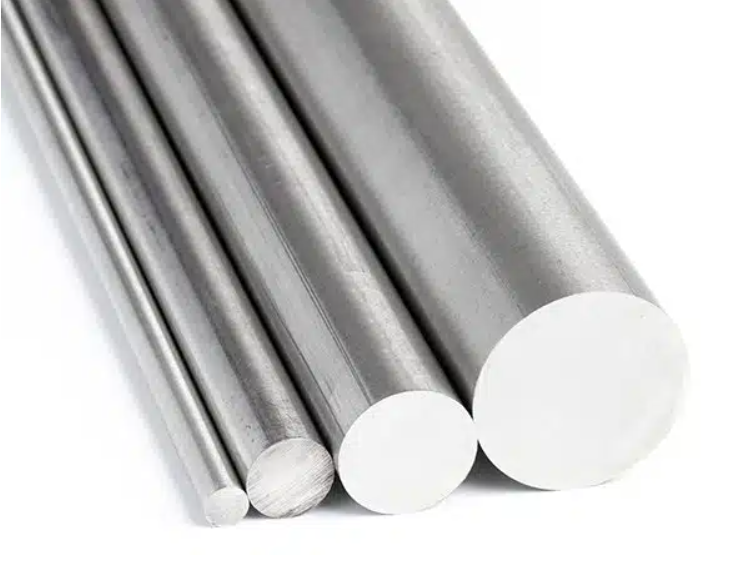

What to Check Before Ordering Aerospace Titanium Bars
Ordering titanium bars for aerospace parts is not only a question of price, size, and delivery time. In aerospace applications, titanium bar selection may affect machining stability, fatigue performance, structural reliability, receiving inspection, certification review, and future repeat orders.
A titanium bar that looks acceptable on a basic datasheet may still create problems if the grade, condition, heat treatment, microstructure, traceability, inspection documents, or supplier process control is not clearly confirmed.
Before ordering aerospace titanium bars, buyers should check the application requirement, titanium grade, product standard, heat treatment condition, MTR/MTC, traceability, inspection method, supplier quality system, and long-term supply risk.
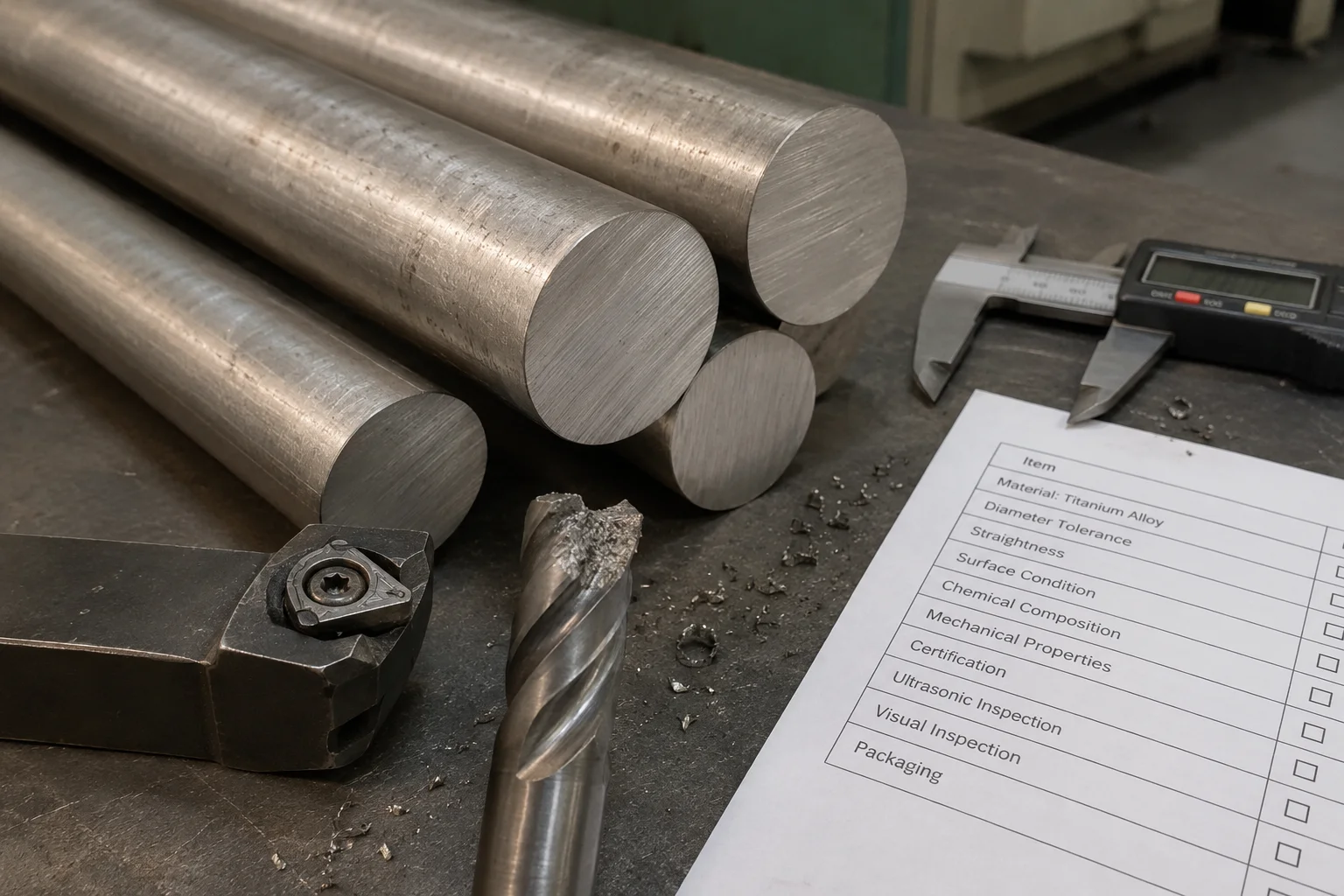
The goal is not to find one “best” titanium bar. The goal is to order the titanium bar that matches the drawing, application environment, machining plan, inspection requirement, and approval process.
Why Aerospace Titanium Bar Orders Need More Care
Titanium bars are widely used in aerospace-related applications because titanium alloys can offer a useful combination of strength-to-weight ratio, corrosion resistance, and fatigue performance. However, aerospace use does not mean every titanium bar is suitable for every part.
A bar used for a non-functional machining trial may not need the same control level as a bar used for a flight-relevant structural component. A prototype bar may have different requirements from a production part. A titanium bar for a bracket, fastener, actuator component, landing gear-related part, engine-adjacent part, or test fixture may need different mechanical, thermal, and inspection requirements.
That is why buyers should not treat titanium bar procurement as a simple grade-and-price comparison.
What Makes Aerospace Titanium Bar Procurement Different?
| Factor | Why It Matters |
|---|---|
| Application criticality | Flight-relevant or load-bearing parts require stricter control than non-functional prototypes. |
| Drawing requirements | The drawing may specify grade, standard, heat treatment, test method, or certificate type. |
| Fatigue and fracture behavior | Aerospace parts may experience repeated stress, vibration, or impact conditions. |
| Temperature exposure | Some titanium alloys have temperature limits and must be reviewed for elevated-temperature use. |
| Machining stability | Residual stress, microstructure, and bar straightness may affect machining results. |
| Heat treatment condition | Mechanical properties and microstructure depend strongly on processing condition. |
| Traceability | Heat number and batch records support receiving inspection and root-cause analysis. |
| Certification review | Missing or incomplete documents may delay incoming inspection or project approval. |
| Repeatability | Prototype success may lead to repeat orders, pilot production, or production supply. |
The FAA’s receiving inspection guidance for aircraft parts and materials highlights the importance of receiving inspection systems, traceability, documentation, identification, and preventing unsuitable materials from entering inventory. FAA receiving inspection guidance
This is a useful reminder: aerospace material control should begin before the purchase order is placed, not only after the material arrives.
Is One Titanium Bar Always Better Than Another?
There is no universal “best” titanium bar for every aerospace application.
A titanium alloy that works well for a structural bracket may not be suitable for an elevated-temperature component. A titanium bar selected for strength may not be ideal when fracture toughness, fatigue, formability, weldability, or machining stability is more important.
The correct choice depends on the part function and the engineering requirement.
Common Titanium Bar Selection Factors
| Application Need | Material Factor to Review | Why It Matters |
|---|---|---|
| High strength-to-weight ratio | Tensile strength, yield strength, density | Important for aerospace structural efficiency. |
| Fatigue resistance | Microstructure, surface condition, defect control | Critical when parts face repeated loading or vibration. |
| Fracture toughness | Alloy type, condition, interstitial control | Important where crack growth resistance matters. |
| Elevated-temperature use | Creep behavior, stability, oxidation behavior | Some titanium alloys may not be suitable near hotter zones. |
| Machining stability | Residual stress, straightness, hardness, microstructure | Helps reduce distortion and machining problems. |
| Corrosion resistance | Alloy chemistry and surface condition | Relevant in corrosive or moisture-exposed environments. |
| Weldability or formability | Ductility, alloy type, heat treatment | Important for assembled or shaped components. |
| Certification approval | Standard, MTR, traceability, test records | Required for receiving inspection and customer review. |
For example, Ti-6Al-4V is commonly specified in aerospace-related applications, but buyers still need to confirm the exact standard, product form, condition, size tolerance, and inspection requirement. If a drawing specifies an AMS standard, the purchase order and MTR must match that requirement.
SAE AMS4928 Ti-6Al-4V specification is one example of an aerospace material specification covering Ti-6Al-4V in forms such as bars, wire, forgings, rings, and drawn shapes.
For more general titanium bar procurement, ASTM B348 titanium bar requirements cover titanium and titanium alloy bars and billets, including chemical composition and tensile testing requirements.
Why the Specification Sheet Is Only a Starting Point
A datasheet is useful, but it is not enough.
A datasheet usually shows typical chemical composition, mechanical properties, density, elastic modulus, hardness, and sometimes corrosion resistance. These values help buyers compare grades at an early stage. However, they do not prove that a specific delivered bar meets the project requirement.
For aerospace titanium bars, buyers should also check processing history, heat treatment, microstructure, traceability, inspection records, and the actual batch certificate.
Datasheet vs. Actual Material Evidence
| Information Type | What It Shows | What It Does Not Prove |
|---|---|---|
| Datasheet | Typical grade properties and general performance | Actual batch chemistry, heat treatment, NDT, or traceability |
| MTR / MTC | Actual chemistry, mechanical properties, heat number, and standard for the supplied material | Final suitability for the customer’s part design |
| Heat treatment record | Processing condition and thermal cycle evidence | Long-term performance under all service conditions |
| Microstructure report | Grain structure or phase condition when required | Complete fatigue or fracture performance unless tested |
| NDT report | Inspection result for certain defects under specified method | Absence of every possible defect |
| Third-party test report | Independent test result for selected properties | Suitability unless sample, method, and acceptance criteria match the project |
A titanium bar can meet a material standard and still be unsuitable if the wrong grade, condition, tolerance, or document package is ordered. This is why the purchase order should clearly define both the material and the acceptance requirements.
Hidden Risks Beyond the Titanium Bar Specification
Two titanium bars with the same nominal grade can still differ in performance.
The difference may come from melt practice, forging or rolling route, heat treatment, cooling method, residual stress, grain structure, inclusion level, surface condition, or inspection control. These details may not be obvious in a simple quotation.
Hidden Variables Buyers Should Review
| Hidden Variable | Possible Impact | What Buyers Can Ask |
|---|---|---|
| Grain structure | May influence fatigue, fracture behavior, and consistency | Is microstructure review required by the project or standard? |
| Residual stress | May cause distortion during machining | Was stress relief or proper heat treatment performed if required? |
| Heat treatment uniformity | May affect mechanical properties across the bar | Are heat treatment records or furnace controls available if required? |
| Inclusions or internal defects | May affect fatigue-sensitive or critical parts | Is UT or other NDT required by the purchase order? |
| Surface defects | May create machining loss or inspection rejection | What surface condition and visual inspection criteria apply? |
| Hydrogen pickup or contamination | May affect ductility or performance in some titanium applications | Are pickling, cleaning, and handling procedures controlled? |
| Mixed material risk | Wrong grade or batch mix-up can delay approval | Are heat number marking and segregation controlled? |
| Incomplete documentation | May stop receiving inspection | What certificates and reports will be shipped with the material? |
For aerospace buyers, these hidden variables matter because early material problems often become later machining, testing, inspection, or qualification problems.
Which Standards and Documents Should Buyers Confirm?
The correct standard depends on the drawing, customer requirement, product form, and application.
Buyers should avoid ordering only by a broad name such as “Grade 5 titanium bar.” A complete inquiry should define the grade, standard, condition, diameter, length, tolerance, surface condition, inspection requirement, and certificate type.
Useful Standards and Documents to Review
| Item | Example Source | What It Helps Confirm |
|---|---|---|
| Titanium and titanium alloy bars | ASTM B348 titanium bar requirements | Chemical composition and tensile testing requirements for titanium and titanium alloy bars and billets |
| Ti-6Al-4V aerospace material | SAE AMS4928 Ti-6Al-4V specification | Aerospace specification example for Ti-6Al-4V bars, wire, forgings, rings, and drawn shapes |
| Inspection documents | BS EN 10204 inspection documents | Inspection document types used to authenticate metallic materials |
| Receiving inspection | FAA receiving inspection guidance | Guidance related to receiving inspection, traceability, and material control for aircraft parts and materials |
| Laboratory testing | ISO/IEC 17025 laboratory competence | Competence, impartiality, and consistent operation of testing and calibration laboratories |
| Aerospace quality management | AS9100 aerospace quality management | QMS requirements for aviation, space, and defense organizations |
| Critical process accreditation | Nadcap critical process accreditation | Accreditation for critical processes such as heat treating, NDT, chemical processing, and materials testing laboratories |
Standards and certifications should be checked for relevance. A general quality certificate does not automatically prove that a specific titanium bar meets a specific aerospace drawing.
How to Review an MTR or MTC for Titanium Bars
A Material Test Report or Material Test Certificate is one of the most important documents in titanium bar sourcing.
It should be batch-specific. It should match the material delivered. It should support the standard and purchase order requirements.
What Buyers Should Check in the MTR / MTC
| MTR / MTC Item | Why It Matters |
|---|---|
| Supplier or mill name | Helps identify the document source. |
| Material grade | Confirms the ordered titanium grade. |
| UNS or alloy designation | Helps avoid confusion between similar names. |
| Product form | Confirms whether the material is bar, rod, billet, forging stock, or another form. |
| Product standard | Shows whether ASTM, AMS, EN, ASME, or customer standard applies. |
| Heat number / lot number | Supports traceability from material to certificate. |
| Chemical composition | Confirms alloying elements and impurity limits. |
| Mechanical properties | Confirms tensile strength, yield strength, elongation, hardness, or other required values. |
| Heat treatment condition | Critical for strength, ductility, microstructure, and machining behavior. |
| Size and tolerance | Confirms diameter, length, straightness, or other dimensional requirements. |
| NDT or inspection results | Required if UT, surface inspection, or other tests are specified. |
| Certificate type | EN 10204 3.1 or another certificate type may be required by the project. |
| Authorized signature or approval | Helps confirm document responsibility. |
| Match with material marking | The heat number and grade on the bar should match the paperwork. |
BS EN 10204 inspection documents are used to authenticate materials and support proof of chemical and mechanical properties.
If the order is critical, buyers may also request independent testing. In that case, ISO/IEC 17025 laboratory competence can help buyers understand whether the laboratory operates competently and consistently.
How Can Buyers Verify Supplier Claims?
Supplier claims should be verified with documents, scope, and evidence.
A supplier may say they can supply aerospace-grade titanium bars, but buyers still need to confirm what that means for the specific order. The word “aerospace” is not enough. The buyer should check the material standard, certificate type, traceability, inspection method, quality system, and whether any special process accreditation is required.
Supplier Verification Checklist
| Verification Area | What to Check |
|---|---|
| Application understanding | Does the supplier ask about part function, stress, temperature, machining, and certification requirements? |
| Standard capability | Can the supplier provide material to the specified ASTM, AMS, EN, ASME, or customer standard? |
| MTR quality | Does the MTR show heat number, chemistry, mechanical properties, standard, condition, and inspection data? |
| Traceability | Can the supplied bar be traced to the heat number and document package? |
| Heat treatment control | Can the supplier confirm heat treatment condition and records if required? |
| NDT support | Can UT, PMI, or other inspection be provided when specified? |
| Third-party testing | Can testing be arranged through a qualified laboratory if required? |
| Certificate scope | Are AS9100, Nadcap, ISO 9001, or other certificates relevant to the ordered material and process? |
| Non-conformance process | How does the supplier handle material deviation, document mismatch, or inspection rejection? |
| Repeatability | Can the supplier support future orders with the same grade, standard, and document package? |
ISO 9001 supply chain guidance reminds buyers that supplier quality systems are useful, but buyers still need to define drawings, product standards, specifications, and expectations clearly.
For aerospace-related sourcing, AS9100 may be relevant when the buyer or project requires an aerospace quality management system. AS9100 aerospace quality management standardizes QMS requirements for aviation, space, and defense organizations.
Nadcap should be treated differently from AS9100. It is not a general company quality certificate. It is related to specific critical processes such as heat treating, NDT, chemical processing, or materials testing laboratories. Nadcap critical process accreditation
If the project requires a Nadcap-accredited process, buyers should verify the exact scope and validity, not only ask whether the supplier “has Nadcap.”
Are All Titanium Certifications Equal?
No. Different certificates answer different questions.
A common mistake is treating all certificates as if they prove the same thing. ISO 9001, AS9100, Nadcap, EN 10204, and ISO/IEC 17025 each serve different purposes.
Certificate Types and Their Meaning
| Certificate / Standard | What It Generally Supports | What It Does Not Automatically Prove |
|---|---|---|
| ISO 9001 | General quality management system | Aerospace-specific approval or batch material compliance |
| AS9100 / 9100 QMS | Aerospace quality management system requirements | Specific material batch performance or special process approval |
| Nadcap | Accreditation for specific aerospace critical processes | General company-wide material suitability |
| EN 10204 3.1 | Inspection certificate for specific material/product data | Final suitability for the part application |
| ISO/IEC 17025 | Laboratory competence and consistent testing operation | That the tested material is suitable for all aerospace uses |
| MTR / MTC | Actual batch chemistry, mechanical properties, heat number, and standard | That the material will perform correctly in the final design |
This is why buyers should not only collect certificates. They should check whether each certificate is relevant to the ordered material, the process performed, and the project requirement.
What Questions Should Buyers Ask Before Ordering?
The best way to avoid material problems is to clarify requirements before issuing the purchase order.
Technical Questions
| Question | Why It Matters |
|---|---|
| What titanium grade is required? | Prevents confusion between CP titanium, Grade 5, Grade 23, Grade 9, Grade 7, or other alloys. |
| What standard is required? | ASTM, AMS, EN, ASME, or customer-specific standards may have different requirements. |
| What product form is needed? | Bar, billet, rod, forging stock, or cut blank may have different supply routes. |
| What heat treatment condition is required? | Mechanical properties and microstructure depend on condition. |
| What diameter, length, and tolerance are required? | Affects machining yield, fixture setup, and final part geometry. |
| Is straightness important? | Important for long bars and precision machining. |
| Is UT or other NDT required? | Critical for some aerospace or load-bearing applications. |
| Is microstructure review required? | May matter for fatigue-sensitive or customer-specified parts. |
| Is stress relief needed before machining? | May reduce distortion risk in some machined parts. |
| Is surface condition specified? | Surface defects can affect machining, inspection, and acceptance. |
Documentation Questions
| Question | Why It Matters |
|---|---|
| What MTR/MTC will be provided? | Confirms actual batch data. |
| Is EN 10204 3.1 required? | Common for traceable metallic material procurement. |
| Will the heat number be marked on the bar? | Helps match material to certificate. |
| Can the supplier provide PMI or chemical retest if required? | Adds verification for critical orders. |
| Can third-party inspection be arranged? | Useful for high-risk or first-time orders. |
| Are AS9100 or Nadcap requirements applicable? | Depends on customer/project requirement. |
| What happens if the material fails receiving inspection? | Clarifies responsibility and corrective action. |
| Can the same material route be repeated later? | Important for prototype-to-production transition. |
What Are the Risks of Ordering Only by Price?
The lowest titanium bar price is not always the lowest project cost.
A cheaper bar may create additional cost if it has incomplete documents, wrong condition, poor straightness, unsuitable surface condition, internal defects, unclear traceability, or inconsistent repeat supply.
Cost and Risk Factors Beyond Unit Price
| Risk | Possible Result |
|---|---|
| Incomplete MTR | Incoming inspection delay or customer document rejection |
| Wrong standard | Material cannot be used for the intended part |
| Wrong heat treatment condition | Mechanical properties or machining behavior may not match expectations |
| Poor traceability | Root-cause analysis and customer approval become difficult |
| Surface defects | Extra machining loss, inspection failure, or scrap |
| Internal defects | NDT rejection or part failure during machining/testing |
| Batch inconsistency | Repeat orders may not match earlier prototype results |
| Long lead time | Project schedule or aircraft-related maintenance plan may be affected |
| Supplier communication gaps | Delayed problem resolution and requalification work |
For aerospace buyers, price should be evaluated together with documentation, inspection, delivery reliability, repeatability, and supplier support.
Practical Checklist Before Ordering Aerospace Titanium Bars
Before confirming an aerospace titanium bar order, buyers can review the following checklist:
- What part will the titanium bar be machined into?
- Is the part structural, fastener-related, engine-adjacent, bracket, actuator-related, test fixture, or prototype-only?
- Is the part flight-relevant or only for machining or fit-up evaluation?
- What titanium grade is required?
- What standard is specified on the drawing or purchase order?
- Is the standard ASTM, AMS, EN, ASME, or customer-specific?
- What product form is required: bar, rod, billet, forging stock, or cut blank?
- What heat treatment condition is required?
- What diameter, length, straightness, surface condition, and tolerance are required?
- Are fatigue, fracture toughness, creep, corrosion, or elevated-temperature behavior important?
- Is UT, PMI, chemical retest, mechanical retest, or third-party inspection required?
- Is microstructure or grain size evidence required?
- Is heat number traceability required?
- Does the MTR/MTC need to follow EN 10204 3.1 or another certificate type?
- Does the project require AS9100, Nadcap, or other aerospace-related approvals?
- Are special packaging, marking, or anti-mix-up controls required?
- Can the supplier support future repeat orders with consistent documentation?
- Has the material been reviewed by the engineering team against the actual application?
Conclusion
Ordering titanium bars for aerospace parts requires more than comparing grade names, tensile strength, and price.
The right titanium bar depends on the application, grade, standard, heat treatment condition, microstructure, inspection requirement, documentation, traceability, machining plan, and supplier quality system.
There is no single “best” titanium bar for every aerospace component. Buyers should first define the part function and project requirement, then confirm the material standard, MTR/MTC, certificate type, testing needs, process controls, and supplier reliability.
When the part is load-bearing, fatigue-sensitive, temperature-exposed, flight-relevant, or subject to customer approval, titanium bar sourcing should be treated as part of engineering and quality risk control, not only as a purchasing task.