
Chlor-Alkali Material Selection: What Buyers Must Confirm
Choosing materials for chlor-alkali projects is not just a specification comparison. Chlor-alkali equipment may handle brine, wet chlorine, dry chlorine, caustic soda, hypochlorite, sulfuric acid, hydrogen, cooling water, cleaning chemicals, high temperature, pressure, impurities, flow velocity, and process upsets.
A poor material choice may increase corrosion risk, leakage risk, maintenance work, emergency repair, downtime, replacement cost, or project risk. However, the solution is not simply to choose the most expensive material. Buyers should confirm the real process condition, supplier documentation, testing scope, and lifecycle risk before ordering.
The European Commission chlor-alkali BREF covers multiple process activities, including brine preparation and purification, brine electrolysis, sodium or potassium hydroxide concentration and handling, chlorine cooling, drying and handling, and hydrogen cooling and handling: European Commission Chlor-Alkali BREF.
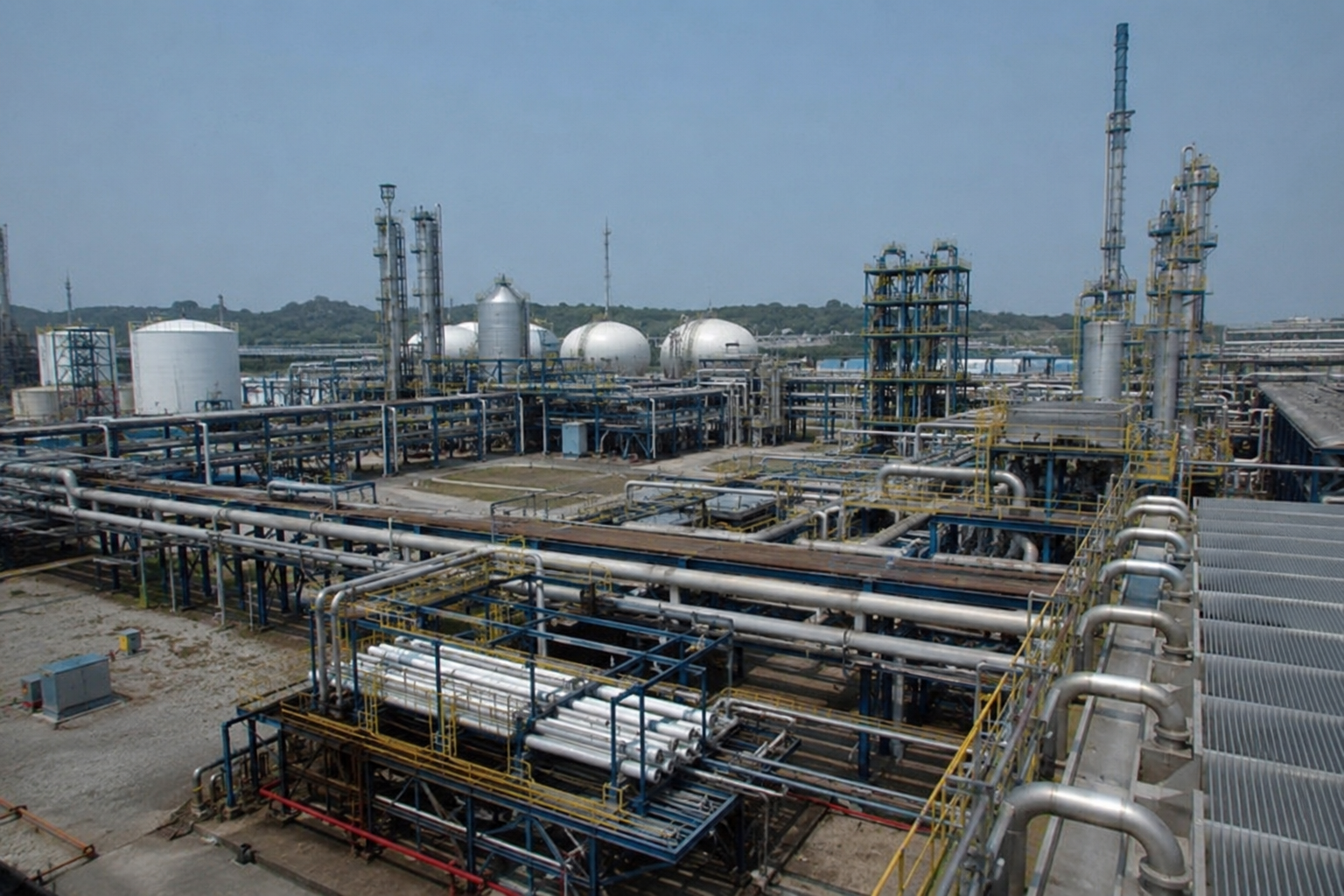
For engineers and procurement teams, the key question is not “Which material is best for chlor-alkali?” The better question is “Which material is suitable for this process stage, this chemical medium, this temperature, this concentration, this moisture condition, and this inspection requirement?”
Is Just Comparing Material Specifications Enough?
No. Comparing material specifications alone is not enough for chlor-alkali projects. A specification can define grade, chemistry, mechanical properties, dimensions, heat treatment, and testing requirements, but it cannot fully prove performance in wet chlorine, dry chlorine, hot caustic soda, hypochlorite, sulfuric acid, hydrogen, or upset conditions.
ASTM B338 covers seamless and welded titanium alloy tubes for condensers, evaporators, and heat exchangers: ASTM B338. ASTM B444 covers UNS N06625 and related nickel alloy cold-worked seamless pipe and tube: ASTM B444. These standards are important, but they do not replace service-condition review.
A material may meet a standard and still be unsuitable for a specific chlor-alkali section if the actual medium, temperature, concentration, moisture level, impurities, flow velocity, stress, fabrication condition, or inspection scope is not reviewed.
Why Chlor-Alkali Plants Are Not One Uniform Environment
A chlor-alkali plant includes many process sections. Each section may have different corrosion and safety risks.
Common sections include:
- Brine preparation and purification
- Electrolysis cells
- Wet chlorine cooling and handling
- Chlorine drying
- Dry chlorine handling
- Caustic soda concentration
- Caustic soda storage and transfer
- Hypochlorite production or scrubbing
- Hydrogen cooling and handling
- Heat exchangers
- Piping, valves, pumps, fittings, tanks, tubes, and custom parts
This means one material cannot be applied blindly across the whole plant.
For example, titanium may be considered in wet chlorine and hypochlorite environments, but it has important limitations in dry chlorine and hot caustic conditions. Nickel and high-nickel materials may be considered for caustic soda service, but suitability still depends on NaOH concentration, temperature, impurities, stress, and flow.
Critical Operating Variables Buyers Should Confirm
Before ordering nickel alloy, titanium alloy, stainless steel, or other corrosion-resistant materials for chlor-alkali equipment, buyers should confirm the actual operating condition.
| Variable | What to Confirm | Why It Matters |
|---|---|---|
| Process stage | Brine, electrolysis, wet chlorine, dry chlorine, caustic, hypochlorite, hydrogen, sulfuric acid drying, heat exchange | Each stage has different material risks |
| Chemical medium | Chlorine, NaOH, brine, hypochlorite, sulfuric acid, hydrogen, cooling water | Determines the main corrosion mechanism |
| Moisture level | Wet chlorine or dry chlorine | Titanium behaves very differently in wet and dry chlorine |
| Concentration | NaOH concentration, chlorine level, hypochlorite concentration, acid concentration | Corrosion risk changes with concentration |
| Temperature | Normal, maximum, startup, shutdown, upset temperature | Higher temperature may change corrosion rate and safety margin |
| Pressure | Operating pressure, design pressure, pressure cycling | Affects mechanical design and inspection requirements |
| pH | Acidic, neutral, alkaline, or fluctuating | Influences passivation and localized corrosion |
| Impurities | Iron, oxygen, chlorates, sulfates, solids, metals, process contaminants | Impurities may change corrosion behavior |
| Flow velocity | Low-flow, high-flow, turbulent, or stagnant | Affects erosion-corrosion and deposits |
| Stress | Pressure stress, vibration, residual stress, weld stress, thermal stress | Important for SCC, fatigue, and cracking review |
| Fabrication | Welding, forming, bending, machining, heat treatment | Fabrication can affect corrosion resistance and mechanical properties |
| Inspection | PMI, ECT, UT, hydrostatic test, dimensional inspection, surface inspection | Helps verify material and product quality |
| Documentation | MTC / MTR, heat number, EN 10204 3.1 / 3.2 if required | Supports traceability and order compliance |
A vague RFQ such as “material for chlor-alkali plant” is not enough. The supplier needs the exact process stage and service conditions.
Wet Chlorine, Dry Chlorine and Hypochlorite Are Different Services
Chlorine-related service must be separated carefully. Wet chlorine, dry chlorine, chlorine condensate, hypochlorite solution, and chlorine drying systems do not create the same material risk.
A Titanium Association presentation states that titanium is highly resistant to wet chlorine, chlorine dioxide, and hypochlorite in many conditions, but it also lists important limitations such as dry chlorine attack, hot caustic attack, acidic fluoride environments, and hydrogen embrittlement risk: Titanium in Chlorate, Chloralkali and Chlorine Dioxide Applications.
Practical material review should separate:
| Service Condition | Material Selection Note |
|---|---|
| Wet chlorine | Titanium may be considered because moist chlorine can support titanium passivation |
| Dry chlorine | Titanium may be attacked; dry chlorine service needs separate material review |
| Hypochlorite | Titanium may be considered, but pH, temperature, crevice areas, and gasket compatibility must be reviewed |
| Chlorine plus caustic | Hypochlorite formation, caustic concentration, temperature, and flow velocity must be checked |
| Chlorine drying with sulfuric acid | Material selection must consider acid concentration, water content, temperature, and contamination |
| Chlorine valves and fittings | Require special attention because sealing areas and crevices may create localized risk |
World Chlorine Council guidance for chlorine safety scrubbing systems also emphasizes that caustic soda material selection should be based on expected service temperatures, pressures, and concentrations: Chlorine Safety Scrubbing Systems.
Caustic Soda Service Needs Separate Review
Caustic soda service should not be treated as the same environment as wet chlorine or brine service. NaOH concentration, temperature, pressure, impurities, flow velocity, stress, and fabrication condition all matter.
Nickel Institute has a technical guide dedicated to nickel and high-nickel materials in caustic soda and other alkalies: Corrosion Resistance of Nickel and Nickel-Containing Alloys in Caustic Soda and Other Alkalies.
Nickel and high-nickel materials may be considered for:
- Hot caustic soda equipment
- Caustic evaporators
- Caustic heat exchangers
- Caustic piping in selected concentration and temperature ranges
- Caustic storage or handling equipment where carbon steel is not sufficient
- Selected high-temperature alkaline service
However, nickel is not a universal answer. Buyers should still confirm the exact NaOH concentration, temperature, stress condition, flow velocity, impurity level, product standard, MTC, and inspection scope.
Assessing Materials for Different Operating Scenarios
Buyers should evaluate materials under normal operation, startup, shutdown, cleaning, and upset conditions.
Important questions include:
- What happens during startup?
- What happens during shutdown?
- Can the medium change from wet to dry chlorine?
- Can caustic concentration increase temporarily?
- Can temperature rise during process upset?
- Can flow velocity increase or become turbulent?
- Can deposits or solids accumulate?
- Can cleaning chemicals be more aggressive than normal process fluid?
- Can pH shift during operation?
- Can welds, bends, or crevices create local corrosion risks?
A material that works during steady-state operation may still need additional review if the plant has frequent thermal cycling, chemical cleaning, moisture transitions, or process upsets.
Why Supplier Claims Need Verification
Supplier claims such as “chlor-alkali grade,” “high corrosion resistance,” “excellent for chlorine,” or “suitable for caustic soda” should be checked with documents and process-specific evidence.
Buyers should ask:
- Which alloy grade and UNS number are supplied?
- Which ASTM, ASME, EN, ISO, or customer standard applies?
- Is the product a tube, pipe, bar, plate, fitting, valve part, pump part, or custom machined part?
- Is the tube seamless or welded?
- What is the heat treatment condition?
- What exact process stage is the material recommended for?
- Is the service wet chlorine, dry chlorine, caustic soda, hypochlorite, sulfuric acid, hydrogen, or brine?
- What temperature, pressure, and concentration were used for the recommendation?
- Are impurities, flow velocity, crevices, deposits, and cleaning chemicals considered?
- Can the supplier provide MTC / MTR for the actual heat number?
- Can the material be traced back to the melt or batch?
- Are PMI, ECT, UT, hydrostatic test, dimensional inspection, or surface inspection included?
- Can third-party inspection be arranged if required?
- Can the supplier explain where the material should not be used?
A reliable supplier should explain both advantages and limitations.
What Documents Buyers Should Request
For nickel and titanium alloy materials used in chlor-alkali equipment, buyers may request:
- Material Test Certificate / Mill Test Report
- EN 10204 Type 3.1 or Type 3.2 certificate if required
- Heat number or batch number traceability
- Chemical composition report
- Mechanical properties report
- Heat treatment condition
- Hardness report if required
- Dimensional inspection report
- Surface inspection report
- Eddy current testing report if required
- Ultrasonic testing report if required
- Hydrostatic or pneumatic test report if required
- PMI report if required
- Third-party inspection report if required
- Packing and marking records
EN 10204 defines inspection documents for metallic products. Type 3.1 is an inspection certificate in which the manufacturer declares the supplied products comply with the order and provides test results: EN 10204 Inspection Documents.
Buyers should verify that the certificate matches the physical material: heat number, grade, standard, size, condition, test values, quantity, marking, and purchase order.
Useful Testing and Inspection Methods
Testing requirements depend on product form, material standard, pressure rating, customer specification, and service risk.
| Test / Inspection | Purpose |
|---|---|
| Chemical analysis | Confirms alloy composition |
| Mechanical testing | Confirms tensile strength, yield strength, elongation, hardness, or other required values |
| PMI testing | Helps verify alloy identity and major elements |
| Eddy current testing | Commonly used to inspect heat exchanger tubes and non-ferrous tubing |
| Ultrasonic testing | Helps detect internal discontinuities in suitable tubes, bars, or components |
| Hydrostatic / pneumatic testing | Helps verify pressure integrity when required |
| Dimensional inspection | Confirms OD, ID, wall thickness, diameter, length, tolerance, and straightness |
| Surface inspection | Checks scratches, dents, pits, cracks, scale, or contamination |
| Liquid penetrant testing | Helps reveal surface-breaking defects when applicable |
| Third-party inspection | Adds independent verification for critical projects |
ASNT explains that electromagnetic testing uses electromagnetic fields to detect and measure discontinuities in industrial components: ASNT Electromagnetic Testing.
ASNT also explains that ultrasonic testing uses high-frequency sound waves to detect and measure discontinuities in industrial components: ASNT Ultrasonic Testing.
ISO 9001 Is Useful, but Not Enough
ISO 9001 can support supplier evaluation, but it should not be treated as proof that a specific batch of material is suitable for a specific chlor-alkali process stage.
ISO explains that ISO 9001 is a globally recognized standard for quality management and helps organizations establish, implement, maintain, and continually improve a quality management system: ISO 9001 Quality Management Systems.
For critical chlor-alkali equipment, buyers should still verify:
- Material grade
- Product standard
- Heat number
- Chemical composition
- Mechanical properties
- Heat treatment
- Manufacturing route
- Surface condition
- Inspection reports
- MTC / MTR
- Application compatibility
- Third-party inspection if required
Quality management certification is helpful, but batch-level material verification and process-condition review are still necessary.
Lifecycle Cost: Why Initial Price Is Not Enough
The lowest purchase price is not always the lowest lifecycle cost. In chlor-alkali plants, the real cost may include inspection, installation, leakage, corrosion monitoring, maintenance, emergency repair, replacement materials, downtime, cleaning, production interruption, and safety control.
NIST’s Life Cycle Cost Manual explains that lifecycle cost is the total cost of owning, operating, maintaining, and disposing of a system over a given study period: NIST Life Cycle Cost Manual.
When comparing material options, buyers should consider:
- Initial material cost
- Product standard
- Manufacturing route
- Testing and inspection cost
- Documentation requirement
- Service temperature and concentration
- Corrosion mechanism
- Expected maintenance interval
- Leakage consequence
- Replacement difficulty
- Downtime risk
- Lead time
- Spare parts strategy
- Failure consequence
A higher-cost alloy may be more economical in severe service if it reduces leakage risk, replacement frequency, or inspection burden. A lower-cost material may be acceptable in mild service. The correct decision depends on total risk and lifecycle cost.
Practical RFQ Checklist for Chlor-Alkali Materials
Before sending an inquiry, buyers can prepare the following information:
- Process stage: brine, electrolysis, wet chlorine, dry chlorine, caustic, hypochlorite, hydrogen, sulfuric acid drying, storage, or heat exchange
- Component name: tube, pipe, heat exchanger tube, valve, fitting, pump part, bar, plate, tank part, fastener, or custom machined component
- Product form: seamless tube, welded tube, pipe, bar, plate, sheet, fitting, or custom blank
- Required alloy grade and UNS number if known
- Required standard: ASTM, ASME, EN, ISO, or customer specification
- Size, tolerance, wall thickness, length, quantity, and surface condition
- Chemical medium and concentration
- Wet chlorine or dry chlorine condition
- NaOH concentration and temperature if caustic service
- Hypochlorite concentration, pH, and temperature if applicable
- Sulfuric acid concentration and water content if chlorine drying service
- Operating temperature and maximum temperature
- Operating pressure and pressure cycling
- Flow velocity and turbulence
- Impurities, solids, deposits, or fouling risk
- Cleaning method and cleaning chemicals
- Startup, shutdown, and upset conditions
- Corrosion mechanism: general corrosion, pitting, crevice corrosion, SCC, erosion-corrosion, galvanic corrosion, or unknown
- Heat treatment condition
- Required testing: PMI, ECT, UT, PT, hydrostatic, pneumatic, hardness, dimensional inspection, surface inspection, or third-party inspection
- Required certificate type: EN 10204 3.1 or 3.2
- Packing, marking, export documentation, and delivery schedule
A clear RFQ helps the supplier recommend a suitable material instead of quoting a general “chlor-alkali corrosion-resistant alloy.”
Conclusion
Chlor-alkali material selection should be based on process stage, operating variables, supplier verification, traceability, inspection scope, and lifecycle risk.