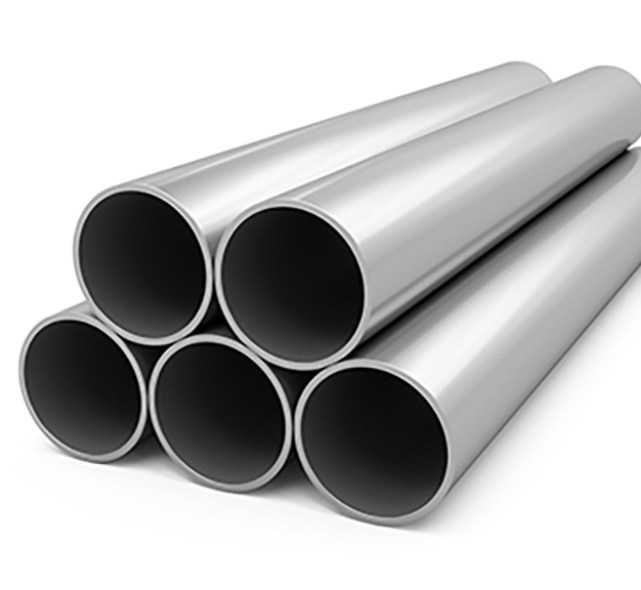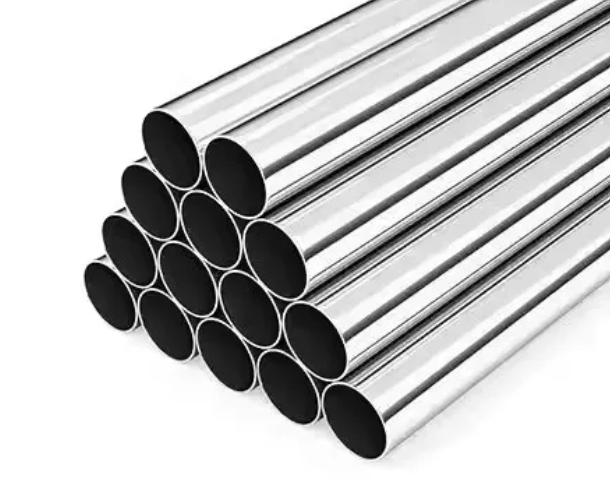

Before ordering alloy tubes for semiconductor equipment, buyers should confirm more than material grade, size and quantity.
Semiconductor-related equipment may involve ultra-high purity gas delivery, liquid chemical distribution, etching, deposition, vacuum systems, cooling lines or support structures. Each application may require different surface finish, cleanliness, traceability, testing and documentation.
Quick Answer:
Before ordering alloy tubes for semiconductor equipment, buyers should confirm application type, process medium, required standard, material grade, UNS number, tube type, surface finish, cleanliness level, weld condition, dimensional tolerance, MTR / MTC, heat number traceability, PMI or grade verification, NDT, packaging and supplier quality controls. For UHP gas or liquid distribution systems, SEMI-related requirements such as SEMI F20 and SEMI F19 may also need to be reviewed. A standard material certificate alone may not cover semiconductor-specific surface, cleanliness and contamination requirements.
SEMI F20 defines metallurgical cleanliness requirements and material composition for 316L stainless steel used in components for general-purpose, high-purity and ultra-high-purity chemical gas or liquid distribution systems in semiconductor manufacturing facilities: SEMI F20.
SEMI F19 provides requirements for the wetted surface condition of stainless steel components used in chemical gas and liquid distribution systems of semiconductor manufacturing facilities: SEMI F19.
This is why buyers should not treat “high purity” as a single simple label. The real requirement should be written clearly in the purchase order, drawing or technical specification.
Why Is “Just Any” High-Purity Alloy Tube Not Enough?
A tube can be called “high purity” and still be unsuitable for a specific semiconductor equipment application.
The reason is simple: semiconductor equipment may require control over surface finish, particle generation, metallic contamination, outgassing, leak integrity, weld quality, packaging and traceability.
For semiconductor equipment, buyers should define what “high purity” means for the actual application.
Hidden Variables Buyers Should Confirm
| Hidden Variable | Why It Matters | What to Confirm |
|---|---|---|
| Surface Finish | A rough or damaged surface may retain particles or residues | Ra value, SEMI F19 if applicable, polishing or electropolishing requirement |
| Cleanliness | Residual oil, particles or moisture may affect sensitive systems | Cleaning method, cleanroom handling, packaging and caps |
| Material Purity | Standard chemistry may not cover all trace element concerns | MTR / MTC, impurity limits if specified, additional analysis if required |
| Weld Condition | Weld bead, heat tint or crevice areas may affect flow, corrosion or cleanliness | Weld procedure, internal weld condition, borescope or NDT if required |
| Leak Integrity | UHP gas systems may require strict integrity verification | Leak test, oxygen ingress test or customer-defined test if required |
| Traceability | Batch history supports audits and root-cause review | Heat number, lot number, MTR / MTC, processing records |
| Packaging | Poor packaging can contaminate clean surfaces before installation | Double bagging, end caps, clean packaging if required |
ISO 14644-1 specifies the classification of air cleanliness in cleanrooms and clean zones by concentration of airborne particles: ISO 14644-1.
This supports a practical point: when buyers require cleanroom cleaning or packaging, the cleanroom level and packaging method should be specified clearly.
What Should Buyers Confirm About Surface Finish?
Surface finish is one of the most important confirmation points for semiconductor-related tubes.
For UHP gas or liquid distribution systems, surface finish is not only a cosmetic issue. It may affect particle retention, cleanability, corrosion initiation, residue removal and flow path cleanliness.
Surface Finish Checklist
| Item | What to Confirm |
|---|---|
| Internal Surface Ra | Required Ra value according to drawing, SEMI F19 or customer specification |
| External Surface | Polished, pickled, bright, or standard mill condition |
| Electropolishing | Required or not required; applicable material and acceptance criteria |
| Borescope Inspection | Required for internal surface confirmation if specified |
| Scratches / Dents / Burrs | Acceptance criteria should be defined |
| Heat Tint / Weld Oxide | Acceptable level or removal requirement |
| Surface Cleanliness | Particle, residue, oil or moisture limits if specified |
| Surface Report | Whether supplier provides surface roughness report or visual inspection record |
Electropolishing is an electrochemical process that removes material from a metallic surface and can reduce surface roughness by leveling micro-peaks and valleys: Electropolishing - Wikipedia.
However, buyers should avoid writing only “EP tube” or “smooth surface.” They should define the measurable acceptance criteria.
What Should Buyers Confirm About Cleanliness?
Cleanliness requirements depend on the application.
A cooling water tube does not need the same cleanliness level as a UHP gas delivery tube. A non-wetted support tube does not need the same surface requirement as a wafer-process gas line.
Cleanliness Questions
| Question | Why It Matters |
|---|---|
| Is the tube used for UHP gas delivery? | Gas purity and particle control may be critical |
| Is the tube used for liquid chemical distribution? | Wetted surface and extractables may matter |
| Is the tube used for vacuum service? | Outgassing and residue control may matter |
| Is the tube wafer-facing or process-facing? | Contamination sensitivity may be higher |
| Is cleanroom packaging required? | Packaging should protect cleaned surfaces |
| Are end caps required? | Prevents particles and moisture from entering ID |
| Is moisture control required? | Important for some process gases |
| Is particle counting required? | Must be specified if needed |
| Is a cleanliness certificate required? | Should be included in quotation scope if required |
SEMI F35 defines a method to monitor the integrity of UHP gas distribution systems by detecting atmospheric oxygen ingress using non-invasive oxygen measurement: SEMI F35.
This does not mean every tube order needs SEMI F35. It means UHP system integrity requirements should be defined by the project.
How Does the Semiconductor Application Change Tube Requirements?
Different semiconductor applications require different tube confirmations.
A tube for UHP gas delivery, liquid chemical distribution, etching equipment, deposition equipment, cooling lines or vacuum systems may have different priorities.
Application-Based Confirmation
| Application Type | Key Confirmation Points | Material / Specification Notes |
|---|---|---|
| UHP Gas Delivery | Surface finish, cleanliness, leak integrity, packaging, traceability | SEMI F20 / SEMI F19 may be relevant for 316L stainless steel components |
| Liquid Chemical Distribution | Chemical compatibility, wetted surface, extractables, cleanliness | Material must match chemical, concentration, temperature and purity requirement |
| Etching Equipment | Corrosion resistance, plasma or chemical compatibility, particles, surface condition | Nickel or titanium alloys may be evaluated only after process review |
| Deposition Equipment | Temperature, precursor compatibility, cleanliness, outgassing, thermal cycling | Heat treatment and surface condition should be confirmed |
| Vacuum Systems | Low outgassing, leak integrity, cleanliness, dimensional stability | Cleanliness and packaging requirements should be defined |
| Chiller / Cooling Lines | Corrosion resistance to coolant, pressure, dimensional fit | Requirements are usually different from UHP process lines |
| Structural / Support Tubes | Mechanical strength, dimensional tolerance, cleanliness if needed | Material may not need UHP wetted-surface requirements unless specified |
A 2024 review in Journal of Vacuum Science & Technology B notes that particles and foreign elements introduced by processing equipment can cause random yield loss and that corrosive processing plasma consumes chamber parts over time: Future of Plasma Etching for Microelectronics.
This supports one important buyer lesson: the application location matters. A plasma-facing component, gas delivery tube and cooling line should not automatically use the same confirmation checklist.
Why Are Particles and Contamination Important?
Semiconductor manufacturing is sensitive to contamination because particles, metals, moisture, organics or residues may affect process stability, wafer quality or yield.
An OSTI-indexed paper on contamination and semiconductor manufacturing yield notes that particulate and chemical contamination control is important for high semiconductor device yields and discusses contamination from cleanroom air, semiconductor processes and tools, gases, chemicals and DI water: Effects of Contamination on Semiconductor Manufacturing Yield.
Possible Contamination Sources from Tubes
| Source | Possible Risk |
|---|---|
| Rough internal surface | Particle retention or difficult cleaning |
| Poor cutting / deburring | Burrs or metallic particles |
| Welding oxide | Particle or corrosion initiation risk |
| Residual oil | Organic contamination |
| Moisture | Gas purity or corrosion concern |
| Wrong packaging | Contamination during transport |
| Wrong alloy grade | Metal contamination or corrosion mismatch |
| Poor traceability | Difficult root-cause analysis |
This does not mean every semiconductor tube needs the highest possible specification. It means the required contamination control level should match the real process risk.
What Should Buyers Confirm About Weld Integrity?
Weld integrity matters when welded tubes, welded assemblies or orbital-welded systems are used.
An internal weld bead, heat tint, lack of fusion, cracks or crevices may create risk depending on the medium, cleanliness requirement and process sensitivity.
Weld Confirmation Checklist
| Item | What to Confirm |
|---|---|
| Seamless or Welded | Which type is required by drawing or specification? |
| Weld Method | Automatic welding, orbital welding or other process |
| Internal Weld Bead | Flush, controlled or acceptable profile |
| Heat Tint | Acceptance level and cleaning requirement |
| Weld Inspection | Visual, borescope, ECT, UT or X-ray if required |
| Weld Procedure | Required or not required |
| Leak Testing | Required by system specification or purchase order |
| Post-Weld Cleaning | Pickling, passivation or cleaning if applicable |
ASTM E426 is intended as a guide for eddy current examination of seamless and welded tubular products: ASTM E426.
ASTM E213 covers ultrasonic testing of metal pipe and tubing for detecting discontinuities during volumetric examination: ASTM E213.
These tests should be specified only when relevant to the tube type, material, wall thickness, service risk and purchase order.
What Should Buyers Confirm About Material Grade and Standard?
The material grade must be confirmed clearly. Trade names alone are not enough.
Buyers should confirm:
- Material family
- Exact grade
- UNS number
- Product standard
- Tube type
- Heat treatment condition
- Chemical composition
- Mechanical properties
- Surface condition
- Testing scope
- Documentation level
Common Standards That May Appear in Tube Procurement
| Standard | General Relevance |
|---|---|
| SEMI F20 | 316L stainless steel for general-purpose, high-purity and UHP semiconductor chemical gas or liquid distribution systems |
| SEMI F19 | Wetted surface condition of stainless steel components for semiconductor gas / liquid distribution systems |
| ASTM A269 | Seamless and welded austenitic stainless steel tubing for general corrosion-resisting and low- or high-temperature service |
| ASTM B338 | Seamless and welded titanium alloy tubes for condensers, evaporators and heat exchangers |
| ASTM B163 | Seamless nickel and nickel alloy tubes for condenser and heat-exchanger service |
| ASTM E1476 | Metals identification, grade verification and sorting |
| ASTM E426 | Eddy current examination of tubular products |
| ASTM E213 | Ultrasonic testing of metal pipe and tubing |
ASTM A269 covers nominal-wall-thickness seamless and welded austenitic steel tubing for general corrosion-resisting and low- or high-temperature service: ASTM A269.
ASTM B338 covers seamless and welded titanium alloy tubes: ASTM B338.
ASTM B163 covers seamless nickel and nickel alloy tubes for condenser and heat-exchanger service: ASTM B163.
These standards help define product requirements, but they do not automatically cover every semiconductor-specific cleanliness or surface requirement.
What Should Buyers Confirm About Traceability?
Traceability is important for quality control, audits, receiving inspection and root-cause review.
Traceability Checklist
| Traceability Item | What It Confirms |
|---|---|
| Heat Number | Links tube to original production batch |
| Lot Number | Links finished product to processing batch |
| MTR / MTC | Batch-specific chemical and mechanical data |
| Material Standard | Confirms technical basis |
| Processing Record | Heat treatment, polishing, cleaning or special processing if required |
| Inspection Record | Dimensional, surface, NDT, PMI or other test results |
| Packaging Record | Clean packaging or special handling if specified |
| Marking | Tube, bundle, label or tag traceability |
ASTM E1476 provides guidance for nondestructive identification and sorting of metals: ASTM E1476.
For semiconductor equipment buyers, PMI or grade verification may be useful when multiple alloy grades are used or when material mix-up risk must be reduced.
Why Supplier Quality Controls Matter
A supplier’s quality system helps control consistency, but it does not replace project-specific inspection requirements.
ISO explains that the ISO 9000 family helps organizations improve product and service quality and consistently meet customer expectations: ISO 9000 Family.
However, an ISO quality system does not automatically prove that a tube meets SEMI F19, SEMI F20, cleanroom packaging, particle control, surface roughness or plasma compatibility requirements.
Supplier Verification Checklist
| Verification Item | What to Ask |
|---|---|
| Application Review | Does the supplier ask about gas, liquid, plasma, vacuum, cooling or structural use? |
| Material Grade | Can exact grade and UNS number be confirmed? |
| Standard | Which ASTM / SEMI / customer standard is quoted? |
| Surface Finish | Can Ra value and surface report be provided if required? |
| Cleanliness | Can cleaning, drying and packaging be defined? |
| Weld Control | Can weld condition and inspection be confirmed if required? |
| MTR / MTC | Can batch-specific chemical and mechanical data be provided? |
| Heat Number | Can the tube be traced to production batch? |
| PMI | Can grade verification be supported? |
| NDT | Can ECT, UT, hydrostatic or other tests be supported if required? |
| Third-Party Inspection | Can SGS, BV, TÜV, LRQA, ABS or buyer-appointed inspection be supported? |
| Change Control | Will material, process or subcontractor changes be communicated? |
A qualified supplier should not only quote price. The supplier should help clarify the technical scope before production.
How Does Careful Confirmation Reduce Procurement Risk?
Careful confirmation does not guarantee that no problem will ever occur. But it can reduce ambiguity and help prevent common procurement risks.
Risk Reduction Through Confirmation
| Risk Area | How Confirmation Helps |
|---|---|
| Material Mismatch | Grade, UNS number, standard and PMI reduce mix-up risk |
| Contamination | Surface finish, cleaning and packaging requirements reduce uncertainty |
| Weld Problems | Weld inspection and acceptance criteria clarify quality expectations |
| Documentation Gaps | MTR, heat number and inspection reports support audits |
| Receiving Disputes | Clear purchase requirements reduce misunderstanding |
| Qualification Delay | Correct documents and test reports support customer review |
| Maintenance Risk | Proper material and surface condition support longer service review |
| Cost Overrun | Fewer surprises during inspection, installation or qualification |
The goal is not to over-specify every tube. The goal is to specify the right requirements for the actual semiconductor equipment application.
Buyer Checklist Before Ordering Alloy Tubes for Semiconductor Equipment
Before placing an order, buyers should prepare the following information.
| RFQ Item | What to Provide |
|---|---|
| Application | UHP gas, liquid chemical, vacuum, etching, deposition, cooling, support |
| Tube Material | 316L, nickel alloy, titanium alloy or open to recommendation |
| Grade / UNS | Exact grade and UNS number |
| Standard | SEMI, ASTM, ASME, EN, ISO or customer specification |
| Size | OD, wall thickness, length and tolerance |
| Tube Type | Seamless, welded, straight tube, U-tube or assembly |
| Surface Finish | Ra value, EP, polished, pickled, clean ID / OD |
| Cleanliness | Cleaning method, cleanroom class, packaging, caps if required |
| Medium | Gas, chemical, coolant, vacuum or plasma-related exposure |
| Temperature | Normal, maximum, cleaning and cycling temperature |
| Pressure | Operating pressure and design pressure |
| Weld Requirement | Welded tube, orbital weld, internal bead, weld inspection |
| Testing | Chemical analysis, mechanical test, PMI, ECT, UT, hydrostatic |
| Documentation | MTR / MTC, heat number, inspection report, certificate |
| Third-Party Inspection | Required or optional |
| Packaging | Clean bagging, end caps, wooden case, special marking |
| Delivery | Required date, destination and logistics requirement |
Example RFQ Wording
For UHP stainless steel tubing:
“Please quote 316L stainless steel tubing for semiconductor UHP gas delivery. Please confirm whether SEMI F20 material requirements and SEMI F19 wetted surface requirements are applicable. Required: OD mm, WT mm, length mm, internal surface Ra , electropolished ID, cleanroom cleaning and capped packaging. MTR / MTC, heat number traceability, dimensional report, surface roughness report and PMI required.”
For nickel alloy tubing:
“Please quote nickel alloy tubes for semiconductor equipment according to attached drawing. Material: Alloy / UNS . Application: chemical / thermal / structural / vacuum / etching-related component. Please confirm material standard, surface finish, cleanliness requirement, MTR / MTC, heat number traceability, PMI, dimensional inspection and NDT options.”
For titanium tubing:
“Please quote titanium alloy tubes for semiconductor equipment. Please review process medium, temperature, cleanliness requirement, surface finish, packaging and documentation. MTR / MTC, heat number traceability, dimensional inspection, surface inspection and PMI required. Please quote third-party inspection option if available.”
This is clearer than simply writing:
“Please quote high-purity alloy tubes for semiconductor equipment.”
How Emily PIPE Supports Semiconductor Equipment Tube Buyers
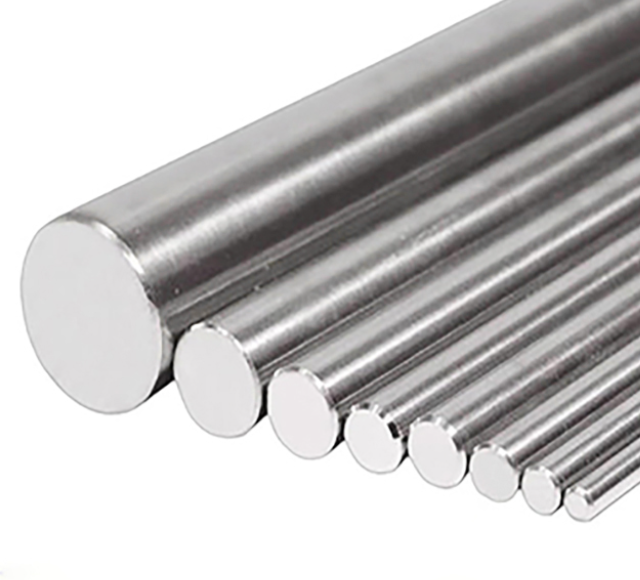
Emily PIPE is a China-based manufacturer and exporter specializing in nickel alloy tubes, nickel alloy bars, titanium alloy tubes and titanium alloy bars. We support customers across chemical processing, oil and gas, marine engineering, aerospace, power generation, medical equipment, heat exchangers, semiconductor-related equipment and other corrosion-resistant or high-temperature applications.
For semiconductor equipment tube projects, we can support:
- Nickel alloy tubes and pipes
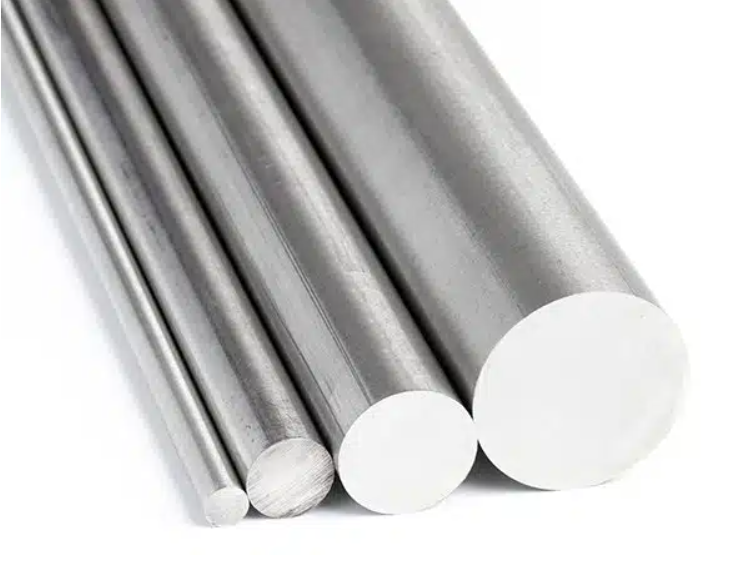
- Nickel alloy bars for machined components
- Titanium alloy tubes and pipes
- Titanium alloy bars for machined components
- Alloy 625, Alloy 718, Alloy 600, Alloy 601, Alloy C276, Alloy 825 and other nickel alloys according to project requirements
- Titanium Grade 2, Grade 7, Grade 12 and other titanium grades according to application review
- Custom OD, wall thickness, length, tolerance and surface condition
- MTR / MTC and heat number traceability
- Dimensional and surface inspection
- PMI, chemical analysis, tensile, hardness, eddy current, ultrasonic, hydrostatic and other testing support when required
- Third-party inspection support
- Export packaging and logistics support
Our role is not to claim that one alloy tube fits every semiconductor equipment application. Our role is to help buyers clarify material grade, standard, application, surface finish, cleanliness, testing, documentation and delivery requirements before production.
If you are ordering alloy tubes for semiconductor equipment, please send your drawing, material grade, UNS number, standard, application, process medium, surface finish, cleanliness requirement, testing requirement, documentation requirement, packaging requirement and destination. Our team can help review your requirements and provide a suitable quotation.
FAQ: Alloy Tubes for Semiconductor Equipment
1. Is “high purity” enough when ordering semiconductor alloy tubes?
No. Buyers should define what high purity means, including material standard, surface finish, cleanliness, packaging, MTR / MTC, heat number traceability and testing requirements.
2. What is SEMI F20?
SEMI F20 defines metallurgical cleanliness requirements and material composition for 316L stainless steel used in components for general-purpose, high-purity and ultra-high-purity semiconductor chemical gas or liquid distribution systems.
3. What is SEMI F19?
SEMI F19 defines wetted surface characterization requirements and finish acceptance criteria for stainless steel components used in semiconductor chemical gas and liquid distribution systems.
4. Do all semiconductor tubes need electropolishing?
No. Electropolishing should be specified when required by the application, drawing, SEMI-related requirement or customer specification.
5. Why does surface finish matter?
Surface finish may affect particle retention, cleanability, corrosion initiation and residue control. Buyers should specify measurable Ra values and inspection requirements.
6. Do all alloy tubes need cleanroom packaging?
No. Cleanroom packaging should be required when contamination sensitivity justifies it. Buyers should specify cleanroom class, packaging method, caps and handling requirements.
7. What documents should buyers request?
Buyers should request MTR / MTC, heat number traceability, dimensional report, surface inspection report, PMI report, NDT report and surface finish report when required.
8. Can ISO 9001 replace batch inspection records?
No. ISO 9001 supports quality management, but it does not replace batch-specific MTR / MTC, heat number traceability, inspection reports or project-specific requirements.
Conclusion
Ordering alloy tubes for semiconductor equipment requires more than matching material grade and size.
Buyers should confirm the full technical scope: application, process medium, material grade, UNS number, standard, surface finish, cleanliness, weld condition, testing, MTR / MTC, heat number traceability, packaging and supplier quality controls.
For nickel alloy and titanium tubes, good sourcing starts with clear application data and ends with traceable, tested and properly documented supply.