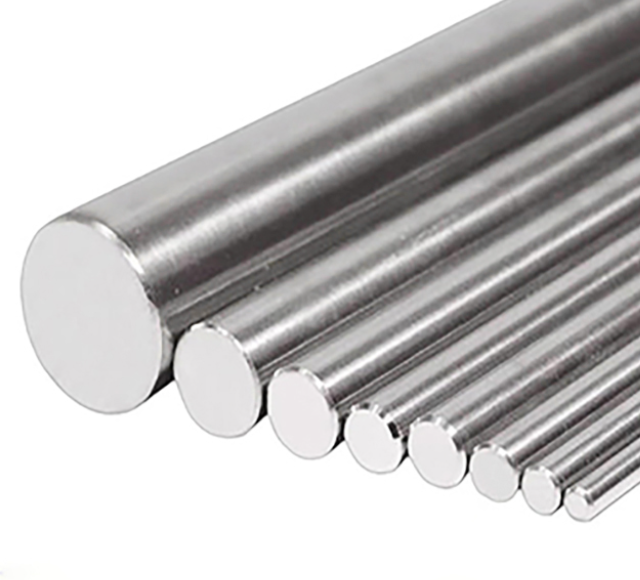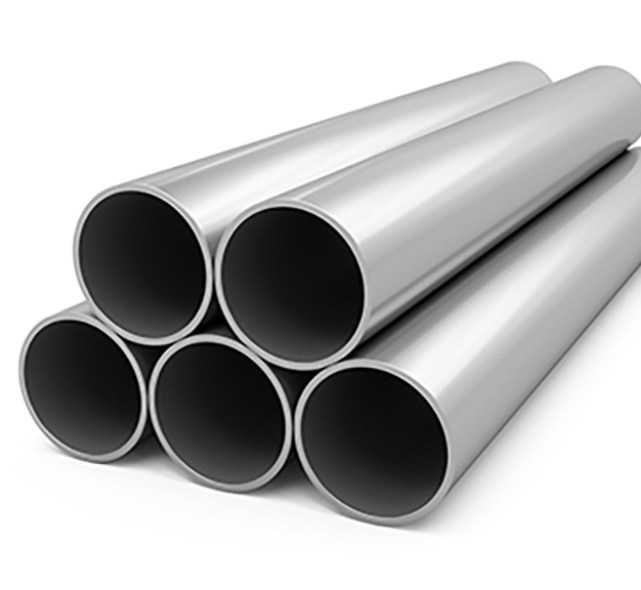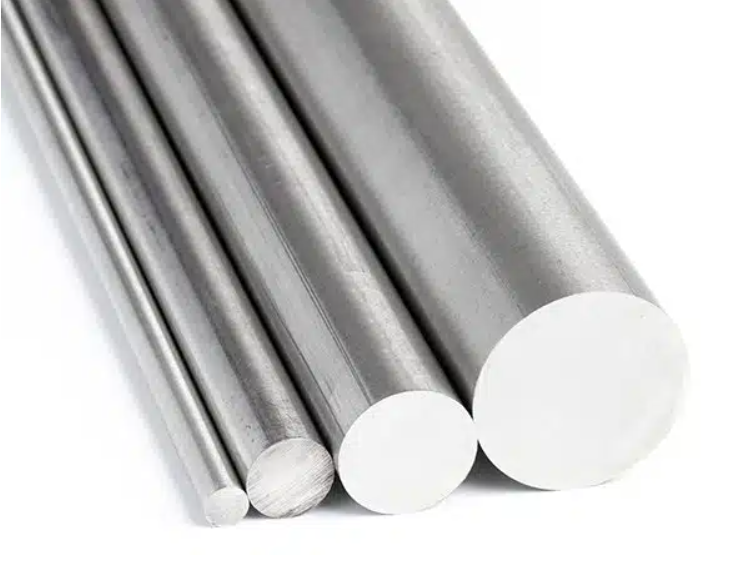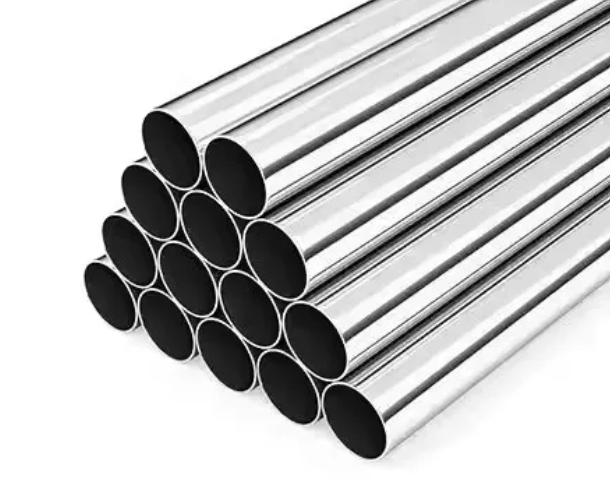

Choosing nickel and titanium alloys for hydrogen energy equipment is not a simple “best material” decision. Hydrogen systems may involve high-pressure gas, cryogenic liquid hydrogen, electrolyzers, fuel cells, compressors, valves, heat exchangers, piping, storage systems or transportation infrastructure.
Each application has different pressure, temperature, loading, purity, corrosion, leakage and inspection requirements.
Quick Answer:
There is no single best nickel or titanium alloy for all hydrogen energy equipment. Material selection should be based on the exact application, hydrogen form, pressure, temperature, purity, moisture or impurity level, cyclic loading, corrosion environment, design code, testing requirement, MTR / MTC, heat number traceability and supplier verification. Hydrogen compatibility should be supported by relevant standards, hydrogen-specific test data or application-based engineering review, not only by general datasheets or supplier claims.
Sandia National Laboratories’ Technical Reference for Hydrogen Compatibility of Materials explains that material suitability depends on service conditions, especially mechanical, environmental and material conditions associated with a particular component. It also notes that safety factors for hydrogen gas systems should be based on material tests performed under relevant conditions without significant extrapolation: Sandia Technical Reference for Hydrogen Compatibility of Materials.
H2Tools explains that exposure of metals to hydrogen can lead to embrittlement, which may appear as losses in tensile strength, ductility and fracture toughness, as well as accelerated fatigue crack growth: H2Tools Material Compatibility.
This is why buyers should avoid selecting hydrogen-service alloys only by strength, price or general corrosion resistance.
Why Is There No Single Best Alloy for Hydrogen Energy Equipment?
Hydrogen energy equipment covers many different systems.
A material used in an alkaline electrolyzer cathode, a PEM fuel cell bipolar plate, a high-pressure hydrogen valve, a hydrogen compressor component, a cryogenic liquid hydrogen line and a hydrogen heat exchanger may face very different conditions.
The correct alloy depends on the real service environment.
Key Conditions That Change Material Selection
| Condition | Why It Matters |
|---|---|
| Hydrogen Form | Gaseous hydrogen, liquid hydrogen, dissolved hydrogen and process hydrogen create different risks |
| Pressure | High-pressure hydrogen may increase hydrogen uptake and cracking risk in susceptible materials |
| Temperature | Cryogenic, ambient and high-temperature systems require different property reviews |
| Loading Mode | Static load, cyclic pressure, vibration and fatigue affect crack initiation and growth |
| Material Strength | High strength can increase hydrogen embrittlement sensitivity in some materials |
| Hydrogen Purity | Moisture, oxygen, sulfur compounds, chlorides or other impurities may change degradation risk |
| Welding | Welds and heat-affected zones may behave differently from base metal |
| Surface Condition | Defects, roughness or contamination may affect cracking, corrosion or leakage risk |
| Corrosion Environment | Water, electrolyte, acid, alkaline solution or external atmosphere can affect material choice |
| Design Code | ASME, ISO, ASTM or customer standards may define mandatory requirements |
A material that performs well in one hydrogen system may be unsuitable in another.
Why Can’t Buyers Choose Only the Strongest or Cheapest Alloy?
Strength and price are important, but they are not enough.
A high-strength material may look attractive on a datasheet, but if it is susceptible to hydrogen embrittlement under the actual operating pressure, temperature and stress condition, the system may face cracking or reduced safety margin.
A low-cost material may also become expensive if it creates frequent replacement, downtime, leakage investigation or requalification cost.
Hydrogen Embrittlement Risk
NASA describes hydrogen embrittlement as a process resulting in decreased fracture toughness or ductility of a metal due to the presence of hydrogen: NASA Hydrogen Embrittlement.
NIST research on pipeline steels in high-pressure gaseous hydrogen observed ductility losses with increases in pressure and decreases in strain rate: NIST Hydrogen Embrittlement in Pipeline Steels.
For buyers, this means general tensile strength in air should not be treated as proof of hydrogen compatibility.
Why Initial Price Is Not Enough
Buyers should compare life-cycle cost, not only initial purchase price.
The U.S. Environmental Protection Agency defines life-cycle cost as original cost minus salvage value plus operating costs, maintenance costs, renewal costs and decommissioning costs: EPA Life Cycle and Replacement Costs.
The U.S. Department of Energy’s O&M Best Practices Guide describes reactive maintenance as allowing machinery to run to failure and repairing or replacing damaged equipment when obvious problems occur: DOE O&M Best Practices Guide.
In hydrogen service, the lowest material price may not be the lowest-risk decision if testing, documentation, traceability, design code compliance or hydrogen compatibility are missing.
What Does Hydrogen Do to Metallic Materials?
Hydrogen can interact with metallic materials in several ways. The exact mechanism depends on the material, hydrogen pressure, temperature, stress, microstructure, impurities and exposure time.
Hydrogen-Related Material Risks
| Risk | What It Means | Buyer Concern |
|---|---|---|
| Hydrogen Embrittlement | Reduced ductility or fracture toughness due to hydrogen | Cracking risk in susceptible materials |
| Hydrogen-Assisted Cracking | Hydrogen helps crack initiation or crack growth | Risk under stress or cyclic loading |
| Accelerated Fatigue Crack Growth | Fatigue cracks may grow faster in hydrogen | Important for valves, compressors and pressure cycling |
| Blistering | Hydrogen accumulates at internal defects or interfaces | Surface or internal damage risk |
| Hydride Formation | Some metals, including titanium, can form brittle hydrides | Important for titanium alloy review |
| High-Temperature Hydrogen Attack | Hydrogen reacts with carbides in some steels at high temperature | Relevant mainly to certain steels and refinery environments |
| Permeation / Leakage | Hydrogen can pass through some materials or seals | Important for containment and purity |
| Corrosion with Impurities | Moisture, oxygen, sulfur or chlorides may add corrosion risk | Material must match real gas or liquid chemistry |
A recent review on hydrogen-resistant alloys for high-pressure hydrogen systems explains that hydrogen embrittlement remains a major issue for metallic structural materials in hydrogen pipelines, storage cylinders and compressors: Overview of Hydrogen-Resistant Alloys for High-Pressure Hydrogen Systems.
What Material Properties Should Buyers Evaluate?
For hydrogen energy equipment, buyers should review more than standard chemical composition and mechanical strength.
Important Properties for Hydrogen Service
| Property | Why It Matters |
|---|---|
| Hydrogen Embrittlement Resistance | Helps assess whether ductility and toughness are retained in hydrogen |
| Fracture Toughness in Hydrogen | Important for crack tolerance and design safety margin |
| Fatigue Performance in Hydrogen | Critical for pressure cycling, compressors, valves and vibration |
| Tensile Properties in Hydrogen | Air test data may not represent hydrogen performance |
| Hardness | High hardness may be restricted in some hydrogen or sour environments |
| Corrosion Resistance | Needed when water, electrolyte, acid, alkaline solution or external atmosphere is present |
| Thermal Stability | Important for cryogenic or high-temperature systems |
| Weldability | Welds may require separate testing or qualification |
| Surface Condition | Surface defects can become crack initiation points |
| Permeation Behavior | Important for hydrogen containment and purity |
| Traceability | Required for quality review, audit and root-cause analysis |
Hydrogen-Specific Testing
ASTM G142 covers determination of tensile properties of metals in high-pressure, high-temperature or combined high-pressure and high-temperature gaseous hydrogen-containing environments: ASTM G142.
ASTM G129 covers slow strain rate testing to evaluate susceptibility of metallic materials to environmentally assisted cracking in environments that may simulate aqueous, nonaqueous and gaseous service conditions: ASTM G129.
These tests do not automatically qualify every component for every hydrogen system. But they show why hydrogen-specific testing may be required for critical applications.
How Do Application Scenarios Change Material Choice?
Hydrogen energy equipment includes many different applications. Each one has different material priorities.
Application-Based Material Review
| Application | Key Risks to Review | Material Selection Focus |
|---|---|---|
| High-Pressure Hydrogen Storage | Hydrogen embrittlement, fatigue, pressure cycling, leakage | Strength, fracture toughness, fatigue data, design code |
| Hydrogen Piping and Pipelines | Pressure, welds, fatigue, leakage, external corrosion | ASME B31.12, weldability, inspection, material compatibility |
| Hydrogen Compressors | Cyclic loading, high pressure, friction, fatigue | Fatigue in hydrogen, hardness, surface finish, NDT |
| Valves and Fittings | Pressure cycling, sealing, wear, leakage | Material identity, hardness, surface condition, testing |
| Liquid Hydrogen Systems | Cryogenic temperature, thermal contraction, leakage | Cryogenic toughness, thermal stability, cleanliness |
| Electrolyzers | Alkaline or acidic electrolyte, electrical current, corrosion | Corrosion resistance, conductivity, coating or electrode material |
| Fuel Cells | Bipolar plates, heat exchangers, corrosion, conductivity | Corrosion resistance, contact resistance, coating compatibility |
| Heat Exchangers | Hydrogen, water, coolant, pressure, temperature | Corrosion resistance, tube standard, leakage and NDT |
| Reformers / High-Temperature Systems | Heat, steam, hydrogen, oxidation, creep | High-temperature strength, oxidation resistance, creep review |
ASME B31.12 establishes requirements for design, materials, fabrication, inspection, testing and operation of hydrogen piping and pipeline systems: ASME B31.12 via H2Tools.
ISO/TR 15916 provides guidelines for hydrogen in gaseous and liquid forms and identifies basic safety concerns, hazards and risks related to hydrogen systems: ISO/TR 15916.
Where May Nickel Alloys Be Evaluated?
Nickel alloys may be evaluated for selected hydrogen energy components where corrosion resistance, high-temperature strength, mechanical strength, thermal stability or fabricability is required.
However, “nickel alloy” is not a single material choice. Alloy 625, Alloy 718, Alloy 600, Alloy 601, Alloy 825, Alloy C276, Nickel 200 and other grades have different chemistry, heat treatment and performance profiles.
Nickel Alloy Review
| Nickel Alloy Family | Possible Evaluation Area | Buyer Caution |
|---|---|---|
| Alloy 625 / UNS N06625 | Corrosion-resistant tubing, fittings, heat exchangers, selected valves or components | Confirm hydrogen pressure, temperature, stress, standard and test data |
| Alloy 718 / UNS N07718 | High-strength fasteners, springs, shafts or compressor-related components | Confirm aging condition, hardness, hydrogen embrittlement data and fatigue requirements |
| Alloy 600 / UNS N06600 | High-temperature or selected corrosion environments | Confirm hydrogen exposure, oxidation, temperature and code requirements |
| Alloy 601 / UNS N06601 | High-temperature oxidation service | Confirm whether hydrogen-containing process and temperature are within design limits |
| Alloy 825 / UNS N08825 | Selected acid or corrosion-resistant systems | Confirm exact fluid chemistry and hydrogen-related risk |
| Alloy C276 / UNS N10276 | Selected aggressive chemical or process environments | More relevant where corrosive fluids are present; hydrogen-specific data still needed |
| Nickel 200 / UNS N02200 | Selected alkaline or high-purity applications | Confirm strength, temperature, hydrogen and impurity conditions |
Nickel alloys should be selected by grade, UNS number, product form, heat treatment, application data and required test scope.
Where May Titanium Alloys Be Evaluated?
Titanium alloys may be considered where low density, corrosion resistance and strength-to-weight ratio matter. Titanium is also used in selected heat exchanger, chemical, marine and energy applications.
However, titanium is not automatically safe for every hydrogen environment.
Titanium has high affinity for hydrogen, and titanium hydrides can be brittle. A research paper on solute hydrogen and hydrides in titanium describes titanium as a typical hydride-forming metal and notes that titanium hydrides are brittle phases that can contribute to premature failure of titanium alloys: Characterizing Solute Hydrogen and Hydrides in Titanium.
Titanium Review Points
| Question | Why It Matters |
|---|---|
| Is hydrogen absorption possible? | Titanium can form hydrides under certain conditions |
| Is the environment acidic, alkaline, wet, dry or high temperature? | Corrosion and hydrogen uptake can change |
| Is cathodic charging or electrochemical exposure present? | May increase hydrogen uptake |
| Is the component under tensile stress? | Hydrides and stress may affect cracking risk |
| Is the part welded? | Weld and heat-affected zones may need review |
| Is the application cryogenic? | Cryogenic toughness and thermal contraction matter |
| Is titanium used as a heat exchanger tube? | ASTM B338 may be relevant |
| Is coating required? | Coatings may be used in selected fuel cell or electrolyzer components |
ASTM B338 covers seamless and welded titanium and titanium alloy tubes for condensers and heat exchangers: ASTM B338.
This standard can support tube procurement, but it does not by itself prove suitability for every hydrogen energy application.
What About Fuel Cells and Electrolyzers?
Fuel cells and electrolyzers are not the same material environment.
A fuel cell bipolar plate may need corrosion resistance, conductivity, low contact resistance and coating compatibility. An electrolyzer electrode or bipolar plate may need corrosion resistance under alkaline or acidic electrochemical conditions.
A 2024 open-access paper on Ti-Pt-coated stainless steel bipolar plates investigated corrosion behavior and degradation mechanisms for PEM fuel cell bipolar plates: Corrosion Behavior of Ti-Pt-Coated Stainless Steel for Bipolar Plates.
A review on non-precious electrodes for alkaline water electrolysis discusses nickel-based materials such as Raney nickel as cathode materials in alkaline systems: Non-Precious Electrodes for Practical Alkaline Water Electrolysis.
This supports a practical point: fuel cell and electrolyzer materials should be selected by component function and electrochemical environment, not by broad alloy family.
How Can Buyers Verify Supplier Claims?
A supplier may say a material is “hydrogen-compatible.” Buyers should ask: compatible under what conditions?
Hydrogen compatibility depends on:
- Hydrogen form
- Pressure
- Temperature
- Stress
- Cyclic loading
- Material strength
- Microstructure
- Heat treatment
- Weld condition
- Surface condition
- Impurities
- Test method
- Design code
- Component function
Supplier Claim Verification Checklist
| Verification Item | What to Ask |
|---|---|
| Exact Grade | What alloy grade and UNS number are supplied? |
| Product Form | Tube, pipe, bar, forging, sheet, plate or machined part? |
| Product Standard | ASTM, ASME, ISO, EN or customer specification? |
| Hydrogen Conditions | Pressure, temperature, gaseous or liquid hydrogen, purity and impurities |
| Test Data | Is there hydrogen-specific tensile, SSRT, fracture or fatigue data? |
| Heat Treatment | What condition is supplied and documented? |
| Hardness | Is hardness controlled for the service requirement? |
| Welding | Are weld procedures, HAZ properties and post-weld treatment reviewed? |
| MTR / MTC | Are batch-specific chemistry and mechanical properties provided? |
| Heat Number | Can the product be traced to the production heat? |
| PMI | Can grade verification be performed? |
| NDT | UT, ECT, PT, RT, hydrostatic or other tests if required |
| Third-Party Inspection | Can independent inspection or testing be supported? |
| Change Control | Will changes in material, heat treatment or subcontractor be communicated? |
ASTM E1476 provides guidance for nondestructive metals identification, grade verification and sorting: ASTM E1476.
PMI or grade verification does not prove hydrogen compatibility, but it helps reduce material mix-up risk.
What Documents Should Buyers Request?
Documentation is central to hydrogen energy material procurement.
Common Documents
| Document | What It Confirms |
|---|---|
| Quotation Scope | Material, standard, testing and documents included |
| Drawing / Specification | Geometry, tolerance and component requirement |
| MTR / MTC | Batch-specific chemical and mechanical properties |
| Heat Number | Link to original melt or production batch |
| Heat Treatment Record | Supplied material condition |
| Chemical Analysis | Alloy composition |
| Mechanical Test Report | Tensile, yield, elongation, hardness, impact if required |
| Hydrogen-Specific Test Report | G142, G129, SSRT, fracture or fatigue if required |
| NDT Report | UT, ECT, PT, RT, hydrostatic or leak test if required |
| PMI Report | Grade verification |
| Dimensional Report | Size and tolerance |
| Surface Inspection | Surface defects and finish |
| Third-Party Inspection Report | Independent verification when required |
| Packaging and Marking Record | Shipping, traceability and receiving inspection |
A standard MTR is useful, but it may not include hydrogen-specific performance data unless the buyer specifies those tests.
RFQ Checklist for Hydrogen Energy Alloy Materials
Before requesting a quotation, buyers should prepare the following information.
| RFQ Item | What to Provide |
|---|---|
| Application | Storage, piping, valve, compressor, fuel cell, electrolyzer, heat exchanger |
| Hydrogen Form | Gaseous, liquid, process hydrogen, electrolyte-related hydrogen |
| Pressure | Operating and design pressure |
| Temperature | Normal, maximum, minimum and cycling temperature |
| Hydrogen Purity | Moisture, oxygen, sulfur, chlorides or other impurities |
| Medium | Hydrogen only or mixed with water, steam, electrolyte, acid, alkaline or coolant |
| Loading | Static load, cyclic pressure, fatigue, vibration, thermal cycling |
| Material Grade | Nickel alloy, titanium alloy or open to recommendation |
| UNS Number | Exact material designation |
| Product Form | Tube, pipe, bar, forging, plate, sheet or machined part |
| Standard | ASTM, ASME, ISO, EN or customer specification |
| Heat Treatment | Annealed, solution annealed, aged, stress relieved or other |
| Welding | Welded or seamless; weld procedure and inspection if required |
| Hardness Requirement | If required by project or code |
| Testing | Chemical, mechanical, NDT, hydrogen-specific testing if required |
| Documentation | MTR / MTC, heat number, inspection reports |
| Third-Party Inspection | Required or optional |
| Packaging | Surface protection, sealing, marking and export packing |
| Delivery | Required date, destination and shipping method |
This information helps suppliers understand the real service requirement before quoting.
Example RFQ Wording
For nickel alloy material:
“Please quote nickel alloy tubes / bars for hydrogen energy equipment. Material: Alloy / UNS . Application: hydrogen valve / compressor / heat exchanger / piping component. Hydrogen condition: gaseous hydrogen, pressure MPa, temperature °C, purity , cyclic loading yes/no. Required standard: ASTM / ASME / customer specification . Please provide MTR / MTC, heat number traceability, chemical analysis, mechanical test report, PMI, dimensional inspection and NDT option. Please confirm whether hydrogen-specific testing such as ASTM G142 or SSRT is required or available.”
For titanium material:
“Please quote titanium alloy tubes / bars for hydrogen-related equipment. Material: Titanium Grade / UNS . Application: heat exchanger / lightweight component / corrosion-resistant part. Please review hydrogen exposure, electrochemical conditions, temperature, pressure, welding requirement and hydride risk. MTR / MTC, heat number traceability, dimensional inspection, surface inspection and third-party inspection option required.”
This is clearer than simply writing:
“Please quote hydrogen-compatible alloy materials.”
How Emily PIPE Supports Hydrogen Energy Material Buyers
Emily PIPE is a China-based manufacturer and exporter specializing in nickel alloy tubes, nickel alloy bars, titanium alloy tubes and titanium alloy bars. We support customers across chemical processing, oil and gas, marine engineering, aerospace, power generation, heat exchangers, hydrogen-related equipment and other corrosion-resistant or high-temperature applications.
For hydrogen energy material projects, we can support:
- Nickel alloy tubes and pipes
- Nickel alloy bars for machined components
- Titanium alloy tubes and pipes
- Titanium alloy bars for machined components
- Alloy 625, Alloy 718, Alloy 600, Alloy 601, Alloy 825, Alloy C276, Nickel 200 and other grades according to project requirements
- Titanium Grade 2, Grade 7, Grade 12, Grade 5 and other grades according to application review
- Custom OD, wall thickness, length, tolerance and surface condition
- MTR / MTC and heat number traceability
- Dimensional and surface inspection
- PMI, chemical analysis, tensile, hardness, UT, ECT, hydrostatic and other testing support when required
- Third-party inspection support
- Export packaging and logistics support
Our role is not to claim that one nickel or titanium alloy fits every hydrogen energy application. Our role is to help buyers clarify material grade, standard, hydrogen condition, pressure, temperature, testing, documentation and delivery requirements before production.
If you are selecting nickel or titanium alloy materials for hydrogen energy equipment, please send the drawing, material grade, UNS number, product form, hydrogen condition, pressure, temperature, impurity level, loading condition, testing requirement, documentation requirement and destination. Our team can help review your requirements and provide a suitable quotation.
FAQ: Nickel and Titanium Alloys for Hydrogen Energy Equipment
1. Is there one best material for hydrogen energy equipment?
No. Material selection depends on hydrogen form, pressure, temperature, stress, impurities, component function, design code and required testing.
2. What is hydrogen embrittlement?
Hydrogen embrittlement is a degradation process in which hydrogen can reduce ductility or fracture toughness in susceptible metals.
3. Are nickel alloys suitable for hydrogen service?
Selected nickel alloys may be evaluated for hydrogen-related components, but suitability depends on grade, strength, heat treatment, pressure, temperature, stress, environment and hydrogen-specific data.
4. Are titanium alloys suitable for hydrogen service?
Titanium alloys may be useful in selected applications, but hydrogen absorption and hydride formation must be reviewed, especially under electrochemical or hydrogen-rich conditions.
5. Is a normal MTR enough for hydrogen equipment?
A normal MTR confirms batch-specific chemistry and mechanical properties, but it may not prove hydrogen compatibility unless hydrogen-specific tests are included.
6. What tests may be relevant for hydrogen materials?
Relevant tests may include hydrogen tensile testing, slow strain rate testing, fracture toughness testing, fatigue testing, hardness testing, PMI, NDT and leak testing depending on the project.
7. What standard applies to hydrogen piping?
ASME B31.12 is a key code for hydrogen piping and pipelines. Project requirements may also involve ISO, ASTM, EN or customer specifications.
8. What should buyers ask suppliers?
Buyers should ask for exact grade, UNS number, product standard, hydrogen condition, test data, heat treatment, hardness, MTR / MTC, heat number, PMI, NDT and third-party inspection options.
Conclusion
Nickel and titanium alloy selection for hydrogen energy equipment should not be based only on strength, price or general datasheets.
Hydrogen compatibility depends on application, pressure, temperature, hydrogen purity, loading mode, material grade, heat treatment, weld condition, surface condition, testing and documentation.
For buyers, good material selection means combining application data, hydrogen-specific risk review, verifiable documents and clear supplier communication before production.