
How to Choose Alloy Materials for Vacuum Chamber Components
Selecting alloy materials for vacuum chamber components is not only about strength, corrosion resistance, or price. In vacuum systems, the material may also affect outgassing, pump-down time, contamination risk, dimensional stability, magnetic behavior, thermal cycling performance, and long-term reliability.
Vacuum chamber supports and precision components may include brackets, frames, mounting parts, flanges, feedthrough-related parts, sensor mounts, optical mounts, internal fixtures, machined spacers, and other custom components. Each part may have a different function and a different level of exposure to heat, vacuum, process gas, or sensitive instrumentation.
There is no single best alloy for every vacuum chamber component. A better approach is to match the material to the vacuum level, operating temperature, surface requirement, contamination sensitivity, mechanical function, and required documentation.
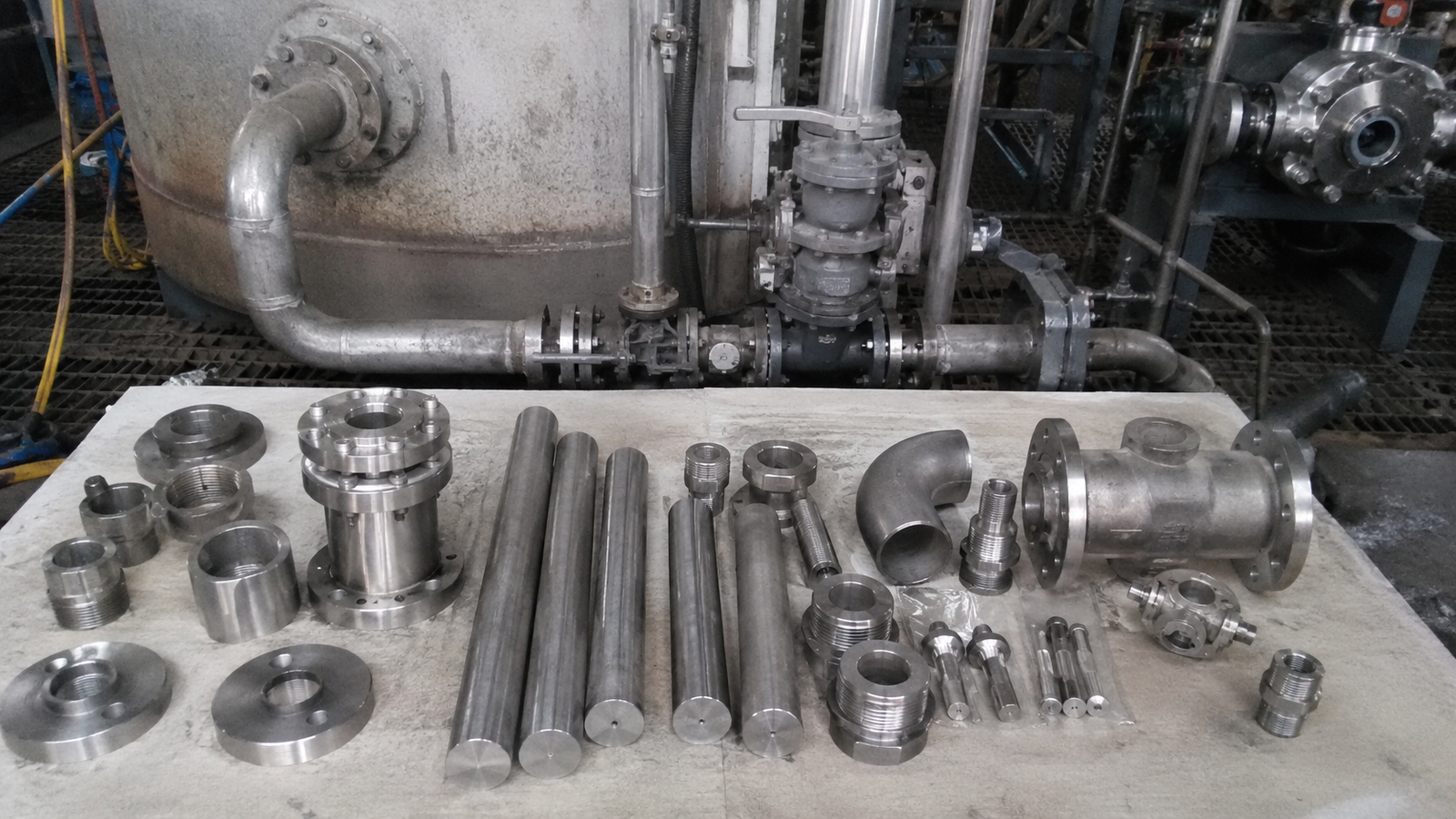
For buyers of nickel alloy, titanium alloy, stainless steel, and other precision alloy materials, the key is to define the real vacuum environment first. Only then can the material grade, product form, surface finish, cleaning method, inspection documents, and supplier capability be evaluated properly.
Why Vacuum Material Selection Is Different
In general industrial equipment, buyers may focus mainly on mechanical strength, hardness, corrosion resistance, or machinability. These properties are still important, but they are not enough for vacuum chamber components.
Vacuum systems introduce additional requirements. Materials may release adsorbed gases, trapped moisture, hydrocarbons, hydrogen, or other volatile species. Surface contamination, machining residue, poor cleaning, or unsuitable packaging can also affect vacuum performance.
The NASA Outgassing Database explains that outgassing testing is performed according to ASTM E595 to determine total mass loss and collected volatile condensable material in a vacuum environment. This shows why outgassing is a measurable material-selection issue, not only a general cleanliness concern.
Vacuum-Specific Properties to Review
| Property | Why It Matters in Vacuum Systems |
|---|---|
| Outgassing behavior | High outgassing may increase pump-down time, contaminate surfaces, or prevent the system from reaching the required pressure. |
| Vapor pressure | Materials or contaminants with higher vapor pressure may become problematic at elevated temperature or low pressure. |
| Surface finish | Rough or contaminated surfaces may hold more gas, moisture, oil, or particles. |
| Cleanliness | Machining oil, dust, fingerprints, moisture, or residues can become contamination sources. |
| Thermal stability | Components may need to survive bake-out, heating cycles, or temperature gradients. |
| Coefficient of thermal expansion | CTE mismatch can cause stress, distortion, or alignment problems in precision assemblies. |
| Magnetic behavior | Low magnetic permeability may be important near electron beams, sensors, or magnetic-field-sensitive instruments. |
| Weldability and machinability | Vacuum components may require leak-tight welds, precision machining, and controlled surface condition. |
| Documentation and traceability | Critical projects may require MTRs, heat numbers, certificates, and inspection reports. |
A material that looks suitable on a standard datasheet may still create problems if the surface condition, heat treatment, cleaning, or packaging is not controlled.
Is There One Best Alloy for Vacuum Chambers?
There is no universal alloy for all vacuum chamber applications.
The right choice depends on the vacuum level, operating temperature, process gas, component function, surface finish, cleaning requirement, and contamination sensitivity.
A support bracket does not have the same requirements as an optical mount. A chamber wall does not have the same requirements as an internal fixture exposed to heat or process gases. A high-vacuum system does not have the same requirements as an ultra-high vacuum or extreme-high vacuum system.
Context Factors That Affect Material Choice
| Context Factor | What Buyers Should Consider |
|---|---|
| Vacuum level | Rough vacuum, high vacuum, UHV, and XHV systems may have different outgassing and cleanliness requirements. |
| Operating temperature | Higher temperature may increase outgassing, affect strength, or require bake-out-compatible materials. |
| Bake-out requirement | Materials must tolerate the required bake-out temperature without distortion, degradation, or contamination. |
| Process gas exposure | Reactive gases, corrosive gases, or deposition processes may require special corrosion or compatibility review. |
| Component function | Structural support, precision alignment, sealing, heat shielding, and sensor mounting may require different properties. |
| Magnetic sensitivity | Electron beam, ion beam, analytical, or magnetic-field-sensitive equipment may require low-magnetic materials. |
| Precision requirement | Optical, sensor, or alignment parts may require stable CTE, tight tolerance, and surface control. |
| Cleanliness level | UHV or contamination-sensitive systems may require special cleaning, handling, and packaging. |
NIST compared outgassing rates of vacuum chambers made from 304L, 316L, 316LN stainless steels, titanium, and aluminum. The study found that both material and heat treatment affected water and hydrogen outgassing behavior. NIST vacuum chamber outgassing comparison
This supports an important point: material choice is not only about alloy name. Heat treatment, cleaning, surface condition, and the actual vacuum requirement may also affect performance.
Which Materials May Be Considered?
Many materials can be used in vacuum systems, but each has limits. The following table gives general considerations only. Final selection should be reviewed against the actual system design and service environment.
Common Material Families for Vacuum Components
| Material Family | Possible Use Consideration | Important Caution |
|---|---|---|
| 304L / 316L stainless steel | Commonly used for many vacuum chambers, flanges, supports, and structural components | UHV/XHV use may require stricter cleaning, surface control, heat treatment, or lower magnetic requirements |
| 316LN stainless steel | May be considered where strength, low temperature performance, or specific vacuum requirements matter | Availability, machining, welding, and project specifications should be checked |
| Titanium Grade 2 / titanium alloys | May be considered for some lightweight, corrosion-resistant, or low-outgassing vacuum components | Galling, machining, welding, cost, surface condition, and compatibility must be reviewed |
| Aluminum alloys | May be used for lightweight chambers or components in some vacuum systems | Surface treatment, permeability to gas, strength, and temperature limits must be considered |
| Nickel alloys, such as Alloy 600, Alloy 625, or C276 | May be considered for high-temperature, corrosive, or special process environments | Higher cost, machinability, magnetic behavior, and outgassing data should be reviewed |
| Copper and copper alloys | May be used where thermal or electrical conductivity is important | Strength, oxidation, joining, and compatibility with other materials must be considered |
| Invar / Kovar-type alloys | May be considered where low thermal expansion or glass/ceramic sealing compatibility is important | Magnetic behavior, machinability, cost, and corrosion resistance must be reviewed |
| Non-metallic materials | May be used in seals, insulators, or special components | Outgassing, temperature resistance, particle generation, and compatibility are critical |
CERN notes that austenitic stainless steels are widely used as reference materials for many vacuum devices because of properties such as corrosion resistance, strength, and ductility. Materials for high vacuum technology
However, stainless steel is not automatically the best choice for every part. Some applications may require titanium, aluminum, copper, nickel alloys, low-expansion alloys, or special surface-treated materials.
Why Surface Finish, Cleaning, and Bake-Out Matter
For vacuum components, the surface is often as important as the bulk material.
A rough or contaminated surface may trap moisture, oil, particles, or machining residue. These contaminants can release gas under vacuum and affect pump-down behavior or sensitive equipment surfaces.
CERN training material explains that after long pumping or bake-out, hydrogen outgassing can become an important factor. It also shows that heating and bake-out can reduce hydrogen outgassing in several vacuum materials. CERN outgassing and bake-out guidance
Surface and Cleaning Items to Specify
| Requirement | What to Clarify |
|---|---|
| Surface roughness | Required Ra value or finish grade if relevant to pump-down, sealing, or contamination control |
| Machining residue | Whether cutting oils, coolants, burrs, or particles must be removed |
| Degreasing | Whether solvent cleaning, ultrasonic cleaning, or special cleaning is required |
| Passivation or pickling | Whether chemical surface treatment is required for stainless steel or other alloys |
| Electropolishing | Whether it is required for UHV, cleanliness, or surface-smoothing purposes |
| Bake-out compatibility | Whether the material and surface condition can tolerate the required temperature |
| Clean packaging | Whether capped ends, sealed bags, clean wrapping, or controlled packing are required |
| Handling instructions | Whether gloves, clean tools, or contamination-controlled handling are required |
Not every vacuum component needs the same treatment. A rough vacuum support part may have different requirements from an internal UHV optical mount. Buyers should specify the cleaning and surface requirement according to the actual vacuum level and contamination sensitivity.
How Should Buyers Evaluate Supplier Claims?
A general material certificate is useful, but it may not be enough for vacuum applications.
A Material Test Report can verify chemical composition, mechanical properties, heat number, and standard. However, vacuum performance may also depend on surface finish, cleaning, heat treatment, machining condition, packaging, and application-specific testing.
Supplier Evidence to Request
| Document / Evidence | Why It Matters |
|---|---|
| MTR / MTC | Helps verify grade, heat number, chemical composition, mechanical properties, and product standard. |
| EN 10204 certificate | Defines the inspection document type required for the order. |
| Heat number traceability | Links the material to a specific batch for quality tracking. |
| Surface finish report | Useful when Ra value, polishing, or special surface condition is required. |
| Cleaning record | Important when oil, particles, or residues must be controlled. |
| Packaging record | Helps verify that material protection and cleanliness requirements were followed. |
| Dimensional inspection report | Confirms tolerance, flatness, straightness, thickness, diameter, or machined dimensions. |
| Outgassing / RGA data | Useful for critical UHV/XHV applications if required by the project. |
| Third-party inspection | Helpful for critical orders or buyer approval requirements. |
| Laboratory test record | More credible when the test method and laboratory competence are clear. |
BS EN 10204 inspection documents are used to authenticate metallic materials and help prove specified chemical and mechanical properties.
If test results are important for approval, ISO/IEC 17025 laboratory competence can help buyers understand whether the laboratory operates competently and produces reliable test results.
ISO 9001 can support a supplier’s quality management system, but it does not replace batch-specific documents or vacuum-specific evidence. ISO 9001 supply chain guidance also reminds buyers to define intended use, business risk, supplier history, and confidence in the supplier’s ability to provide conforming product consistently.
Common Mistakes in Vacuum Material Selection
Even experienced teams can make mistakes when the vacuum requirement is not defined clearly.
Mistakes to Avoid
| Common Mistake | Why It Creates Risk | Better Approach |
|---|---|---|
| Choosing only by material grade | The same grade may perform differently depending on heat treatment, surface condition, and cleaning | Define grade, condition, surface finish, cleaning, and documents |
| Ignoring outgassing | Material or surface contaminants may prevent the system from reaching the required pressure | Review outgassing behavior and cleaning requirements |
| Treating HV and UHV the same | Higher vacuum levels usually require stricter material and surface control | Specify vacuum level and acceptance criteria |
| Ignoring CTE mismatch | Thermal cycling may cause stress, warping, or alignment loss | Check CTE compatibility for mating parts |
| Overlooking magnetic behavior | Some instruments are sensitive to magnetic interference | Specify low magnetic permeability if needed |
| Forgetting bake-out temperature | Some materials or treatments may not tolerate bake-out cycles | Confirm temperature limits and dimensional stability |
| Relying only on price | A cheaper material may increase pump-down time, cleaning effort, or rework | Compare total risk, not only purchase cost |
| Missing documentation | Incoming inspection or project approval may be delayed | Confirm MTR, EN 10204, surface report, cleaning record, or test data early |
For vacuum chamber components, the best material is not always the most expensive material. It is the material that fits the vacuum level, component role, cleanliness requirement, operating temperature, and documentation requirement.
Practical Checklist Before Ordering Vacuum Chamber Materials
Before confirming an order, buyers can review the following checklist:
- What vacuum level is required: rough vacuum, HV, UHV, or XHV?
- What is the component function: support, frame, flange, mount, shield, spacer, or precision part?
- Will the part be inside the vacuum environment or outside the chamber?
- Will the part face heat, bake-out, thermal cycling, or temperature gradients?
- Is low outgassing required?
- Is RGA or outgassing test data required by the project?
- Is low magnetic permeability required?
- Does the part need tight dimensional stability or CTE matching?
- Will the part contact process gases, corrosive media, or deposition by-products?
- What material grade and product standard are required?
- What surface finish, cleaning, passivation, electropolishing, or packaging is needed?
- What documents are required: MTR, EN 10204 3.1, surface report, cleaning record, third-party inspection, or lab test report?
- Is heat number traceability required?
- Can the supplier support repeat orders with consistent quality and documentation?
Conclusion
Choosing alloy materials for vacuum chamber supports and precision components requires more than checking mechanical strength or corrosion resistance.
Vacuum applications may require attention to outgassing, surface finish, cleaning, thermal stability, CTE matching, magnetic behavior, bake-out compatibility, dimensional tolerance, documentation, and supplier consistency.
There is no single best alloy for every vacuum chamber component. The right material depends on the vacuum level, operating temperature, component function, contamination sensitivity, surface requirement, and long-term operating risk.
For critical vacuum applications, buyers should discuss the vacuum level, drawings, material grade, surface finish, cleaning method, packaging, inspection documents, and any outgassing or RGA requirements with the supplier before confirming the order.