
How to Select Titanium Alloy Bars for Medical Equipment Frames and Structural Parts
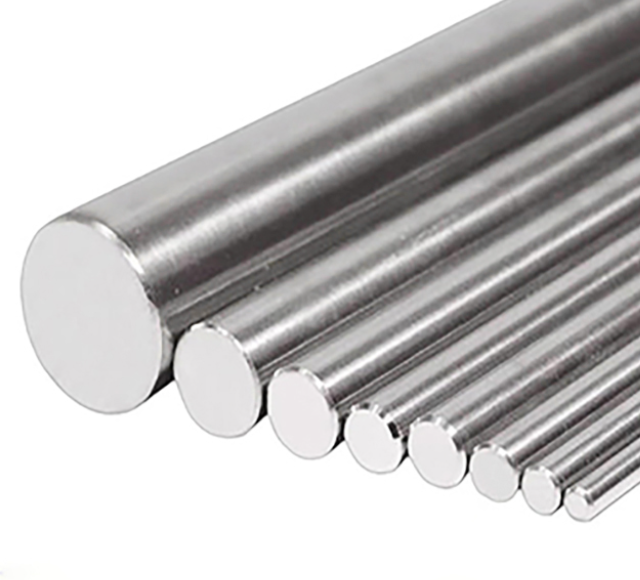
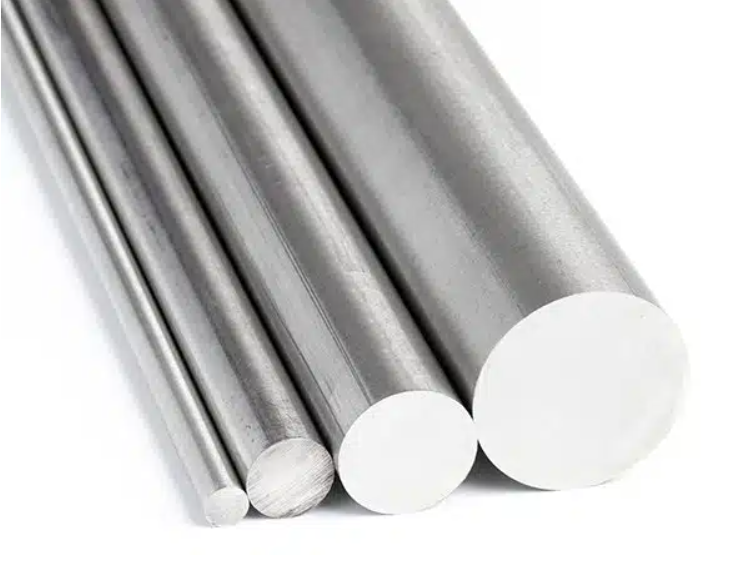
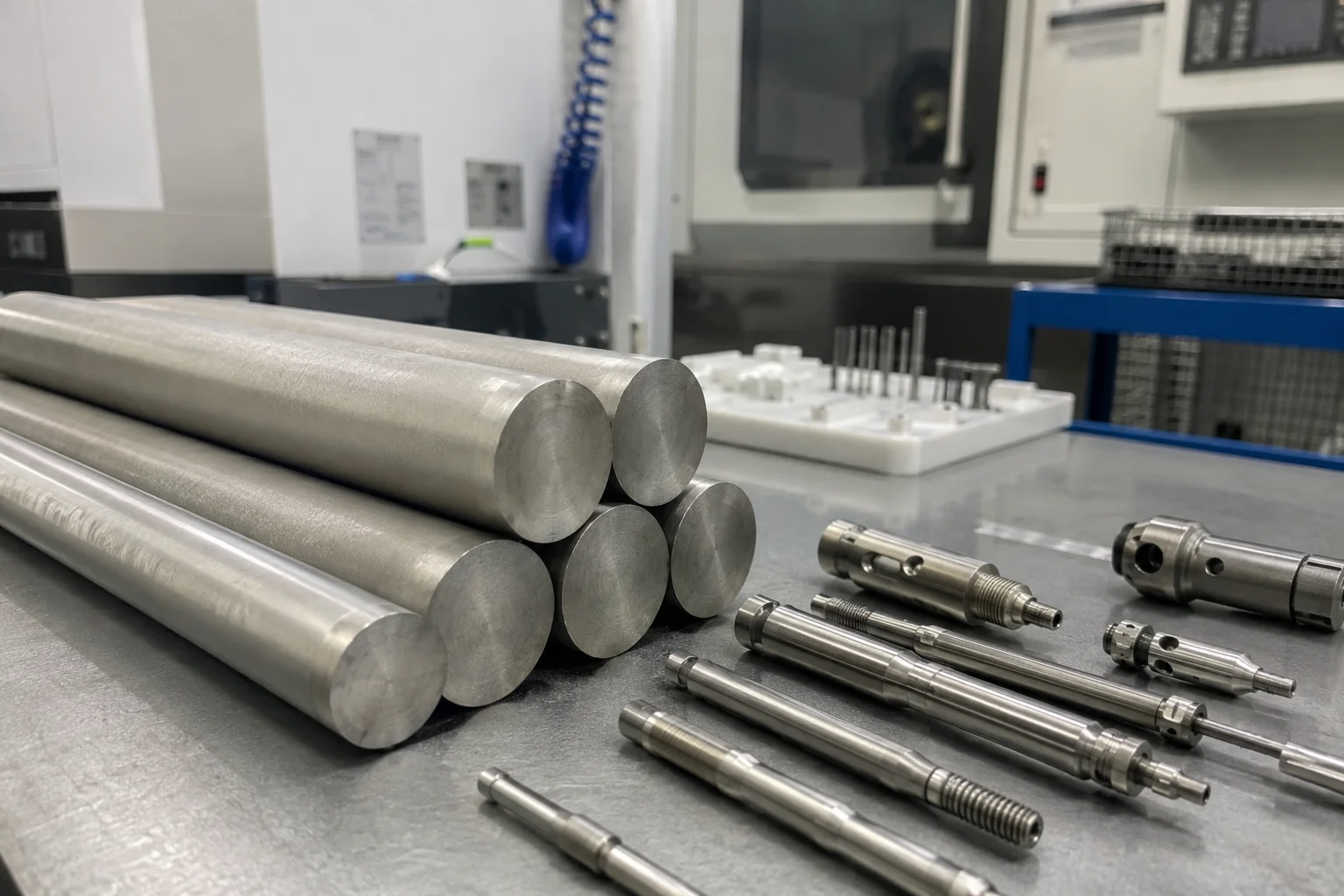
Titanium alloy bars are used to manufacture a wide range of medical-equipment components, including support members, robotic links, instrument shafts, brackets, pins, fasteners, housings, reusable tools, and selected implantable parts.
These applications do not share one material-selection pathway.
An external diagnostic-equipment frame may never contact a patient and may be selected mainly for weight, corrosion resistance, stiffness, cleanability, and appearance.
A reusable surgical instrument may require repeated cleaning, disinfection, or sterilization as well as resistance to wear, galling, and handling damage.
A long-term implant may require an implant-specific titanium standard, biological evaluation, fatigue testing, surface characterization, manufacturing validation, and regulatory evidence.
The correct titanium bar is therefore not simply the strongest grade or the material described as “medical grade.” It is the exact alloy, product standard, condition, size, surface, traceability level, and verification package that match the component’s intended use, contact category, loading, manufacturing route, reprocessing conditions, and regulatory pathway.
The first question should not be:
“Should we use Grade 2, Grade 5, or Grade 23?”
It should be:
“What does the finished component do, who or what does it contact, how is it manufactured and processed, and which risks must the material help control?”
Start with the Intended Use, Not the Alloy Grade
The phrase “medical equipment structural part” can refer to components with very different risk profiles.
Non-Patient-Contact Equipment Structures
Examples may include:
- Diagnostic-equipment frames;
- equipment stands;
- external brackets;
- robotic-system bases;
- covers and housings;
- internal equipment supports;
- laboratory-device fixtures.
Primary considerations may include:
- Structural stiffness;
- weight;
- corrosion from cleaning agents;
- dimensional stability;
- machinability;
- appearance;
- electrical or magnetic requirements;
- supply cost;
- ease of repair.
These components do not automatically require surgical-implant material standards.
Reusable Medical and Surgical Instruments
Examples may include:
- Instrument shafts;
- handles;
- clamps;
- reusable positioning devices;
- end-effector supports;
- robotic surgical links;
- alignment and fixation tools.
Additional considerations may include:
- Repeated cleaning;
- disinfection;
- moist-heat sterilization;
- chemical sterilization;
- wear;
- galling;
- hinges and sliding surfaces;
- surface residues;
- cleanability;
- marking durability;
- maintenance limits.
Patient-Contact Device Components
A component may contact:
- Intact skin;
- breached or compromised surfaces;
- tissue;
- bone;
- blood;
- circulating blood pathways.
The nature and duration of contact influence the biological-risk evaluation.
A material used for a device that contacts intact skin briefly should not automatically follow the same evidence plan as a permanent implant.
Implantable Structural Components
Examples may include:
- Bone-fixation parts;
- spinal components;
- dental components;
- joint-related structures;
- implantable housings;
- permanent fixation elements.
These components may require:
- Implant-specific material standards;
- long-term biological evaluation;
- fatigue and fracture validation;
- surface characterization;
- corrosion and wear assessment;
- sterilization validation;
- manufacturing-process validation;
- device-specific regulatory evidence.
The intended use must be established before the raw-material specification is chosen.
“Medical Grade Titanium” Is Not a Complete Specification
The term “medical grade” is often used commercially, but it does not identify:
- Alloy;
- UNS designation;
- product form;
- material standard;
- standard revision;
- heat treatment;
- surface condition;
- mechanical properties;
- intended contact type;
- regulatory status;
- inspection requirements.
A complete procurement description may need to include:
- Grade or alloy designation;
- UNS number;
- ASTM or other product specification;
- specification revision;
- bar diameter and length;
- tolerance;
- straightness;
- annealed or other approved condition;
- surface condition;
- chemistry;
- mechanical properties;
- microstructure where required;
- testing;
- marking;
- heat traceability;
- packaging.
The word “medical” should never replace these technical requirements.
Match the Product Standard to the Intended Use
ASTM B348/B348M for General Titanium Bars
ASTM B348/B348M-25 covers annealed titanium and titanium-alloy bars and billets across multiple commercially established grades.
It can be appropriate for non-implant applications when:
- The selected grade is technically suitable;
- the project accepts the standard;
- all additional device requirements are specified separately.
ASTM B348 conformity does not itself establish:
- Surgical-implant suitability;
- biological safety;
- sterilization compatibility;
- finished-device fatigue life;
- regulatory clearance.
ASTM F67 for Unalloyed Surgical-Implant Titanium
ASTM F67-24 covers four grades of unalloyed titanium used in the manufacture of surgical implants.
Its product scope includes several wrought product forms, including bars.
F67 establishes material-level chemical, mechanical, and metallurgical requirements.
It does not prove that the final implant:
- Meets its design loads;
- has an acceptable surface;
- is biologically safe in its final form;
- has sufficient fatigue life;
- has been sterilized correctly;
- has regulatory authorization.
ASTM F1472 for Ti-6Al-4V Implant Material
ASTM F1472-23 covers wrought Ti-6Al-4V, UNS R56400, for surgical-implant applications.
This is distinct from purchasing a general Grade 5 bar under ASTM B348.
The project should specify the exact standard rather than relying only on the words “Grade 5.”
ASTM F136 for Ti-6Al-4V ELI
ASTM F136-26 covers wrought annealed Ti-6Al-4V ELI, UNS R56401, for surgical-implant applications.
ELI means extra low interstitial.
The specification controls material-level chemical, mechanical, and metallurgical requirements.
It should not be interpreted as a guarantee of:
- Superior fatigue performance in every geometry;
- fracture resistance of the final component;
- device biocompatibility;
- implant service life;
- complete regulatory compliance.
The lower interstitial limits can support particular ductility and toughness requirements, but final performance still depends on design, section size, microstructure, machining, surface condition, residual stress, environment, and testing.
Do Not Select Grade 23 Automatically for Every Critical Part
Grade 23 is frequently requested because of its association with implantable medical devices.
That association can lead to unnecessary over-specification.
A high-strength external robot link may not require an implant-specific F136 material if:
- It never contacts a patient;
- it has no biological-risk requirement;
- another specification provides suitable mechanical properties;
- the design is verified independently;
- the regulatory and quality teams approve the material route.
Conversely, a permanent implant should not be downgraded to a general Grade 5 bar solely because the nominal alloy composition appears similar.
The correct decision depends on both intended use and documented requirements.
Compare Titanium Grades by Function
The following table is a screening guide, not a device-approval table.
| Material Candidate | Potential Strengths | Important Limitations | Possible Application Context |
|---|---|---|---|
| CP Titanium Grade 2 | Corrosion resistance, ductility, formability, lower strength than alloyed grades | May require larger sections; not automatically appropriate for high-load parts | Covers, housings, brackets, selected low-to-moderate-load parts |
| CP Titanium Grade 4 | Higher strength than lower-strength CP grades while retaining unalloyed-titanium chemistry | Less formable than lower CP grades; still requires fatigue and design validation | Selected dental, implant, instrument, and structural applications |
| Ti-6Al-4V Grade 5 | High strength-to-weight ratio, broad industrial availability, established machining routes | Not automatically an implant material unless supplied to the required implant standard | High-strength equipment structures and project-approved medical parts |
| Ti-6Al-4V ELI / F136 | Implant-specific chemical and metallurgical controls with reduced interstitial limits | Higher cost and availability requirements; does not guarantee final-device performance | Project-approved surgical implants and critical patient-contact applications |
| Other medical titanium alloys | Alternative modulus, strength, chemistry, or implant history | Availability, processing, standards, and regulatory data may be more limited | Device-specific applications supported by an approved design basis |
The selection should also compare titanium with:
- Stainless steel;
- aluminum;
- cobalt alloys;
- engineering polymers;
- fiber-reinforced composites;
- ceramics.
Titanium is not automatically the lowest-cost or lowest-risk material for every medical-equipment frame.
Strength and Stiffness Are Different Requirements
Tensile Strength
Tensile strength represents the maximum tensile stress reached during a defined material test.
It does not directly establish:
- Device load rating;
- fatigue life;
- impact resistance;
- joint performance;
- allowable design stress;
- safety factor.
Yield Strength
Yield strength helps determine when a material begins to deform permanently under a defined test.
For a medical-equipment structural component, permanent deformation may affect:
- Alignment;
- clearances;
- calibration;
- seal performance;
- robotic accuracy;
- mechanical function.
Elastic Modulus
Elastic modulus influences how much a material deflects under load.
However, most conventional titanium grades have broadly similar stiffness compared with the large strength differences between them.
Changing from Grade 2 to Grade 5 may greatly increase strength without producing a comparable increase in structural stiffness.
Component stiffness is also controlled by:
- Cross-section;
- wall thickness;
- span;
- joint design;
- support location;
- fastener preload;
- geometry.
A flexible frame problem may be solved more effectively through section design than through changing titanium grade.
Fatigue Cannot Be Determined from the MTR
Medical-device components may experience repeated loading from:
- Robotic movement;
- instrument actuation;
- vibration;
- patient motion;
- cyclic clamping;
- repeated assembly;
- repeated sterilization and handling;
- transport and impact.
Fatigue performance depends on:
- Applied stress range;
- mean stress;
- number of cycles;
- geometry;
- notches;
- threads;
- holes;
- section size;
- surface roughness;
- machining marks;
- residual stress;
- microstructure;
- heat treatment;
- corrosion;
- fretting;
- coating;
- sterilization and cleaning history.
A standard MTR tensile result is not a fatigue test.
Likewise, F136 conformity does not establish the fatigue life of a machined implant or robotic component.
Fatigue Validation Should Match the Finished Part
A fatigue program may need to consider:
- Realistic loading direction;
- worst-case dimensions;
- actual surface finish;
- threads, holes, and transitions;
- finished heat treatment;
- coating or surface treatment;
- cleaning and sterilization;
- expected use cycles;
- misuse or overload conditions where required;
- statistically justified sampling.
Material coupon data can support design screening but should not replace finished-component verification.
Fracture Toughness and Defect Tolerance
A critical structural component may need to tolerate:
- Small machining flaws;
- handling damage;
- inclusions;
- surface scratches;
- fatigue cracks;
- unexpected overload.
Fracture toughness describes resistance to crack extension under defined conditions.
It is not normally included in a standard bar MTR unless the purchase specification requires it.
For high-criticality components, the design team may need:
- Fracture-mechanics analysis;
- component inspection;
- crack-growth data;
- defined defect acceptance;
- damage-tolerance testing.
The decision should be based on the device risk analysis rather than the alloy name alone.
Titanium Can Gall and Wear
Titanium is not inherently a high-wear-resistance material.
Sliding contact may produce:
- Galling;
- adhesive wear;
- surface transfer;
- frictional heating;
- particles;
- dimensional loss.
Potential locations include:
- Threads;
- pivots;
- hinges;
- shafts;
- guides;
- clamps;
- fastener interfaces;
- instrument jaws.
Wear control may require:
- Different material pairing;
- suitable clearance;
- approved lubrication;
- surface hardening;
- coating;
- replaceable bushings;
- reduced contact stress.
A harder titanium grade does not automatically eliminate galling.
Any coating or lubricant used in a patient-contact device may introduce additional biological, cleaning, sterilization, and particulate risks.
Surface Finish Is a Finished-Device Requirement
A raw titanium bar may be supplied as:
- Descaled;
- ground;
- turned;
- peeled;
- machined;
- polished.
This is not necessarily the final surface of the device.
Subsequent operations may introduce:
- Tool marks;
- grinding burns;
- embedded contamination;
- burrs;
- sharp edges;
- residual polishing compounds;
- oxide changes;
- particles;
- cleaning residues.
For the finished part, the manufacturer may need to specify:
- Surface roughness;
- measurement method;
- measurement direction;
- inspection locations;
- edge condition;
- cleaning method;
- residue limits;
- passivation or surface treatment;
- packaging.
A roughness number alone does not prove cleanability or biological safety.
Biocompatibility Belongs to the Final Finished Device
ISO 10993-1:2025 treats biological safety as part of a medical-device risk management process.
The evaluation should consider:
- Intended use;
- type of body contact;
- contact duration;
- material composition;
- manufacturing process;
- surface;
- geometry;
- particles;
- degradation;
- cleaning;
- sterilization;
- residual chemicals.
The FDA biocompatibility guidance similarly emphasizes evaluation of the final finished device.
This means that neither of the following statements is sufficient:
- “Titanium is biocompatible.”
- “The bar complies with ASTM F136.”
The biological evaluation must address the actual finished device and its contact scenario.
Chemical Characterization Does Not End with the Alloy Chemistry
ISO 10993-18 addresses chemical characterization of medical-device materials within a risk management process.
The relevant chemicals may come from:
- Bulk alloy composition;
- trace elements;
- machining fluids;
- cutting oils;
- polishing compounds;
- cleaning agents;
- acids;
- alkaline cleaners;
- coatings;
- lubricants;
- adhesives;
- marking;
- packaging;
- sterilization.
A bar MTR generally reports selected bulk chemical elements.
It does not normally identify all possible chemicals that may be present on or released from the finished device.
Sterilization Compatibility Must Be Verified at Device Level
Titanium is often selected partly because of its corrosion resistance, but this does not justify a universal statement that every titanium device can withstand every sterilization method indefinitely.
Moist-Heat Sterilization
ISO 17665:2024 defines requirements for developing, validating, and routinely controlling moist-heat sterilization processes.
Repeated steam exposure may need to be evaluated for its effect on:
- Surface appearance;
- oxide condition;
- joints;
- coatings;
- markings;
- dimensional stability;
- trapped moisture;
- residues;
- other materials in the assembly.
Ethylene Oxide
ISO 11135 defines requirements for development, validation, and routine control of ethylene-oxide sterilization.
For an assembled device, relevant questions may include:
- EO residuals;
- aeration;
- packaging;
- polymers;
- adhesives;
- enclosed volumes;
- surface residues.
Radiation and Other Sterilization Processes
Radiation, vaporized hydrogen peroxide, liquid chemical sterilants, and other processes may interact differently with:
- Coatings;
- polymers;
- electronics;
- adhesives;
- color markings;
- lubricants.
The medical-device manufacturer should validate the selected sterilization process for the final device and intended number of cycles.
Cleaning, Disinfection, and Reprocessing May Govern the Material Choice
Reusable medical equipment may experience more cleaning cycles than high mechanical load cycles.
The evaluation should define:
- Cleaning agent;
- concentration;
- temperature;
- contact time;
- pH;
- oxidizing chemicals;
- chlorides;
- rinsing water;
- drying;
- number of cycles;
- manual or automated process.
Potential concerns include:
- Residue;
- crevice retention;
- discoloration;
- coating damage;
- joint corrosion;
- galvanic interaction;
- label or marking failure;
- trapped moisture.
A corrosion-resistant titanium bar does not automatically create a cleanable device.
Cleanability also depends on:
- Geometry;
- surface accessibility;
- joints;
- threads;
- dead spaces;
- disassembly;
- surface finish;
- cleaning validation.
Consider Dissimilar Materials and Galvanic Interfaces
Medical equipment often combines titanium with:
- Stainless steel;
- aluminum;
- cobalt alloys;
- copper;
- carbon-fiber composites;
- electrical contacts;
- coated fasteners.
Where dissimilar conductive materials are connected in the presence of an electrolyte, galvanic effects may be possible.
Possible electrolytes include:
- Saline;
- body fluids;
- disinfectant;
- rinse water;
- condensed moisture.
The engineering review should consider:
- Material pair;
- area ratio;
- electrical contact;
- electrolyte;
- coating condition;
- crevice geometry;
- cleaning;
- exposure duration.
Material compatibility should be evaluated at the assembly level.
Product Form and Manufacturing Route Matter
A titanium bar may be used directly for machining or as starting stock for forging.
The project should clarify whether it needs:
- Finished bar;
- forging bar;
- billet;
- forged blank;
- machined component.
These forms may have different:
- Microstructures;
- grain flow;
- section-size effects;
- sampling;
- inspection;
- machining allowance;
- qualification requirements.
For an implant forging, a bar certificate alone may not describe the condition of the final forged product.
Heat Treatment Must Match the Product Standard
Heat treatment can affect:
- Strength;
- ductility;
- microstructure;
- residual stress;
- dimensional stability;
- fatigue;
- machinability.
The order should identify:
- Required condition;
- governing standard;
- heat-treatment route;
- whether subsequent thermal processing is permitted;
- testing after final thermal processing.
A supplier should not alter the heat-treatment condition simply to achieve a preferred strength value.
Melt Route Should Be Specified Only When Required
Titanium may involve multiple melting steps and different melting technologies.
The required route should come from:
- Applicable material standard;
- device specification;
- validated manufacturing route;
- risk assessment;
- regulatory submission;
- customer requirement.
The buyer should not request a particular melt route only because it sounds more advanced.
Conversely, the supplier should not change the approved source or melt route without formal review.
Straightness and Machining Allowance Are Important for Bar Components
Long bars used for shafts, robotic links, or precision components may require controlled:
- Straightness;
- diameter tolerance;
- ovality;
- surface defects;
- decarburization is not relevant to titanium, but surface contamination and alpha case may be relevant depending on processing;
- machining stock;
- usable length;
- end condition.
The raw-material drawing or purchase specification should define measurable requirements.
“Precision titanium bar” is not a technical acceptance criterion.
Traceability Must Continue After Cutting
A full-length bar may be cut into many shorter pieces.
The supplier should have a controlled method for:
- Recording the original heat number;
- linking cut pieces to the original MTR;
- transferring identification;
- preventing heat mixing;
- documenting remnants;
- linking packaging labels to certificates.
For medical-device manufacturing, the device manufacturer may also need traceability through:
- Incoming inspection;
- machining batch;
- finishing;
- cleaning;
- sterilization;
- finished-device lot.
Raw-material traceability is only the first link.
What Does an MTR Prove?
An MTR may provide:
- Material grade;
- UNS designation;
- heat number;
- chemical composition;
- mechanical properties;
- heat-treatment condition;
- product standard;
- selected tests.
It does not normally prove:
- Final-device biocompatibility;
- fatigue life;
- sterilization compatibility;
- cleanliness;
- finished surface;
- regulatory approval;
- manufacturing-process validation;
- absence of all internal defects.
The buyer should read the MTR against the exact purchase specification rather than treating the presence of a certificate as sufficient.
EN 10204 3.1 Does Not Mean Medical-Device Approval
BS EN 10204 inspection documents defines types of inspection documents for metallic products.
An EN 10204 3.1 document may support batch-specific material conformity.
It does not establish:
- ASTM F136 compliance unless F136 is actually specified and tested;
- biological safety;
- device risk acceptability;
- FDA authorization;
- CE conformity;
- sterilization validation.
ISO 13485 and ISO 9001 Serve Different Functions
ISO 13485:2016 is a quality-management system standard developed for the medical-device sector.
ISO 9001 is a general quality-management system standard.
A raw-material supplier may operate under:
- ISO 9001;
- ISO 13485;
- both;
- a customer-approved quality system.
The required system depends on:
- Supplier role;
- device manufacturer requirements;
- regulatory market;
- component criticality;
- purchasing controls.
Neither certificate proves that the offered bar conforms to the purchase order.
Certificate review should confirm:
- Legal company name;
- manufacturing location;
- scope;
- validity;
- certification body;
- whether bar production or distribution is included.
U.S. FDA QMSR Does Not Create an “FDA-Certified Titanium Bar”
The U.S. FDA Quality Management System Regulation became effective in 2026 and incorporates ISO 13485:2016 into the U.S. medical-device quality-system framework.
This applies within the medical-device regulatory system.
It does not mean that FDA certifies ordinary raw titanium bars.
Suppliers should avoid claims such as:
- FDA-approved titanium;
- FDA-certified bar;
- guaranteed FDA compliance.
The medical-device manufacturer remains responsible for determining whether the supplied material and its controls support the regulated device.
Laboratory Scope Must Match the Required Test
ISO/IEC 17025:2017 provides requirements for competent, impartial, and consistent laboratory operation.
When a test is important for acceptance, verify:
- Laboratory name;
- location;
- accreditation body;
- certificate validity;
- exact accredited method;
- sample traceability;
- test standard and revision;
- authorized report approval.
A laboratory may be accredited for chemistry but not for fatigue, metallography, ultrasonic testing, or surface analysis.
What Additional Testing May Be Required?
Depending on the component and risk, the purchase specification may require:
| Requirement | Possible Evidence |
|---|---|
| Alloy identity | Original mill MTR, PMI, heat marking |
| Chemistry | Heat analysis and product analysis where required |
| Mechanical properties | Tensile, yield, elongation, reduction of area |
| Microstructure | Metallographic examination and acceptance criteria |
| Internal integrity | Defined ultrasonic examination |
| Surface integrity | Visual, dimensional or penetrant inspection |
| Straightness and geometry | Dimensional inspection report |
| Surface roughness | Instrumented roughness report |
| Cleanliness | Validated cleaning and residue results |
| Fatigue | Material or finished-component fatigue testing |
| Fracture | Fracture-toughness or crack-growth data |
| Biological safety | Final-device risk-based ISO 10993 evaluation |
| Sterilization | Validated finished-device sterilization process |
| Packaging | Packaging validation and material protection |
Not every item requires every test.
Testing should be based on the device risk analysis and purchasing requirements.
Risk-Based Procurement Levels
| Component Category | Primary Risk Focus | Possible Material Evidence |
|---|---|---|
| Non-contact external frame | Stiffness, weight, corrosion, appearance | B348 bar, MTR, dimensions and surface |
| Internal equipment bracket | Alignment, fatigue, cleanliness | MTR, dimensions, traceability and design verification |
| Reusable instrument component | Wear, cleaning, sterilization, surface | Controlled bar, surface and reprocessing validation |
| Patient-contact non-implant part | Biological contact, residues, surface | Material evidence plus final-device biological evaluation |
| Temporary implant | Strength, fatigue, surface, contact duration | Implant material standard and device qualification |
| Permanent load-bearing implant | Fatigue, fracture, biological safety, traceability | Implant-specific standard, controlled manufacturing and extensive validation |
| Novel alloy or process | Unknown biological and mechanical behavior | Formal qualification and regulatory assessment |
Supplier Questions That Reveal Real Capability
Product Standard
- What exact alloy and UNS designation are offered?
- Is the material supplied to ASTM B348, F67, F136, F1472, or another specification?
- What revision applies?
- Is the offered condition fully compliant with that standard?
- Is the product bar, billet, forging bar, or forged product?
Manufacturing
- Who is the original melt producer?
- Where is the bar manufactured?
- What melting route is used?
- Which operations are subcontracted?
- What heat treatment is applied?
- How are process changes controlled?
- Can the same approved route be repeated?
Testing
- Which tests are required by the product standard?
- Which values are actual and which are specification limits?
- What is the sampling frequency?
- Can microstructure testing be provided when specified?
- Can UT be performed to a defined method and acceptance level?
- Which laboratory performs additional testing?
- Are the methods within its ISO/IEC 17025 scope?
Traceability
- Can the original heat be traced to every cut piece?
- How are cut pieces re-marked?
- Are original mill documents supplied?
- How are mixed heats prevented?
- How long are records retained?
Surface and Packaging
- What bar surface condition is supplied?
- What dimensional tolerances are achievable?
- What straightness is guaranteed?
- Is cleaning controlled?
- Is clean packaging available?
- What does “medical packaging” specifically mean?
- Are packaging materials compatible with downstream cleaning?
Quality System
- Does the company hold ISO 9001 or ISO 13485?
- Which facility and scope are listed?
- Does the certificate cover manufacturing or only sales?
- How are nonconformities handled?
- How are customer complaints and corrective actions managed?
- How are supplier and subcontractor changes communicated?
A credible supplier should clearly distinguish between what the material certificate proves and what remains the responsibility of the device manufacturer.
RFQ Checklist for Titanium Alloy Bars
Before requesting a quotation, define:
- Device or equipment type;
- exact component;
- intended use;
- patient-contact status;
- contact type;
- contact duration;
- implantable or non-implantable;
- reusable or single-use;
- expected service life;
- expected load;
- static load;
- cyclic load;
- number of cycles;
- impact or overload condition;
- required stiffness;
- allowable deflection;
- fatigue requirement;
- fracture requirement;
- wear or galling concern;
- operating temperature;
- cleaning method;
- cleaning chemicals;
- disinfection method;
- sterilization method;
- number of reprocessing cycles;
- body-fluid or saline exposure;
- dissimilar materials;
- MRI-related requirement where applicable;
- alloy grade;
- UNS designation;
- product standard;
- standard revision;
- product form;
- annealed or other condition;
- melt-route requirement;
- bar diameter;
- length;
- dimensional tolerance;
- straightness;
- ovality;
- machining allowance;
- bar surface condition;
- chemistry limits;
- mechanical-property requirements;
- microstructure requirement;
- hardness requirement;
- UT requirement;
- surface inspection;
- dimensional report;
- roughness report;
- original mill MTR;
- CoC;
- EN 10204 document type;
- PMI requirement;
- ISO/IEC 17025 requirement;
- heat-number marking;
- cut-piece traceability;
- cleaning requirement;
- packaging requirement;
- third-party inspection;
- supplier QMS requirement;
- change-notification requirement;
- nonconformance approval;
- record-retention period.
Common Mistakes in Medical Titanium Bar Procurement
1. Using “Medical Grade” as the Complete Specification
Always define the grade, UNS, standard, revision, condition, product form, and testing.
2. Applying Implant Standards to Every Medical Equipment Frame
External equipment structures may not require F67 or F136.
3. Using General B348 Material for an Implant Without Review
A general bar standard does not automatically replace an implant-specific standard.
4. Assuming Grade 23 Always Has Better Fatigue Life
Fatigue depends heavily on component geometry, surface, processing, residual stress, environment, and test conditions.
5. Selecting Alloy Grade to Solve a Stiffness Problem
Section geometry and structural design often control stiffness more than grade strength.
6. Assuming Titanium Is Wear Resistant
Sliding titanium interfaces can gall and generate particles.
7. Treating a Smooth Raw Bar as a Clean Finished Device
Machining, polishing, cleaning, marking, and sterilization determine the final surface.
8. Treating F136 as Proof of Biocompatibility
Biological safety must be evaluated for the final finished device and intended contact.
9. Assuming Titanium Tolerates Unlimited Sterilization Cycles
The complete device and its actual processing method must be validated.
10. Treating ISO 13485 as a Batch Material Certificate
It is a quality-management system standard.
11. Accepting an MTR Without Checking the Standard Revision
The reported grade may not match the project-required edition or condition.
12. Requesting “100% UT” Without a Method
The test standard, calibration, coverage, sensitivity, and acceptance criteria must be defined.
13. Ignoring the Original Mill
The seller, processor, stockist, and original producer may be different organizations.
14. Losing Traceability After Cutting
Every delivered piece should remain linked to its original heat and documents when required.
15. Allowing Unapproved Source or Process Changes
Changes to the mill, melt route, heat treatment, testing laboratory, or product condition may affect the validated device supply chain.
Frequently Asked Questions
What is the best titanium grade for medical equipment frames?
There is no universal best grade. External frames may use Grade 2, Grade 5, another metal, or a non-metallic material depending on weight, stiffness, corrosion, cleaning, machining, and cost.
Is Grade 23 always required for medical devices?
No. ASTM F136 Ti-6Al-4V ELI is intended for surgical-implant applications. It may be unnecessary for non-contact equipment structures unless the project specifically requires it.
What is the difference between ASTM B348 and ASTM F136?
ASTM B348 covers general titanium and titanium-alloy bars and billets across many grades. ASTM F136 specifically covers wrought annealed Ti-6Al-4V ELI for surgical-implant applications.
Is Grade 23 stronger than Grade 5?
The answer depends on the governing specifications and product condition. F136 ELI focuses on implant-specific chemistry and metallurgical requirements. It should not be assumed to provide higher strength or fatigue life in every finished component.
Does ASTM F136 prove biocompatibility?
No. It proves conformance to a material specification when correctly supplied and tested. Biological safety must be evaluated for the final finished device under its intended contact conditions.
Can titanium withstand autoclave sterilization?
Titanium may be compatible with moist heat in many applications, but the final device—including joints, coatings, markings, surface residues, and other materials—must be evaluated and the sterilization process validated.
Is ISO 13485 mandatory for every titanium-bar supplier?
Not universally. It may be required by the device manufacturer’s purchasing controls or regulatory supply-chain strategy. The supplier’s actual role, facility, and certificate scope should be reviewed.
Does an MTR prove that a bar is medical grade?
An MTR proves only the material and test information stated in the document. The buyer must compare it with the exact medical or general product specification required by the order.
Should titanium bars receive ultrasonic testing?
Only where required by the material standard, drawing, device risk analysis, or purchase order. The test method and acceptance criteria must be specified.
Can the raw-material supplier approve the final medical application?
No. The supplier can provide material information, certificates, manufacturing details, and test support. Final approval belongs to the medical-device manufacturer and its engineering, quality, biological-safety, and regulatory processes.
Conclusion
Selecting titanium alloy bars for medical equipment frames and structural parts requires more than choosing between Grade 2, Grade 5, and Grade 23.
A reliable decision must connect:
- Intended use;
- patient-contact category;
- implant or non-implant status;
- mechanical load;
- stiffness;
- fatigue and fracture;
- wear and galling;
- cleaning and sterilization;
- biological-risk evaluation;
- product form;
- material standard;
- heat treatment;
- manufacturing route;
- surface condition;
- laboratory testing;
- traceability;
- supplier quality controls;
- final-device verification.
ASTM B348, F67, F1472, and F136 serve different purposes.
ISO 10993, ISO 14971, ISO 13485, sterilization standards, laboratory accreditation, and material inspection documents also serve different purposes.
None of these documents should be treated as a universal “medical-grade titanium certificate.”
The goal is not to purchase the most expensive titanium grade.
The goal is to establish a controlled material and manufacturing pathway that provides the mechanical, surface, biological, reprocessing, documentation, and supply-chain evidence required for the finished medical device.