
How to Choose Nickel Alloy Tubes for Thermocouple Protection
Many industrial processes rely on stable temperature measurement, and thermocouple protection tubes play an important role in shielding the sensing element from heat, corrosion, pressure, vibration, and mechanical damage. Choosing the wrong nickel alloy tube may lead to premature replacement, inaccurate readings, corrosion damage, or unplanned maintenance risk.
Selecting the right nickel alloy tube for thermocouple protection is not about finding one universal “best” product. It requires matching material properties to the actual operating conditions, including temperature, atmosphere, corrosive elements, pressure, mechanical stress, thermal cycling, surface condition, inspection requirements, and material traceability.
The U.S. Department of Energy’s technical brief on materials selection for thermal process equipment emphasizes that high-temperature material selection should consider mechanical properties, oxidation or hot corrosion resistance, component form, material availability, and long-term exposure behavior — not only maximum temperature.
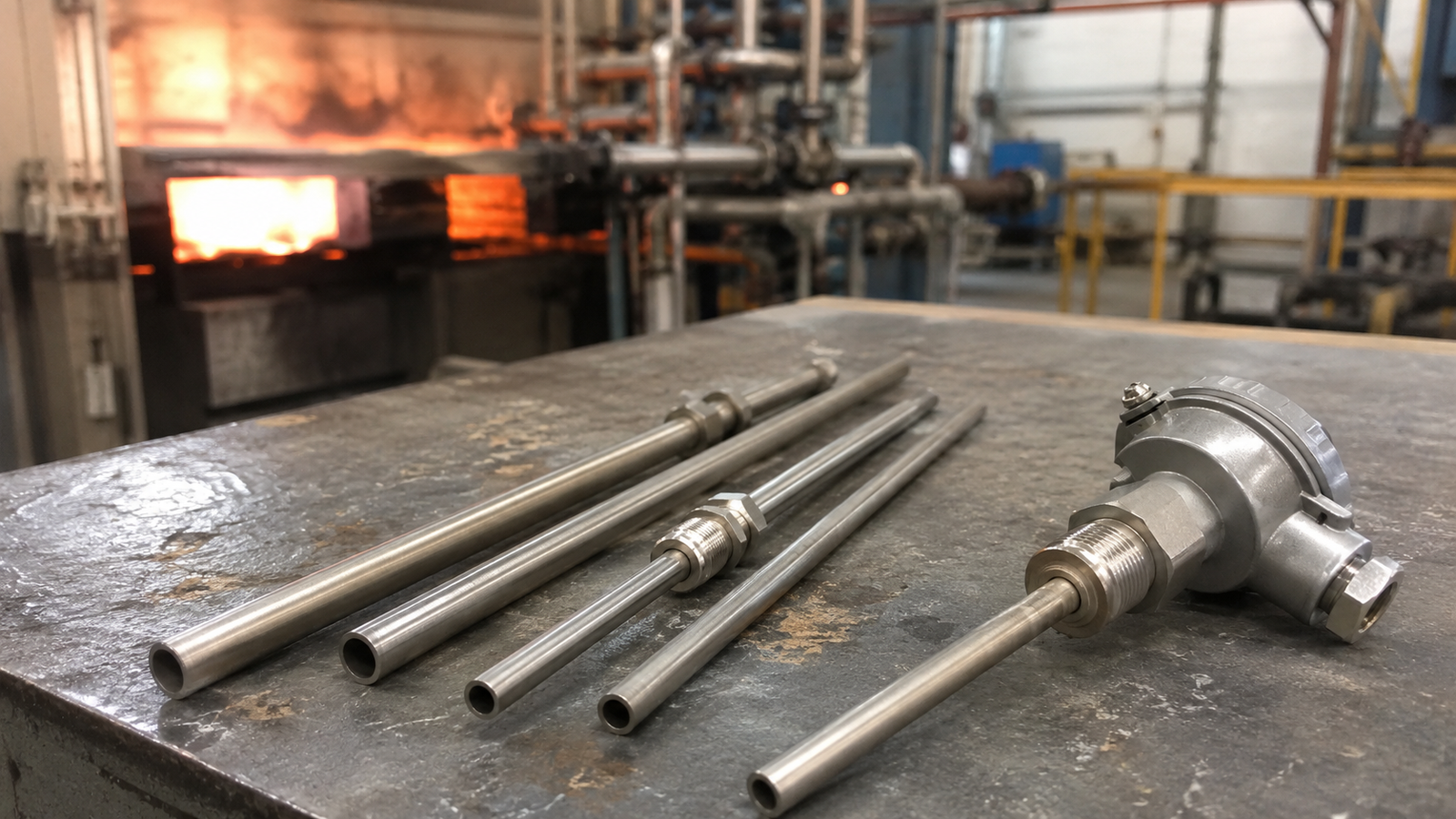
For buyers, engineers, and maintenance teams, the key question is not “Which nickel alloy is the best?” The better question is “Which nickel alloy tube is suitable for this temperature, atmosphere, pressure, corrosion risk, and expected service life?”
Does a One-Size-Fits-All Nickel Alloy Exist for Thermocouple Protection?
No single nickel alloy tube can handle every thermocouple protection application. Different industrial processes create different risks. A tube used in a high-temperature oxidizing furnace may need a different material than a tube used in a reducing, carburizing, sulfidizing, chlorinating, molten salt, steam, seawater, or acidic environment.
For example:
- A tube in high-temperature air or combustion gas may need strong oxidation resistance.
- A tube in a carburizing furnace may need resistance to carbon absorption and embrittlement.
- A tube in a sulfur-bearing atmosphere may need careful review of sulfidation risk.
- A tube in chloride-containing media may need resistance to pitting, crevice corrosion, or stress corrosion cracking.
- A tube in high-flow service may need erosion resistance and mechanical stability.
- A tube exposed to repeated heating and cooling may need thermal fatigue resistance.
- A tube under long-term high-temperature load may need creep resistance.
This is why a general “good high-temperature alloy” recommendation can be risky. Material performance is always connected to the real operating environment.
Thermocouple Protection Tube vs. Thermowell: Why the Difference Matters
Buyers sometimes use the terms thermocouple protection tube and thermowell interchangeably, but they are not always the same from a design and standard point of view.
ASME PTC 19.3 TW applies to thermowells machined from bar stock. The ASME page also notes that thermowells manufactured from pipe are outside the scope of that standard.
This distinction matters because a machined thermowell, welded thermowell, and fabricated protection tube may have different design requirements, wall thickness considerations, pressure limits, vibration risks, and inspection needs.
Before ordering, buyers should confirm whether they need:
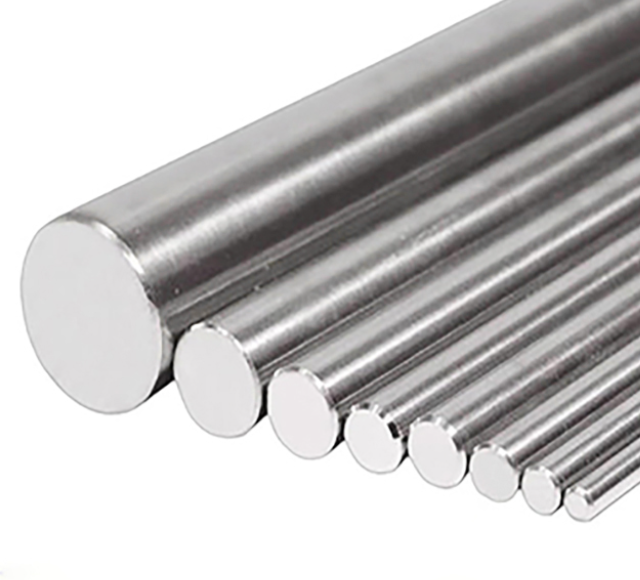
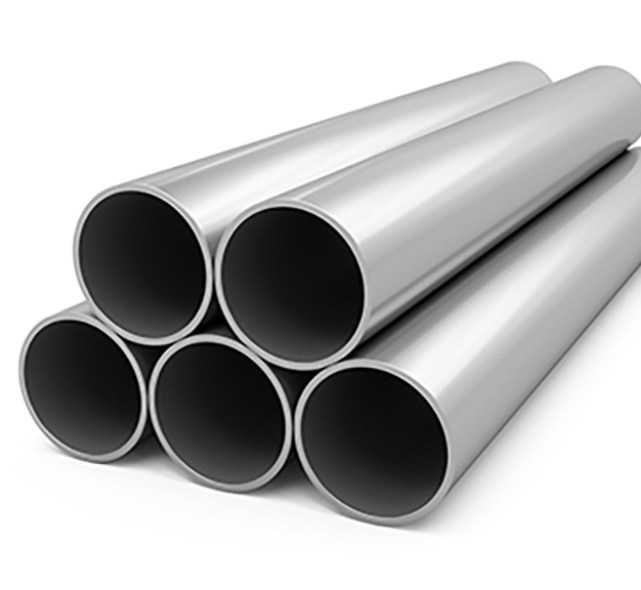
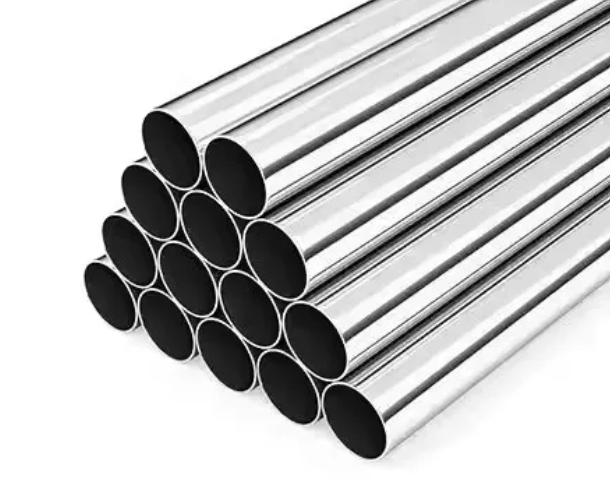
- Straight thermocouple protection tube
- Closed-end protection tube
- Welded or fabricated protection tube
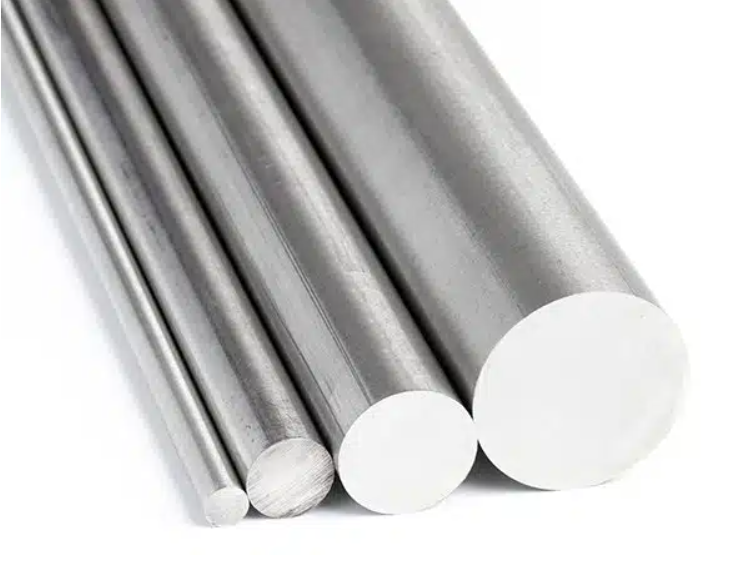
- Machined bar-stock thermowell
- Flanged thermowell
- Threaded thermowell
- Customized tube or assembly based on drawings
The product form affects both material selection and inspection requirements.
How Process Conditions Drive Nickel Alloy Selection
Process conditions are the main driver of nickel alloy selection. It is not enough to know that the application is “hot.” Buyers should confirm the actual atmosphere, corrosive media, pressure, flow condition, and operating cycle.
ASM International discusses several high-temperature corrosion mechanisms of nickel alloys, including oxidation, nitridation, sulfidation, halogenation, hot corrosion, ash or salt deposit corrosion, molten salt corrosion, and molten metal corrosion.
The following table gives a practical overview for buyer discussion. It should not be treated as a final material selection chart.
| Process Condition | Possible Material Risk | What Buyers Should Confirm |
|---|---|---|
| Oxidizing atmosphere | Scaling, oxide spalling, wall loss | Temperature, oxygen level, steam, combustion gas, thermal cycling |
| Reducing atmosphere | Different oxide stability, possible atmosphere-related attack | Gas composition, dew point, hydrogen, carbon monoxide, process contaminants |
| Carburizing atmosphere | Carbon absorption, embrittlement, internal attack | Carbon potential, temperature, exposure time, thermal cycle |
| Nitriding atmosphere | Nitrogen-related surface reaction or hardening | Nitrogen potential, temperature, required ductility |
| Sulfur-bearing atmosphere | Sulfidation, grain-boundary attack, rapid degradation risk | H₂S, SO₂, fuel impurities, sulfur in processed materials |
| Chloride or halogen environment | Pitting, crevice corrosion, stress corrosion cracking, halogen attack | Chloride level, moisture, temperature, pH, concentration |
| Molten salt or salt deposit | Hot corrosion, localized attack | Salt chemistry, temperature, deposit formation |
| Steam or superheated steam | Oxidation, scale growth, creep risk | Steam temperature, pressure, flow, service duration |
| High-flow or particle-containing media | Erosion, vibration, wear | Flow velocity, particle loading, vibration risk |
Different nickel alloy families may be considered depending on these factors, but the final choice should be based on actual process data, not only a grade name.
Why Temperature Alone Is Not Enough
Temperature is important, but it is only one part of material selection. A nickel alloy tube may resist a certain temperature in clean air but fail faster in a sulfur-bearing, chloride-bearing, carburizing, or high-velocity environment.
At elevated temperature, buyers should also consider:
- Oxidation resistance
- Hot corrosion resistance
- Creep resistance
- Thermal fatigue resistance
- Phase stability
- Surface scale behavior
- Mechanical strength at service temperature
- Compatibility with process atmosphere
- Long-term exposure behavior
For example, a tube exposed to repeated heating and cooling may fail by thermal fatigue even if the maximum temperature seems acceptable. A tube exposed to long-term stress at elevated temperature may slowly deform due to creep. A tube in corrosive gas may lose wall thickness even when its mechanical strength looks sufficient on paper.
How Alloy Composition Relates to Service Environment
Nickel alloys are widely used in demanding high-temperature and corrosive applications because different alloying elements can improve different properties. However, buyers should avoid oversimplified rules.
A practical way to understand alloy selection is to look at the purpose of major alloying elements:
| Alloying Element | Common Role in Nickel Alloys | Buyer Caution |
|---|---|---|
| Nickel | Base element for many corrosion-resistant and heat-resistant alloys | Performance still depends on full composition and environment |
| Chromium | Helps support oxidation resistance through protective oxide scale formation | Not enough by itself for every corrosive environment |
| Molybdenum | Often improves resistance in certain reducing and chloride-containing environments | Exact media, temperature, and concentration must be checked |
| Iron | Used in some nickel-iron-chromium alloys for cost and property balance | May affect behavior in specific corrosive environments |
| Niobium / Columbium | May contribute to strengthening or stabilization in selected alloys | Effect depends on alloy system and heat treatment |
| Aluminum / Titanium | Can contribute to strengthening or oxidation behavior in some alloys | Heat treatment and service temperature are important |
| Silicon | May help in selected high-temperature environments | Excessive simplification should be avoided |
For thermocouple protection tubes, alloy composition should be connected to the actual process atmosphere and expected failure mode. A buyer should not choose an alloy only because one element sounds beneficial.
Common Nickel Alloy Tube Candidates
The following examples are only general starting points for discussion. Final selection should always depend on actual temperature, atmosphere, pressure, corrosion media, and service life.
| Nickel Alloy Type | Typical Reason Buyers Consider It | Important Caution |
|---|---|---|
| Inconel 600 / Alloy 600 | Commonly considered for high-temperature oxidation and general heat-resistant applications | May not be suitable for all sulfur-bearing or chloride-rich conditions |
| Inconel 601 / Alloy 601 | Often considered where oxidation resistance is a key concern | Actual atmosphere and thermal cycle still need review |
| Inconel 625 / Alloy 625 | Often considered for corrosion resistance and strength in demanding environments | Cost, temperature range, and media compatibility must be checked |
| Incoloy 800 / 800H / 800HT | Often considered for high-temperature service and furnace-related applications | Supplied condition, creep requirement, and standard must be confirmed |
| Alloy 825 | Often considered for certain corrosive chemical environments | Not a universal high-temperature furnace material |
| Hastelloy C-276 / Alloy C-276 | Often considered for severe corrosion and chloride-containing environments | High-temperature mechanical and oxidation requirements must be reviewed |
| Nickel 200 / 201 | Used in selected caustic or reducing environments | Temperature and contamination limitations must be checked carefully |
This table should help buyers begin a technical discussion, not replace engineering review or project specifications.
What Questions Should Buyers Ask Suppliers?
A reliable supplier should not only quote a price. For thermocouple protection tubes, buyers should ask detailed questions about application, product form, standard, testing, and traceability.
Important questions include:
- Can you supply the tube according to the required ASTM, ASME, EN, ISO, or customer specification?
- Can you provide MTC / MTR for the specific heat number?
- Is the tube seamless, welded, fabricated, or machined from bar stock?
- What heat treatment condition is supplied?
- What surface finish is available?
- Can you support PMI testing?
- Can you support dimensional inspection and surface inspection?
- Can you support ultrasonic testing or liquid penetrant testing if required?
- Can you provide third-party inspection before shipment?
- Have you supplied similar tubes for comparable temperature, atmosphere, or corrosion conditions?
- What are the known limitations of the proposed alloy in this service environment?
- Can you help review the previous failure mode before recommending a replacement material?
A transparent supplier should be willing to discuss both the strengths and the limitations of a material.
What Documents Should Buyers Request?
Documentation helps verify that the delivered material matches the purchase order and project requirements.
For nickel alloy thermocouple protection tubes, buyers may request:
- Material Test Certificate / Mill Test Report
- Chemical composition report
- Mechanical properties report
- Heat number or batch number traceability
- Heat treatment record if required
- Dimensional inspection report
- Surface inspection report
- PMI report if required
- Ultrasonic testing report if required
- Liquid penetrant testing report if required
- Hydrostatic or pressure test report if required
- Third-party inspection report if required
- Packing list and material marking records
For metallic products, EN 10204 Type 3.1 inspection certificate is commonly used to provide specific inspection results and confirm compliance with order requirements. However, buyers should still check whether the certificate matches the actual material marking, heat number, size, standard, and purchase order.
What Testing May Be Useful?
Testing requirements depend on product form and application risk.
| Test / Inspection | Purpose |
|---|---|
| PMI testing | Helps verify alloy identity and major chemical elements |
| Chemical analysis | Confirms composition against the required grade or standard |
| Mechanical testing | Confirms tensile strength, yield strength, elongation, or hardness when required |
| Dimensional inspection | Confirms OD, ID, wall thickness, length, straightness, and tolerance |
| Visual inspection | Checks surface cracks, pits, scale, dents, or obvious defects |
| Ultrasonic testing | Helps detect internal discontinuities in suitable products |
| Liquid penetrant testing | Helps reveal surface-breaking defects |
| Hydrostatic / pressure testing | May be required for pressure-related tube applications |
| Third-party inspection | Adds independent verification for critical projects |
ASNT explains that ultrasonic testing uses high-frequency sound waves to detect and measure discontinuities in industrial components. ASNT also explains that liquid penetrant testing is used to reveal surface discontinuities in solid, nonporous materials.
How to Evaluate Supplier Capability
Supplier evaluation should go beyond price. A low-cost tube may become expensive if it lacks correct material verification, traceability, inspection, or technical support.
When evaluating suppliers, buyers should check:
| Supplier Factor | What to Ask | Why It Matters |
|---|---|---|
| Application understanding | Do they ask about temperature, atmosphere, media, pressure, and failure history? | Shows whether they understand the actual service condition |
| Product standard | Can they supply according to ASTM, ASME, EN, ISO, or customer drawings? | Helps ensure technical consistency |
| Material verification | Can they provide MTC / MTR and heat number traceability? | Helps confirm alloy identity and compliance |
| Manufacturing control | Can they explain tube production, heat treatment, surface finish, and inspection steps? | Helps reduce batch-to-batch variation |
| Inspection capability | Can they support PMI, UT, PT, dimensional inspection, or third-party inspection? | Helps reduce delivery risk |
| Quality system | Do they operate under a quality management system such as ISO 9001? | Indicates structured quality management, but does not replace product verification |
| Documentation consistency | Do certificates, labels, markings, and packing records match? | Helps prevent material mix-up |
| Technical communication | Can they discuss alternatives if the original material failed? | Helps avoid repeating the same material selection mistake |
ISO describes ISO 9001 as a quality management system standard. It can support supplier evaluation, but it should not be treated as proof that a specific batch of material is suitable for a specific thermocouple protection tube application.
Common Failure Modes and How to Reduce Risk
Most thermocouple protection tube failures are not random. They often come from a mismatch between material and service environment.
| Failure Mode | Possible Cause | How to Reduce Risk |
|---|---|---|
| Oxidation and scaling | High temperature in oxygen, steam, or combustion gas | Select alloy with suitable oxidation resistance and specify surface condition |
| Sulfidation | Sulfur-bearing atmosphere or fuel/process contamination | Confirm sulfur source and review alloy compatibility |
| Carburization | Carbon-rich high-temperature atmosphere | Check carbon potential and choose suitable carburization-resistant material |
| Nitridation | Nitrogen-rich atmosphere at elevated temperature | Confirm nitriding potential and service temperature |
| Chloride-related corrosion | Chlorides, moisture, acidic media, or salt deposits | Confirm chloride concentration, temperature, pH, and alloy resistance |
| Thermal fatigue | Repeated heating and cooling | Check thermal cycling and choose material with suitable ductility and stability |
| Creep deformation | Long-term stress at high temperature | Confirm load, temperature, and creep requirement |
| Erosion or vibration damage | High flow, particles, or unsupported tube length | Review design, support, wall thickness, and flow condition |
The best prevention method is to define the real operating environment before selecting the material.
Practical RFQ Checklist for Nickel Alloy Thermocouple Protection Tubes
Before sending an inquiry, buyers can prepare the following information:
- Application industry
- Sensor type or thermocouple type
- Product form: straight protection tube, closed-end tube, welded tube, machined thermowell, or customized part
- Required alloy grade if already known
- Standard: ASTM, ASME, EN, ISO, or customer specification
- OD, ID, wall thickness, length, and tolerance
- Operating temperature range
- Maximum temperature
- Temperature cycling condition
- Process atmosphere or media
- Pressure or vacuum condition
- Flow velocity or vibration risk
- Corrosive elements: chloride, sulfur, acid, alkali, steam, molten salt, or others
- Mechanical stress or installation condition
- Required surface finish
- Required certificate type, such as EN 10204 3.1
- Required testing: PMI, UT, PT, hydrostatic test, dimensional inspection, or third-party inspection
- Packing, marking, and delivery requirements
A clear RFQ helps the supplier understand the application and recommend a more suitable material instead of simply quoting a general nickel alloy tube.
Conclusion
Choosing nickel alloy tubes for thermocouple protection is not a simple “best alloy” decision. The right material depends on temperature, atmosphere, corrosive media, pressure, flow condition, mechanical stress, thermal cycling, surface finish, testing requirements, and supplier traceability.
A reliable selection process combines application analysis, suitable alloy choice, controlled manufacturing, inspection, and clear documentation. When these points are confirmed before ordering, thermocouple protection tubes are more likely to perform reliably and replacement risks become easier to control.