
How Should Buyers Select Nickel Alloy for Automotive Oxygen Sensor Protection Tubes?
Selecting material for automotive oxygen sensor protection tubes is not only a material-name decision. The protection tube works close to hot exhaust gas, combustion residues, thermal cycling, vibration and strict dimensional requirements.
For buyers, the real question is not:
What is the best nickel alloy?
A better question is:
What material condition, tube size, surface condition, heat resistance, oxidation resistance and documentation are required by this oxygen sensor design?
There is no single universal “best” nickel alloy for automotive oxygen sensor protection tubes. Candidate materials such as Inconel 600, Inconel 601 and Incoloy 800H/HT may be considered when high-temperature strength, oxidation resistance, thermal cycling resistance or creep resistance is required. However, final material selection should always follow the OEM drawing, sensor design, exhaust temperature, validation requirement, forming process, welding process and quality documentation requirement.
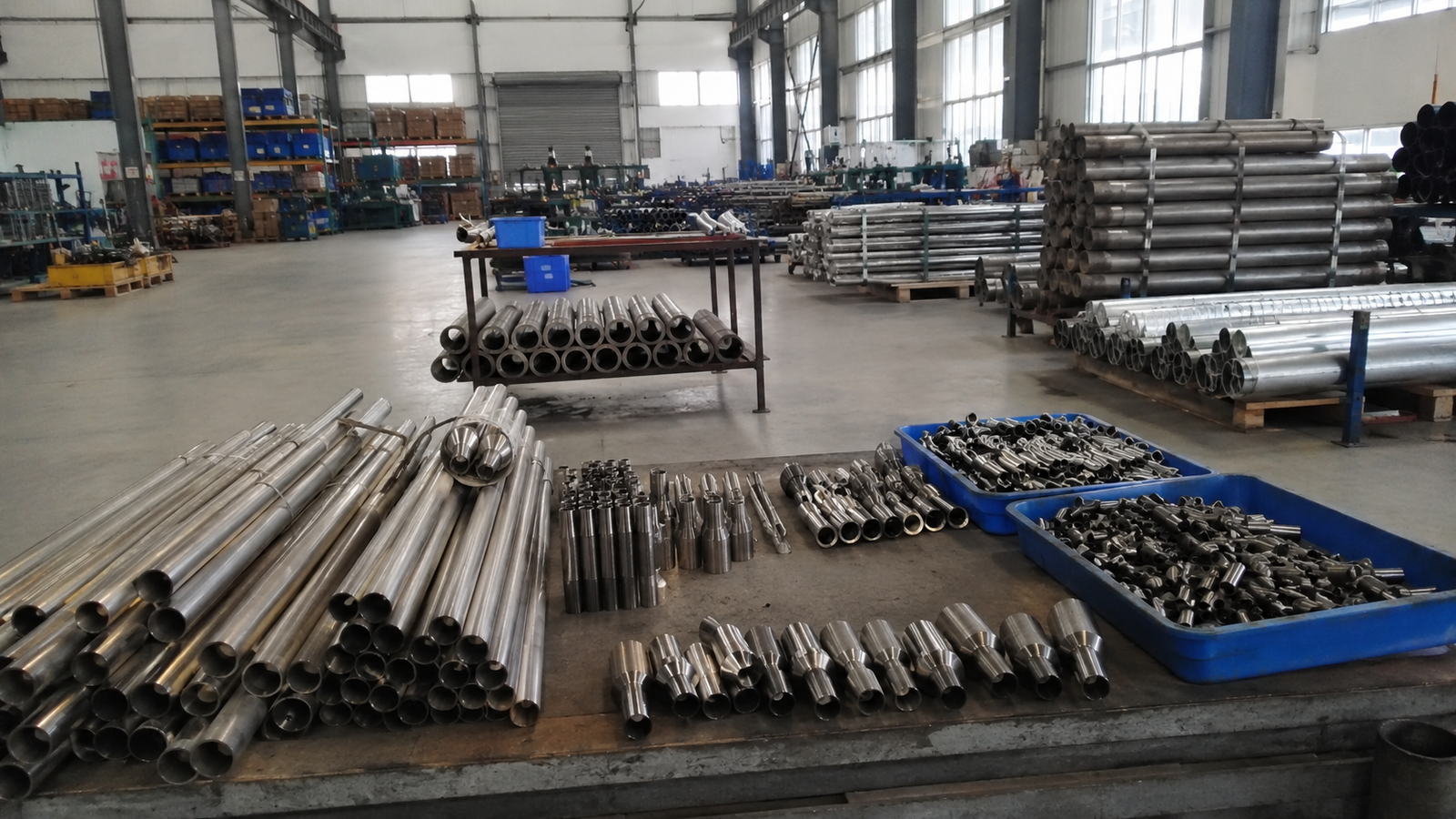
Bosch explains that a lambda sensor includes a protective tube, and that this protective tube helps protect the sensor against residues contained in exhaust gas. Source: Bosch Lambda Sensors PDF
Bosch LSU 4.9 data also shows that a wide-band lambda sensor may face exhaust gas temperature up to 930°C, with short-time exposure up to 1030°C depending on application. Source: Bosch Motorsport LSU 4.9 Data Sheet
This guide explains how buyers should evaluate nickel alloy materials for oxygen sensor protection tube applications.
Quick Answer: Which Nickel Alloy Is Best for Oxygen Sensor Protection Tubes?
There is no universal answer.
Inconel 600, Inconel 601 and Incoloy 800H/HT can all be considered in different high-temperature tube applications, but they are not interchangeable.
General Candidate Material Comparison
| Candidate Alloy | UNS Number | Main Strength | Possible Use Direction |
|---|---|---|---|
| Inconel 600 | UNS N06600 | Good high-temperature strength and oxidation resistance. | Candidate for general heat-resistant nickel alloy tube applications where the design does not require the higher oxidation resistance of Alloy 601. |
| Inconel 601 | UNS N06601 | Excellent high-temperature oxidation resistance due to chromium and aluminum content. | Candidate where oxidation resistance and thermal cycling performance are important. |
| Incoloy 800H | UNS N08810 | Higher creep and rupture strength than Alloy 800. | Candidate where elevated-temperature strength and controlled grain size are required. |
| Incoloy 800HT | UNS N08811 | Higher creep/rupture properties with controlled Al + Ti and heat treatment requirements. | Candidate for more demanding elevated-temperature tube conditions when validated by design. |
INCONEL alloy 600 is a nickel-chromium alloy with strength and oxidation resistance at high temperatures, used in corrosion-resistant and heat-resistant applications. Source: Special Metals — INCONEL Alloy 600
INCONEL alloy 601 has a nickel base and substantial chromium content for resistance to corrosive media and high-temperature environments, with oxidation resistance further enhanced by aluminum. Source: Special Metals — INCONEL Alloy 601
INCOLOY alloys 800H and 800HT have significantly higher creep and rupture strength than Alloy 800. Source: Special Metals — INCOLOY Alloy 800H/800HT
Buyer Takeaway
Do not ask only for “Inconel tube.” Confirm the exact UNS number, operating temperature, oxidation requirement, forming process, wall thickness, surface condition and validation requirement.
Why Is There No Single Best Nickel Alloy?
Automotive oxygen sensor protection tube designs can vary by vehicle type, engine layout, sensor position, exhaust temperature, sensor response requirement, protective tube geometry and OEM validation criteria.
The material may need to resist:
- High exhaust temperature
- Oxidation
- Combustion residues
- Deposits and contamination
- Thermal cycling
- Vibration
- Forming or deep drawing
- Laser welding or resistance welding
- Dimensional tolerance
- Surface cleanliness
- Long-term stability
Key Factors That Change Material Selection
| Factor | Why It Matters |
|---|---|
| Exhaust gas temperature | Higher temperature increases oxidation, creep and thermal fatigue risk. |
| Sensor location | Pre-catalyst and post-catalyst sensors may face different thermal and chemical conditions. |
| Thermal cycling | Repeated heating and cooling may cause cracking, distortion or fatigue. |
| Exhaust residues | Combustion residues or deposits may affect sensor protection and surface condition. |
| Vibration / shock | Engine vibration and road vibration may increase fatigue risk. |
| Tube geometry | Holes, slots, thin walls and drawn shapes influence manufacturability and strength. |
| Wall thickness | Thin-wall tubes require strict control of forming, welding and dimensional tolerance. |
| Weldability | Protection tubes may need welding or assembly with sensor housings. |
| Surface condition | Oxide, contamination, burrs or sharp edges may affect final sensor assembly. |
| OEM validation | Final material must pass design validation, not only material data sheet review. |
Buyer Takeaway
The material should be selected for the actual sensor design and operating environment, not for a generic material ranking.
What Material Properties Matter Most?
For automotive oxygen sensor protection tubes, material properties should be linked to the real function of the part.
Important Properties
| Property | Why It Matters |
|---|---|
| High-temperature oxidation resistance | The tube works in hot exhaust gas and must resist scaling or rapid oxidation. |
| Elevated-temperature strength | The tube must keep shape and strength under heat. |
| Thermal fatigue resistance | Repeated engine start/stop cycles create heating and cooling cycles. |
| Creep / rupture resistance | Relevant when temperature and stress are high enough for time-dependent deformation. |
| Formability | Thin protection tubes may require drawing, punching, forming or slotting. |
| Weldability | Sensor assemblies may require welding or joining. |
| Dimensional stability | OD, wall thickness, slot shape and end condition may affect assembly. |
| Surface cleanliness | Contamination, oxide scale or burrs may affect downstream assembly and sensor performance. |
| Traceability | Automotive supply chains often require heat number and MTR/MTC traceability. |
Buyer Takeaway
The best material is the one that passes the required design, production and validation requirements.
How Does Exhaust Temperature Affect Alloy Selection?
Temperature is one of the most important selection factors.
At high temperatures, materials may lose strength, oxidize, scale, distort or creep. The closer the protection tube is to the engine or exhaust manifold, the more important oxidation resistance and thermal cycling behavior become.
Temperature-Driven Material Concerns
| Temperature Concern | Material Requirement |
|---|---|
| High peak temperature | Oxidation resistance and high-temperature strength. |
| Repeated heating/cooling | Thermal fatigue resistance and stable oxide behavior. |
| Long exposure time | Creep resistance and microstructural stability. |
| Localized hot spots | Material must resist scaling or distortion at the hottest area. |
| Sensor warm-up requirement | Tube design must protect the element without preventing correct sensor response. |
Material Direction
| Condition | Possible Candidate Direction |
|---|---|
| Moderate high-temperature service | Inconel 600 may be considered if oxidation and strength requirements are within design limits. |
| Higher oxidation requirement | Inconel 601 may be considered due to enhanced oxidation resistance from aluminum content. |
| Higher creep/rupture requirement | Incoloy 800H/HT may be considered when elevated-temperature creep resistance is required. |
ASTM B167 covers UNS N06600 and UNS N06601 seamless pipe and tube intended for general corrosion-resistant and heat-resistant applications. Source: ASTM B167
ASTM B407 covers UNS N08810 and UNS N08811 seamless pipe and tube. It notes that these alloys are normally employed above 1100°F / 593°C where resistance to creep and rupture is required. Source: ASTM B407
Buyer Takeaway
For oxygen sensor protection tubes, temperature should be specified as normal operating temperature, peak temperature and short-time maximum temperature.
How Does Exhaust Gas and Contamination Affect Material Choice?
An oxygen sensor protection tube is exposed to exhaust gas flow and residues. The material must maintain surface stability and not degrade quickly under operating conditions.
Bosch states that the protective tube helps protect the sensor against residues contained in exhaust gas. Source: Bosch Lambda Sensors PDF
Exhaust-Side Risks
| Risk | Why It Matters |
|---|---|
| Oxidizing atmosphere | Can cause scaling or oxide growth at high temperature. |
| Combustion residues | Deposits may affect protection tube openings and sensor exposure. |
| Sulfur-containing compounds | May contribute to high-temperature corrosion depending on fuel and environment. |
| Chlorine-related contaminants | Possible in certain fuel/contamination cases; should be reviewed case by case. |
| Particulate matter | May create deposits or blockage depending on tube hole/slot design. |
| Condensation during cold start | May create wet/dry cycling and surface deposit issues. |
Buyer Takeaway
Do not describe the environment only as “exhaust gas.” Provide fuel type, sensor location, exhaust temperature, contamination risk and validation conditions.
How Should Buyers Compare Inconel 600, Inconel 601 and Incoloy 800H/HT?
The table below is a starting point, not a final design rule.
Candidate Alloy Comparison
| Alloy | Main Advantage | Possible Limitation | Buyer Should Confirm |
|---|---|---|---|
| Inconel 600 | Good oxidation resistance and strength at high temperature. | May not provide the same oxidation resistance as Alloy 601 in more severe conditions. | Temperature range, exhaust chemistry, wall thickness, forming and welding. |
| Inconel 601 | Excellent oxidation resistance; aluminum improves oxide stability. | Cost, availability and forming behavior must be checked for thin-wall designs. | Oxidation requirement, thermal cycling, surface condition and manufacturability. |
| Incoloy 800H | Improved creep/rupture strength compared with Alloy 800. | May be unnecessary if creep is not a design concern. | Whether service temperature and stress truly require 800H. |
| Incoloy 800HT | Controlled chemistry and heat treatment for higher creep/rupture properties. | Must meet additional UNS N08811 requirements; may be over-specified for lower-risk parts. | UNS N08811 certification, heat treatment, grain size and MTR/MTC details. |
Simple Selection Logic
| If the main concern is... | Consider evaluating... |
|---|---|
| General heat-resistant nickel alloy tube | Inconel 600 |
| Higher oxidation resistance | Inconel 601 |
| Elevated-temperature creep / rupture resistance | Incoloy 800H or 800HT |
| Strict OEM drawing requirement | Follow the exact drawing material |
| Cost-sensitive but non-critical use | Review whether nickel alloy is truly required |
| Thin-wall forming and welding | Validate manufacturability before bulk order |
Buyer Takeaway
Do not select by alloy reputation. Select by the property that the sensor protection tube actually needs.
What Tube Specifications Should Buyers Confirm?
Automotive sensor protection tubes are usually small, thin-wall and precision-controlled. Material grade is only one part of the purchase specification.
Tube Specification Checklist
| Item | What to Confirm |
|---|---|
| Material grade | Inconel 600, Inconel 601, Incoloy 800H, Incoloy 800HT or OEM-specified grade. |
| UNS number | N06600, N06601, N08810, N08811, etc. |
| Product standard | ASTM B167, ASTM B407 or customer/OEM drawing depending on alloy and product form. |
| Tube type | Seamless tube, welded tube, drawn tube, formed protection tube or custom part. |
| OD / ID / wall thickness | Critical for assembly, airflow and forming. |
| Length tolerance | Important for sensor assembly. |
| Hole / slot design | Affects gas exposure, protection and manufacturability. |
| Surface condition | Pickled, bright, cleaned, oxide-free, deburred or customer-specified finish. |
| Heat treatment | Annealed, solution annealed or customer-specified condition. |
| Hardness / strength | Important for forming, punching and assembly. |
| Weldability | Confirm if the tube will be welded to sensor housing. |
| Cleanliness | Important for sensor assembly and avoiding contamination. |
| MTR/MTC | Chemical composition, mechanical properties and heat number traceability. |
| NDT / inspection | Dimensional inspection, visual inspection, PMI, leak test or customer-specific test. |
| Validation | Prototype, sample approval or PPAP/customer validation if required. |
Buyer Takeaway
For oxygen sensor protection tubes, precision and repeatability may matter as much as alloy name.
How Can Buyers Verify Material Quality?
For specialized nickel alloy tubes, buyers should not rely only on verbal claims.
Useful Documents and Checks
| Document / Check | What It Helps Verify |
|---|---|
| MTR / MTC | Heat number, chemical composition, mechanical properties, heat treatment and standard. |
| EN 10204 3.1 certificate | Batch-specific test results and order compliance. |
| PMI report | Alloy identity by positive material identification if required. |
| Dimensional report | OD, ID, wall thickness, length, slot/hole dimensions and tolerance. |
| Surface inspection report | Surface finish, scratches, burrs, oxide or contamination. |
| Hardness report | Forming and heat treatment consistency if required. |
| NDT report | UT, ET, leak test or other test if specified. |
| Pre-shipment photos | Packaging, marking and visual condition before delivery. |
| Sample validation record | Prototype or sample test result before mass production. |
| Third-party inspection | Independent verification if required by project or buyer. |
EN 10204 Type 3.1 inspection certificates provide actual test results from the supplied material lot and are endorsed by a manufacturer’s representative independent from manufacturing. Source: EN 10204 Type 3.1 Inspection Certificates
ISO 9001 defines requirements for establishing, implementing, maintaining and continually improving a quality management system. Source: ISO 9001 — Quality Management Systems
Important Caution
ISO 9001 is a quality management system standard. It does not replace MTR/MTC, dimensional inspection, PMI, NDT or customer validation for a specific batch of material.
Buyer Takeaway
For automotive sensor-related tube parts, buyers should verify both material identity and production repeatability.
What Risks Should Buyers Control During Procurement?
Because oxygen sensor protection tubes may be small and precise, procurement risk is not only about alloy chemistry.
Common Procurement Risks
| Risk | How to Reduce It |
|---|---|
| Wrong alloy grade | Use UNS number, MTR/MTC and PMI if required. |
| Wrong wall thickness | Specify OD, ID, wall and tolerance clearly. |
| Poor formability | Validate material condition before mass production. |
| Welding problems | Confirm welding process, tube cleanliness and heat treatment. |
| Surface contamination | Require cleaning, caps, packing and surface inspection. |
| Dimensional variation | Require dimensional report and sampling plan. |
| Oxidation / scaling | Confirm high-temperature exposure and oxidation requirement. |
| Thermal fatigue | Perform prototype and thermal cycling validation if required. |
| Missing documentation | Require EN 10204 3.1 MTR/MTC and heat number traceability. |
| Supplier delay | Confirm lead time, MOQ and backup supply plan. |
| Over-specification | Avoid choosing higher-cost alloy without real design need. |
| Under-specification | Avoid generic “nickel alloy tube” without grade, size and condition. |
Buyer Takeaway
The safest procurement process starts with a clear drawing, clear material standard and clear inspection requirement.
RFQ Checklist for Oxygen Sensor Protection Tube Materials
When sending an inquiry, buyers should provide more than just “Inconel tube.”
Information to Include in RFQ
| RFQ Item | What to Provide |
|---|---|
| Application | Automotive oxygen sensor protection tube, sensor housing tube or exhaust-side protection component. |
| Material grade | Inconel 600, Inconel 601, Incoloy 800H/HT or OEM-specified material. |
| UNS number | N06600, N06601, N08810, N08811, etc. |
| Standard | ASTM B167, ASTM B407, ASME, EN, customer drawing or OEM specification. |
| Tube dimensions | OD, ID, wall thickness, length and tolerances. |
| Geometry | Straight tube, slotted tube, perforated tube, formed tube or custom drawing. |
| Surface condition | Pickled, bright, polished, cleaned, deburred, oxide-free or customer-specified finish. |
| Heat treatment condition | Annealed, solution annealed or drawing-specified condition. |
| Operating temperature | Normal temperature, peak temperature and short-time maximum temperature. |
| Exhaust environment | Fuel type, residues, deposits, thermal cycling and contamination concerns. |
| Mechanical conditions | Vibration, shock, assembly stress and welding process. |
| Inspection | Dimensional report, visual inspection, PMI, hardness, NDT or leak test if required. |
| Certificate | EN 10204 3.1 MTR/MTC, heat number traceability, CoC or third-party inspection. |
| Sample requirement | Prototype quantity, sample validation, trial order or PPAP if required. |
| Quantity and lead time | Development sample, pilot batch, mass production or annual demand. |
| Packing | End protection, surface protection, clean packing and labeling. |
Example RFQ Message
We are evaluating nickel alloy material for automotive oxygen sensor protection tubes. Candidate material: Inconel 601 / UNS N06601, ASTM B167 or customer drawing. Required tube size: OD 8.0 mm × WT 0.5 mm × length 35 mm, with slotted/perforated design according to drawing. Application: exhaust-side oxygen sensor protection tube with high-temperature oxidation and thermal cycling requirement. Please confirm manufacturability, heat treatment condition, surface finish, deburring, dimensional tolerance, EN 10204 3.1 MTR/MTC, heat number traceability, PMI option, sample lead time, MOQ and mass production capability.
Common Mistakes Buyers Should Avoid
1. Asking for “the Best Nickel Alloy”
There is no universal best alloy. Selection depends on temperature, exhaust environment, tube geometry, validation and cost.
2. Saying Only “Inconel Tube”
Inconel is a family of alloys. Always specify grade and UNS number.
3. Ignoring OEM Drawing Requirements
Automotive parts should follow drawing, validation and customer specification requirements.
4. Overlooking Wall Thickness
Small changes in wall thickness may affect forming, welding, gas flow and durability.
5. Ignoring Thermal Cycling
Engine start/stop cycles may create repeated heating and cooling stress.
6. Assuming Higher Alloy Always Means Better
A higher-cost alloy may be unnecessary if the temperature and oxidation requirement do not justify it.
7. Ignoring Surface Cleanliness
Burrs, oxide, oil or contamination may affect assembly and sensor performance.
8. Relying Only on ISO 9001
ISO 9001 supports quality management, but buyers still need MTR/MTC, dimensional reports and validation data.
9. Not Testing Samples
Prototype validation can prevent mass production problems.
10. Not Confirming Lead Time
Special nickel alloy small tubes may require custom production, drawing, heat treatment, cutting or forming.
FAQ: Nickel Alloy for Automotive Oxygen Sensor Protection Tubes
1. Is Inconel 601 better than Inconel 600 for oxygen sensor protection tubes?
Inconel 601 generally has stronger high-temperature oxidation resistance due to aluminum content, but whether it is better depends on the actual sensor design, temperature, cost and validation requirement.
2. When should Incoloy 800H or 800HT be considered?
Incoloy 800H/HT may be considered when elevated-temperature creep or rupture resistance is important. It may be unnecessary for lower-stress or lower-temperature designs.
3. What is the most important property for oxygen sensor protection tubes?
High-temperature oxidation resistance, thermal cycling resistance, dimensional stability, cleanliness and manufacturability are usually important. The exact priority depends on the design.
4. Does automotive exhaust always exceed 1000°C?
No. Exhaust temperature depends on engine type, sensor location and operating condition. Some sensor datasheets allow very high peak exhaust gas temperatures, but buyers should confirm the real temperature profile.
5. Is stainless steel enough for oxygen sensor protection tubes?
It depends on OEM design and operating conditions. Stainless steel may be used in many sensor applications, while nickel alloys may be evaluated when higher heat, oxidation or corrosion resistance is required.
6. What standard applies to Inconel 600 or 601 tubes?
ASTM B167 covers several nickel-chromium-iron alloys including UNS N06600 and UNS N06601 seamless pipe and tube.
7. What standard applies to Incoloy 800H/HT seamless tubes?
ASTM B407 covers nickel-iron-chromium alloy seamless pipe and tube, including UNS N08810 and UNS N08811.
8. Should buyers request EN 10204 3.1 MTR/MTC?
For industrial and quality-controlled orders, EN 10204 3.1 MTR/MTC is useful for batch-specific chemical and mechanical test results.
9. Is ISO 9001 enough to prove material quality?
No. ISO 9001 is a quality management system standard. Material quality should be verified by MTR/MTC, heat number traceability, inspection reports and validation results.
10. What should buyers send to suppliers?
Buyers should send material grade, UNS number, tube size, drawing, temperature profile, exhaust environment, surface condition, tolerance, inspection requirement, certificate requirement and sample quantity.
Conclusion
Selecting nickel alloy for automotive oxygen sensor protection tubes requires more than choosing a well-known alloy name.
Inconel 600, Inconel 601 and Incoloy 800H/HT may all be considered as candidate materials for different high-temperature protection tube requirements, but each alloy has different strengths.
The correct choice depends on exhaust temperature, oxidation requirement, thermal cycling, vibration, tube geometry, wall thickness, forming process, welding process, surface cleanliness, OEM drawing and validation requirements.
For buyers, the safest approach is to define the application clearly, compare candidate alloys with real service conditions, request MTR/MTC and traceability, validate samples and confirm supplier manufacturing capability before mass production.
Emily PIPE supplies nickel alloy tubes, nickel alloy bars, titanium alloy tubes and titanium alloy bars for global industrial applications. If you are evaluating nickel alloy tubes for automotive oxygen sensor protection tubes or other high-temperature sensor protection components, you can send your material grade, UNS number, size, drawing, operating temperature, surface condition and certificate requirement for technical review and quotation.