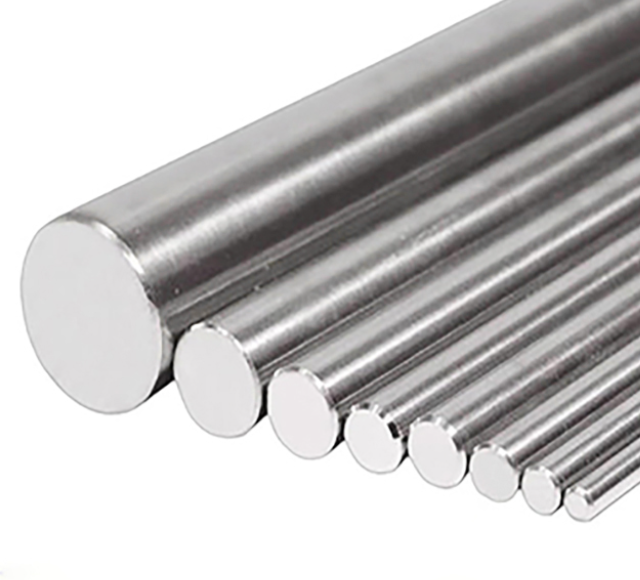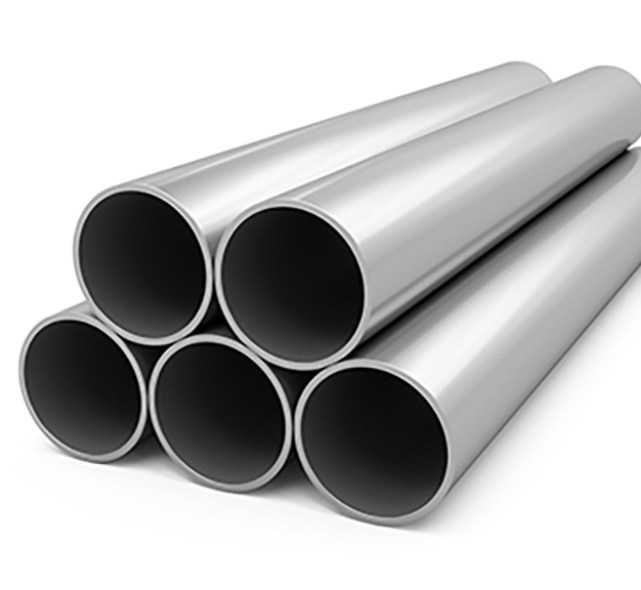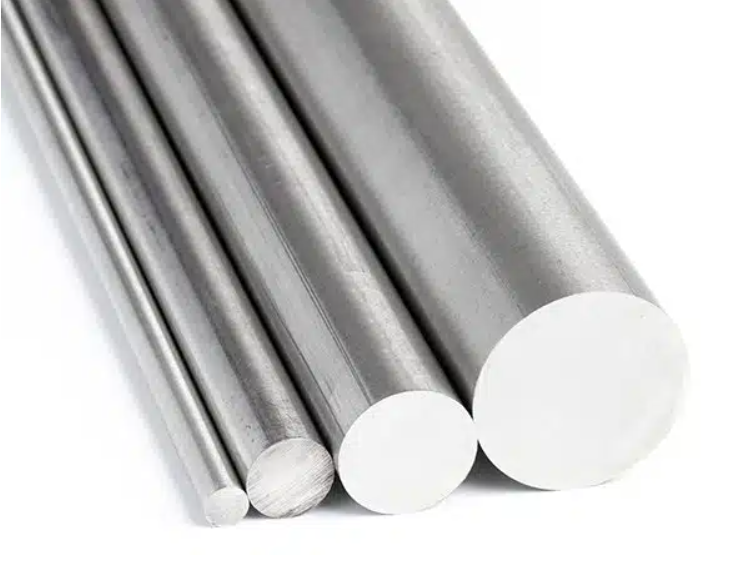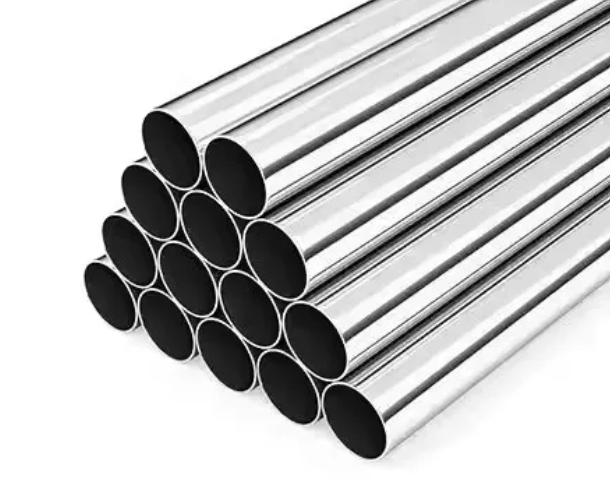

Material traceability is not just paperwork for hydrogen energy components. It is a practical way to verify material identity, batch history, processing condition, testing records and supplier accountability.
For hydrogen systems, this matters because material selection is highly dependent on service conditions such as hydrogen pressure, temperature, loading mode, purity, impurities, welding, heat treatment and component function.
Quick Answer:
Material traceability matters for hydrogen energy components because it helps buyers verify the material grade, heat number, chemical composition, mechanical properties, heat treatment, processing history, PMI, NDT, hydrogen-service testing and inspection records. Traceability does not guarantee long-term performance by itself, but it supports risk control, audits, root-cause analysis, supplier accountability and safer material procurement for hydrogen-related applications.
Traceability is generally understood as the ability to verify the history, location or application of an item through documented identification: Traceability - Wikipedia.
H2Tools explains that exposure of metals to hydrogen can lead to embrittlement, including losses in tensile strength, ductility and fracture toughness, as well as accelerated fatigue crack growth: H2Tools Material Compatibility.
Sandia National Laboratories explains that material suitability for hydrogen service depends on the mechanical, environmental and material conditions associated with a particular component: Sandia Technical Reference for Hydrogen Compatibility of Materials.
This is why hydrogen component buyers should not only ask, “What alloy is this?” They should also ask, “Can this exact material batch be traced, tested and verified for the required service condition?”
How Does Traceability Support Hydrogen Component Safety?
Traceability supports safety review by making the material history verifiable.
Hydrogen systems may involve high-pressure gas, liquid hydrogen, cyclic pressure, vibration, welding, cryogenic temperature, high temperature, fuel cell environments, electrolyzer service or corrosive impurities. These conditions can affect material behavior.
NASA defines hydrogen embrittlement as a process that results in decreased fracture toughness or ductility of a metal due to the presence of atomic hydrogen: NASA Hydrogen Embrittlement.
When a buyer has full traceability, the following questions become easier to answer:
- What exact alloy grade was supplied?
- What UNS number applies?
- Which heat number does the component belong to?
- What was the chemical composition of that heat?
- What mechanical test results were recorded?
- What heat treatment condition was supplied?
- Was PMI or grade verification performed?
- Were NDT or pressure tests performed?
- Were hydrogen-specific tests required or performed?
- Was third-party inspection required?
- Which batch, bundle, coil, bar, tube or forged piece was used?
Without traceability, buyers may have difficulty confirming whether a component actually matches the purchase order, drawing, material standard or hydrogen-service requirement.
Why Are Basic Material Specifications Not Enough?
A material specification is important, but it is usually only the baseline.
A specification may define:
- Chemical composition range
- Mechanical property limits
- Product form
- Heat treatment condition
- Dimensional tolerance
- Testing requirements
- Inspection requirements
However, the specification may not show the full material journey.
Specification vs. Traceability
| Item | What a Specification May Show | What Traceability Helps Verify |
|---|---|---|
| Alloy Grade | Required material grade | Actual batch chemistry and UNS number |
| Mechanical Properties | Minimum values | Actual tensile, yield, elongation or hardness results |
| Heat Treatment | Required condition | Actual heat treatment record or furnace batch |
| Product Form | Tube, bar, plate, forging or fitting | Actual production route and batch identity |
| Inspection | Required tests | Actual test reports and acceptance results |
| Material Identity | Material name | PMI, grade verification and heat number |
| Supplier Claim | Compliance statement | Supporting documents and records |
| Quality History | Not always visible | Nonconformance, rework or inspection records if shared |
For hydrogen components, a “meets specification” statement is useful, but it should be backed by MTR / MTC, heat number traceability and required test reports.
Why Is Heat Number Traceability Important?
A heat number links the delivered product to a specific melt or production batch.
This matters because the same alloy grade can be produced in different heats, with slight differences within allowable chemical ranges. Processing, heat treatment, cold work, welding or surface treatment can also affect final properties.
What Heat Number Traceability Supports
| Traceability Item | Why It Matters |
|---|---|
| Chemical Composition | Confirms the actual alloy chemistry for the supplied heat |
| Mechanical Properties | Confirms batch-specific tensile, yield, elongation and hardness data |
| Heat Treatment | Helps verify supplied condition |
| PMI Review | Helps reduce material mix-up risk |
| Batch Control | Helps identify affected material if a problem is found |
| Root-Cause Analysis | Links failure investigation to actual material batch |
| Audit Support | Provides evidence for customer or third-party review |
| Supplier Accountability | Helps identify where a process or document gap occurred |
ASTM E1476 provides guidance for nondestructive identification, grade verification and sorting of metals: ASTM E1476.
PMI or grade verification does not prove hydrogen compatibility. But it helps confirm that the supplied material is the correct alloy family and grade.
What Hydrogen-Specific Risks Make Traceability More Important?
Hydrogen can affect materials differently depending on the exact service condition.
Hydrogen-Related Risks Buyers Should Review
| Risk | Why Traceability Helps |
|---|---|
| Hydrogen Embrittlement | Confirms material grade, strength level, heat treatment and relevant testing |
| Fatigue Crack Growth | Links cyclic loading risk to actual material data |
| Fracture Toughness Reduction | Helps verify whether hydrogen-related data was requested |
| Weld / HAZ Risk | Tracks weld procedures, weld inspection and post-weld treatment |
| Hydride Risk in Titanium | Helps review material grade, exposure condition and processing route |
| Corrosion with Impurities | Links service chemistry to actual material and surface condition |
| Leakage Risk | Supports pressure test, NDT and dimensional records |
| Material Mix-Up | PMI and heat number help identify incorrect grade before installation |
ASTM G142 covers determination of tensile properties of metals in high-pressure, high-temperature or combined gaseous hydrogen-containing environments: ASTM G142.
ASTM G129 covers slow strain rate testing for evaluating metallic materials for environmentally assisted cracking: ASTM G129.
These tests are not required for every hydrogen component. But for critical applications, they show why hydrogen-service verification may need to go beyond normal room-temperature tensile testing.
What Standards and Codes May Require Better Documentation?
Hydrogen systems may fall under project-specific design codes, customer specifications or inspection requirements.
ASME B31.12 applies to piping and pipelines handling gaseous hydrogen, hydrogen mixtures and liquid hydrogen service. It covers requirements related to materials, welding, heat treating, testing, inspection, examination, operation and maintenance: ASME B31.12.
ISO/TR 15916 provides basic considerations for the safety of hydrogen systems and identifies safety concerns, hazards and risks related to gaseous and liquid hydrogen: ISO/TR 15916.
These references support an important procurement point: hydrogen materials should be documented according to the actual system requirement, not only according to a generic alloy name.
What Documents Should Buyers Request?
For hydrogen energy components, buyers should request documents that make the material history clear.
Core Traceability Documents
| Document | What It Confirms |
|---|---|
| MTR / MTC | Batch-specific chemical composition and mechanical properties |
| Heat Number | Link to original production heat or melt |
| UNS Number | Exact material designation |
| Product Standard | ASTM / ASME / EN / ISO / customer specification |
| Heat Treatment Record | Supplied condition and process confirmation |
| PMI Report | Grade verification and material identity |
| Mechanical Test Report | Tensile, yield, elongation, hardness, impact if required |
| NDT Report | UT, ECT, PT, RT or other inspection if required |
| Hydrostatic / Leak Test Report | Pressure or leak integrity when required |
| Hydrogen-Specific Test Report | G142, G129, SSRT, fatigue or fracture testing if required |
| Dimensional Report | Size and tolerance verification |
| Surface Inspection Report | Surface condition and visual acceptance |
| Third-Party Inspection Report | Independent verification if required |
| Packing and Marking Record | Confirms labeling, batch separation and shipment traceability |
ASTM E8/E8M covers tension testing of metallic materials and includes determination of yield strength, tensile strength, elongation and reduction of area: ASTM E8/E8M.
A normal MTR is useful, but it may not prove hydrogen compatibility unless hydrogen-specific testing is included and linked to the actual service requirement.
What Is the Difference Between 3.1 and 3.2 Documentation?
Some hydrogen projects may request EN 10204 Type 3.1 or Type 3.2 inspection documents.
Type 3.1 is generally manufacturer-issued inspection documentation based on the supplied product and required tests. Type 3.2 adds independent verification when required by the buyer, project or specification.
ABS explains that EN 10204 Type 3.2 certification can involve third-party visual examination, dimensional checks, confirmation that materials are traceable back to ladle chemical analysis and witnessing of mechanical tests: ABS EN 10204 Type 3.2 Certification.
Not every order needs Type 3.2. But for critical hydrogen components, buyers should confirm the certificate level before production because it can affect inspection planning, cost and lead time.
Why Supplier Traceability Systems Matter
Traceability is not only one document. It is a system.
A qualified supplier should be able to connect:
- Raw material source
- Heat number
- Production order
- Processing route
- Heat treatment
- Inspection records
- Test reports
- Final marking
- Packaging
- Shipment documents
ISO explains that the ISO 9000 family helps organizations improve product and service quality and consistently meet customer expectations: ISO 9000 Family.
However, ISO quality management certification does not replace batch-specific MTR / MTC, heat number traceability, hydrogen-service review or project-required testing.
Supplier Verification Checklist
| Verification Item | What to Ask |
|---|---|
| Material Identity | Can exact grade and UNS number be confirmed? |
| Heat Number Control | Can each tube, bar, forging or part be traced to heat number? |
| Batch Separation | How does the supplier prevent material mix-up? |
| MTR / MTC | Are batch-specific chemical and mechanical data provided? |
| Heat Treatment | Are heat treatment records available if required? |
| PMI | Can grade verification be performed? |
| NDT | Can required UT, ECT, PT, RT or hydrostatic testing be supported? |
| Hydrogen Testing | Can ASTM G142, G129 or customer-specific testing be supported if required? |
| Third-Party Inspection | Can SGS, BV, TÜV, ABS, LRQA or buyer-appointed inspection be supported? |
| Record Retention | How long are batch records retained? |
| Change Control | How are process, subcontractor or material changes communicated? |
| Nonconformance Control | How are nonconforming materials identified and separated? |
A supplier that cannot explain its traceability system clearly may create documentation risk for critical hydrogen projects.
How Does Traceability Help Root-Cause Analysis?
If a hydrogen component leaks, cracks or fails inspection, traceability helps narrow the investigation.
Without Traceability
Buyers may not know:
- Which heat the part came from
- Whether the correct grade was supplied
- Whether heat treatment was correct
- Whether PMI was performed
- Whether similar parts from the same heat are installed elsewhere
- Whether the issue is isolated or batch-related
- Which supplier or process step should be reviewed
With Traceability
Buyers can review:
- Heat number
- Chemical composition
- Mechanical properties
- Heat treatment condition
- Inspection results
- NDT records
- Welding or fabrication history
- Shipment and installation batch
- Similar components from the same lot
Traceability does not automatically identify the root cause. But it gives engineers the data needed to investigate more efficiently.
How Does Traceability Support Maintenance and Asset Management?
Hydrogen components may operate under pressure cycling, temperature changes, vibration, corrosion exposure or hydrogen embrittlement risk.
When maintenance teams know the exact material batch, heat treatment and inspection history, they can make better decisions about inspection intervals, spare part replacement and risk review.
Maintenance Benefits of Traceability
| Maintenance Need | How Traceability Helps |
|---|---|
| Inspection Planning | Identifies which components share the same heat or process route |
| Spare Part Control | Ensures replacement parts match required grade and standard |
| Failure Investigation | Links problem parts to original batch records |
| Audit Review | Provides documents for customer or third-party audit |
| Change Management | Shows whether a supplier, heat treatment or process route changed |
| Life-Cycle Cost Review | Helps compare initial cost with maintenance and replacement risk |
The U.S. Environmental Protection Agency defines life-cycle cost as original cost minus salvage value plus operating costs, maintenance costs, renewal costs and decommissioning costs: EPA Life Cycle and Replacement Costs.
The U.S. Department of Energy’s O&M Best Practices Guide describes reactive maintenance as allowing equipment to run to failure and then repairing or replacing damaged equipment when obvious problems occur: DOE O&M Best Practices Guide.
For hydrogen projects, traceability can support a more planned approach to inspection and replacement.
What Should Buyers Confirm Before Ordering Hydrogen Materials?
Before placing an order, buyers should prepare a clear traceability requirement.
Hydrogen Material Traceability Checklist
| RFQ Item | What to Provide or Require |
|---|---|
| Application | Storage, piping, valve, compressor, heat exchanger, fuel cell, electrolyzer |
| Hydrogen Form | Gaseous, liquid, mixed gas or electrochemical hydrogen |
| Pressure | Operating and design pressure |
| Temperature | Minimum, normal, maximum and cycling temperature |
| Loading | Static, cyclic, vibration, fatigue or thermal cycling |
| Impurities | Moisture, oxygen, sulfur, chloride, H2S or other species |
| Material Grade | Nickel alloy, titanium alloy, stainless steel or open to recommendation |
| UNS Number | Exact material designation |
| Product Form | Tube, pipe, bar, forging, plate, fitting or machined part |
| Product Standard | ASTM, ASME, EN, ISO or customer specification |
| Heat Treatment | Annealed, solution annealed, aged, stress relieved or other |
| Welding Requirement | Seamless, welded, weld procedure and NDT if required |
| Testing | Chemical, mechanical, hardness, PMI, NDT, hydrogen-specific testing |
| Documentation | MTR / MTC, heat number, inspection reports |
| Certificate Level | EN 10204 3.1 or 3.2 if required |
| Traceability Marking | Heat number, batch label, bundle tag or part marking |
| Third-Party Inspection | Required or optional |
| Record Retention | Required retention period if specified |
| Packaging | Marking, separation, protection and export packing |
| Delivery | Required date, destination and shipping method |
This information helps suppliers quote the same technical scope and reduces later documentation disputes.
Example RFQ Wording
For nickel alloy materials:
“Please quote nickel alloy tubes / bars for hydrogen system components. Material: Alloy / UNS . Application: hydrogen valve / compressor / heat exchanger / piping component. Hydrogen condition: gaseous hydrogen, pressure MPa, temperature °C, purity , cyclic loading yes/no. Required standard: ASTM / ASME / customer specification . MTR / MTC, heat number traceability, chemical analysis, mechanical test report, PMI, dimensional inspection and NDT option required. Please confirm whether hydrogen-specific testing such as ASTM G142 or ASTM G129 is required or available.”
For titanium alloy materials:
“Please quote titanium alloy tubes / bars for hydrogen-related equipment. Material: Titanium Grade / UNS . Application: heat exchanger / lightweight component / corrosion-resistant part. Please review hydrogen exposure, electrochemical conditions, temperature, pressure, welding requirement and hydride risk. MTR / MTC, heat number traceability, dimensional inspection, surface inspection and third-party inspection option required.”
For traceability requirements:
“All supplied materials must be traceable by heat number. MTR / MTC must show chemical composition, mechanical properties, heat treatment condition and applicable standard. Material marking, bundle labeling and packing list must match the heat number and batch records. PMI and third-party inspection shall be quoted as optional items unless otherwise required by the purchase order.”
This is clearer than simply writing:
“Please quote hydrogen-compatible material with certificate.”
How Emily PIPE Supports Hydrogen Material Buyers
Emily PIPE is a China-based manufacturer and exporter specializing in nickel alloy tubes, nickel alloy bars, titanium alloy tubes and titanium alloy bars. We support customers across chemical processing, oil and gas, marine engineering, aerospace, power generation, heat exchangers, hydrogen-related equipment and other corrosion-resistant or high-temperature applications.
For hydrogen material projects, we can support:
- Nickel alloy tubes and pipes
- Nickel alloy bars for machined components
- Titanium alloy tubes and pipes
- Titanium alloy bars for machined components
- Alloy 625, Alloy 718, Alloy 600, Alloy 601, Alloy 825, Alloy C276, Nickel 200 and other grades according to project requirements
- Titanium Grade 2, Grade 7, Grade 12, Grade 5 and other grades according to application review
- Custom OD, wall thickness, length, tolerance and surface condition
- MTR / MTC and heat number traceability
- Dimensional and surface inspection
- PMI, chemical analysis, tensile, hardness, UT, ECT, hydrostatic and other testing support when required
- Third-party inspection support
- Export packaging and logistics support
Our role is not to claim that traceability alone guarantees hydrogen-service performance. Our role is to help buyers clarify material grade, standard, hydrogen condition, pressure, temperature, testing, documentation and traceability requirements before production.
If you are sourcing nickel or titanium alloy materials for hydrogen energy components, please send the drawing, material grade, UNS number, product form, hydrogen condition, pressure, temperature, impurity level, loading condition, testing requirement, documentation requirement and destination. Our team can help review your requirements and provide a suitable quotation.
FAQ: Material Traceability for Hydrogen Energy Components
1. What is material traceability?
Material traceability is the ability to verify the history, location or application of a material or component through documented identification such as heat number, batch number, MTR / MTC and inspection records.
2. Why does traceability matter for hydrogen components?
Hydrogen components may face embrittlement, fatigue, cracking, leakage or corrosion risks. Traceability helps verify the exact material, heat treatment, testing and inspection history.
3. Does traceability guarantee hydrogen compatibility?
No. Traceability does not guarantee compatibility. It supports verification, audit review, root-cause analysis and supplier accountability.
4. Is an MTR enough?
An MTR is important, but it may not be enough for critical hydrogen service. Buyers may also need heat number traceability, PMI, NDT, heat treatment records, hydrogen-specific tests and third-party inspection.
5. What is a heat number?
A heat number links the supplied material to a specific melt or production batch. It helps connect the final product to chemical composition and mechanical test results.
6. What is PMI?
PMI means positive material identification. It helps verify alloy grade and reduce material mix-up risk.
7. When is EN 10204 3.2 useful?
EN 10204 Type 3.2 may be useful when independent third-party verification is required by the buyer, project or end user.
8. What should buyers ask suppliers?
Buyers should ask for exact grade, UNS number, product standard, heat number, MTR / MTC, PMI, NDT, heat treatment record, certificate level and third-party inspection options.
Conclusion
Material traceability is a key part of hydrogen energy material procurement.
It does not replace engineering design, hydrogen-specific testing or correct material selection. But it helps buyers verify material identity, processing history, test results, supplier control and documentation.
For nickel alloy and titanium alloy materials used in hydrogen-related components, strong traceability helps reduce material mix-up, documentation gaps, audit risk and root-cause uncertainty.