
Is Inconel Stronger Than Stainless Steel? A Practical Guide for Procurement
Struggling to choose between Inconel and stainless steel? The cost difference is huge, but you worry about performance. How do you pick the right one for your project?
The short answer: Inconel is not always stronger. Its main advantage is maintaining mechanical integrity at extreme temperatures and resisting aggressive corrosion. For many room-temperature applications, specific high-strength stainless steel grades are actually stronger and far more cost-effective.
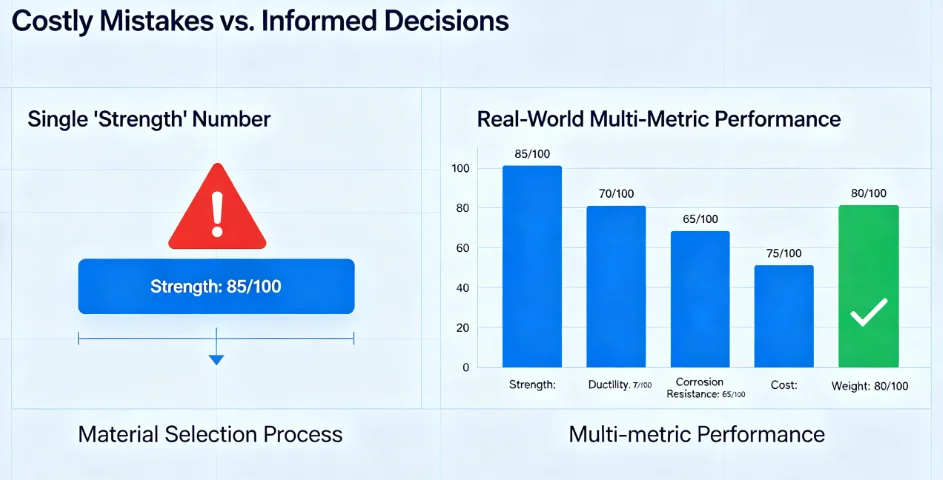
1. What Does "Stronger" Actually Mean for Metal Parts?
Choosing a material based on a single "strength" number can lead to costly mistakes. In the real world, we measure performance through different metrics:
- Yield Strength: The stress at which a material begins to deform permanently.
- Ultimate Tensile Strength (UTS): The maximum stress a material can withstand before breaking.
- Creep Strength: The ability to resist slow deformation under constant stress at high temperatures.
At Emily PIPE, we leverage 15 years of metallurgical experience to help customers avoid over-specifying. For many structural parts, high-strength stainless steel provides an ideal safety factor without the "Inconel premium."
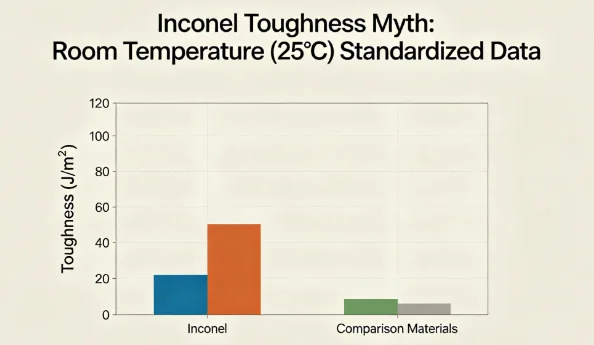
2. The Room Temperature Reality Check
It’s a common myth that Inconel is always tougher. Let’s look at the standardized data for room temperature ($25^circ C$):
| Alloy Grade | Yield Strength (MPa) | Tensile Strength (MPa) | Why It Matters |
|---|---|---|---|
| 316L Stainless Steel | ~290 | ~515 | Standard industrial grade. |
| 17-4PH Stainless (H900) | ~1170 | ~1310 | Mechanically stronger than many Inconels at RT. |
| Inconel 625 (Annealed) | ~414 | ~827 | Excellent fatigue & corrosion resistance. |
| Inconel 718 (Aged) | ~1035 | ~1240 | High-strength aerospace superalloy. |
Expert Insight: As evidenced by standard material data sheets, a heat-treated 17-4PH Stainless Steel can exhibit nearly double the yield strength of annealed Inconel 625 at ambient temperatures.
3. The "Thermal Watershed": 600°C (1100°F)
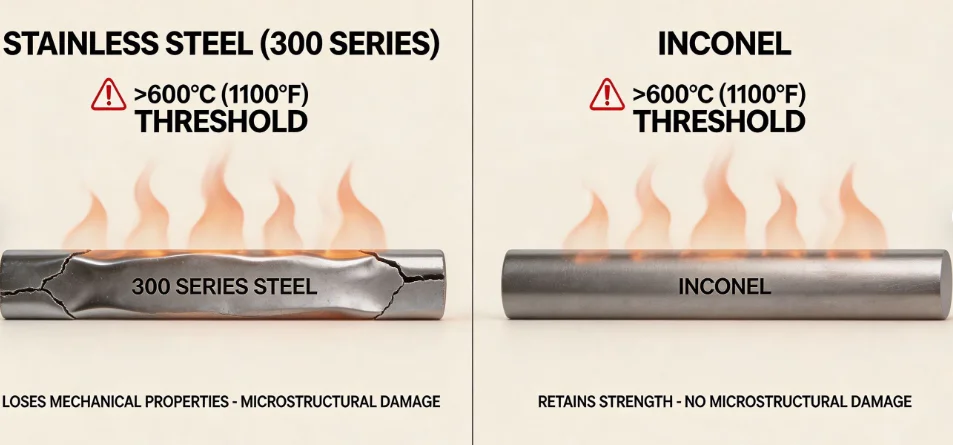
Inconel earns its reputation when the heat is on. Most stainless steels (such as the 300 series) lose their mechanical properties rapidly once they cross the 600°C (1100°F) threshold due to microstructural changes.
While stainless steel lattices begin to "soften," Inconel maintains its rigidity through solid solution strengthening. In environments like chemical reactors or exhaust systems, Inconel remains stable while stainless steel would undergo creep failure.
4. The Corrosion Defense: Calculating the PREN
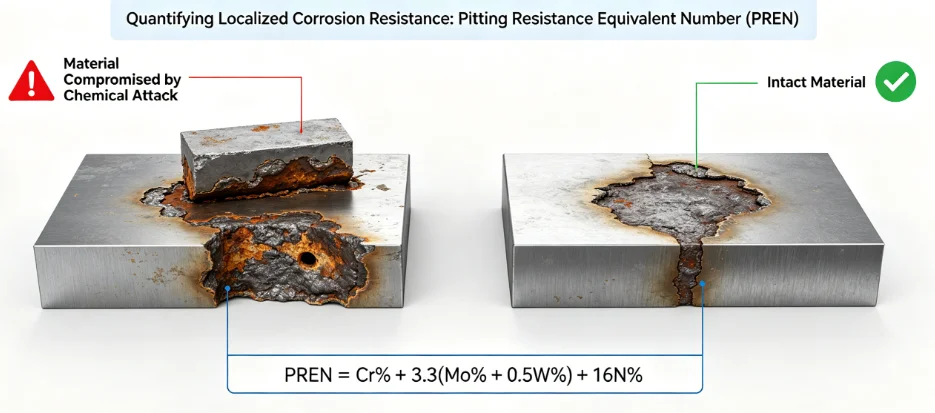
Strength is useless if the material is compromised by chemical attack. We quantify localized corrosion resistance using the Pitting Resistance Equivalent Number (PREN):
$$PREN = %Cr + 3.3 times (%Mo + 0.5 times %W) + 16 times %N$$
According to research found on ScienceDirect:
- 316L Stainless Steel: PREN ≈ 24-25 (Standard protection).
- Inconel 625: PREN ≈ 45-50 (Designed for severe marine and acidic environments).
5. The Business Decision: Cost vs. Machinability
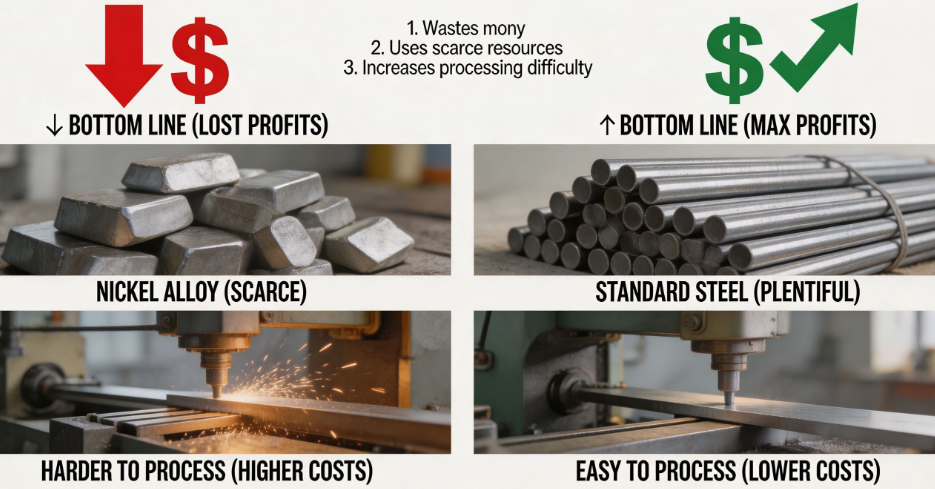
Choosing the "strongest" material when it’s not required can hurt your bottom line. Beyond material scarcity, nickel alloys are significantly harder to process.
Using the Machinability Index (where 1212 Carbon Steel = 100%):
- 304/316 Stainless Steel: ~35-45% (Easy to CNC).
- Inconel 718: ~10-12% (Requires specialized ceramic tooling and slower cycle times).
The Bottom Line: An Inconel component can cost 5 to 10 times more than its stainless steel equivalent due to raw material prices and extended machining hours.
Conclusion
Is Inconel stronger?
- In a $700^circ C$ furnace or sour gas environment? Absolutely.
- For a structural bracket at room temperature? No—high-strength stainless steel is often the smarter, more economical choice.
At Emily PIPE, we bring over 20 years of manufacturing expertise to help you select the material that scientifically matches your project's technical and budgetary requirements.
[Contact Emily PIPE for a Technical Material Consultation]