
How to Replace an Old Alloy Part: Why Chemical Matching Is Not Enough
Do you have an old alloy part that is worn, damaged, discontinued, or difficult to source? At first, replacement may look simple: test the chemistry, find the same grade, and order a new part.
In reality, replacing an alloy from an old sample is more complex.
A reliable replacement should not be based only on chemical composition. Buyers should also evaluate the original part’s function, working environment, manufacturing route, heat treatment condition, microstructure, mechanical properties, failure history, certificate traceability, and validation requirements. Material selection should consider performance goals, material properties, cost, and working conditions, not only one material parameter.
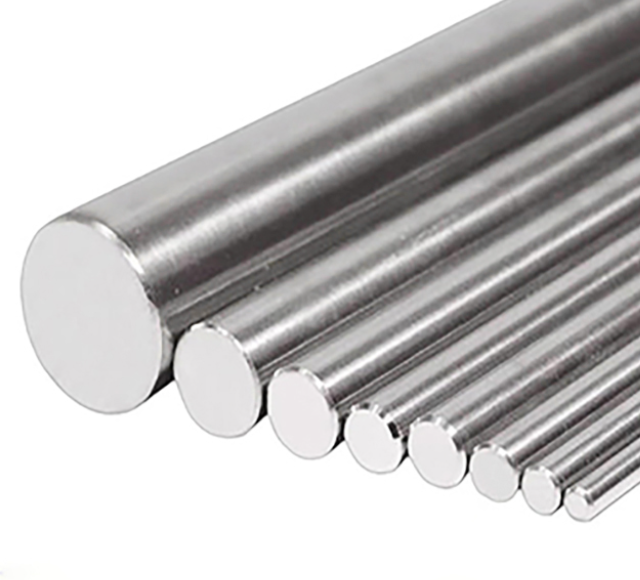
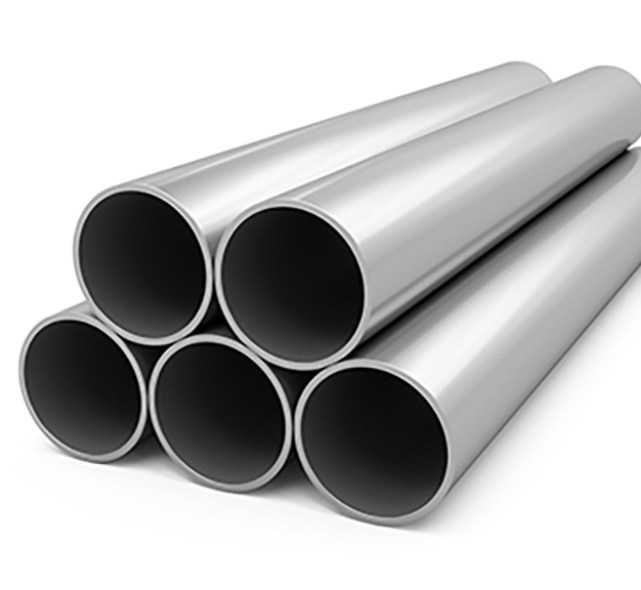
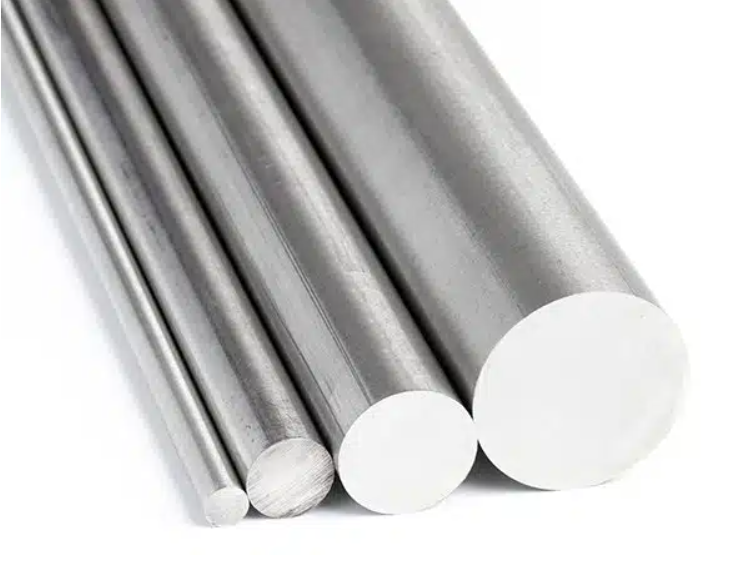
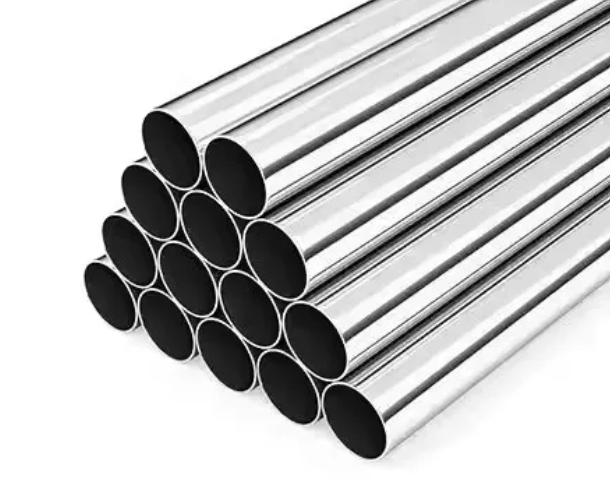
For nickel alloy tubes, nickel alloy bars, titanium alloy tubes, and titanium alloy bars, an old sample can be helpful, but it is not the full answer. A sample may tell you what the material is, but it may not tell you why that material was originally selected, how it was processed, or whether the same material is still the best choice for the current application.
This guide explains what buyers should confirm when replacing an old alloy part or sourcing a replacement material from an old sample.
Quick Answer: Can You Replace an Alloy Only by Matching Chemistry?
Not reliably.
Chemical analysis can help identify the alloy family and possible grade, but it cannot fully prove product form, heat treatment, mechanical properties, microstructure, fatigue resistance, creep performance, corrosion resistance, manufacturing route, or application suitability.
| Replacement Question | Why It Matters |
|---|---|
| What is the chemical composition? | Helps identify alloy family, possible grade, and UNS number |
| What was the original function? | Defines whether strength, corrosion resistance, wear resistance, or high-temperature performance was critical |
| What was the working environment? | Temperature, pressure, media, chloride, pH, flow, and stress affect performance |
| How was the original part manufactured? | Hot worked, cold worked, seamless, welded, forged, machined, or heat-treated condition may change properties |
| What was the heat treatment condition? | Annealed, solution annealed, aged, stress relieved, or cold worked condition affects performance |
| What mechanical properties are needed? | Tensile strength, yield strength, elongation, hardness, fatigue, creep, or impact toughness may be critical |
| Did the old part fail? | Failure mode helps identify whether the old material was actually suitable |
| Is there an old MTC or heat number? | Supports traceability and confirms original material data |
| Is the original specification still available? | Obsolete or unavailable grades may require approved alternatives |
| Who approves the substitution? | Final replacement should be approved by the buyer’s engineer or end user |
The goal is not to copy the old sample blindly. The goal is to confirm a replacement material that meets the real functional requirements.
Why Isn’t Simple Chemical Analysis Enough?
Chemical analysis is useful, but it only answers one part of the replacement question.
It can show which elements are present in the sample, but it does not fully show how the material was processed, heat treated, tested, used, damaged, or approved.
A chemical match may not be a performance match. Similar chemistry can still result in different mechanical properties, corrosion behavior, fatigue resistance, creep resistance, hardness, ductility, or machinability because manufacturing route, heat treatment, cold working, and microstructure also matter.
What Chemical Analysis Can and Cannot Tell You
| Chemical Analysis Can Help Identify | Chemical Analysis Cannot Fully Prove |
|---|---|
| Alloy family | Original manufacturing route |
| Main alloying elements | Heat treatment condition |
| Possible UNS number | Mechanical property level |
| Possible grade range | Fatigue or creep performance |
| Major composition mismatch | Corrosion performance in the real environment |
| Material mix-up risk | Microstructure, grain size, precipitates, or residual stress |
| Whether chemistry is close to a standard | Whether the part is suitable for the current application |
| Whether further testing is needed | Whether the old part failed because of material, design, fabrication, or service condition |
Heat treating is commonly used to optimize alloy mechanical properties. Annealing can change ductility and hardness by altering the material structure. Cold working can make metal harder and stronger but less plastic and may leave residual stress.
These factors show why chemistry alone is not enough for replacement decisions.
What Information Should Be Collected From the Old Part?
Before asking a supplier to quote a replacement, buyers should collect as much information as possible from the old part and project records.
Old Part Information Checklist
| Information Source | What to Look For |
|---|---|
| Material Marking | Grade, UNS number, heat number, standard, size |
| Old Drawing | Dimensions, tolerance, material note, heat treatment, surface finish |
| Old Purchase Order | Original grade, standard, supplier, certificate type |
| Old MTC / MTR | Chemistry, mechanical properties, heat number, standard compliance |
| Packing List / Label | Heat number, lot number, quantity, size |
| Maintenance Record | Service time, replacement interval, repair history |
| Failure Photos | Cracks, pits, corrosion, wear, deformation, fracture surface |
| Operating Data | Temperature, pressure, load, speed, vibration, fluid, chemicals |
| Installation Condition | Welding, machining, bending, bolting, contact metals |
| Cleaning / Process Fluid | Acid, alkali, seawater, chloride, solvents, steam |
| End User Requirement | Code, safety factor, approval process, industry standard |
If the old sample has no marking and no documents, buyers may need a combination of chemical analysis, hardness testing, microstructure examination, dimensional inspection, and application review.
How Do You Re-Evaluate the Original Material’s Function?
A replacement material should be selected based on what the original part needed to do.
Buyers should re-evaluate the original function by confirming working environment, mechanical load, corrosion exposure, temperature, pressure, service life, fabrication method, and failure mode. Metallurgical failure analysis aims to determine the root cause of failure and prevent future failures by examining failed parts and considering design, material selection, manufacturing, testing, inspection, and service environment.
Function Review Questions
| Question | Why It Matters |
|---|---|
| What did the part do? | Tube, shaft, fastener, valve component, heat exchanger tube, support, spring, structural bar |
| What was the operating temperature? | High temperature may require creep or oxidation review |
| Was the load static or cyclic? | Cyclic loading may require fatigue review |
| Was there pressure? | Pressure service may require wall thickness, hydrostatic test, or code review |
| What chemicals contacted the part? | Corrosion resistance depends on media, concentration, pH, temperature, and impurities |
| Was chloride or seawater present? | May increase pitting, crevice corrosion, or stress corrosion cracking risk |
| Was the part welded, machined, bent, or formed? | Fabrication affects stress, surface condition, and final properties |
| Did the old part fail? | Failure mode helps identify missing requirements |
| How long did it last? | Service life helps evaluate whether the original material was adequate |
| Did the process condition change? | A replacement may need different performance if the operating environment changed |
| Is the original specification obsolete? | A current standard or equivalent material may need to be evaluated |
If the old material served well for many years, the replacement goal may be to reproduce its functional performance. If the old part failed early, the replacement goal should not be a blind match; it should be an improved or corrected material selection based on failure analysis.
Which Failure Modes Should Be Considered?
The old part may have failed because of material, design, processing, installation, or service environment. Identifying the failure mode helps prevent repeating the same problem.
| Failure Mode | What It May Indicate | Replacement Review |
|---|---|---|
| General Corrosion | Material loss across the surface | Confirm media, concentration, temperature, corrosion allowance |
| Pitting Corrosion | Localized attack, often in chloride-containing environments | Review chloride, oxygen, stagnant areas, surface condition |
| Crevice Corrosion | Local attack in gaps or shielded areas | Review gaskets, deposits, supports, stagnant solution |
| Stress Corrosion Cracking | Cracking under tensile stress and corrosive environment | Review stress, residual stress, media, temperature |
| Fatigue Cracking | Repeated stress cycles or vibration | Review load cycles, vibration, surface finish, notch sensitivity |
| Creep Deformation | Long-term stress at elevated temperature | Review temperature, stress, exposure time |
| Wear / Erosion | Particles, flow, friction, slurry | Review hardness, surface treatment, flow velocity |
| Overload / Deformation | Strength or design issue | Review yield strength, section size, design load |
| Weld-Related Cracking | Heat-affected zone, residual stress, welding procedure | Review weldability, heat treatment, NDT |
| Material Mix-Up | Wrong grade or wrong batch | Review PMI, MTC, heat number, marking |
| Manufacturing Defect | Internal or surface discontinuity | Review UT, ET, PT, dimensional inspection |
Pitting corrosion, crevice corrosion, stress corrosion cracking, fatigue, and creep are different mechanisms. A replacement material should be reviewed against the relevant failure mode, not only against the chemical composition of the old sample.
What Structured Steps Should Buyers Take?
Replacing an old alloy part should follow a structured workflow.
Replacement Workflow
| Step | Action | Purpose |
|---|---|---|
| 1. Collect Old Part Data | Photos, marking, dimensions, old PO, drawings, MTC, failure history | Build the starting information |
| 2. Identify the Material | PMI, chemical analysis, hardness, possible UNS number | Narrow down alloy family and grade |
| 3. Confirm Original Standard | ASTM, ASME, EN, AMS, customer specification | Avoid wrong product form or condition |
| 4. Review Function | Load, temperature, pressure, corrosion media, service life | Define actual performance requirements |
| 5. Review Failure Mode | Corrosion, fatigue, wear, cracking, deformation, creep | Avoid repeating the same failure |
| 6. Check Product Form | Tube, pipe, bar, billet, forging, machined part | Select correct manufacturing route and standard |
| 7. Define Critical Properties | Strength, hardness, ductility, fatigue, creep, corrosion, surface | Decide what must be verified |
| 8. Review Candidate Materials | Same grade, equivalent grade, upgraded grade, available alternatives | Compare options |
| 9. Validate the Replacement | MTC, heat number, NDT, mechanical testing, corrosion testing, prototype if required | Reduce uncertainty |
| 10. Get Engineering Approval | Buyer’s engineer, end user, design authority, regulator if applicable | Finalize material substitution |
For low-risk parts, the process may be simple. For critical applications, each step should be documented.
What Tests May Be Needed for Replacement Verification?
The required tests depend on risk, product form, and application. Not every replacement needs every test.
Testing and Verification Options
| Test / Verification | What It Helps Confirm | When It May Be Useful |
|---|---|---|
| PMI Testing | Alloy identity and material mix-up control | When grade identity is uncertain |
| Chemical Analysis | Element composition and possible grade | When old material has no document |
| Hardness Test | Supplied condition and approximate strength level | Bars, shafts, machined parts |
| Tensile Test | Yield strength, tensile strength, elongation | Structural or load-bearing parts |
| Impact Test | Toughness under impact or low temperature | Low-temperature or dynamic load service |
| Metallographic Examination | Microstructure, grain size, phases, defects | When processing history or failure mode matters |
| Corrosion Test | Resistance to a specified environment | Chemical or marine service |
| Creep / Stress-Rupture Data | Long-term high-temperature behavior | High-temperature loaded parts |
| UT / ET / PT | Internal, surface, or near-surface discontinuities | Tubes, bars, critical components |
| Dimensional Inspection | Size, tolerance, straightness, wall thickness | Replacement fit and assembly |
| Prototype / Trial Run | Real or simulated application performance | High-risk replacement or new material substitution |
For independent testing, buyers may specify ISO/IEC 17025 accredited laboratories when required. ISO/IEC 17025 sets requirements for the competence, impartiality, and consistent operation of testing and calibration laboratories.
Which Standards May Be Relevant?
The correct standard depends on alloy grade and product form. An old sample may be a tube, bar, rod, billet, forging, or machined component. Each may require a different standard.
| Product Type | Useful Standard / Source | Why It Matters |
|---|---|---|
| Nickel Alloy Seamless Pipe / Tube | ASTM B444 | Covers UNS N06625, UNS N06852, and UNS N06219 cold-worked seamless pipe and tube; includes chemical, tensile, hydrostatic, and nondestructive electric testing requirements |
| Nickel Alloy Rod / Bar | ASTM B446 | Covers UNS N06625, UNS N06219, and UNS N06650 rod and bar; includes chemistry, heat treatment, tensile properties, dimensions, length, and straightness |
| Precipitation-Hardening Nickel Alloy Bar / Forging Stock | ASTM B637 | Covers hot- and cold-worked precipitation-hardenable nickel alloy rod, bar, forgings, and forging stock for moderate or high-temperature service |
| Titanium Alloy Bars / Billets | ASTM B348/B348M | Covers annealed titanium and titanium alloy bars and billets, including chemical composition and tensile property requirements |
| Customer Drawing / Project Specification | Buyer’s own document | Defines dimensions, tolerance, inspection, and approval requirements |
| AMS / ASME / EN Standards | Industry-specific requirements | May be required for aerospace, pressure, medical, or regulated projects |
A replacement quote should specify not only the alloy name, but also the product form, standard, condition, testing, certificate, and inspection scope.
How Can Buyers Vet Suppliers and Material Claims?
Supplier claims should be verified with documents, traceability, production capability, and technical communication.
A Mill Test Report or Material Test Certificate certifies chemical and physical properties and states compliance with applicable standards. A heat number supports traceability by linking a metal product to a specific heat or batch. ISO 9001 supports quality management systems, but it does not replace batch-level MTCs, inspection reports, or buyer approval.
Supplier Vetting Checklist
| What to Verify | What to Ask |
|---|---|
| Material Identity | Grade, UNS number, standard, equivalent grade if any |
| MTC / MTR | Does it match the actual supplied heat or batch? |
| Heat Number Traceability | Does heat number appear on material, label, packing list, and MTC? |
| Manufacturing Capability | Can the supplier make the required product form and condition? |
| Heat Treatment Capability | Can the required annealing, solution treatment, aging, or stress relief be controlled? |
| Dimensional Capability | Can the supplier meet OD, WT, diameter, length, straightness, and tolerance? |
| Testing Capability | Can UT, ET, PMI, hydrostatic, tensile, hardness, or corrosion tests be provided if required? |
| Laboratory Credibility | Is testing done internally, externally, or by an ISO/IEC 17025 lab if required? |
| Quality System | Is the supplier certified to ISO 9001 or another relevant QMS? |
| Technical Communication | Can the supplier explain grade, standard, condition, and inspection scope clearly? |
| Similar Experience | Can the supplier show relevant experience or anonymized project examples if available? |
| Third-Party Inspection | Can the supplier coordinate SGS, BV, TÜV, Lloyd’s, or customer-designated inspection if needed? |
ISO 9001 helps organizations establish, implement, maintain, and continually improve a quality management system. However, buyers should still verify order-specific documents such as MTC, heat number, inspection report, and dimensional report.
What If the Exact Alloy Match Is Not Available?
Sometimes the original alloy is obsolete, unavailable, too expensive, or not available in the required product form. In that case, buyers may need to consider alternatives.
When an exact match is not available, buyers should evaluate functional equivalence. This means comparing the critical performance requirements of the original part, not just copying the chemical composition.
Evaluating Alternative Materials
| Evaluation Item | Why It Matters |
|---|---|
| Critical Function | What must the part do? Carry load, resist corrosion, transfer heat, seal pressure, resist wear? |
| Critical Properties | Strength, ductility, hardness, toughness, creep, fatigue, corrosion resistance |
| Chemical Compatibility | Is the new alloy compatible with the service media? |
| Temperature Capability | Can it handle continuous or cyclic temperature? |
| Mechanical Trade-Offs | Higher strength may reduce ductility or affect machinability |
| Corrosion Trade-Offs | Better resistance in one media may not mean better resistance in all media |
| Processing Compatibility | Can it be welded, machined, bent, formed, or heat treated as required? |
| Product Availability | Is it available as tube, pipe, bar, billet, or cut blank? |
| Standard and Certificate | Does a recognized standard and certificate scope exist? |
| Testing and Validation | What tests are needed before approval? |
| Cost and Lead Time | Does the alternative meet budget and schedule? |
| Engineering Approval | Has the buyer’s engineer or end user approved the substitution? |
Do not approve an alternative material only because it is “close enough” in chemistry. The correct question is:
Can this material meet the same functional requirement under the same or updated service conditions?
Replacement Material RFQ Checklist
When asking a supplier to help replace an old alloy part, buyers can provide the following information.
| RFQ Item | Information to Provide |
|---|---|
| Old Part Photos | Overall photo, close-up, marking, damage area |
| Material Marking | Grade, UNS, heat number, standard if visible |
| Old MTC / MTR | Chemical and mechanical values if available |
| Old Drawing | Dimensions, tolerance, surface finish, heat treatment |
| Old Purchase Record | Grade, supplier, standard, quantity, certificate type |
| Sample Analysis | Chemical analysis, PMI, hardness if already tested |
| Product Form Needed | Tube, pipe, bar, rod, billet, cut blank, machined part |
| Target Alloy Grade | Same grade, equivalent grade, or open to alternatives |
| UNS Number | If known |
| Standard Requirement | ASTM, ASME, EN, AMS, ISO, customer specification |
| Size and Tolerance | OD, WT, ID, diameter, length, straightness, roundness |
| Quantity | Pieces, meters, kilograms, or tons |
| Application Environment | Temperature, pressure, media, concentration, pH, chloride, flow |
| Mechanical Load | Static load, cyclic load, vibration, impact, rotation |
| Failure Mode | Corrosion, crack, wear, deformation, rupture, unknown |
| Expected Service Life | Target operating life or maintenance interval |
| Testing Requirement | Chemical, tensile, hardness, UT, ET, PMI, corrosion, impact |
| Certificate Type | MTC, EN 10204 3.1, 3.2, CoC |
| Third-Party Inspection | Required or not required |
| Delivery Requirement | Required date, shipping mode, destination, Incoterms |
A complete RFQ helps the supplier avoid guessing and helps the buyer compare quotations more accurately.
What Can the Supplier Support, and What Should the Buyer Decide?
A supplier can support replacement material review, but the final decision should be approved by the buyer’s engineering team, design authority, or end user.
| Topic | Supplier Can Support | Buyer / Engineer Should Confirm |
|---|---|---|
| Material Identification | Suggest possible grades based on chemistry and sample information | Final grade approval |
| Equivalent Grade Review | Compare UNS, ASTM, ASME, EN, AMS references | Whether substitution is allowed |
| Product Form | Tube, pipe, bar, billet, cut blank options | Final design requirement |
| Manufacturing Route | Explain seamless, welded, hot worked, cold worked, heat-treated options | Suitability for the application |
| Testing Scope | Provide MTC, PMI, UT, ET, tensile, hardness, corrosion testing if required | Which tests are mandatory |
| Traceability | Provide heat number, marking, packing list, MTC | Acceptance criteria |
| Technical Questions | Identify missing application details | Final service condition |
| Quotation and Lead Time | Confirm availability, MOQ, production route, packing, logistics | Project schedule and budget |
| Third-Party Inspection | Coordinate inspection if required | Inspection authority and acceptance |
This boundary keeps the replacement process practical and responsible.
FAQ: Replacing an Old Alloy Part
Can I replace an old alloy part only by chemical analysis?
Not reliably. Chemical analysis helps identify possible alloy grade, but it does not fully prove heat treatment, mechanical properties, microstructure, manufacturing route, fatigue behavior, creep performance, or service suitability.
What should I do if the old part has no marking?
You can provide photos, dimensions, operating conditions, failure history, and sample test results. The supplier may suggest PMI, chemical analysis, hardness testing, or metallographic examination to narrow the material options.
Is the same alloy grade always the best replacement?
Not always. If the old part failed early or the operating condition has changed, the same grade may repeat the problem. A functional review is needed.
Can an equivalent alloy be used?
Possibly, but only after comparing critical properties, standards, product form, heat treatment, testing, and service environment. Final approval should come from the buyer’s engineer or end user.
Is an MTC enough to approve a replacement material?
An MTC is important for chemistry, physical properties, and standard compliance, but it may not prove application suitability. Additional testing or engineering review may be needed.
When should third-party testing be requested?
Third-party testing may be useful for critical applications, high-value orders, new suppliers, uncertain old samples, or when independent verification is required by the project.
What is functional equivalence?
Functional equivalence means the replacement material meets the original part’s required performance in the real application, even if the chemistry is not exactly identical.
How Can Emily PIPE Support Replacement Alloy Projects?
Emily PIPE supplies nickel alloy tubes, nickel alloy bars, titanium alloy tubes, and titanium alloy bars for global industrial customers. We support standard and customized specifications according to drawings, technical requirements, and application environments.
For replacement alloy projects, we can help review:
- possible nickel alloy or titanium alloy grade options
- UNS number and equivalent grade references
- ASTM / ASME / EN / ISO / AMS standard requirements
- tube OD, wall thickness, length, and tolerance
- bar diameter, length, straightness, and surface condition
- seamless or welded tube requirements
- heat treatment condition
- surface finish and packaging protection
- cut-to-length and machining allowance requirements
- MTR/MTC and heat number traceability
- UT, ET, PMI, hydrostatic, hardness, and dimensional inspection requirements
- EN 10204 3.1 / 3.2 certificate requirements
- third-party inspection coordination
- export packing and shipment documents
We recommend sharing old sample photos, visible markings, old drawings, MTCs, test reports, application environment, failure mode, and required inspection scope at the RFQ stage. This helps us prepare a more accurate material review and quotation.
Conclusion
Replacing an old alloy part is not a simple chemical matching task. Buyers should review the original function, service environment, failure mode, product form, manufacturing route, testing requirements, certificate scope, and traceability before selecting a replacement.
If you need to replace an old nickel alloy or titanium alloy tube, pipe, bar, rod, billet, or cut blank, you can send us your sample information, grade, UNS number, standard, size, application environment, failure details, testing requirements, and certificate type. Our team can help review the scope and provide a quotation based on your project needs.