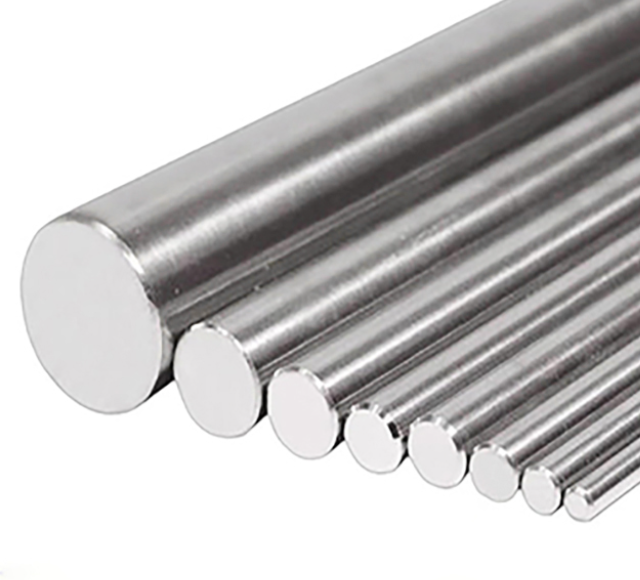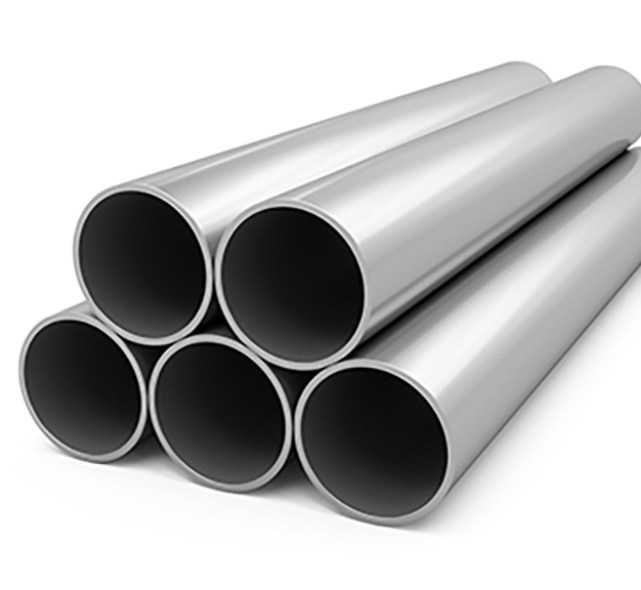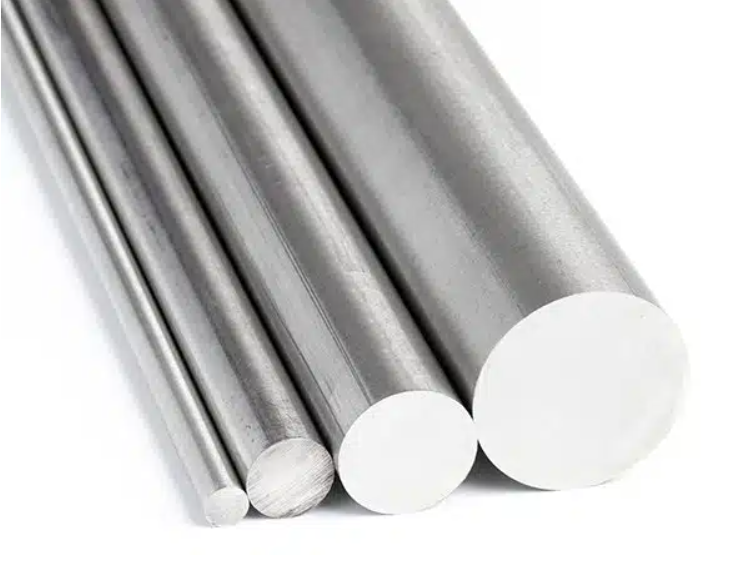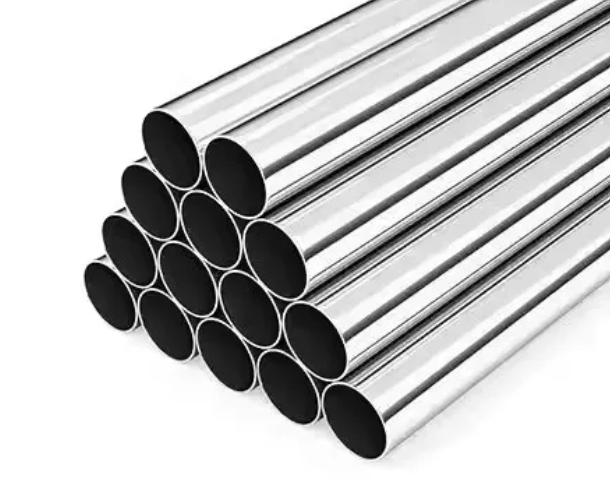

Specifying heat exchanger tube standards is not about finding one universal “best” standard. It is about selecting a product standard, material grade, testing scope, documentation level, and supplier verification process that match the real application.
For heat exchanger tube buyers, the standard should be connected to the operating media, temperature, pressure, corrosion mechanism, fabrication method, inspection requirement, documentation requirement, and project risk level.
Quick Answer:
Heat exchanger tube standards should be specified according to the application, material family, operating environment, manufacturing route, testing requirement, documentation requirement, and supplier capability. ASTM B338 may apply to titanium tubes for surface condensers, evaporators, and heat exchangers. ASTM B163 may apply to seamless nickel and nickel alloy condenser and heat-exchanger tubes. ASTM A213 may apply to seamless ferritic and austenitic steel boiler, superheater, and heat-exchanger tubes. However, the product standard alone does not guarantee suitability. Buyers still need to confirm media, temperature, pressure, corrosion risk, surface condition, NDT, MTR / MTC, heat number traceability, and inspection requirements.
AMPP explains that no material is resistant to all corrosive situations and that material selection is critical to preventing many types of failures: AMPP Materials Selection and Design for Corrosion Control.
HSE covers corrosion and selection of materials of construction as part of process safety technical measures and refers to relevant codes of practice and standards: HSE Corrosion / Selection of Materials.
The NIST corrosion performance database also shows that corrosion behavior should be evaluated according to specific environments, including concentration and temperature: NIST Corrosion Performance Databases.
This is why heat exchanger tube standard specification should begin with the actual service environment, not only the material name.
Is There a “Best” Standard for Heat Exchanger Tubes?
No. There is no single best standard for all heat exchanger tubes.
A tube standard that is suitable for a titanium seawater condenser may not be suitable for a nickel alloy chemical heat exchanger. A standard used for stainless steel boiler tubes may not be suitable for a chloride-containing evaporator. A tube that meets a product standard may still be wrong if the selected material grade does not match the real medium.
The correct heat exchanger tube standard depends on the material, service environment, operating temperature, pressure, corrosion risk, manufacturing method, inspection requirement, and project specification.
Why One Standard Cannot Cover Every Case
Different heat exchangers face different risks:
- Seawater cooling may involve chloride corrosion, fouling, crevices, deposits, and cleaning issues.
- Chemical processing may involve acids, alkalis, solvents, chlorides, reducing conditions, oxidizing conditions, or mixed media.
- Power generation may involve high temperature, steam, pressure, oxidation, creep, vibration, and thermal cycling.
- General water or oil service may need a different balance of cost, corrosion allowance, pressure design, and availability.
This means the buyer should not ask, “What is the best standard?”
A better question is:
“Which standard and material grade match my exact operating conditions and inspection requirements?”
Common Heat Exchanger Tube Standard Examples
The following standards are common examples, but final selection should follow the project specification, design code, and actual application.
| Standard | Material Family | General Scope | Buyer Review Point |
|---|---|---|---|
| ASTM B338 | Titanium and titanium alloy tubes | Seamless and welded tubes for surface condensers, evaporators, and heat exchangers | Grade, seamless/welded route, surface condition, testing, MTR, heat number |
| ASTM B163 | Nickel and nickel alloy tubes | Seamless nickel and nickel alloy tubes for condenser and heat-exchanger service | Alloy grade, OD / WT limit, heat treatment, testing and chemical environment |
| ASTM B407 | Nickel-iron-chromium alloy seamless pipe and tube | Cold-worked and hot-finished annealed seamless pipe and tube | High-temperature grade, creep/rupture needs and project specification |
| ASTM A213 | Ferritic and austenitic steel tubes | Seamless boiler, superheater, and heat-exchanger tubes | Stainless / alloy steel grade, pressure, temperature and corrosion condition |
ASTM B338 covers seamless and welded titanium alloy tubes for surface condensers, evaporators, and heat exchangers: ASTM B338.
ASTM B163 covers seamless tubes of nickel and nickel alloy for condenser and heat-exchanger service: ASTM B163.
ASTM B407 covers nickel-iron-chromium alloys in cold-worked and hot-finished annealed seamless pipe and tube form: ASTM B407.
ASTM A213 covers seamless ferritic and austenitic steel boiler, superheater, and heat-exchanger tubes: ASTM A213.
How Should Buyers Match Standards to Applications?
A standard should be selected after reviewing the service environment.
Application-Based Standard Review
| Application | Key Factors to Confirm | Possible Material Family | Standard Example |
|---|---|---|---|
| Seawater condenser | Chlorides, fouling, crevice risk, temperature, flow, cleaning | Titanium alloy | ASTM B338 |
| Brine evaporator | Chloride level, temperature, pH, scaling, crevice risk | Titanium or nickel alloy, depending on service | ASTM B338 / ASTM B163 |
| Chemical heat exchanger | Acid type, concentration, oxidizing/reducing condition, temperature | Nickel alloy, titanium, stainless steel or other alloy | ASTM B163 / project-specific standard |
| High-temperature service | Temperature, oxidation, creep, rupture strength, thermal cycling | Nickel-iron-chromium or nickel alloy | ASTM B407 or other relevant standard |
| General stainless heat exchanger | Water chemistry, chloride level, pressure, temperature | Austenitic or ferritic stainless steel | ASTM A213 |
| Replacement tube order | Existing drawing, old standard, failure history, tube sheet data | Same or improved material after review | Project standard / ASTM standard |
This table is not a final material recommendation. It is a starting point for discussion. The final standard should be confirmed by the engineering specification and real operating conditions.
Why Is Material Grade Not Enough?
Many buyers specify only a material grade, such as “Titanium Grade 2” or “Alloy 625.” This is not enough for critical heat exchanger tube procurement.
A complete specification should include:
- Product standard
- Material grade
- Seamless or welded type
- OD and wall thickness
- Length
- Tolerance
- Surface condition
- Heat treatment condition
- Tube-side and shell-side media
- Temperature and pressure
- Corrosion risk
- Fouling risk
- Testing requirement
- Certificate type
- Heat number traceability
- Packaging and marking
A material grade tells the supplier what alloy family is required. A product standard and purchase specification tell the supplier how the tube should be manufactured, inspected, documented, and delivered.
How Do We Look Beyond Basic Parameters?
Basic parameters such as grade, size and quantity are important, but they do not fully define tube performance or procurement risk.
For heat exchanger tubes, buyers should also review:
- Chemical composition range
- Mechanical properties
- Heat treatment condition
- Seamless or welded manufacturing route
- Surface finish
- Dimensional tolerance
- Straightness and roundness
- NDT requirement
- MTR / MTC
- Heat number
- Third-party inspection
- Packaging and protection
Chemical Composition
A product standard defines chemical composition limits, but the buyer should still confirm that the supplied material matches the required grade and standard.
For critical corrosion service, buyers may need to review:
- Main alloying elements
- Restricted elements
- Heat number
- Chemical test results
- Grade verification
- Customer-specific limits if required
Manufacturing Route
Seamless and welded tubes have different production routes. One is not automatically “better” in every application.
Buyers should confirm:
- Seamless or welded tube requirement
- Whether welded tube is permitted by the project specification
- Weld inspection requirement
- Heat treatment requirement
- Surface condition requirement
- Pressure and testing requirement
- Applicable standard and acceptance criteria
Heat Treatment
Heat treatment may affect mechanical properties, residual stress, microstructure, ductility, and corrosion behavior. Buyers should not only write “annealed” if the project requires a specific condition.
When relevant, confirm:
- Annealed condition
- Solution annealed condition
- Stress relief requirement
- Heat treatment record
- Mechanical test data
- Hardness requirement
- Microstructure requirement if specified
Surface Finish
Surface finish can affect fouling, cleaning, inspection and localized corrosion initiation risk.
Buyers should define:
- Pickled surface
- Polished surface
- Bright annealed surface
- Clean ID / OD
- Ra value if required
- No visible cracks, folds, dents, deep scratches or heavy scale
- Surface inspection report if required
Surface finish should be specified clearly instead of using vague terms like “good surface” or “smooth surface.”
What Questions Should Buyers Ask Suppliers?
Supplier claims should be verified with documents and inspection records.
Buyers should ask suppliers for batch-specific MTR / MTC, heat number traceability, standard confirmation, chemical and mechanical test data, dimensional inspection, surface inspection, NDT reports, and third-party inspection support when required.
Essential Supplier Questions
| Question | Why It Matters |
|---|---|
| Which product standard are you quoting? | Prevents confusion between commercial tube and ASTM / ASME tube |
| Which material grade and UNS number are supplied? | Reduces material mismatch risk |
| Is the tube seamless or welded? | Affects manufacturing route and inspection needs |
| Can you provide MTR / MTC? | Confirms batch-specific chemistry and mechanical properties |
| Can you provide heat number traceability? | Links tubes to production batch |
| What tests are included in the quotation? | Prevents misunderstanding about ECT, UT, hydrostatic, tensile, hardness or PMI |
| Is third-party inspection included or optional? | Affects cost, lead time and inspection schedule |
| What surface condition is included? | Prevents disputes about pickled, polished or bright surface |
| What tolerances are included? | Affects fit, tube sheet assembly and installation |
| What packaging is included? | Protects long, thin-wall or polished tubes during shipment |
| What is the lead time? | Helps project planning and shutdown scheduling |
How Should Buyers Read MTR / MTC?
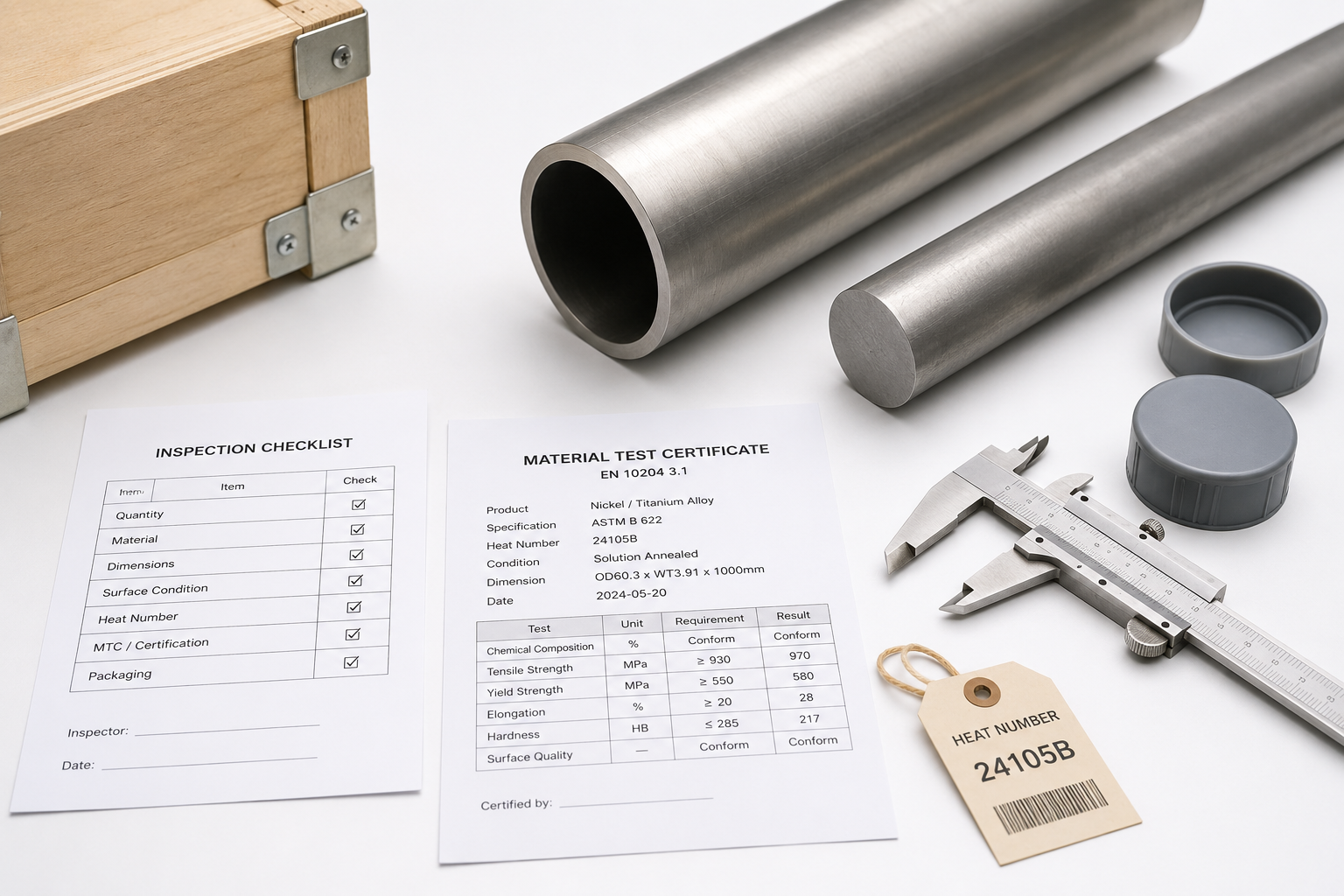
An MTR or MTC is not just a formality. It is one of the most important documents in alloy tube procurement.
A useful MTR should show:
- Manufacturer information
- Product standard
- Material grade
- Heat number
- Size
- Chemical composition
- Mechanical properties
- Heat treatment condition if applicable
- Test results
- Inspection statement
- Certificate type if required
- Authorized signature or stamp
EN 10204 3.1 and 3.2
Some projects require EN 10204 inspection certificates.
A Type 3.1 certificate normally includes specific test results for the supplied batch and is issued by the manufacturer’s authorized inspection representative.
A Type 3.2 certificate adds independent validation by the buyer’s inspector or an officially designated body when required by the project or purchase order.
LRQA describes EN 10204 Type 3.2 certification as a way to help prove that materials meet defined chemical and mechanical properties: LRQA EN 10204 Type 3.2 Certification.
ABS states that EN 10204 Type 3.2 certification can involve third-party surveyor visual examination, sample dimensional checks, confirmation of material traceability back to ladle chemical analysis, and validation that properties meet specification requirements: ABS EN 10204 Type 3.2 Certification.
This does not mean every order needs Type 3.2. The certificate level should match the project requirement and risk level.
What Testing Standards May Be Required?
Testing requirements should be stated clearly before quotation. If the buyer does not specify them, suppliers may quote different testing scopes.
Common Tests for Heat Exchanger Tubes
| Test / Document | What It Confirms |
|---|---|
| Chemical Analysis | Confirms alloy composition |
| Tensile Test | Confirms yield strength, tensile strength and elongation |
| Hardness Test | Confirms hardness if required |
| Eddy Current Test | Helps detect discontinuities in tubular products |
| Ultrasonic Test | Helps detect discontinuities in metal pipe and tubing |
| Hydrostatic Test | Helps verify pressure integrity when required |
| PMI / Grade Verification | Helps reduce material mix-up risk |
| Dimensional Inspection | Confirms OD, wall thickness, length and tolerance |
| Surface Inspection | Confirms visible surface condition |
| Third-Party Inspection | Adds independent verification when required |
ASTM E8/E8M covers tension testing of metallic materials and includes determination of yield strength, tensile strength, elongation and reduction of area: ASTM E8/E8M.
ASTM E426 is a standard practice for electromagnetic eddy current examination of seamless and welded tubular products: ASTM E426.
ASTM E213 covers ultrasonic testing of metal pipe and tubing during volumetric examination: ASTM E213.
ASTM E1476 describes general requirements, methods and procedures for nondestructive identification and sorting of metals: ASTM E1476.
How Do Standards Link to Procurement Risk?
Technical standards are directly connected to procurement risk.
If the standard is unclear, suppliers may quote different assumptions. One supplier may quote a basic commercial tube. Another may include ASTM compliance, MTR, heat number, NDT, surface inspection, export packaging and third-party inspection. The price difference may look large, but the scope is not the same.
Clear standard specification helps reduce quotation ambiguity, material mismatch, inspection disputes, delivery delays and rework risk.
Common Procurement Risks
| Risk | Cause | How to Reduce It |
|---|---|---|
| Wrong material grade | Grade not clearly specified | State material grade, UNS number and standard |
| Wrong standard | Supplier quotes commercial tube instead of ASTM / ASME tube | State the exact standard and revision if required |
| Missing tests | NDT or hydrostatic test not included | List required tests in RFQ and PO |
| Weak traceability | No heat number or incomplete MTR | Require MTR / MTC and heat number traceability |
| Surface dispute | “Smooth” or “bright” not defined | Specify surface condition and Ra if required |
| Delivery delay | Special grade or testing not planned early | Confirm lead time, raw material availability and inspection schedule |
| Cost overrun | Scope changes after quotation | Provide full technical and commercial requirements upfront |
| Inspection failure | Acceptance criteria not agreed | Define inspection scope and acceptance criteria before production |
EPA defines life-cycle cost as original cost minus salvage value plus operating costs, maintenance costs, renewal costs and decommissioning costs: EPA Life Cycle and Replacement Costs.
The U.S. Department of Energy’s O&M Best Practices Guide describes reactive maintenance as allowing machinery to run to failure and repairing or replacing damaged equipment when obvious problems occur: DOE O&M Best Practices Guide.
For heat exchanger tube buyers, this means the cheapest standard or the simplest documentation is not always the lowest-risk choice. The standard, testing and documentation should match the project criticality.
How Should Buyers Prepare a Heat Exchanger Tube Specification?
A good specification should be clear enough for suppliers to quote the same scope.
Heat Exchanger Tube Specification Checklist
| Item | What to Specify |
|---|---|
| Application | Condenser, evaporator, cooler, heater, chemical heat exchanger, seawater system |
| Material Family | Titanium, nickel alloy, stainless steel, copper alloy or open to recommendation |
| Material Grade | Titanium Grade 2, Grade 7, Grade 12, Alloy 625, Alloy 825, C276, 800H, 304L, 316L |
| UNS Number | If applicable |
| Product Standard | ASTM B338, ASTM B163, ASTM B407, ASTM A213, ASME, EN, ISO or customer standard |
| Product Type | Seamless tube, welded tube, straight tube, U-tube |
| Size | OD, wall thickness, length |
| Tolerance | Standard or special tolerance |
| Quantity | Pieces, meters, kilograms or tons |
| Tube-Side Medium | Seawater, brine, acid, steam, gas, process fluid |
| Shell-Side Medium | Cooling water, steam, gas, chemical, air |
| Temperature | Normal, maximum, startup, shutdown and cleaning temperature |
| Pressure | Operating pressure and design pressure |
| Flow Condition | Flow velocity, turbulence, stagnant zones, solids |
| Corrosion Risk | Chloride, acid, SCC, pitting, crevice corrosion, oxidation, reducing condition |
| Fouling Risk | Scale, biological fouling, suspended solids, deposits |
| Cleaning Method | Mechanical cleaning, chemical cleaning, cleaning frequency |
| Surface Condition | Pickled, polished, bright annealed, clean ID / OD |
| Heat Treatment | Annealed, solution annealed or project-specified condition |
| Testing | Tensile, hardness, PMI, eddy current, UT, hydrostatic, corrosion test if required |
| Documents | MTR / MTC, heat number, inspection report, EN 10204 3.1 / 3.2 if required |
| Inspection | Internal, customer, or third-party inspection |
| Packaging | Wooden case, bundle, end caps, seaworthy packing, special protection |
| Delivery | Required delivery date, destination, shipping method, Incoterms |
This checklist helps suppliers understand whether they are quoting the same technical and commercial scope.
Example Specification Wording
Buyers can use wording like this:
“Titanium seamless tubes according to ASTM B338 Grade 2, OD 25.4 mm × WT 1.2 mm × 6000 mm, pickled surface, clean ID and OD, for seawater condenser service. MTC / MTR, heat number traceability, dimensional inspection, surface inspection and eddy current test required. Export seaworthy packing. Third-party inspection required before shipment.”
For nickel alloy tubes:
“Seamless nickel alloy tubes according to ASTM B163, Alloy 625 / UNS N06625, OD 19.05 mm × WT 1.65 mm × 6000 mm, annealed and pickled, for chemical heat exchanger service. MTC / MTR, heat number traceability, chemical analysis, tensile test, dimensional inspection, surface inspection and hydrostatic test required.”
This type of specification is much clearer than simply writing:
“Please quote heat exchanger tubes.”
How Emily PIPE Supports Heat Exchanger Tube Buyers
Emily PIPE is a China-based manufacturer and exporter specializing in nickel alloy tubes, nickel alloy bars, titanium alloy tubes and titanium alloy bars. We support customers across chemical processing, marine engineering, power generation, oil and gas, heat exchangers, desalination, and other corrosion-resistant or high-temperature applications.
For heat exchanger tube projects, we can support:
- Nickel alloy seamless tubes
- Nickel alloy welded tubes
- Titanium seamless tubes
- Titanium welded tubes
- ASTM B338 titanium tube requirements
- ASTM B163 nickel alloy tube requirements
- ASTM B407 nickel-iron-chromium tube requirements when applicable
- Custom OD, wall thickness, length, tolerance and surface condition
- MTR / MTC and heat number traceability
- Dimensional and surface inspection
- PMI, eddy current, UT, hydrostatic, tensile, hardness and other testing support when required
- Third-party inspection support
- Export packaging and logistics support
Our role is not to claim that one standard fits every heat exchanger project. Our role is to help buyers clarify the application, select the correct standard, define testing and documentation requirements, and supply alloy tubes that match the required specification.
If you are preparing a heat exchanger tube specification, please send your material grade, product standard, size, quantity, tube-side medium, shell-side medium, temperature, pressure, corrosion risk, fouling risk, cleaning method, testing requirement, certificate requirement, packaging requirement and destination. Our team can help review your requirements and provide a suitable quotation.
FAQ: Heat Exchanger Tube Standards
1. Is there one best standard for heat exchanger tubes?
No. The correct standard depends on material, application, medium, temperature, pressure, testing requirement and project specification.
2. What is ASTM B338 used for?
ASTM B338 covers seamless and welded titanium alloy tubes for surface condensers, evaporators and heat exchangers.
3. What is ASTM B163 used for?
ASTM B163 covers seamless nickel and nickel alloy tubes for condenser and heat-exchanger service.
4. What is ASTM A213 used for?
ASTM A213 covers seamless ferritic and austenitic steel boiler, superheater and heat-exchanger tubes.
5. Does meeting ASTM standard guarantee corrosion resistance?
No. A product standard defines material and manufacturing requirements, but corrosion resistance still depends on the actual medium, temperature, concentration, pH, flow, crevices and cleaning method.
6. Should buyers ask for EN 10204 3.1 or 3.2?
It depends on project requirements. Type 3.1 may be enough for many orders. Type 3.2 adds independent validation when required by the buyer, project specification or risk level.
7. What documents should buyers request?
Buyers should request MTR / MTC, heat number traceability, chemical composition, mechanical properties, dimensional inspection, surface inspection, NDT reports and third-party inspection documents when required.
8. Why do standards affect price?
Standards affect material grade, manufacturing route, testing, inspection, documentation, packaging and lead time. A quote with full ASTM compliance and NDT is not the same as a basic commercial tube quote.
Conclusion
Specifying heat exchanger tube standards is a technical and commercial decision.
The goal is not to find one universal best standard. The goal is to define the standard, grade, size, manufacturing route, testing, documentation and inspection scope that match the real application.
For buyers, a complete specification helps reduce material mismatch, quotation ambiguity, inspection disputes, delivery delays and rework risk.
For nickel alloy and titanium heat exchanger tubes, the safest approach is to start with application conditions, confirm the applicable ASTM / ASME / EN / ISO requirement, request traceable MTR / MTC and heat number documentation, and verify supplier capability before production.