
How to Choose Alloy Bars for Furnace Rollers, Trays, and Supports
Are you trying to choose the right alloy bars for furnace rollers, trays, internal supports, fixtures, or load-bearing parts? In heat treatment furnaces, material selection is not only about choosing a familiar alloy grade. A poor match between material and service condition may lead to distortion, cracking, oxidation, carburization, or premature replacement.
Selecting the right alloy for furnace rollers, trays, and supports requires a clear understanding of temperature, furnace atmosphere, thermal cycling, mechanical load, surface condition, and documentation control. There is no universal “best” alloy. The better approach is to match alloy properties to the actual operating conditions of each furnace component.
The U.S. Department of Energy’s technical brief on materials selection for thermal process equipment also emphasizes that material selection for high-temperature equipment should consider mechanical properties, oxidation or hot corrosion resistance, component form, availability, and long-term exposure behavior — not just maximum temperature.
For buyers, engineers, and maintenance teams, the goal is not simply to buy a high-temperature alloy. The real goal is to select a material that can work reliably in your specific furnace environment.
Why There Is No Single Best Alloy for All Furnace Parts
A heat treatment furnace may contain many different parts, including rollers, trays, baskets, rails, internal supports, fixtures, shafts, and structural components. These parts do not face the same working conditions.
For example:
- A furnace roller may rotate under load and experience repeated thermal cycling.
- A tray or basket may carry workpieces and resist sagging, oxidation, and distortion.
- An internal support may stay in a fixed high-temperature zone under long-term compressive or bending stress.
- A fixture or frame may move in and out of the hot zone and face repeated heating and cooling.
Because each part has a different function, the suitable alloy may also be different. One component may need better creep resistance. Another may need better oxidation resistance. Another may need better thermal fatigue resistance or better resistance to carburizing or nitriding atmospheres.
This is why asking “What is the strongest high-temperature alloy?” is not enough. A more useful question is:
Which alloy is suitable for this component, at this temperature, under this atmosphere, with this load and service cycle?
How Furnace Environment Affects Alloy Selection
Furnace atmosphere is one of the most important factors in alloy selection. High-temperature degradation can include oxidation, carburization, nitridation, sulfidation, halogenation, hot corrosion, molten salt corrosion, and other mechanisms. ASM International discusses these high-temperature corrosion mechanisms in relation to heat-resistant nickel alloys and other high-temperature materials.
Different atmospheres create different risks:
| Furnace Atmosphere | Possible Material Risk | What Buyers Should Check |
|---|---|---|
| Oxidizing atmosphere | Scaling, oxide spalling, material loss | Oxidation resistance and surface condition |
| Reducing atmosphere | Different oxide stability, possible atmosphere-related attack | Actual gas composition and dew point if required |
| Carburizing atmosphere | Carbon absorption, embrittlement, internal attack | Carburization resistance and alloy chemistry |
| Nitriding atmosphere | Nitrogen-related surface reactions | Nitridation resistance and service temperature |
| Sulfur-containing atmosphere | Sulfidation or grain-boundary attack risk | Sulfur level, fuel/process contaminants, alloy suitability |
| Chlorine or halogen-containing atmosphere | Accelerated high-temperature corrosion risk | Halogen source and corrosion resistance |
| Vacuum or inert atmosphere | Cleanliness, outgassing, surface condition | Surface cleanliness and process compatibility |
A material that performs well in one atmosphere may not perform well in another. Therefore, buyers should avoid choosing furnace alloys only by maximum temperature charts.
Are You Misinterpreting Alloy Material Parameters?
Datasheet values are useful, but they should not be read in isolation. Maximum service temperature, tensile strength, creep rupture strength, and oxidation resistance all need to be interpreted according to the real working environment.
For furnace rollers, trays, and supports, buyers should pay special attention to these parameters:
| Parameter | What It Means | Why It Matters |
|---|---|---|
| Creep resistance | Resistance to slow deformation under stress at high temperature | Helps reduce sagging, bending, or permanent deformation |
| Oxidation resistance | Ability to resist surface degradation in hot oxidizing environments | Helps reduce scaling and material loss |
| Thermal fatigue resistance | Ability to withstand repeated heating and cooling cycles | Important for moving parts or parts exposed to temperature fluctuation |
| Carburization resistance | Resistance to carbon absorption in carbon-rich atmospheres | Helps reduce embrittlement and internal degradation |
| Nitridation resistance | Resistance to nitrogen-related attack in nitriding atmospheres | Important for nitrogen-containing furnace environments |
| Sulfidation resistance | Resistance to sulfur-related high-temperature attack | Important when sulfur may be present in fuel, gas, or processed materials |
| Surface condition | Surface roughness, scale, cracks, contamination, or machining marks | Can influence oxidation, crack initiation, and installation suitability |
Thermal fatigue is especially important when components face repeated temperature changes. A technical review on thermal fatigue explains that thermal fatigue is related to thermal stress or thermal strain cycles caused by temperature gradients.
This means a furnace part may fail even when the average furnace temperature appears acceptable. Local temperature gradients, rapid heating and cooling, or repeated door openings may create more severe conditions than the general furnace specification suggests.
Why Material Grade Alone Is Not Enough
Two suppliers may offer the same alloy grade, but the actual performance can still differ if the manufacturing process, heat treatment, surface finish, or inspection control is different.
For high-temperature alloy bars and furnace components, buyers should confirm:
- Chemical composition
- Mechanical properties
- Heat treatment condition
- Product form: bar, rod, tube, plate, casting, or fabrication
- Surface finish
- Dimensional tolerance
- Straightness and roundness
- Heat number traceability
- Inspection and testing scope
- Certificate type and order compliance
For some nickel-based alloys, heat treatment can strongly influence microstructure. Cambridge University’s resource on nickel-based superalloys explains that solution treatment and aging can affect γ′ precipitation and microstructure. This is one reason why the same alloy name should not be separated from its supplied condition and processing route.
Surface condition also matters. Research on surface preparation and high-temperature oxidation shows that polishing, grinding, and sand-blasting can affect oxidation behavior and oxide-layer formation. For furnace parts, surface condition should be specified according to the application instead of being treated as a secondary detail.
Hidden Factors That Affect Furnace Alloy Life
Some material problems are not obvious from a general specification sheet. Buyers should also consider hidden or easily overlooked factors.
1. Thermal Gradients
The average furnace temperature may not represent the actual temperature experienced by every part. Local hot spots, cold zones, door openings, air circulation, and uneven heating can create thermal gradients. These gradients may increase thermal stress and thermal fatigue risk.
2. Atmospheric Impurities
Even small amounts of sulfur, chlorine, carbon-bearing gases, or other contaminants may change the corrosion behavior of a high-temperature alloy. ASM’s high-temperature corrosion resources include mechanisms such as sulfidation and halogenation, which are relevant when furnace gases or process materials contain these elements.
3. Residual Stress
Residual stresses from forming, welding, machining, or improper heat treatment may increase cracking or distortion risk in service. For fabricated furnace components, weld quality and post-weld condition should be checked carefully.
4. Surface Scale and Contamination
Heavy oxide scale, rough surfaces, machining damage, or contamination may influence oxidation behavior or create crack initiation sites. Buyers should clearly state required surface finish and cleaning requirements in the purchase order.
5. Previous Failure Mode
If a previous part failed, the failure mode should guide the next material selection. A part that sagged may require better creep strength. A part that cracked after repeated heating and cooling may require better thermal fatigue resistance. A part that suffered surface attack may require better environmental resistance.
How to Make Smarter Alloy Choices for Furnace Parts
A smarter alloy choice starts with a detailed understanding of the actual application. Before asking for a quotation, buyers should prepare the following information:
Essential Technical Questions
- What is the furnace type?
- Which component will the material be used for: roller, tray, basket, support, shaft, rail, or fixture?
- What is the normal operating temperature?
- What is the maximum temperature?
- Is the temperature stable or cycling?
- What is the furnace atmosphere?
- Are there carbon, nitrogen, sulfur, chlorine, or other contaminants?
- What load will the part carry?
- Is the load static, dynamic, compressive, tensile, bending, or rotational?
- What was the previous material grade?
- What failure problem occurred before: sagging, cracking, scaling, embrittlement, corrosion, or deformation?
- What product form is required: bar, rod, tube, plate, casting, or fabricated part?
- What standard, tolerance, and surface finish are required?
- What certificate and inspection documents are required?
This information helps the supplier recommend a suitable material instead of only quoting a general “high-temperature alloy.”
What Documentation Should Buyers Request?
For furnace alloy bars and replacement components, documentation helps verify whether the delivered material matches the order.
Common documents may include:
- Material Test Certificate / Mill Test Report
- Chemical composition report
- Mechanical properties report
- Heat number or batch number traceability
- Heat treatment record if required
- Dimensional inspection report
- Surface inspection report
- PMI report if required
- Ultrasonic testing report if required
- Liquid penetrant testing report if required
- Third-party inspection report if required
EN 10204 Type 3.1 inspection certificates are commonly used for metallic products. The EN 10204 standard preview explains that a Type 3.1 document includes compliance with order requirements and test results, and it is validated by the manufacturer’s authorized inspection representative independent of the manufacturing department. Buyers can refer to EN 10204 inspection document requirements when defining certificate expectations.
However, a certificate should not be accepted blindly. Buyers should check whether the heat number, grade, size, standard, test values, and material marking are consistent with the purchase order and the physical product.
What Testing May Be Useful?
Testing requirements depend on product form and risk level. For furnace alloy bars, rollers, trays, and supports, the following inspections may be considered:
| Test / Inspection | Purpose |
|---|---|
| PMI testing | Confirms alloy identity and major chemical elements |
| Dimensional inspection | Confirms diameter, length, straightness, tolerance, and shape |
| Visual inspection | Checks surface cracks, scale, pits, laps, or obvious defects |
| Ultrasonic testing | Helps detect internal discontinuities in suitable products |
| Liquid penetrant testing | Helps reveal surface-breaking defects |
| Hardness testing | Helps confirm condition when hardness is specified |
| Third-party inspection | Adds independent verification when required by project |
ASNT explains that ultrasonic testing uses high-frequency sound waves to detect and measure discontinuities in industrial components. ASNT also explains that liquid penetrant testing is used to reveal surface discontinuities in solid, nonporous materials.
How to Evaluate a Supplier
Supplier evaluation should go beyond price. A low price may not be a real advantage if the material lacks traceability, proper testing, controlled processing, or technical support.
When evaluating suppliers, buyers should check:
| Supplier Factor | What to Ask | Why It Matters |
|---|---|---|
| Application understanding | Do they ask about temperature, atmosphere, load, and failure mode? | Shows whether they understand the real working environment |
| Material verification | Can they provide MTC / MTR and heat number traceability? | Helps verify material identity and compliance |
| Manufacturing control | Can they explain heat treatment, forming, surface condition, and inspection steps? | Helps reduce batch-to-batch variation |
| Inspection ability | Can they support PMI, UT, PT, dimensional inspection, or third-party inspection? | Helps reduce delivery risk |
| Quality management | Do they operate under a quality management system such as ISO 9001? | Indicates a structured quality system, but does not replace product verification |
| Documentation consistency | Are certificates, markings, packing lists, and order details consistent? | Helps prevent material mix-up |
| Technical communication | Can they discuss alternative materials when the original grade fails? | Helps buyers make a more informed decision |
ISO describes ISO 9001 as a quality management system standard. It can support supplier evaluation, but buyers should still verify the actual material, certificate, inspection results, and application suitability.
Practical RFQ Checklist for Furnace Alloy Bars
When sending an inquiry, buyers can use the following RFQ structure:
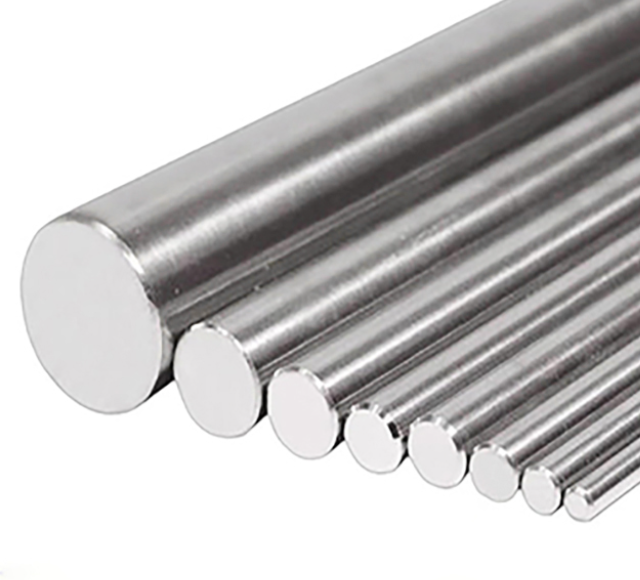
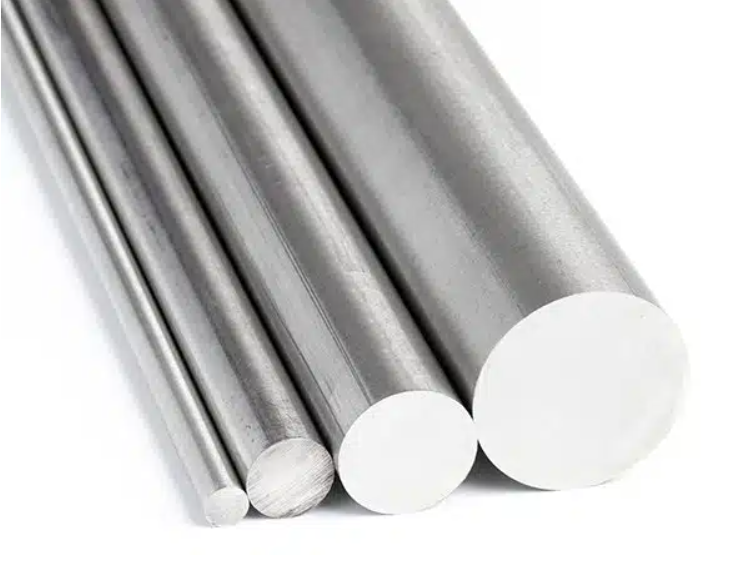
- Product name: alloy bar / rod / machined bar / furnace roller material
- Application: furnace roller / tray / support / fixture / shaft / rail
- Alloy grade and UNS number if known
- Standard: ASTM / ASME / EN / customer specification
- Diameter, length, tolerance, and quantity
- Furnace type and operating temperature
- Furnace atmosphere
- Thermal cycling condition
- Mechanical load condition
- Previous failure mode if available
- Required heat treatment condition
- Required surface finish
- Required certificate type, such as EN 10204 3.1
- Required inspection: PMI, UT, PT, hardness, dimensional inspection, third-party inspection
- Packing, marking, and delivery requirements
A clear RFQ helps the supplier understand the application and reduces the risk of quoting a material that only looks suitable on paper.
Conclusion
Choosing alloy bars for furnace rollers, trays, and supports is not a one-size-fits-all decision. The right material depends on component function, operating temperature, furnace atmosphere, thermal cycling, creep risk, mechanical load, surface condition, processing route, inspection requirements, and supplier traceability.
Instead of asking only for the “best high-temperature alloy,” buyers should define the real working conditions of each furnace part. When material selection, manufacturing control, testing, and documentation are considered together, furnace components are more likely to perform reliably and replacement risks become easier to control.