
How to Evaluate Supplier-Recommended Alternative Alloy Grades
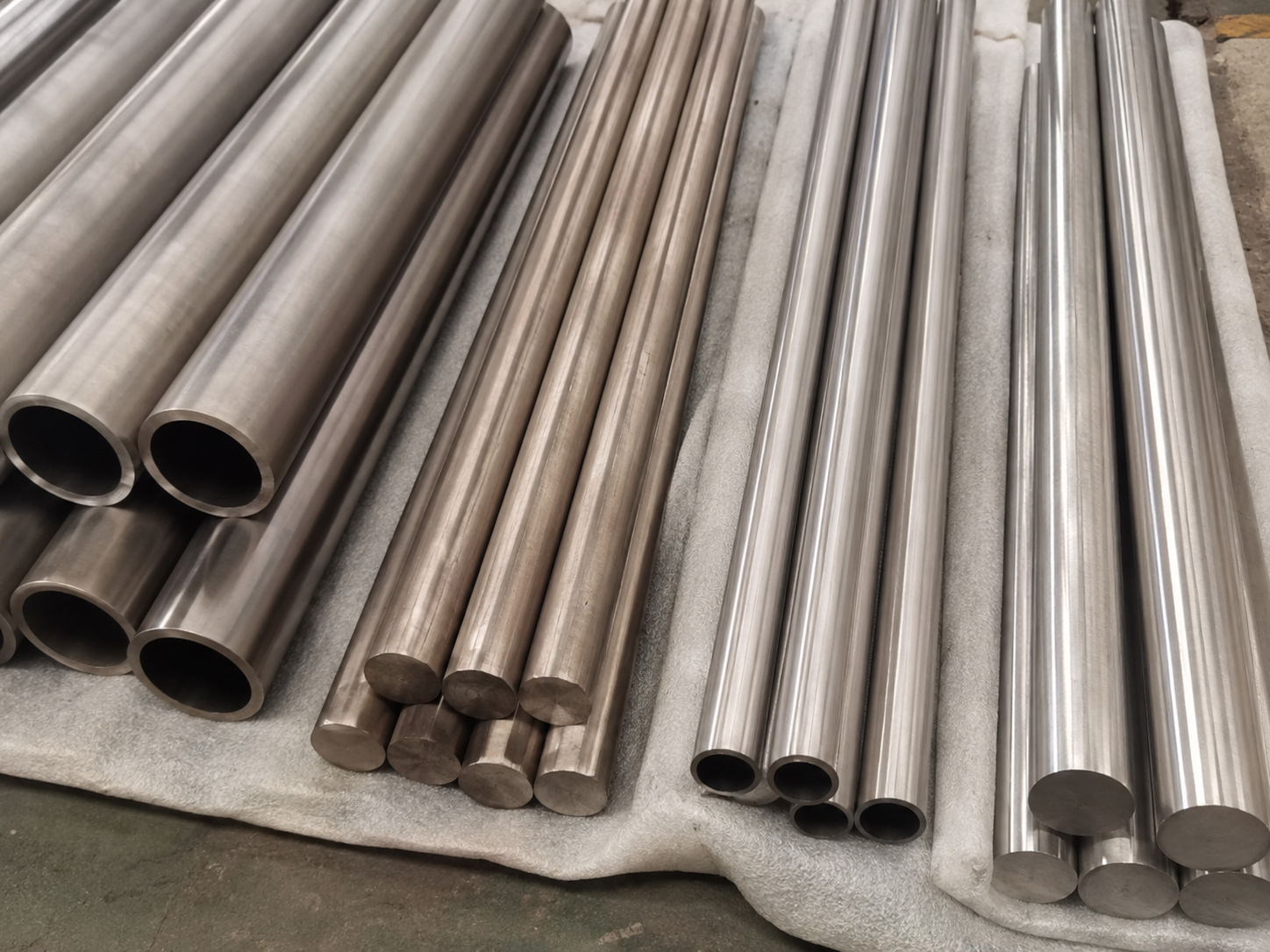
When a supplier recommends an alternative alloy grade, the decision should not be based only on price, availability, or a simple “equivalent material” statement. For nickel alloy and titanium alloy tubes, bars, pipes, fittings, or machined parts, a substitute material may affect corrosion resistance, strength, heat resistance, welding behavior, machining performance, inspection requirements, certificate requirements, and lifecycle cost.
A lower-cost alternative may be acceptable in some applications if it meets the same technical requirements and is approved by the buyer, engineering team, or end user. But an unsuitable alternative may increase corrosion risk, mechanical performance risk, compliance risk, rework, rejection, maintenance cost, downtime risk, or lifecycle cost.
NIST’s Life Cycle Cost Manual explains that lifecycle cost is the total cost of owning, operating, maintaining and disposing of a system over a given study period: https://www.nist.gov/publications/life-cycle-costing-manual-federal-energy-management-program-0
For procurement teams, the key question is not “Is the alternative cheaper?” The better question is “Can this alternative alloy grade meet the same application requirements, standards, testing scope, documentation, and approval requirements as the original material?”
Why Alternative Alloy Grades Need Careful Review
Supplier-recommended alternatives may be suggested for several reasons:
- Shorter lead time
- Better stock availability
- Lower material cost
- Easier production
- Better machinability
- Better weldability
- Larger available size range
- Similar standard coverage
- Customer budget constraints
- Project specification change
- Improved performance in a specific environment
These reasons are not automatically negative. A good alternative can save cost, shorten delivery, or improve manufacturability. But the buyer should ask for technical justification before accepting the substitution.
FAA guidance on parts and materials substitution explains that material substitutions require substantiating data and approval information in safety-related aviation contexts: https://www.faa.gov/regulations_policies/advisory_circulars/index.cfm/go/document.information/documentid/1021446
This does not mean every industrial alloy order follows FAA rules. It shows an important principle: material substitution should be supported by data, not only by a supplier claim.
Specifications Are Necessary, but Not Always Enough
A material specification is important because it defines baseline requirements. But it does not always answer every application question.
A basic material specification may include:
- Alloy grade
- UNS number
- Chemical composition limits
- Mechanical properties
- Product form
- Heat treatment condition
- Dimensions and tolerances
- Testing requirements
- Marking requirements
However, the actual application may also require review of:
- Corrosive media
- Temperature
- Pressure
- Flow velocity
- Fatigue
- Creep
- Oxidation
- Chlorides
- Acids
- Alkalis
- Seawater
- H₂S or sour service
- Welding
- Machining
- Surface finish
- Cleaning chemicals
- Regulatory or end-user approval
NASA-STD-6016 defines minimum requirements for materials and processes and provides a control specification for NASA program/project hardware procurements and technical programs: https://www.nasa.gov/wp-content/uploads/2018/01/nasa_std_6016b_nasa_materials_and_processes_standard.pdf
ISO 15156-1 describes general principles and gives requirements and recommendations for selecting and qualifying metallic materials for service in H₂S-containing oil and gas environments where failure may pose safety or environmental risk: https://www.iso.org/standard/79658.html
These references support one important idea: material selection should connect the material specification to the actual service condition.
What Does “Equivalent Alloy” Really Mean?
“Equivalent” is one of the most risky words in alloy procurement.
An alternative may be equivalent in one area but not in another.
| Comparison Area | What Buyers Should Check |
|---|---|
| Chemical composition | Are all key elements within the required range? |
| UNS number | Is it the same UNS or only a similar trade name? |
| Product standard | Does it meet the same ASTM, ASME, AMS, EN, ISO or customer standard? |
| Product form | Is the alternative available as tube, pipe, bar, plate, forging or machined part? |
| Mechanical properties | Does it meet tensile strength, yield strength, elongation, hardness or impact requirements? |
| Heat treatment | Is the condition the same, such as annealed, solution annealed, aged or stress relieved? |
| Corrosion resistance | Has it been reviewed for the actual medium, temperature, pH, chlorides or acids? |
| Temperature performance | Is creep, oxidation or thermal fatigue risk relevant? |
| Fabrication | Can it be welded, formed, machined or heat treated in the same way? |
| Inspection | Can the same PMI, UT, ECT, pressure testing or corrosion testing be provided? |
| Certificate | Can the same EN 10204 3.1 / 3.2 or project certificate be issued? |
| Approval | Does the end user, design engineer or project specification allow substitution? |
A material can be “similar” without being acceptable for the same application.
Why Chemistry Alone Is Not Enough
Many alloy comparisons start with chemical composition. This is useful, but chemistry alone may not be enough.
Buyers should also review:
- Product form
- Processing route
- Heat treatment
- Cold work
- Grain size
- Microstructure
- Surface condition
- Welding condition
- Residual stress
- Mechanical testing
- Corrosion testing if specified
- NDT results
- Certificate scope
- Traceability
For example, two materials may have similar nickel or titanium content, but they may not have the same strength, ductility, corrosion resistance, creep resistance, weldability, machinability, or standard acceptance.
ASTM E8 / E8M covers tension testing of metallic materials and includes the determination of yield strength, tensile strength, elongation and reduction of area: https://store.astm.org/e0008_e0008m-22.html
Tensile testing can confirm important mechanical properties, but it does not automatically prove corrosion resistance or suitability for a specific service environment.
Corrosion Resistance Must Be Application-Specific
For nickel and titanium alloys, corrosion resistance is often one of the main reasons buyers consider high-performance materials. But corrosion resistance is not universal.
Buyers should confirm:
- Chemical medium
- Acid or alkali type
- pH
- Chloride level
- Fluoride level
- Temperature
- Pressure
- Oxygen level
- Oxidizing or reducing condition
- Flow velocity
- Deposits
- Crevices
- Cleaning chemicals
- Galvanic coupling
- Operating cycle
TIMET’s titanium corrosion manual explains that titanium offers strong corrosion resistance in many environments, but its behavior depends on the specific chemical medium, concentration and temperature: https://www.timet.com/assets/local/documents/technicalmanuals/corrosion.pdf
This means titanium Grade 2, Grade 5, Grade 7 or Grade 12 should not be treated as interchangeable without checking the actual environment.
Nickel alloys also need application-specific review. A nickel alloy that performs well in one acid, chloride, seawater, high-temperature or sour service environment may not be suitable for another.
Product Standards Must Match the Product Form
An alternative grade should be checked against the correct product standard. The standard depends on alloy grade and product form.
| Product Type | Possible Standard | Typical Relevance |
|---|---|---|
| Titanium heat exchanger tube | ASTM B338 | Seamless and welded titanium alloy tubes for surface condensers, evaporators and heat exchangers |
| Titanium bar / billet | ASTM B348 | Titanium and titanium alloy bars and billets |
| Alloy 625 seamless pipe / tube | ASTM B444 | UNS N06625 and related nickel alloy seamless pipe and tube |
| Nickel alloy seamless pipe / tube | ASTM B622 | Seamless pipe and tube of nickel and nickel-cobalt alloys |
| Nickel alloy heat exchanger tube | ASTM B163 | Seamless nickel and nickel alloy tubes for condenser and heat-exchanger service |
Useful references:
- ASTM B338 Titanium Tubes: https://store.astm.org/b0338-17r21.html
- ASTM B348 Titanium Bars and Billets: https://store.astm.org/standards/b348
- ASTM B444 Alloy 625 Seamless Pipe and Tube: https://store.astm.org/b0444-06.html
- ASTM B622 Nickel Alloy Seamless Pipe and Tube: https://www.astm.org/Standards/B622.htm
- ASTM B163 Nickel Alloy Heat Exchanger Tubes: https://store.astm.org/b0163-22.html
If the original material and the alternative material are covered by different standards, the buyer should check whether the project allows that change.
Supplier Motives: What Should Buyers Ask?
When a supplier recommends an alternative alloy grade, buyers do not need to assume the motive is negative. But they should ask clear questions.
Important questions include:
- Why is this alternative being proposed?
- Is the original grade unavailable?
- Is the alternative in stock?
- Is the alternative cheaper?
- Is the lead time shorter?
- Is it easier to manufacture?
- Does it improve performance in my application?
- Does it meet the same standard?
- Does it meet the same mechanical requirements?
- Does it meet the same corrosion requirements?
- Does it require end-user approval?
- Is there any limitation compared with the original material?
- Can the supplier provide MTC / MTR for the exact batch?
- Can the supplier provide test reports?
- Can third-party inspection be arranged if required?
A transparent supplier should explain both the benefits and limitations of the proposed alternative.
Hidden Costs of a Poor Alternative
A cheaper alternative may reduce initial material cost. But the total cost may increase if the alternative creates downstream problems.
Possible hidden costs include:
| Hidden Cost | Why It Matters |
|---|---|
| Rework | Wrong material assumptions may require remanufacturing |
| Machining problems | Different hardness or work-hardening behavior may slow production |
| Welding problems | Different weldability may require new procedures or qualification |
| Corrosion risk | Lower corrosion margin may reduce service life |
| Inspection cost | Extra testing may be required to approve the alternative |
| Certificate mismatch | Project may reject the material if documents do not match |
| End-user rejection | Customer specification may not allow substitution |
| Maintenance cost | Shorter life may require more frequent inspection or replacement |
| Downtime risk | Failure or replacement may interrupt production |
| Warranty exposure | Supplier and buyer may face disputes if expectations are unclear |
| Lifecycle cost | Initial saving may be offset by operating and maintenance cost |
NIST’s Life Cycle Cost Manual supports evaluating cost over the full study period, not only the initial purchase price: https://www.nist.gov/publications/life-cycle-costing-manual-federal-energy-management-program-0
The goal is not to avoid all alternatives. The goal is to approve only alternatives that are technically justified.
How to Verify an Alternative Alloy Grade
Supplier claims should be verified with documents, standards, testing and traceability.
1. Review the Original Requirement
Start with the original specification:
- Original alloy grade
- UNS number
- Product standard
- Product form
- Heat treatment
- Mechanical properties
- Corrosion requirement
- Surface finish
- Testing
- Certificate
- End-user approval requirement
2. Compare the Alternative Grade
Then compare:
- Chemical composition
- Mechanical properties
- Heat treatment condition
- Standard coverage
- Product availability
- Welding behavior
- Machining behavior
- Corrosion performance
- Temperature limit
- Inspection requirements
- Certificate package
- Delivery risk
- Cost difference
3. Request MTC / MTR
For the exact batch of material, request:
- Material Test Certificate / Mill Test Report
- Heat number
- Chemical composition
- Mechanical properties
- Heat treatment condition if required
- Product standard
- Size and quantity
- Test results
- Manufacturer information
- Order compliance statement
EN 10204 defines inspection documents for metallic products. Type 3.1 is an inspection certificate in which the manufacturer declares that the products supplied comply with the order and provides test results: https://www.sanyosteel.com/files/EN/EN%2010204.pdf
The certificate supports batch verification, but it does not replace application suitability review.
4. Use PMI When Alloy Identity Matters
Positive Material Identification can help verify alloy identity.
ASTM E1476 is a standard guide for metals identification, grade verification and sorting. It describes general requirements, methods and procedures for nondestructive identification and sorting of metals: https://store.astm.org/e1476-04r22.html
PMI can support alloy verification, but buyers should understand that PMI may not fully confirm:
- Carbon
- Nitrogen
- Oxygen
- Hydrogen
- Heat treatment
- Mechanical properties
- Microstructure
- Corrosion resistance
- Fatigue behavior
- Service suitability
For critical parts, PMI should be combined with MTC review, traceability and, if required, laboratory testing.
5. Use Mechanical Testing When Required
Mechanical testing may be needed when strength, ductility, hardness, impact resistance or fatigue resistance is important.
Possible tests include:
- Tensile test
- Hardness test
- Impact test
- Bend test
- Flattening test
- Flaring test
- Fatigue test if specified
ASTM E8 / E8M provides standard methods for tension testing of metallic materials: https://store.astm.org/e0008_e0008m-22.html
Mechanical testing verifies specific properties, but it does not automatically approve an alternative for corrosion, high temperature, fatigue or regulated service.
6. Use Independent Laboratory Testing When Needed
For critical applications, buyers may request third-party testing by a competent laboratory.
ISO/IEC 17025 enables laboratories to demonstrate that they operate competently and generate valid results: https://www.iso.org/ISO-IEC-17025-testing-and-calibration-laboratories.html
Independent testing may include:
- Full chemical analysis
- Tensile testing
- Hardness testing
- Impact testing
- Corrosion testing
- Microstructure examination
- PMI verification
- NDT confirmation
The testing scope should match the actual risk.
Quality Certifications: Useful but Not Final Proof
Supplier certifications can help evaluate supplier systems, but they should not be treated as proof that an alternative grade is suitable for a specific application.
ISO 9001 is a globally recognized standard for quality management systems and helps organizations improve performance and meet customer expectations: https://www.iso.org/standard/62085.html
SAE AS9100D includes ISO 9001:2015 quality management system requirements and adds aviation, space and defense industry requirements: https://www.sae.org/standards/as9100d-quality-management-systems-requirements-aviation-space-defense-organizations
These certifications are useful for supplier evaluation. But buyers should still verify:
- Exact material grade
- Product standard
- Heat number
- MTC / MTR
- Chemical composition
- Mechanical properties
- Heat treatment
- Inspection reports
- Traceability
- Application suitability
- End-user approval
A certified quality system does not automatically approve a material substitution.
When Should Buyers Reject an Alternative?
Buyers should be cautious or reject an alternative when:
- The supplier cannot explain why it is being recommended
- The alternative does not meet the original standard
- Chemical composition is not comparable
- Mechanical properties are lower than required
- Corrosion resistance is not proven for the service environment
- Heat treatment condition is unclear
- Product form is different
- MTC / MTR is missing
- Heat number traceability is missing
- PMI or testing does not match the claim
- The end user does not allow substitution
- The application is critical and no approval process is completed
- The cost saving is small but the failure consequence is high
- The supplier cannot explain limitations
The safer approach is to keep the original grade or request engineering approval before changing materials.
When Can an Alternative Be Reasonable?
An alternative may be reasonable when:
- The original material is unavailable or has long lead time
- The alternative meets the same or higher technical requirements
- The application risk is low or well understood
- The product standard allows the grade
- The end user accepts substitution
- The corrosion environment has been reviewed
- Mechanical requirements are met
- Fabrication requirements are understood
- Certificates and testing can be provided
- The supplier explains limitations clearly
- The lifecycle cost is acceptable
- The buyer documents the approval
A well-supported alternative can reduce cost or lead time without increasing unacceptable risk.
Alternative Alloy Evaluation Checklist
Before accepting a supplier-recommended alternative alloy grade, buyers can use this checklist:
- What is the original alloy grade?
- What is the original UNS number?
- What is the original product standard?
- What is the proposed alternative grade?
- What is the alternative UNS number?
- Why is the alternative being proposed?
- Is the alternative allowed by the drawing, RFQ, PO or project specification?
- Does the end user approve substitution?
- Is the product form the same: tube, pipe, bar, plate, forging or machined part?
- Is the heat treatment condition the same?
- Are chemical composition limits comparable?
- Are mechanical properties comparable?
- Are corrosion risks reviewed for the actual environment?
- Are temperature, pressure, fatigue, creep or oxidation risks relevant?
- Is welding required?
- Is machining required?
- Is forming required?
- Is surface finish critical?
- Is cleaning or passivation required?
- Is sour service, seawater, acid, chloride, high temperature or regulated service involved?
- Can MTC / MTR be provided for the exact batch?
- Can heat number traceability be maintained?
- Is PMI required?
- Is mechanical testing required?
- Is corrosion testing required?
- Is third-party inspection required?
- Is EN 10204 3.1 or 3.2 required?
- Does the alternative change lifecycle cost?
- Does the alternative change lead time?
- Are limitations clearly documented?
A supplier-recommended alternative should be treated as a technical proposal, not just a cheaper quotation.
Conclusion
Evaluating alternative alloy grades requires more than comparing price or basic chemical composition. Buyers should review the original specification, application environment, product standard, mechanical properties, corrosion risk, heat treatment, fabrication requirements, certificates, testing, supplier traceability and lifecycle cost.
A good alternative can reduce cost or improve delivery when it is properly justified. A poor alternative can create rework, rejection, maintenance or failure risk.
The safest decision is based on verified data, clear standards, batch-level documentation and engineering approval.