
Desalination plants may expose materials to chloride-rich seawater, concentrated brine, dissolved oxygen, scaling, cleaning chemicals, temperature changes, pressure, flow velocity and shutdown conditions. These factors can affect corrosion risk, tube leakage, inspection needs and long-term maintenance cost.
Material selection is therefore not only about choosing a strong or corrosion-resistant metal. It is about matching each component to the real desalination process and verifying the material with standards, testing, MTR / MTC, heat number traceability and supplier documentation.
Quick Answer:
Material selection affects desalination plant service life because each process and component faces different corrosion, pressure, temperature, scaling, flow and cleaning conditions. Titanium tubes, nickel alloy tubes, duplex stainless steels and other corrosion-resistant materials may be evaluated depending on SWRO, MED, MSF, condenser, evaporator, brine heater, piping, pump, valve or heat exchanger service. The right choice should be based on water chemistry, operating conditions, localized corrosion risk, inspection requirements, supplier traceability and life-cycle cost, not only on a datasheet or lowest price.
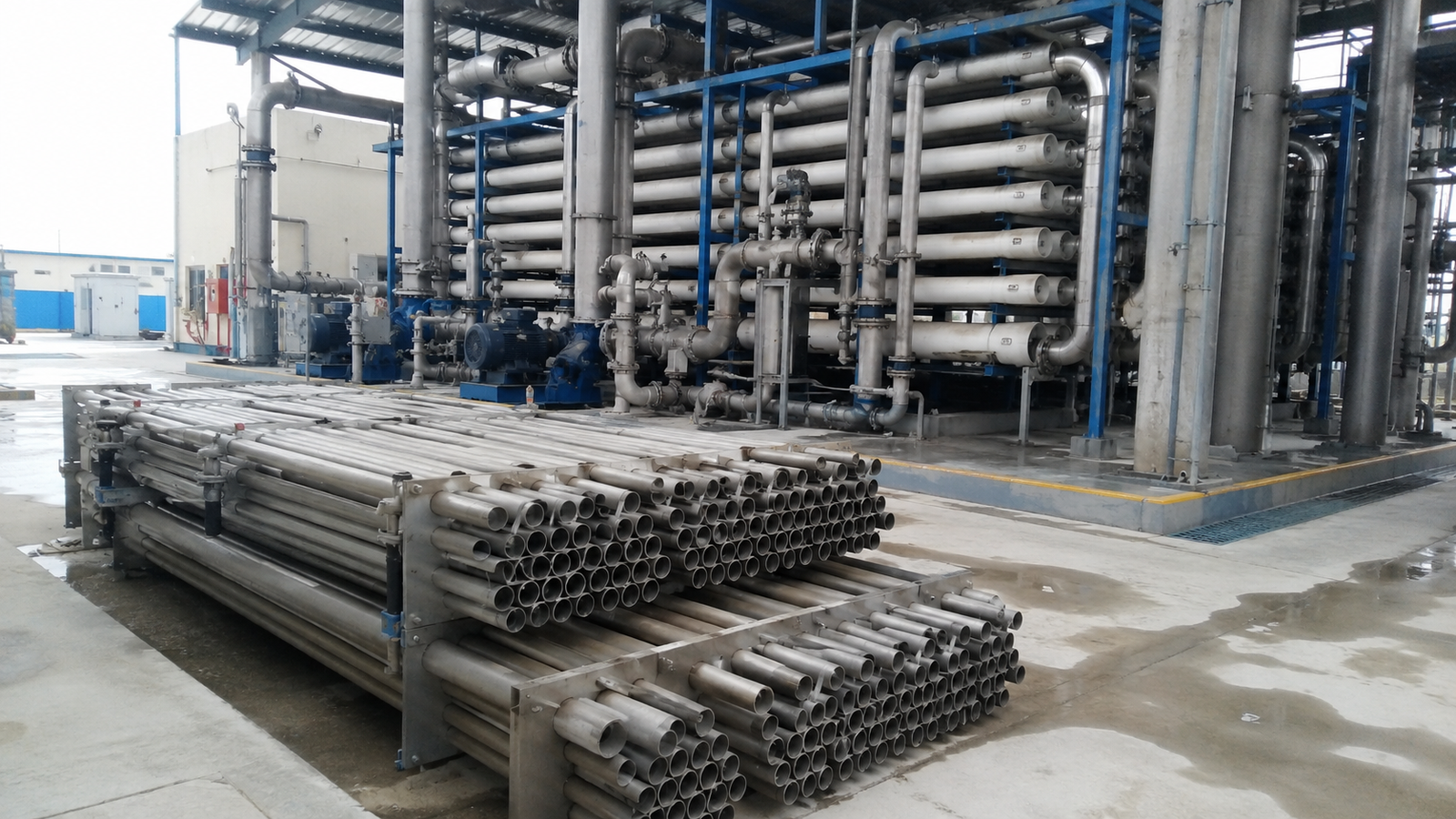
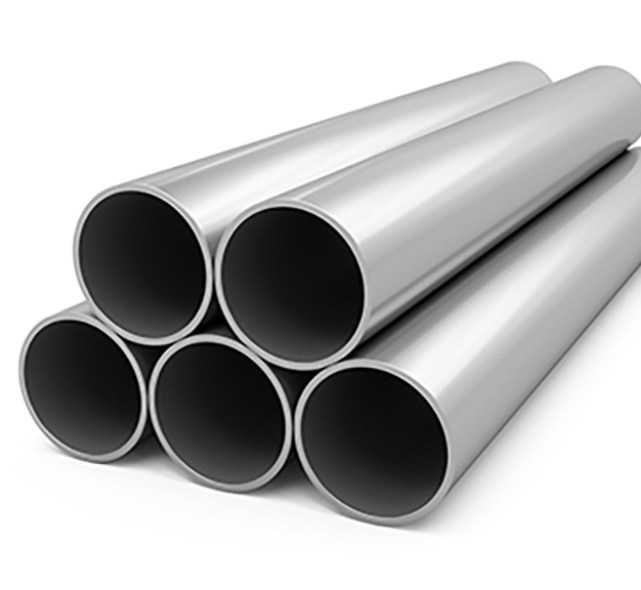
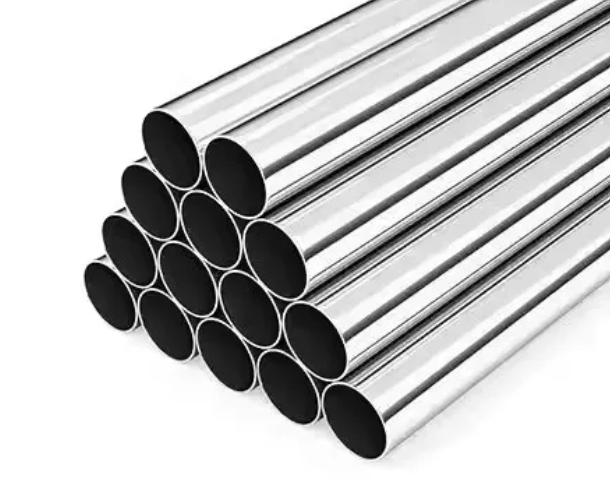
ASTM B338 covers seamless and welded titanium alloy tubes for surface condensers, evaporators and heat exchangers: ASTM B338.
ASTM B163 covers seamless nickel and nickel alloy tubes for condenser and heat-exchanger service: ASTM B163.
AMPP notes that no material is resistant to all corrosive situations and that material selection is critical to preventing many types of failures: AMPP Materials Selection and Design for Corrosion Control.
Why a One-Size-Fits-All Material Approach Is Risky
There is no single material that fits every desalination plant or every component.
A tube material used in a condenser may not be suitable for a brine heater. A material used in SWRO piping may not be suitable for a thermal evaporator. A material selected for seawater exposure may not be suitable for acid cleaning or stagnant deposit conditions.
Why Desalination Process Type Matters
| Process Type | Main Operating Features | Material Selection Focus |
|---|---|---|
| SWRO | High pressure, seawater chloride, oxygenated water, antiscalants, biocides and cleaning chemicals | Pitting, crevice corrosion, SCC risk, pressure rating, weld quality and compatibility with chemicals |
| MED | Thermal evaporation, brine concentration, vacuum operation, heat transfer surfaces, scaling and cleaning | Tube corrosion, under-deposit corrosion, scaling control, thermal cycling and cleaning compatibility |
| MSF | Flashing brine, higher thermal load, brine heater zones, deaerated and oxygenated sections depending on design | High-temperature corrosion, erosion-corrosion, scaling, tube integrity and material compatibility |
| MVC / TVC | Mechanical or thermal vapor compression, heat transfer surfaces and brine concentration | Thermal stress, scaling, corrosion and maintenance requirements |
| Cooling / Condenser Systems | Seawater, cooling water, biological fouling and tube bundle exposure | Seawater corrosion, fouling, tube leakage and inspection requirements |
A Lawrence Berkeley National Laboratory report on desalination technologies lists major desalination processes including reverse osmosis, multi-stage flash, multi-effect distillation and vapor compression, and notes that seawater RO can operate at pressures around 55–80 bar: LBNL Desalination Technologies Report.
This supports a practical point: process type changes material requirements. Buyers should not copy material specifications from one desalination process to another without review.
Which Environmental Factors Affect Desalination Material Service Life?
The most important material-selection data often comes from the plant environment, not only from the alloy datasheet.
Conditions Buyers Should Confirm
| Condition | Why It Matters |
|---|---|
| Salinity and Chloride Level | Chlorides can increase localized corrosion risk in susceptible materials |
| Brine Concentration | Higher concentration can increase corrosion and scaling challenges |
| Dissolved Oxygen | Can influence corrosion potential and localized corrosion behavior |
| pH | Low or variable pH can affect corrosion resistance |
| Temperature | Higher temperature can increase corrosion, scaling and thermal stress |
| Flow Velocity | Low flow may promote deposits; high flow may increase erosion or vibration risk |
| Scaling / Deposits | Deposits can create crevice-like or under-deposit corrosion conditions |
| Chlorination / Biocides | Chemical treatment can change corrosion behavior |
| Cleaning Chemicals | Acid cleaning or oxidizing cleaning agents may affect alloy compatibility |
| Shutdown Conditions | Stagnant seawater or wet deposits may increase localized attack |
| Welding and Heat-Affected Zones | Weld quality and heat input may affect corrosion and cracking risk |
| Component Location | Brine heater, condenser, evaporator and piping areas face different conditions |
A 2025 OSTI-indexed study on corrosion design constraints in desalination found that dissolved oxygen and pH can affect localized corrosion constraints and material selection in desalination evaporator design: Incorporating Corrosion Design Constraints in Desalination Systems.
This means buyers should provide water chemistry and operating data before asking suppliers for a final material recommendation.
How Can Buyers Separate Real Performance from Marketing Claims?
Many materials are described as “excellent corrosion resistant.” That statement is not enough.
Buyers should ask:
- Excellent resistance to what medium?
- At what temperature?
- At what chloride level?
- Under flowing or stagnant conditions?
- With dissolved oxygen or deaerated water?
- With deposits or clean surfaces?
- With acid cleaning or oxidizing chemicals?
- In a welded or seamless product?
- Based on which test method?
- Supported by which report?
Useful Performance Indicators
| Data Point | Why It Helps | Buyer Caution |
|---|---|---|
| General Corrosion Rate | Helps compare uniform metal loss | Does not fully represent localized corrosion |
| PREN | Theoretical screening for pitting resistance in stainless steels and some high alloy systems | Not a substitute for testing |
| CPT | Critical pitting temperature helps compare pitting initiation risk under test conditions | Test medium may not equal plant water |
| CCT | Critical crevice temperature helps compare crevice corrosion risk | Crevice geometry and deposits matter |
| SCC Data | Helps evaluate cracking risk under stress and corrosive conditions | Must match environment and stress condition |
| Erosion-Corrosion Data | Useful for high-flow or suspended solids conditions | Depends on flow velocity and solids |
| Field History | Useful when conditions are similar | Must not replace project-specific review |
| Third-Party Test Reports | Adds independent verification | Test scope must match purchase requirement |
ASTM G48 provides test methods for pitting and crevice corrosion resistance of stainless steels, nickel-base and chromium-bearing alloys using ferric chloride solution. Methods C, D, E and F allow ranking by minimum critical temperature for initiation of pitting and crevice corrosion: ASTM G48.
PREN can help initial screening, but it is a calculated indicator based on chemistry. It should not replace CPT, CCT, corrosion testing, service history or engineering review.
Why Alloy Composition and Manufacturing Process Matter
Two materials with similar trade names may not perform the same.
The final performance can depend on:
- Exact chemical composition
- UNS number
- Product standard
- Heat treatment
- Melting and processing route
- Grain structure
- Cold work
- Welding
- Surface condition
- Inclusions or segregation
- NDT results
- MTR / MTC and heat number traceability
Examples of Composition-Related Questions
| Material Family | Buyer Questions |
|---|---|
| Titanium Grade 1 / Grade 2 | Is strength, ductility, forming or standard seawater service the priority? |
| Titanium Grade 7 / Grade 11 / Grade 16 / Grade 17 | Is enhanced crevice corrosion resistance required by the project? |
| Titanium Grade 12 | Is a specific corrosion or heat exchanger requirement being evaluated? |
| Duplex / Super Duplex Stainless Steel | Is PREN, CPT, CCT, welding and chloride SCC resistance reviewed? |
| Alloy 400 | Are velocity, oxygen, sulfide, ammonia and temperature conditions suitable? |
| Alloy 625 | Is severe localized corrosion or high-temperature brine exposure part of the review? |
| Alloy 825 | Are acid, chloride, temperature and oxygen conditions reviewed? |
| Alloy C276 | Is the environment chemically severe enough to justify evaluation? |
ASTM B338 lists multiple titanium grades for condenser, evaporator and heat exchanger tube service, including Grade 1, Grade 2, Grade 7, Grade 11, Grade 12, Grade 16 and Grade 17: ASTM B338.
The point is not that one grade is always better. The point is that different grades solve different problems.
Where Titanium Tubes May Be Evaluated
Titanium tubes are widely evaluated for seawater condenser, evaporator and heat exchanger applications because of their corrosion resistance in many seawater environments.
A review paper on titanium and titanium alloys in seawater desalination discusses MED, MSF and RO technologies and reviews the application prospects of titanium materials in desalination equipment: Applications and Prospects of Titanium and Its Alloys in Seawater Desalination Industry.
Titanium Tube Review Points
| Review Item | Why It Matters |
|---|---|
| Grade | Grade 1, 2, 7, 11, 12, 16 or 17 may have different strength and corrosion behavior |
| Tube Standard | ASTM B338 may be relevant for condenser, evaporator and heat exchanger tubes |
| Crevice Conditions | Tube sheets, deposits and stagnant zones may affect localized corrosion |
| Welding | Weld quality and heat-affected zones must be controlled |
| Cleaning | Acid or mechanical cleaning method should be reviewed |
| Tube Wall Thickness | Affects strength, heat transfer design and service margin |
| ECT / UT / Hydrostatic Test | Helps verify tube integrity according to project requirement |
| MTR / Heat Number | Confirms batch-specific chemistry and properties |
Titanium should still be evaluated according to the actual water chemistry, temperature, deposits and cleaning method.
Where Nickel Alloy Tubes May Be Evaluated
Nickel alloy tubes may be evaluated for selected severe corrosion, high-temperature, brine, acid-cleaning or critical heat exchanger conditions.
However, nickel alloys are not interchangeable. Alloy 400, Alloy 625, Alloy 825, Alloy C276 and Nickel 200 have different corrosion behavior and cost profiles.
Nickel Alloy Tube Review Points
| Alloy Family | Possible Evaluation Area | Buyer Caution |
|---|---|---|
| Alloy 400 / UNS N04400 | Selected seawater, brine or heat exchanger service | Verify oxygen, sulfide, ammonia, velocity and temperature |
| Alloy 625 / UNS N06625 | Severe localized corrosion or high-temperature brine conditions | Confirm whether the service justifies higher alloy content |
| Alloy 825 / UNS N08825 | Selected acid or chloride-containing environments | Review pH, oxygen, chloride and temperature |
| Alloy C276 / UNS N10276 | Aggressive chemical or severe corrosion environments | Usually for more severe service; confirm exact need |
| Nickel 200 / UNS N02200 | Selected alkaline or high-purity environments | Confirm temperature, strength and chemistry limits |
ASTM B163 provides a purchase basis for seamless nickel and nickel alloy tubes for condenser and heat-exchanger service: ASTM B163.
Nickel alloy selection should be based on corrosion constraints, tube position, temperature, fluid chemistry, inspection requirements and life-cycle cost.
What Tests and Documents Should Buyers Request?
For desalination plant materials, buyers should request enough testing and documentation to verify the material before installation.
Common Verification Requirements
| Requirement | Why It Matters |
|---|---|
| MTR / MTC | Confirms batch-specific chemical composition and mechanical properties |
| Heat Number | Links material to production batch |
| UNS Number | Confirms exact alloy designation |
| Product Standard | Confirms ASTM / ASME / EN / ISO basis |
| PMI / Grade Verification | Helps reduce material mix-up risk |
| Tensile Test | Confirms strength and ductility |
| Hardness Test | Helps verify material condition |
| Dimensional Report | Confirms OD, wall thickness, length and tolerance |
| Surface Inspection | Confirms visual quality and surface defects |
| ECT | Common for tube discontinuity screening when specified |
| UT | Detects discontinuities in metal pipe and tubing when specified |
| Hydrostatic / Pneumatic Test | Confirms pressure integrity when required |
| Third-Party Inspection | Provides independent verification when required |
ASTM E1476 provides guidance for nondestructive identification, grade verification and sorting of metals: ASTM E1476.
ASTM E213 covers ultrasonic testing of metal pipe and tubing: ASTM E213.
ASTM E426 covers eddy current examination of seamless and welded tubular products using encircling coil or probe-coil techniques: ASTM E426.
Why Supplier Capability Matters
A supplier cannot guarantee desalination plant service life. Plant life depends on design, operation, cleaning, water chemistry, maintenance, installation and inspection.
However, supplier capability affects procurement risk.
Supplier Verification Checklist
| Supplier Capability | What Buyers Should Ask |
|---|---|
| Standards Knowledge | Can the supplier explain ASTM B338, ASTM B163 or other applicable standards? |
| Material Traceability | Can every tube, bar or component be traced to heat number? |
| MTR / MTC | Are batch-specific chemical and mechanical reports available? |
| Inspection Support | Can ECT, UT, hydrostatic, dimensional and surface inspection be supported? |
| Surface Control | Can pickled, polished, bright or special surface requirements be confirmed? |
| Technical Clarification | Does the supplier ask about process, water chemistry and temperature? |
| Third-Party Inspection | Can SGS, BV, TÜV, LRQA, ABS or buyer-appointed inspection be supported? |
| Packaging | Can tubes be protected for export shipment and storage? |
| Delivery Planning | Can lead time, quantity and logistics be confirmed realistically? |
| Quality System | Is there a documented quality management system? |
ISO explains that the ISO 9000 family helps organizations improve the quality of products and services and consistently meet customer expectations: ISO 9000 Family.
A quality management system is useful, but it does not replace project-specific inspection reports, MTR / MTC, heat number traceability or corrosion review.
How Do Commercial Realities Affect Material Selection?
The technically strongest material is not always the most practical choice. The lowest initial price is also not always the lowest-cost choice.
Desalination material selection should balance:
- Technical suitability
- Corrosion risk
- Tube standard
- Availability
- Lead time
- Inspection cost
- Installation cost
- Maintenance cost
- Cleaning cost
- Replacement risk
- Downtime risk
- Documentation requirements
The U.S. Environmental Protection Agency defines life-cycle cost as original cost minus salvage value plus operating costs, maintenance costs, renewal costs and decommissioning costs: EPA Life Cycle and Replacement Costs.
The U.S. Department of Energy’s O&M Best Practices Guide describes reactive maintenance as allowing machinery to run to failure and repairing or replacing damaged equipment only when obvious problems occur: DOE O&M Best Practices Guide.
Cost Factors Beyond Material Price
| Cost Factor | Why It Matters |
|---|---|
| Initial Material Price | Affects procurement budget |
| Installation Cost | Tube expansion, welding, retubing or assembly work |
| Inspection Cost | ECT, UT, hydrostatic, third-party inspection |
| Cleaning Cost | Chemical cleaning, sponge ball cleaning or mechanical cleaning |
| Maintenance Cost | Regular inspection and tube cleaning |
| Downtime Cost | Lost production during unplanned shutdown |
| Replacement Cost | New tubes, labor, testing and recommissioning |
| Documentation Cost | Rework if certificates or traceability are incomplete |
| Supply Risk | Long lead time may delay project schedule |
| Asset Life Planning | Material choice affects maintenance and replacement strategy |
A higher-grade alloy may be justified in severe conditions, but not every location needs the highest-cost material. The right decision should be based on service conditions and life-cycle evaluation.
Buyer Checklist Before Confirming Material Selection
Before ordering materials for desalination plant components, buyers should prepare the following information.
| RFQ Item | What to Provide |
|---|---|
| Desalination Process | SWRO, MED, MSF, MVC, TVC or hybrid process |
| Component | Evaporator, condenser, brine heater, piping, pump, valve or heat exchanger |
| Medium | Seawater, brine, condensate, cooling water or cleaning chemical |
| Water Chemistry | Chloride, salinity, pH, dissolved oxygen, sulfide, ammonia, bromide if relevant |
| Temperature | Minimum, normal, maximum, cleaning and shutdown temperature |
| Pressure | Operating pressure and design pressure |
| Flow Velocity | Tube-side and shell-side conditions |
| Scaling / Fouling | Scaling tendency and antiscalant program |
| Cleaning Method | Acid cleaning, mechanical cleaning, hydrojetting or sponge ball cleaning |
| Material Grade | Titanium, nickel alloy, duplex stainless steel or open to recommendation |
| UNS Number | Exact material designation |
| Standard | ASTM B338, ASTM B163 or project specification |
| Product Form | Tube, pipe, bar, plate, forging or machined part |
| Tube Type | Seamless or welded |
| Size | OD, wall thickness, length and tolerance |
| Surface Condition | Pickled, polished, bright, cleaned or special finish |
| Testing | Chemical, mechanical, PMI, ECT, UT, hydrostatic or other tests |
| Documentation | MTR / MTC, heat number, inspection reports |
| Third-Party Inspection | Required or optional |
| Packaging | End protection, bundle marking, seaworthy export packing |
| Delivery | Required date, port and logistics method |
This checklist helps suppliers quote the same technical scope and reduces misunderstanding.
Example RFQ Wording
For titanium tubes:
“Please quote titanium tubes for desalination evaporator / condenser service according to ASTM B338. Required grade: Titanium Grade / UNS . Size: OD mm, WT mm, length ___ mm. Application: MED / MSF / condenser / brine heater. Medium: seawater / brine / cooling water. Please confirm surface condition, MTR / MTC, heat number traceability, dimensional inspection, ECT / UT / hydrostatic test options, packing and delivery time.”
For nickel alloy tubes:
“Please quote seamless nickel alloy tubes for desalination heat exchanger service according to ASTM B163. Material: Alloy / UNS . Size: OD mm, WT mm, length ___ mm. Please review water chemistry, dissolved oxygen, pH, temperature, brine concentration and cleaning method. MTR / MTC, heat number traceability, chemical analysis, mechanical test report, dimensional inspection and NDT options required.”
For material review:
“Please advise whether the proposed material is suitable for the stated desalination process and operating conditions. Final approval will be based on project specification, water chemistry, corrosion risk, inspection requirement and buyer qualification.”
This is clearer than writing:
“Please quote the best alloy for desalination.”
How Emily PIPE Supports Desalination Material Buyers
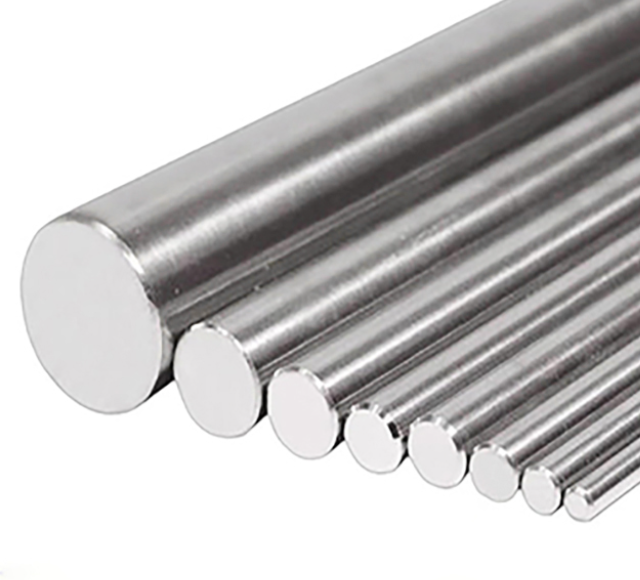
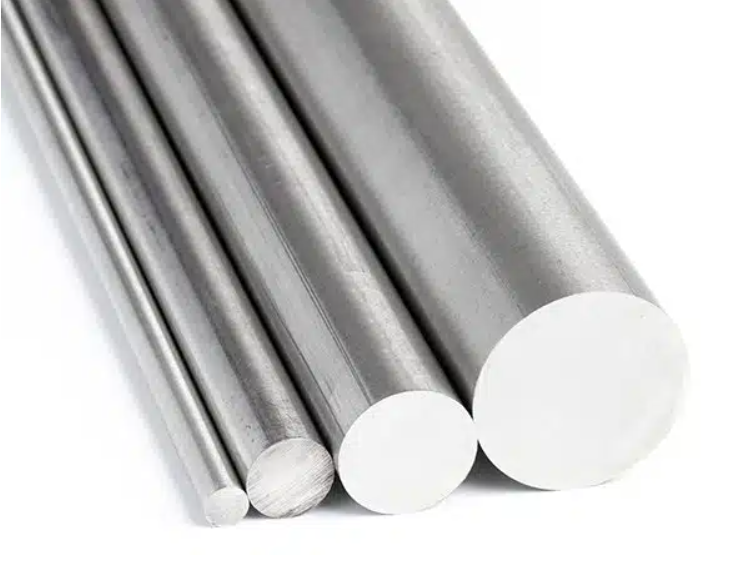
Emily PIPE is a China-based manufacturer and exporter specializing in nickel alloy tubes, nickel alloy bars, titanium alloy tubes and titanium alloy bars. We support customers across chemical processing, oil and gas, marine engineering, power generation, heat exchangers, desalination-related equipment and other corrosion-resistant or high-temperature applications.
For desalination plant material projects, we can support:
- Titanium alloy tubes and pipes
- Nickel alloy tubes and pipes
- Nickel alloy bars for machined components
- Titanium alloy bars for machined components
- Titanium Grade 1, Grade 2, Grade 7, Grade 11, Grade 12 and other grades according to project requirements
- Alloy 400, Alloy 625, Alloy 825, Alloy C276, Nickel 200 and other nickel alloys according to application review
- ASTM B338 titanium tube support
- ASTM B163 nickel alloy tube support
- Custom OD, wall thickness, length, tolerance and surface condition
- MTR / MTC and heat number traceability
- Dimensional and surface inspection
- PMI, chemical analysis, tensile, hardness, UT, ECT, hydrostatic and other testing support when required
- Third-party inspection support
- Export packaging and logistics support
Our role is not to claim that one titanium or nickel alloy fits every desalination plant. Our role is to help buyers clarify process type, component function, water chemistry, temperature, pressure, material grade, standard, testing, documentation and delivery requirements before production.
If you are sourcing titanium or nickel alloy materials for desalination evaporators, condensers, brine heaters, heat exchangers, piping or related components, please send the drawing, material grade, UNS number, standard, size, water chemistry, operating temperature, pressure, testing requirement, documentation requirement and destination. Our team can help review your requirements and provide a suitable quotation.
FAQ: Material Selection for Desalination Plants
1. Why does material selection affect desalination plant service life?
Material selection affects corrosion resistance, tube leakage risk, maintenance planning, cleaning compatibility and replacement frequency. It should be reviewed together with design, operation and inspection.
2. Is there one best material for all desalination plants?
No. SWRO, MED, MSF, MVC and other systems have different pressure, temperature, brine and corrosion conditions.
3. Are titanium tubes used in desalination?
Yes. Titanium tubes are widely evaluated for condenser, evaporator and heat exchanger service. ASTM B338 is a common standard for titanium and titanium alloy tubes used in these applications.
4. When should nickel alloy tubes be considered?
Nickel alloy tubes may be evaluated for selected severe corrosion, high-temperature brine, acid-cleaning or critical heat exchanger conditions. ASTM B163 is a common standard for seamless nickel and nickel alloy condenser and heat-exchanger tubes.
5. Is PREN enough to select material?
No. PREN is a useful theoretical screening tool, but buyers should also review CPT, CCT, corrosion testing, water chemistry, temperature, service history and inspection requirements.
6. Why are water chemistry details important?
Chloride, salinity, dissolved oxygen, pH, sulfides, ammonia and cleaning chemicals can affect corrosion behavior. Without water chemistry, material selection is incomplete.
7. What tests should buyers request?
Depending on the project, buyers may request chemical analysis, tensile testing, dimensional inspection, surface inspection, PMI, eddy current testing, ultrasonic testing, hydrostatic or pneumatic testing and third-party inspection.
8. Is the cheapest material the best value?
Not always. Buyers should compare life-cycle cost, including maintenance, cleaning, replacement, downtime, inspection and documentation risk.
Conclusion
Desalination plant material selection is not a simple choice between “cheap” and “expensive” or between one alloy name and another.
The right material depends on process type, component function, water chemistry, brine concentration, dissolved oxygen, pH, temperature, flow, scaling, cleaning method, testing, supplier traceability and life-cycle cost.
For buyers, the best procurement approach is to define the operating conditions clearly, verify performance with relevant standards and testing, and work with suppliers who can provide traceable, documented and inspectable materials.