
How to Confirm Nickel and Titanium Alloys from Part Drawings
Confirming nickel or titanium alloy materials from part drawings is not always straightforward. A drawing may clearly define geometry, dimensions, tolerances and machining details, but it may not fully define the alloy grade, product standard, heat treatment condition, testing scope, certificate type, or real service environment.
A poor material assumption may increase quoting errors, machining problems, welding issues, corrosion risk, mechanical performance risk, delivery delays, rework, or lifecycle cost. However, the solution is not to guess a material from appearance or from a drawing title. Buyers should confirm the drawing information, application conditions, material standard, batch documentation, testing requirements and supplier traceability before placing an order.
ASME Y14.100 provides requirements and reference documents for the preparation and revision of engineering drawings: ASME Y14.100 Engineering Drawing Practices.
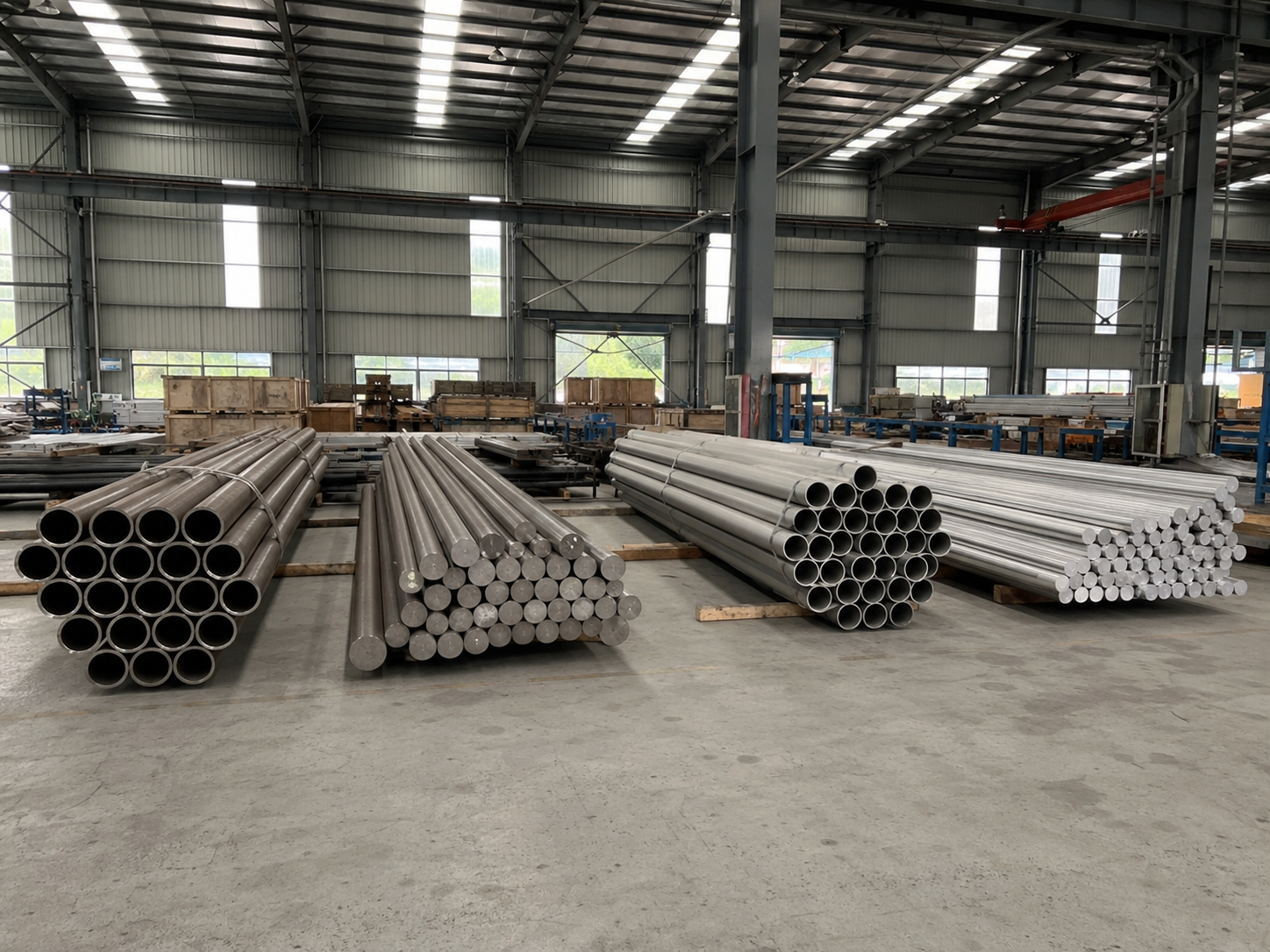
For engineers and procurement teams, the key question is not “Can this part be made from nickel alloy or titanium?” The better question is “Which exact alloy grade, product form, standard, heat treatment, testing scope and certificate package are required for this part and its actual service condition?”
Why Part Drawings Alone May Not Be Enough
A part drawing can be very detailed, but it may still leave important material questions unanswered.
Some drawings clearly specify the material, such as:
- Inconel 625 / UNS N06625
- Hastelloy C-276 / UNS N10276
- Alloy 825 / UNS N08825
- Titanium Grade 2 / UNS R50400
- Ti-6Al-4V / Grade 5 / UNS R56400
- ASTM B338
- ASTM B348
- ASTM B444
- ASTM B622
- AMS, ASME, EN, ISO or customer specifications
Other drawings may only say:
- Nickel alloy
- Titanium
- Corrosion-resistant alloy
- High-temperature alloy
- Equivalent material
- As per sample
- According to drawing
- Material to be confirmed
When the drawing does not specify the exact material grade and standard, buyers should not rely on visual inspection or supplier guessing.
What Information May Be Missing from a Drawing?
A drawing may define the shape of the part but not the performance requirements behind it.
| Missing Information | Why It Matters |
|---|---|
| Exact alloy grade | “Nickel alloy” or “titanium” is not enough to define chemistry or performance |
| UNS number | Helps avoid confusion between similar trade names and grades |
| Product standard | ASTM, ASME, AMS, EN or ISO standards define product requirements |
| Product form | Tube, pipe, bar, plate, forging or machined part may follow different standards |
| Heat treatment condition | Annealed, solution annealed, aged or stress relieved conditions may change properties |
| Application environment | Corrosion, temperature, pressure and media control material suitability |
| Mechanical requirements | Strength, hardness, toughness, fatigue and creep resistance may be critical |
| Surface requirement | Pickled, polished, bright annealed, machined or electropolished surfaces may differ |
| Welding / machining requirement | Some alloys require special fabrication controls |
| Testing scope | PMI, chemical analysis, tensile testing, UT, ECT or pressure testing may be required |
| Certificate type | EN 10204 3.1, 3.2, MTC / MTR or third-party inspection may be required |
| Traceability | Heat number and batch traceability should match documents and markings |
A drawing is the starting point. A complete material specification connects the drawing to real service requirements.
Why Visual Inspection Cannot Confirm Nickel or Titanium Alloy Grade
Visual inspection is useful for checking obvious surface damage, marking, dimensions or workmanship. But it cannot reliably confirm whether a material is Inconel 625, Hastelloy C-276, Alloy 825, Alloy 600, Titanium Grade 2, Titanium Grade 5 or another alloy.
ASTM E1476 is a standard guide for metals identification, grade verification and sorting. It describes general requirements, methods and procedures for nondestructive identification and sorting of metals: ASTM E1476.
Visual inspection should be used together with:
- Material marking
- Heat number
- MTC / MTR
- Product standard
- Chemical analysis
- PMI testing
- Mechanical testing if required
- Dimensional inspection
- Surface inspection
- Third-party inspection if required
If the alloy grade matters, appearance alone is not enough.
How to Bridge the Gap Between Drawing and Material Specification
When the drawing is incomplete, buyers can bridge the gap by asking structured questions.
1. Confirm the Part Function
Ask:
- What does the part do?
- Is it a pressure-retaining part?
- Is it a heat exchanger tube, machined shaft, valve component, fastener, support, sleeve or custom fitting?
- Is it exposed to load, vibration, fatigue, pressure or thermal cycling?
- Is it a critical component or a replaceable wear part?
Material choice should match the part function.
2. Confirm the Service Environment
Ask:
- What media will contact the material?
- Is the environment corrosive?
- Are chlorides, acids, alkalis, seawater, steam, gases or solvents present?
- What is the operating temperature?
- What is the maximum temperature?
- What is the pressure?
- Is there flow velocity, erosion or abrasion?
- Is there cyclic loading or thermal cycling?
- Is welding required?
- Is the part used in aerospace, chemical processing, marine, medical, power, nuclear or other regulated service?
A material that is suitable in one environment may not be suitable in another.
3. Confirm the Required Standard
Different product forms follow different standards. For example:
| Product Form | Possible Standard | What It May Cover |
|---|---|---|
| Titanium heat exchanger tube | ASTM B338 | Seamless and welded titanium alloy tubes for condensers and heat exchangers |
| Titanium bar / billet | ASTM B348 | Titanium and titanium alloy bars and billets |
| Alloy 625 seamless pipe / tube | ASTM B444 | UNS N06625 and related nickel alloy seamless pipe and tube |
| Nickel alloy seamless pipe / tube | ASTM B622 | Seamless pipe and tube of nickel and nickel-cobalt alloys |
| Nickel alloy heat exchanger tube | ASTM B163 | Seamless nickel and nickel alloy tubes for condenser and heat exchanger service |
| Customer machined part | Drawing + material standard + inspection plan | May require both dimensional and material verification |
Useful references:
- ASTM B338 Titanium Tubes
- ASTM B348 Titanium Bars and Billets
- ASTM B444 Alloy 625 Seamless Pipe and Tube
- ASTM B622 Nickel Alloy Seamless Pipe and Tube
- ASTM B163 Nickel Alloy Heat Exchanger Tubes
The correct standard depends on product form, alloy grade, end use and purchase specification.
Why “Equivalent Material” Should Be Verified Carefully
Many drawings or inquiries mention “equivalent material.” This can be useful, but it can also create risk if the equivalence is not defined.
An equivalent material should be checked against:
- Chemical composition limits
- UNS number
- Mechanical properties
- Heat treatment condition
- Product form
- Product standard
- Corrosion resistance requirement
- Temperature capability
- Welding requirement
- Machining requirement
- Inspection scope
- Certificate requirement
- End-user approval
“Equivalent” does not automatically mean identical. Two alloys may look similar on paper but still differ in strength, corrosion resistance, heat treatment, weldability, or acceptance by the final project specification.
A safe approach is to ask the buyer or end user to approve any substitute grade before production.
What Documents Should Buyers Request?
For nickel and titanium alloy parts, buyers may request:
- Material Test Certificate / Mill Test Report
- EN 10204 Type 3.1 or Type 3.2 certificate if required
- Heat number or batch number traceability
- Chemical composition report
- Mechanical properties report
- Heat treatment record if required
- Dimensional inspection report
- Surface inspection report
- PMI report if required
- Ultrasonic testing report if required
- Eddy current testing report if required
- Hydrostatic or pneumatic test report if required
- Hardness test report if required
- Third-party inspection report if required
- Packing and marking records
EN 10204 defines inspection documents for metallic products. Type 3.1 is an inspection certificate in which the manufacturer declares that the products supplied comply with the order and provides test results: EN 10204 Inspection Documents.
Buyers should verify that the certificate matches the physical material:
- Heat number
- Alloy grade
- UNS number
- Standard
- Size
- Quantity
- Test values
- Marking
- Purchase order
- Drawing number if applicable
MTC / MTR supports traceability, but it does not replace application review.
How to Verify Material Authenticity
Material verification should combine documents, markings, inspection and testing.
| Verification Step | Purpose |
|---|---|
| Review drawing | Confirms geometry, tolerance, notes and material callout if listed |
| Review purchase specification | Confirms material grade, standard, certificate and testing scope |
| Check marking | Confirms grade, heat number, size and supplier marking |
| Check MTC / MTR | Confirms batch chemical and mechanical test results |
| Dimensional inspection | Confirms OD, ID, wall thickness, length, machining size or tolerance |
| Surface inspection | Checks scratches, dents, cracks, pits, scale or contamination |
| PMI testing | Helps verify alloy identity by elemental analysis |
| Laboratory chemical analysis | Provides stronger confirmation when PMI is not enough |
| Mechanical testing | Confirms tensile strength, yield strength, elongation or hardness when required |
| NDT | Helps detect defects depending on product form and risk |
| Third-party inspection | Adds independent verification for critical orders |
ASTM E8 / E8M covers tension testing of metallic materials and includes determination of yield strength, tensile strength, elongation and reduction of area: ASTM E8 / E8M.
ISO/IEC 17025 enables laboratories to demonstrate that they operate competently and generate valid results: ISO/IEC 17025.
PMI Testing: Useful, but Not Always Enough
Positive Material Identification can help verify alloy identity quickly. It is often used for incoming inspection, warehouse control, project verification and material sorting.
However, buyers should understand its limitations.
ASTM E1476 provides guidance for metals identification, grade verification and sorting: ASTM E1476.
Depending on the method, PMI may not fully confirm:
- Carbon content
- Nitrogen content
- Oxygen content
- Hydrogen content
- Some light elements
- Heat treatment condition
- Mechanical properties
- Microstructure
- Surface contamination effects
- Coating or plating effects
- Corrosion resistance in real service
EPA documentation on field portable XRF notes that light elements can be difficult for FPXRF and that generally elements with atomic number 16 or greater can be detected and quantified by that method: EPA Method 6200 Field Portable XRF.
For critical nickel and titanium alloy parts, PMI should be combined with MTC review, heat number traceability and, when necessary, laboratory chemical analysis or mechanical testing.
Useful NDT Methods for Alloy Tubes and Parts
Testing requirements depend on product form, material, size, wall thickness, application and purchase order.
| Method | Typical Purpose |
|---|---|
| Eddy current testing | Commonly used for heat exchanger tube inspection |
| Ultrasonic testing | Helps detect discontinuities in suitable products |
| Hydrostatic / pneumatic testing | Helps verify pressure integrity when required |
| Liquid penetrant testing | Helps detect surface-breaking defects |
| Visual inspection | Checks surface condition, marking and workmanship |
| Dimensional inspection | Confirms product size and tolerance |
ASNT explains that eddy current testing is commonly used to inspect heat exchanger tubes and detect wall-thickness changes or defects: ASNT Electromagnetic Testing.
ASNT explains that ultrasonic testing uses high-frequency sound waves to detect and measure discontinuities in industrial components: ASNT Ultrasonic Testing.
ISO 9001 Is Useful, but Not Enough
ISO 9001 can support supplier evaluation, but it should not be treated as proof that a specific batch of nickel or titanium alloy material is suitable for a specific part drawing or service condition.
ISO explains that ISO 9001 is a globally recognized standard for quality management and helps organizations improve performance: ISO 9001 Quality Management Systems.
For material confirmation, buyers should still verify:
- Alloy grade
- UNS number
- Product standard
- Heat number
- Chemical composition
- Mechanical properties
- Heat treatment condition
- Size and tolerance
- Surface condition
- Inspection reports
- MTC / MTR
- Application compatibility
- Third-party inspection if required
A quality management system is helpful, but batch-level verification and engineering review are still necessary.
Why Initial Price Should Not Be the Only Decision Factor
When the material is not clearly defined from the drawing, the lowest price may be based on an incorrect assumption.
The real cost may include:
- Re-quotation
- Drawing clarification
- Wrong material purchase
- Rework
- Machining problems
- Welding problems
- Rejection by end user
- Delay in delivery
- Replacement material
- Third-party testing
- Production interruption
- Lifecycle cost
NIST’s Life Cycle Cost Manual explains that lifecycle cost is the total cost of owning, operating, maintaining and disposing of a system over a given study period: NIST Life Cycle Cost Manual.
A slightly longer clarification process before ordering may prevent much larger problems later.
Practical RFQ Checklist for Nickel and Titanium Alloy Parts from Drawings
Before sending an inquiry, buyers can prepare the following information:
- Drawing number and revision
- Part name and function
- Required alloy grade
- UNS number if available
- Product form: tube, pipe, bar, plate, forging, fitting or machined part
- Required standard: ASTM, ASME, AMS, EN, ISO or customer specification
- Heat treatment condition
- Operating temperature
- Operating pressure
- Service medium or environment
- Corrosion resistance requirement
- Mechanical strength requirement
- Hardness requirement if any
- Fatigue, vibration or impact requirement if any
- Welding requirement
- Machining requirement
- Surface finish requirement
- Dimensional tolerance
- Quantity
- Required certificate type: EN 10204 3.1 or 3.2
- Required testing: PMI, chemical analysis, tensile, hardness, UT, ECT, hydrostatic, pneumatic or other
- Third-party inspection requirement
- Marking requirement
- Packing requirement
- End-user approval requirement for substitute materials
A clear RFQ helps the supplier quote the correct material, avoid false equivalence, and provide the correct documentation package.
Conclusion
Confirming nickel and titanium alloys from part drawings requires more than visual inspection or a general material name. Buyers should check the drawing, application conditions, exact alloy grade, UNS number, product standard, heat treatment, testing scope, MTC / MTR, PMI results, and supplier traceability.
A complete material confirmation process helps connect the design drawing with real manufacturing, inspection and service requirements.