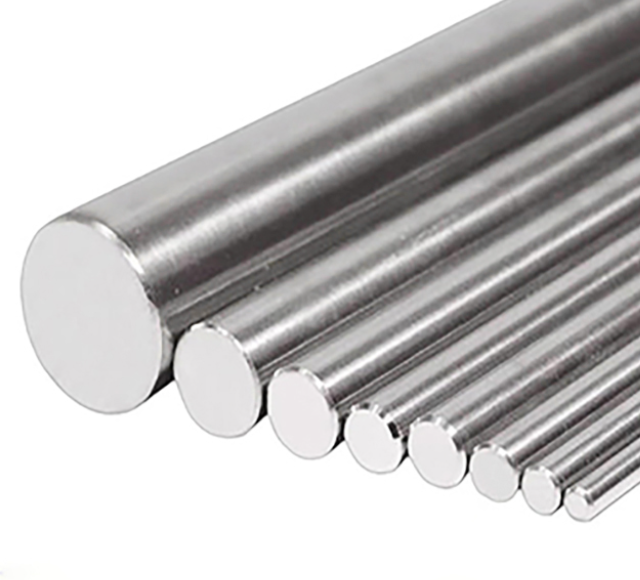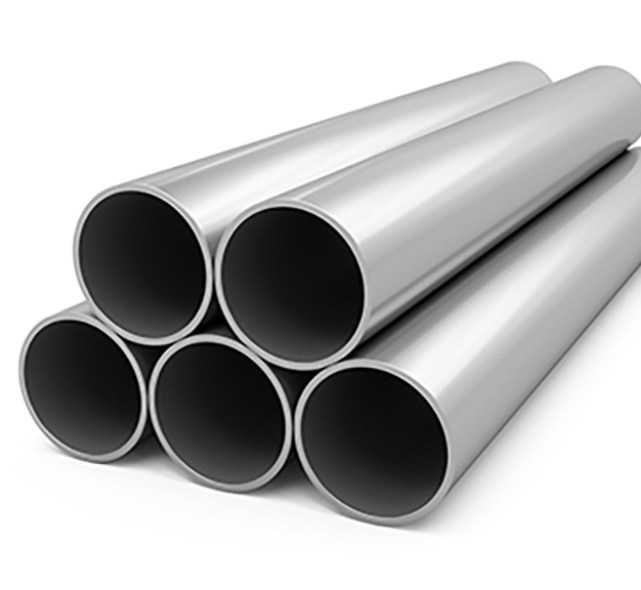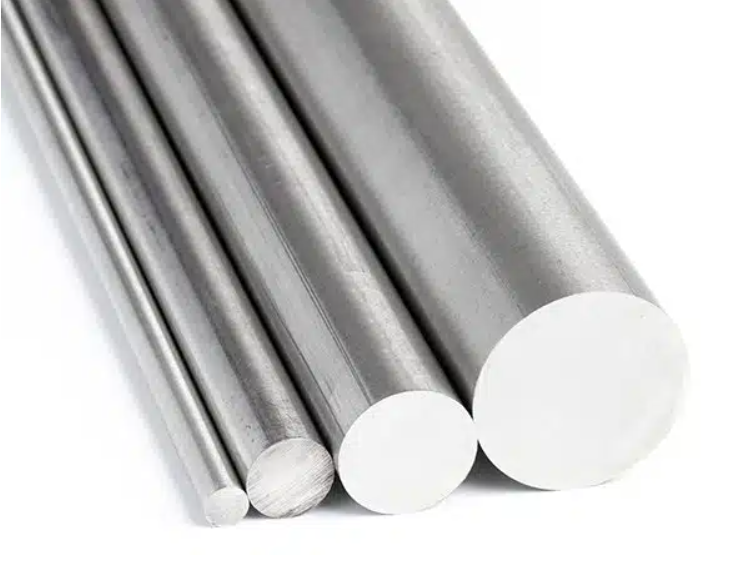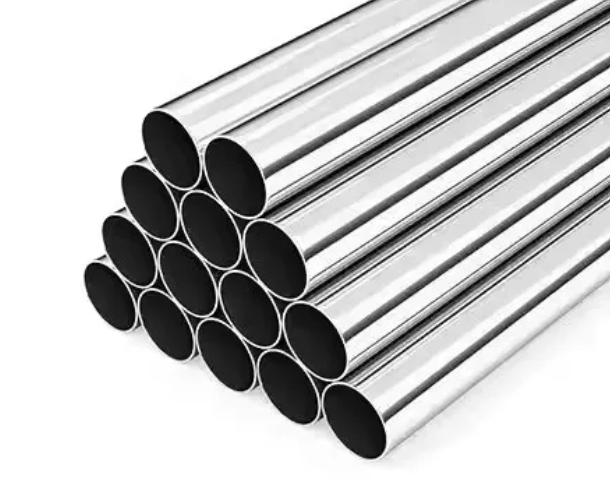

Facing a heat exchanger tube replacement is not just a size-matching task. A replacement tube may have the same outside diameter, wall thickness and length as the original tube, but it can still perform differently if the material grade, surface condition, operating environment, testing scope or documentation is not suitable.
For buyers, the main question should not be:
“Which tube is cheapest?”
A better question is:
“Which replacement tube matches the actual fluid chemistry, temperature, pressure, corrosion risk, fouling condition, maintenance goal and required documentation?”
Quick Answer:
Choosing replacement tubes for heat exchangers requires more than matching tube size. Buyers should review the original failure reason, tube-side and shell-side media, chloride level, pH, temperature, pressure, flow velocity, fouling risk, cleaning method, material grade, tube standard, seamless or welded type, surface condition, testing, MTR / MTC, heat number traceability and supplier capability. There is no single best tube material for every heat exchanger. The suitable choice depends on the actual operating environment and project risk level.
AMPP explains that no material is resistant to all corrosive situations and that material selection is critical to preventing many types of failures: AMPP Materials Selection and Design for Corrosion Control.
The NIST corrosion performance database shows that corrosion observations are tied to particular environments, including concentrations and temperatures: NIST Corrosion Performance Databases.
The UK Health and Safety Executive also identifies corrosion and maintenance faults as important heat exchanger risk areas: HSE Heat Exchangers.
This is why replacement tube selection should begin with the real application, not only the old tube size.
Is There One Best Tube Material for Every Heat Exchanger?
No. There is no universal best tube material for every heat exchanger.
A material that works well in seawater may not be suitable for a reducing acid. A tube that performs well in clean cooling water may not work in chloride-containing water with deposits and stagnant zones. A material that is acceptable for low-temperature service may not be suitable for high-temperature, high-pressure or cyclic operation.
The suitable replacement tube material depends on the real operating environment, including fluid chemistry, temperature, pressure, flow condition, corrosion mechanism, fouling risk, cleaning method and expected service life.
Key Questions Before Selecting Replacement Tubes
| Question | Why It Matters |
|---|---|
| Why did the old tube fail? | Replacement without root-cause review may repeat the same problem |
| What is the tube-side medium? | The fluid inside the tube may cause corrosion, fouling or erosion |
| What is the shell-side medium? | The external medium may also attack the tube |
| What is the chloride level? | Chlorides can increase pitting, crevice corrosion or SCC risk in susceptible materials |
| What is the pH? | Acidic or alkaline conditions may change material suitability |
| What is the temperature range? | Temperature affects corrosion rate, strength and fouling behavior |
| What is the pressure? | Pressure affects wall thickness, mechanical stress and testing needs |
| Is flow velocity high or low? | High velocity may cause erosion; low velocity may promote deposits and stagnation |
| Is fouling or scaling expected? | Deposits may reduce heat transfer and create localized corrosion zones |
| What cleaning method is used? | Cleaning chemicals may be more aggressive than normal service fluid |
| Is the equipment critical? | Critical systems may require stricter testing and documentation |
Replacement Should Not Repeat the Original Mistake
If the original tube leaked, corroded, cracked or lost performance, replacing it with the same material may not be the safest decision unless the root cause is understood.
Buyers should ask:
- Was the old tube attacked by pitting corrosion?
- Was there crevice corrosion under deposits or at the tube sheet?
- Was stress corrosion cracking involved?
- Was erosion caused by high flow velocity or particles?
- Was fouling reducing heat transfer?
- Was vibration or fretting present?
- Was there a welding or tube-to-tubesheet problem?
- Was the material grade verified by MTR or PMI?
- Was the actual fluid chemistry different from the design assumption?
Replacement tube selection should be based on both the old specification and the real failure evidence.
How Do Operating Conditions Affect Replacement Tube Selection?
Operating conditions are one of the most important factors in replacement tube selection.
A material grade alone does not define suitability. The same alloy can perform differently under different temperatures, pH levels, chloride levels, oxygen conditions, flow velocities and cleaning practices.
Operating Conditions to Review
| Condition | What to Confirm |
|---|---|
| Tube-Side Medium | Seawater, brine, acid, steam, cooling water, process fluid, gas |
| Shell-Side Medium | Steam, cooling water, chemical, air, oil, process fluid |
| Temperature | Normal, maximum, startup, shutdown and cleaning temperature |
| Pressure | Operating pressure, design pressure and pressure surge |
| pH | Normal and upset condition |
| Chloride Level | Normal and maximum chloride concentration |
| Oxidizing / Reducing Condition | Important for nickel alloy and titanium selection |
| Flow Velocity | High velocity, low flow, turbulence, stagnant zones |
| Suspended Solids | Particles may increase erosion or deposits |
| Fouling / Scaling | May reduce heat transfer and create under-deposit corrosion |
| Cleaning Chemicals | Chemical cleaning may attack unsuitable materials |
| Shutdown Conditions | Stagnant fluid during shutdown may be more aggressive than normal operation |
Without this information, material recommendation becomes much less reliable.
Which Material Families May Be Considered?
Different material families may be considered for replacement heat exchanger tubes. The final choice should follow the project specification, operating conditions and engineering review.
Common Material Families
| Material Family | When It May Be Considered | Important Caution |
|---|---|---|
| Stainless Steel | General water, steam or less aggressive industrial service | Chloride, temperature and SCC risk must be reviewed |
| Duplex / Super Duplex Stainless Steel | Higher strength and chloride resistance than common austenitic stainless steels | Welding, phase balance and temperature limitations matter |
| Nickel Alloys | Chemical processing, chloride-containing media, acids, caustic or high-temperature service depending on grade | Exact grade must match medium, pH, temperature and oxidizing / reducing condition |
| Titanium Alloys | Seawater, brine and many oxidizing chloride environments | Crevice risk, reducing acids, hydrogen and cleaning chemicals still need review |
| Copper Alloys | Selected condenser and cooling water service | Water chemistry, velocity, sulfides, ammonia and fouling must be reviewed |
A product standard defines tube requirements. It does not guarantee suitability in every environment.
ASTM B338 covers seamless and welded titanium alloy tubes for surface condensers, evaporators and heat exchangers: ASTM B338.
ASTM B163 covers seamless tubes of nickel and nickel alloys for condenser and heat-exchanger service: ASTM B163.
ASTM A213 covers seamless ferritic and austenitic steel boiler, superheater and heat-exchanger tubes: ASTM A213.
Is Titanium Always the Best Replacement for Seawater?
No. Titanium is often evaluated for seawater, brine and many chloride-containing oxidizing environments, but it is not automatically correct for every service condition.
Titanium’s corrosion resistance is related to a stable, protective oxide film. A titanium corrosion paper hosted by the U.S. Nuclear Regulatory Commission explains that titanium’s corrosion resistance is due to a stable, protective and strongly adherent oxide film: Corrosion Resistance of Titanium.
However, titanium selection still requires review of:
- Crevice conditions
- Fouling and deposits
- Reducing acids
- Hydrogen-related conditions
- Cleaning chemicals
- Temperature
- Flow condition
- Tube-to-tubesheet design
- Required titanium grade
For example, Titanium Grade 2 may be considered for many seawater condenser applications, while Grade 7 or Grade 12 may be evaluated when crevice or corrosion conditions are more demanding. The final selection should follow actual service data and project requirements.
Are Nickel Alloys Always Better for Chemical Service?
No. Nickel alloys may offer strong corrosion resistance in many aggressive environments, but the exact grade matters.
“Alloy 625,” “Alloy 825,” “Alloy 20” and “Hastelloy C276” are not interchangeable. Their suitability depends on:
- Acid type
- Acid concentration
- Chloride level
- Temperature
- pH
- Oxidizing or reducing condition
- Sulfur compounds
- Caustic condition
- Flow velocity
- Welding and heat treatment
- Required standard and testing
For replacement projects, buyers should not simply ask for “nickel alloy tubes.” They should specify the grade, UNS number, ASTM / ASME standard, tube size, operating medium and required inspection.
What Details Matter Beyond Material Type?
Material grade is only part of the specification.
Two tubes with the same grade may differ in production route, heat treatment, surface condition, tolerance, inspection scope and documentation.
Replacement tube buyers should confirm not only the alloy, but also how the tube is made, tested, documented and protected during shipment.
Important Specification Details
| Detail | Why It Matters |
|---|---|
| Seamless or Welded | Different manufacturing routes and inspection needs |
| Heat Treatment | Affects mechanical properties, residual stress and corrosion behavior |
| Surface Condition | May affect fouling, cleaning and localized corrosion initiation |
| OD / WT / Length Tolerance | Affects tube sheet fit and installation |
| Straightness / Roundness | Important for bundle assembly |
| End Condition | Affects installation, expansion or welding |
| U-Bend Requirement | Requires bend radius, leg length and inspection review |
| Testing Scope | Confirms whether ECT, UT, hydrostatic, tensile or PMI is included |
| MTR / MTC | Confirms batch-specific chemistry and mechanical properties |
| Heat Number | Supports traceability to production batch |
| Packaging | Protects long, thin-wall or polished tubes during shipping |
Seamless vs Welded: Which Is Better?
There is no universal answer.
Seamless and welded tubes have different manufacturing routes. Seamless tubes may be preferred in some high-pressure, high-temperature or critical services. Welded tubes may be suitable and cost-effective in other applications when the standard permits them and when welding quality, heat treatment and inspection are properly controlled.
The buyer should confirm:
- Is welded tube allowed by the project specification?
- Is seamless tube required by the design code?
- Is the service high pressure?
- Is the medium highly corrosive?
- Is the weld area exposed to SCC, pitting or crevice corrosion risk?
- What inspection is required?
- What does the old exchanger drawing specify?
- Is the replacement tube expected to match the original design?
The decision should be based on project requirements, not only price.
Why Does Surface Finish Matter?
Surface finish can affect fouling, cleaning, inspection and localized corrosion risk.
A rough or contaminated surface may trap deposits, increase cleaning difficulty or create local initiation points for corrosion. A smoother surface may help cleaning in some services, but surface finish alone does not guarantee better performance.
Springer’s heat exchanger fouling reference explains that as fouling layer thickness increases, heat transfer rate decreases and the fouling resistance increases: Towards a Common Taxonomy for Heat Exchanger Fouling.
Buyers should specify surface condition clearly:
- Pickled
- Polished
- Bright annealed
- Clean ID / OD
- Ra value if required
- No visible cracks, folds, dents, deep scratches or heavy scale
- End caps or special cleanliness if required
Vague terms such as “good surface” or “smooth surface” may lead to different supplier interpretations.
What Are the Hidden Costs of Choosing the Wrong Replacement Tube?
The lowest initial tube price is not always the lowest-risk option.
If the replacement tube does not match the real service conditions, the buyer may face leakage, repeated shutdowns, higher cleaning frequency, replacement cost, investigation cost, expedited shipping or production loss.
Buyers should compare life-cycle cost, not only purchase price.
The U.S. Environmental Protection Agency defines life-cycle cost as original cost minus salvage value plus operating costs, maintenance costs, renewal costs and decommissioning costs: EPA Life Cycle and Replacement Costs.
The U.S. Department of Energy’s O&M Best Practices Guide describes reactive maintenance as allowing machinery to run to failure and repairing or replacing damaged equipment when obvious problems occur: DOE O&M Best Practices Guide.
Hidden Cost Factors
| Cost Factor | Why It Matters |
|---|---|
| Unplanned Downtime | Equipment may need emergency repair |
| Lost Production | Shutdown may interrupt output |
| Replacement Labor | Tube removal and installation require labor and equipment |
| Testing and Inspection | Failure investigation and new inspection may be needed |
| Expedited Delivery | Urgent replacement may require faster production or air freight |
| Cleaning Cost | Fouling may require more frequent cleaning |
| Energy Cost | Fouling and pressure drop may reduce operating efficiency |
| Safety / Environmental Risk | Leakage risk depends on process medium |
| Documentation Gap | Missing MTR or heat number makes root-cause analysis harder |
The goal is not to buy the most expensive material. The goal is to select a tube that matches the service risk and project requirement.
How Can Buyers Vet Replacement Tube Suppliers?
Choosing the correct material is only one part of procurement. Buyers also need to verify supplier quality, documentation and technical communication.
A qualified supplier should provide traceable documents and clear answers about manufacturing, testing, surface condition and delivery.
Supplier Verification Checklist
| Verification Item | What to Ask |
|---|---|
| Product Standard | Which ASTM / ASME / EN / ISO standard is quoted? |
| Material Grade | What grade and UNS number will be supplied? |
| Tube Type | Seamless or welded? Straight tube or U-tube? |
| MTR / MTC | Can batch-specific chemical and mechanical data be provided? |
| Heat Number | Can each tube or bundle be traced to the production batch? |
| Heat Treatment | What condition is supplied? Annealed, solution annealed or other? |
| Surface Condition | Pickled, polished, bright annealed, clean ID / OD? |
| Dimensional Inspection | What OD, WT, length and tolerance checks are included? |
| NDT | Is eddy current, ultrasonic or hydrostatic testing included? |
| PMI / Grade Verification | Can material mix-up risk be reduced by grade verification? |
| Third-Party Inspection | Is third-party inspection supported if required? |
| Packaging | How are long, thin-wall or polished tubes protected? |
| Application Discussion | Does the supplier ask about media, temperature, pressure and failure history? |
ASTM E426 is intended as a guide for eddy current examination of seamless and welded tubular products: ASTM E426.
ASTM E213 covers a procedure for detecting discontinuities in metal pipe and tubing during volumetric examination using ultrasonic methods: ASTM E213.
ASTM E8/E8M covers tension testing of metallic materials and determination of yield strength, tensile strength, elongation and reduction of area: ASTM E8/E8M.
ASTM E1476 provides guidance for nondestructive identification and sorting of metals: ASTM E1476.
ISO explains that the ISO 9000 family helps organizations improve product and service quality and consistently meet customer expectations: ISO 9000 Family.
However, ISO certification does not replace batch-specific MTR, heat number traceability, inspection reports or buyer-required testing.
Replacement Tube RFQ Checklist
Before requesting a quotation, buyers should prepare the following information.
| RFQ Item | What to Provide |
|---|---|
| Application | Condenser, evaporator, cooler, heater, seawater system, chemical heat exchanger |
| Replacement Reason | Leakage, corrosion, fouling, cracking, erosion, upgrade, planned maintenance |
| Previous Failure Details | Photos, failure report, leak location, old tube sample if available |
| Existing Tube Size | OD, wall thickness, length, tolerance |
| Material Grade | Existing grade and proposed replacement grade |
| Product Standard | ASTM B338, ASTM B163, ASTM A213, ASME, EN, ISO or customer standard |
| Tube Type | Seamless, welded, straight tube, U-tube |
| Quantity | Pieces, meters, kilograms or tons |
| Tube-Side Medium | Seawater, brine, acid, steam, cooling water, process fluid |
| Shell-Side Medium | Steam, cooling water, chemical, gas, oil, air |
| Temperature | Normal, maximum, startup, shutdown and cleaning temperature |
| Pressure | Operating pressure and design pressure |
| pH | Normal and upset condition |
| Chloride Level | Normal and maximum chloride concentration |
| Flow Condition | Velocity, turbulence, stagnant zones, solids |
| Fouling Risk | Scale, biofilm, suspended solids, deposits |
| Cleaning Method | Mechanical cleaning, chemical cleaning, frequency |
| Surface Condition | Pickled, polished, bright, clean ID / OD |
| Testing | PMI, ECT, UT, hydrostatic, tensile, hardness |
| Documentation | MTR / MTC, heat number, certificate, inspection report |
| Inspection | Internal, customer or third-party inspection |
| Packaging | End caps, wooden case, seaworthy packing, special protection |
| Delivery | Required date, destination and shipping method |
This information helps suppliers quote the same technical scope and reduces repeated clarification.
Example Replacement Tube Specification
Buyers can use wording like this:
“Replacement heat exchanger tubes for seawater condenser service. ASTM B338 Titanium Grade 2 seamless tubes, OD 25.4 mm × WT 1.2 mm × 6000 mm, pickled surface, clean ID / OD, MTR / MTC and heat number traceability required. Eddy current test, dimensional inspection and surface inspection required. Export seaworthy wooden case packing. Please quote with delivery time and third-party inspection option.”
For nickel alloy replacement tubes:
“Replacement seamless nickel alloy tubes according to ASTM B163, Alloy 625 / UNS N06625, OD 19.05 mm × WT 1.65 mm × 6000 mm, annealed and pickled, for chemical heat exchanger service. Please provide MTR / MTC, heat number traceability, chemical analysis, tensile test, dimensional inspection, surface inspection and hydrostatic test if required.”
This is much clearer than simply writing:
“Please quote replacement heat exchanger tubes.”
How Emily PIPE Supports Heat Exchanger Replacement Tube Buyers
Emily PIPE is a China-based manufacturer and exporter specializing in nickel alloy tubes, nickel alloy bars, titanium alloy tubes and titanium alloy bars. We support customers across chemical processing, oil and gas, marine engineering, aerospace, power generation, medical equipment, heat exchangers, desalination and other corrosion-resistant or high-temperature applications.
For replacement heat exchanger tube projects, we can support:
- Nickel alloy seamless tubes
- Nickel alloy welded tubes
- Titanium seamless tubes
- Titanium welded tubes
- ASTM B163 nickel alloy tube requirements
- ASTM B338 titanium tube requirements
- ASTM A213 stainless / alloy steel tube requirements when applicable
- Custom OD, wall thickness, length, tolerance and surface condition
- MTR / MTC and heat number traceability
- Dimensional and surface inspection
- PMI, eddy current, UT, hydrostatic, tensile, hardness and other testing support when required
- Third-party inspection support
- Export packaging and logistics support
Our role is not to claim that one tube material is best for every replacement project. Our role is to help buyers review the real operating environment, confirm material and standard requirements, define testing and documentation, and supply alloy tubes that match the required specification.
If you are selecting replacement tubes for a heat exchanger, please send the existing tube size, material grade, standard, failure reason, tube-side medium, shell-side medium, temperature, pressure, pH, chloride level, flow condition, fouling risk, cleaning method, testing requirement, documentation requirement and destination. Our team can help review your requirements and provide a suitable quotation.
FAQ: Replacement Tubes for Heat Exchangers
1. Can I replace heat exchanger tubes with the same material as before?
Sometimes yes, but not always. If the original tube failed from corrosion, cracking, erosion or fouling, the failure reason should be reviewed before repeating the same material.
2. Is there one best material for replacement heat exchanger tubes?
No. The suitable material depends on the operating medium, temperature, pressure, pH, chloride level, fouling risk, flow condition and maintenance goal.
3. Are titanium tubes good for seawater heat exchangers?
Titanium is often considered for seawater and many chloride-containing oxidizing environments, but crevice risk, fouling, reducing acids, hydrogen conditions and cleaning chemistry should still be reviewed.
4. Are nickel alloy tubes better for chemical heat exchangers?
Nickel alloys may be suitable for selected chemical environments, but the exact grade must match acid type, concentration, temperature, pH, chloride level and oxidizing or reducing condition.
5. Should I choose seamless or welded replacement tubes?
It depends on the project standard, pressure, medium, design and inspection requirement. Seamless and welded tubes have different manufacturing routes and should be selected according to the actual application.
6. Why does surface finish matter?
Surface finish can affect cleaning, fouling, inspection and localized corrosion initiation. Buyers should specify pickled, polished, bright annealed, clean ID / OD or Ra requirements when needed.
7. What documents should I request from a supplier?
Buyers should request MTR / MTC, heat number traceability, chemical composition, mechanical properties, dimensional inspection, surface inspection, NDT reports and third-party inspection documents when required.
8. Why should replacement tube selection consider life-cycle cost?
A low initial price may become costly if the material causes repeated leakage, more cleaning, downtime, replacement or emergency logistics. Buyers should compare purchase price with maintenance, replacement and operating risk.
Conclusion
Choosing replacement tubes for heat exchangers is not just about matching OD, wall thickness and length.
A reliable replacement decision should review the original failure reason, operating environment, fluid chemistry, temperature, pressure, pH, chloride level, fouling risk, cleaning method, material grade, product standard, surface condition, testing, MTR / MTC, heat number traceability and supplier capability.
For nickel alloy and titanium heat exchanger tubes, the safest approach is to combine application data, suitable material selection, clear standards, traceable documentation and practical supplier communication before production.