
How to Choose Titanium Tubes for Desalination Plants
Choosing titanium tubes for desalination plants is not about finding one universal “best” tube. Desalination systems may include MSF, MED, RO, hybrid plants, condensers, evaporators, brine heaters, coolers, heat exchangers, seawater piping, and auxiliary equipment. Each section may expose tube materials to different seawater chemistry, brine concentration, temperature, flow velocity, fouling, scaling, cleaning chemicals, and inspection requirements.
A poor material choice may increase corrosion risk, leakage risk, cleaning frequency, maintenance work, downtime, replacement cost, or lifecycle cost. However, the solution is not simply to choose the highest-grade titanium tube. Buyers should confirm the plant technology, water conditions, tube standard, testing scope, documentation, and lifecycle risk before ordering.
IAEA documentation explains that common desalination processes include multi-stage flash (MSF), multi-effect distillation (MED), and reverse osmosis (RO), and that distillation processes such as MSF and MED use heat to evaporate seawater and produce freshwater vapor: Status of Nuclear Desalination in IAEA Member States.
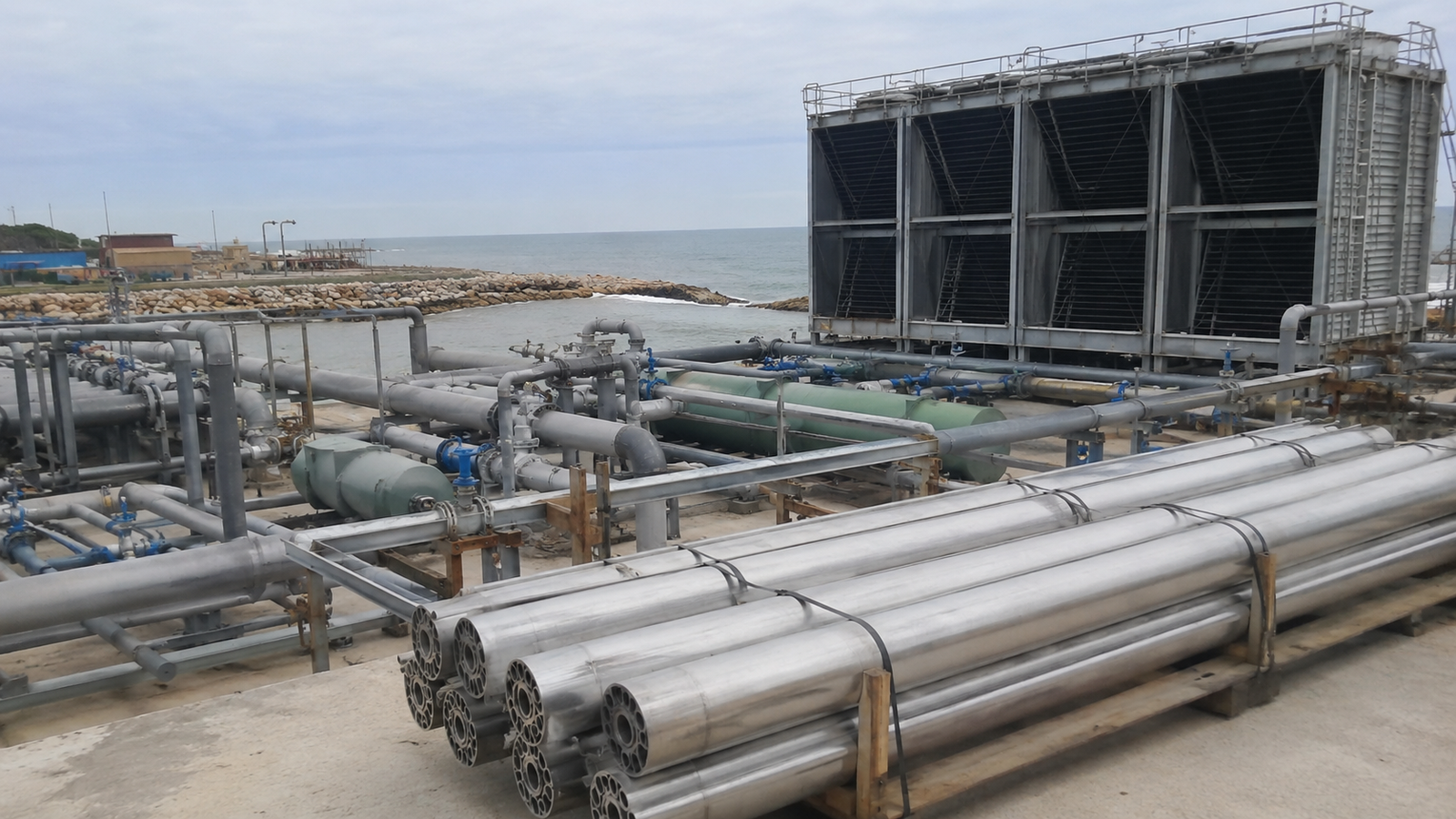
For engineers and procurement teams, the key question is not “Which titanium tube is the best?” The better question is “Which titanium tube is suitable for this desalination technology, this seawater condition, this temperature, this tube position, this inspection scope, and this documentation requirement?”
Is There a Single Best Titanium Tube for Every Desalination Plant?
No. There is no single best titanium tube for every desalination plant. Tube selection depends on desalination technology, seawater chemistry, brine concentration, temperature, flow velocity, fouling tendency, scaling risk, tube design, grade requirement, product standard, testing scope, and lifecycle cost.
Different desalination systems create different material questions.
- MSF plants may involve brine heaters, heat recovery sections, heat rejection sections, condensers, elevated temperature, concentrated brine, scale control, and cleaning requirements.
- MED plants may involve falling-film evaporation, horizontal tube bundles, lower-temperature operation compared with many MSF systems, scaling control, and surface condition requirements.
- RO plants mainly use membranes and pressure, but titanium may still be considered for selected seawater heat exchangers, high-corrosion auxiliary equipment, pumps, piping, or special components.
- Hybrid desalination plants may combine thermal and membrane processes, creating different operating conditions in different plant areas.
The U.S. Geological Survey explains that RO membrane processes use semipermeable membranes and applied pressure to separate water from salts, and RO plants typically use less energy than thermal desalination processes: USGS Reverse Osmosis Desalination.
This is why titanium tube selection should begin with the plant type and the actual equipment location.
Where Titanium Tubes Are Commonly Considered
Titanium tubes are often considered for seawater and brine heat-transfer equipment because titanium forms a stable passive oxide film and generally has strong resistance in many chloride-containing environments.
Common desalination-related applications may include:
- Surface condensers
- Evaporators
- Brine heaters
- Heat recovery exchangers
- Heat rejection exchangers
- Seawater coolers
- Auxiliary heat exchangers
- Selected seawater piping or tube bundles
- Selected corrosive brine or cooling sections
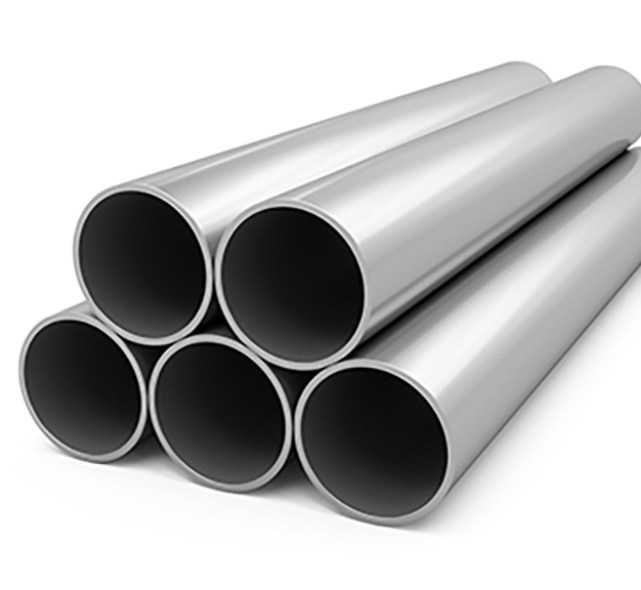
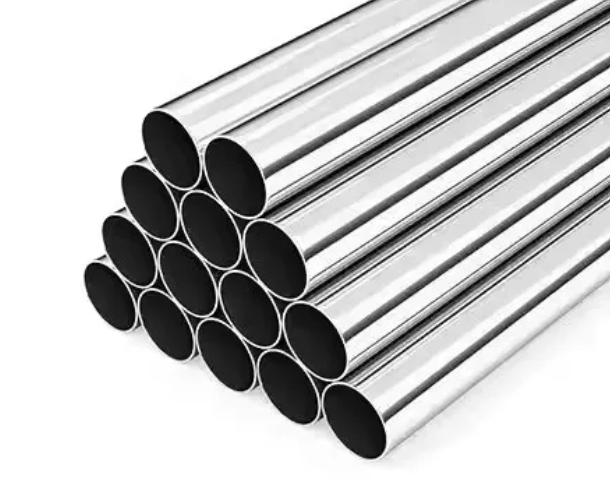
ASTM B338 covers seamless and welded titanium alloy tubes for surface condensers, evaporators, and heat exchangers: ASTM B338.
This standard is important when specifying titanium tubes for desalination heat-transfer equipment, but it does not replace service-condition review.
Titanium Is Corrosion-Resistant, but Not Risk-Free
Titanium is widely used in seawater service, but it should not be described as “corrosion-proof.”
A titanium corrosion resistance manual states that titanium generally exhibits very low corrosion rates in chloride environments. However, it also explains that the limiting factor for titanium and its alloys in aqueous chloride environments may be crevice corrosion: Corrosion Resistance of Titanium.
This means buyers should still confirm:
- Seawater temperature
- Brine concentration
- pH
- Dissolved oxygen
- Chlorination or biocide treatment
- Fluoride or reducing acid contamination
- Crevice areas
- Tube sheet design
- Deposits and fouling
- Galvanic coupling
- Cleaning chemicals
- Flow velocity
- Tube grade
- Inspection plan
Titanium is a strong candidate for many desalination heat-transfer applications, but suitability still depends on the actual condition.
Grade 1, Grade 2, Grade 7 and Grade 12: How Should Buyers Think About Them?
Titanium grade selection should be based on service condition, not only on price or availability.
ASTM B338 includes multiple titanium and titanium alloy grades. Older ASTM B338 scope text identifies Grade 7 as unalloyed titanium with 0.12 to 0.25% palladium and Grade 12 as titanium alloy with 0.3% molybdenum and 0.8% nickel: ASTM B338 Grade Scope.
The following table is only a starting point for discussion. It is not a final selection chart.
| Titanium Grade | Why Buyers May Consider It | Important Caution |
|---|---|---|
| Grade 1 | High ductility; often discussed for formed tube applications | Mechanical strength, thickness, tube design and standard must be checked |
| Grade 2 | Common commercially pure titanium grade; often considered for seawater heat-transfer tubes | Crevice corrosion, temperature, fouling, cleaning and tube sheet design still matter |
| Grade 7 | Palladium-containing titanium grade; may be reviewed where improved crevice corrosion margin is needed | Cost, availability, standard, design and actual chemistry must be confirmed |
| Grade 12 | Nickel-molybdenum titanium alloy; may be reviewed where strength and crevice corrosion resistance are important | Compatibility, welding, forming, temperature and project specification must be confirmed |
Do not choose a titanium grade by name alone. Confirm the water chemistry, temperature, crevice risk, design, mechanical requirement, and tube standard.
Key Water and Operating Conditions to Confirm
Before ordering titanium tubes, buyers should define the actual operating environment.
| Factor | What to Confirm | Why It Matters |
|---|---|---|
| Plant type | MSF, MED, RO, hybrid or auxiliary seawater system | Different technologies expose tubes to different conditions |
| Equipment location | Condenser, evaporator, brine heater, seawater cooler, auxiliary heat exchanger | Determines temperature, flow, brine concentration and cleaning exposure |
| Seawater source | Open intake, beach well, brackish water, high-salinity seawater, treated seawater | Affects solids, biology, oxygen, salinity and fouling |
| Chloride / salinity | Normal salinity, maximum salinity, brine concentration factor | Higher salinity may increase deposit and crevice risks |
| Temperature | Normal, maximum, startup, shutdown and cleaning temperature | Temperature affects scaling, corrosion margin and heat-transfer performance |
| pH | Normal pH, cleaning pH, upset pH | pH affects passivation and compatibility |
| Dissolved oxygen | Aerated, deaerated, stagnant or oxygen-variable | Affects titanium passive film behavior |
| Biofouling risk | Marine organisms, biofilm, algae, bacteria | Can reduce heat transfer and create under-deposit conditions |
| Scaling risk | Calcium carbonate, magnesium hydroxide, calcium sulfate, silica or other scale | Scale reduces heat transfer and may create localized chemistry |
| Flow velocity | Low-flow, normal, turbulent, high-velocity or stagnant | Affects fouling, erosion and deposit behavior |
| Cleaning chemicals | Chlorination, acid cleaning, antiscalants, biocides, alkaline cleaning | Cleaning conditions may be more aggressive than normal operation |
| Crevice areas | Tube sheet joints, rolled joints, gaskets, deposits, support plates | Crevice geometry may control titanium grade selection |
| Galvanic contact | Tube sheet, shell, baffles, fasteners and other metals | Dissimilar metals in seawater should be reviewed together |
| Inspection | ECT, UT, hydrostatic / pneumatic test, dimensional inspection, visual inspection | Confirms product quality and project compliance |
| Documentation | MTC / MTR, heat number, EN 10204 3.1 / 3.2 if required | Supports traceability and verification |
A vague RFQ such as “titanium tube for desalination” is usually not enough.
Why Technical Specifications Alone Are Not Enough
Technical specifications are necessary, but they do not tell the whole service story.
A titanium tube specification may include:
- Grade
- UNS number
- ASTM standard
- OD
- Wall thickness
- Length
- Tolerance
- Mechanical properties
- Chemical composition
- Heat treatment
- Surface condition
- Test requirements
These are important, but buyers should also review:
- Actual seawater chemistry
- Brine concentration
- Maximum temperature
- Startup and shutdown conditions
- Cleaning chemicals
- Biofouling and scaling tendency
- Tube sheet joint design
- Crevice areas
- Flow distribution
- Tube expansion or welding method
- Handling and storage condition
- Inspection accessibility
- Maintenance plan
A tube can meet ASTM B338 and still require additional application review before being used in a specific desalination plant.
Fouling, Scaling and Heat Transfer Performance
Titanium has strong corrosion resistance in many seawater environments, but desalination tube performance is not only a corrosion issue. Fouling and scaling can reduce heat-transfer efficiency and increase cleaning requirements.
A study on MED desalination heat exchanger tube surfaces explains that crystallization fouling in MED plants is a severe and complex problem. It also notes that scale on heat-transfer surfaces reduces the overall heat-transfer coefficient and that fouling is affected by operating parameters, solution composition and heat exchanger surface characteristics such as surface energy, topography and surface roughness: Impact of Tube Surface Properties on Crystallization Fouling in MED Desalination Plants.
Buyers should confirm:
- Is the plant MSF, MED or another thermal process?
- Is scaling expected on the tube outside or tube inside?
- What antiscalant program is used?
- Are acid cleaning cycles planned?
- What is the maximum brine concentration?
- What is the tube surface finish requirement?
- Can the tube bundle be mechanically or chemically cleaned?
- Can deposits create under-deposit corrosion or crevice-like conditions?
- Will scale reduce heat-transfer efficiency?
- What inspection method will be used after operation?
Corrosion resistance alone does not guarantee long-term heat-transfer performance.
Biofouling and Seawater Cooling Conditions
Biofouling is another important issue in seawater cooling and desalination-related systems.
A U.S. Maritime Administration report notes that heat exchangers used in seawater cooling systems are especially prone to reduced performance caused by biofouling because of high surface areas, small openings and the low thermal conductivity of biofilms: Biofouling Prevention Demonstration on Seawater Cooling Systems.
This means buyers should not assume that titanium tubes eliminate all maintenance requirements. Titanium may resist corrosion well, but biofouling control, cleaning schedule, chlorination strategy and inspection access still matter.
Hidden Procurement Risks Buyers Should Not Ignore
Many titanium tube problems are not caused by the titanium grade alone. They may come from incomplete specifications, unclear inspection scope, poor handling, weak documentation or unsuitable installation.
Important procurement risks include:
| Risk Area | What Can Go Wrong | What Buyers Should Check |
|---|---|---|
| Wrong grade | Grade 2 quoted where Grade 7 or Grade 12 was required, or vice versa | Confirm grade, UNS number, ASTM B338 and project specification |
| Wrong tube form | Seamless and welded tube requirements not clearly defined | Specify seamless or welded tube clearly |
| Incomplete MTC | Certificate does not match heat number, grade, size or order | Verify MTC / MTR against marking and purchase order |
| Poor surface condition | Scratches, dents, contamination or roughness | Require surface inspection and packing protection |
| Transport damage | Tubes bent, dented or contaminated during shipping | Require proper packing, end protection and incoming inspection |
| Installation stress | Tube expansion, bending or welding introduces stress or damage | Confirm installation method and inspection plan |
| Tube sheet mismatch | Galvanic or crevice risk not reviewed | Review tube, tube sheet, shell, fasteners and gaskets together |
| Unclear testing scope | ECT, UT, pressure test or PMI not included in purchase order | Define testing requirements before order confirmation |
| Unclear cleaning condition | Cleaning chemicals more aggressive than normal seawater | Confirm cleaning agents, temperature and frequency |
| Overfocus on price | Low initial cost hides higher inspection, cleaning or replacement risk | Review lifecycle cost, not only purchase price |
A clear purchase specification helps prevent misunderstandings between buyer, supplier, contractor and end user.
What Standards and Documents Should Buyers Confirm?
For titanium tubes used in desalination heat exchangers and condensers, ASTM B338 is one of the most common product standards to review.
Buyers may also request:
- Material Test Certificate / Mill Test Report
- EN 10204 Type 3.1 or Type 3.2 certificate if required
- Heat number or batch number traceability
- Chemical composition report
- Mechanical properties report
- Dimensional inspection report
- Surface inspection report
- Eddy current testing report if required
- Ultrasonic testing report if required
- Hydrostatic or pneumatic test report if required
- PMI report if required
- Third-party inspection report if required
- Packing and marking records
EN 10204 defines inspection documents for metallic products and includes inspection certificates based on specific inspection: EN 10204 Inspection Documents.
Buyers should verify that the certificate matches the physical tubes: heat number, grade, standard, OD, wall thickness, length, test values, quantity, marking and purchase order.
Useful Testing and Inspection Methods
Testing requirements depend on the project specification, product form, tube size, plant risk and purchase order.
| Test / Inspection | Purpose |
|---|---|
| Chemical analysis | Confirms titanium grade composition |
| Mechanical testing | Confirms tensile strength, yield strength, elongation or hardness if required |
| Dimensional inspection | Confirms OD, wall thickness, length, tolerance and straightness |
| Surface inspection | Checks scratches, dents, pits, cracks, scale or contamination |
| Eddy current testing | Commonly used for heat exchanger tube inspection |
| Ultrasonic testing | Helps detect discontinuities in suitable products |
| Hydrostatic / pneumatic testing | Helps verify pressure integrity when required |
| PMI testing | Helps verify alloy identity |
| Third-party inspection | Adds independent verification for critical orders |
| Packing inspection | Helps prevent handling and transport damage |
ASNT explains that eddy current testing is commonly used to inspect the condition of heat exchanger tubes and detect tube-wall changes or defects: ASNT Electromagnetic Testing.
ASNT also explains that ultrasonic testing uses high-frequency sound waves to detect and measure discontinuities in industrial components: ASNT Ultrasonic Testing.
ISO 9001 Is Useful, but Not Enough
ISO 9001 can support supplier evaluation, but it should not be treated as proof that a specific batch of titanium tubes is suitable for a specific desalination plant.
ISO explains that ISO 9001 is a globally recognized standard for quality management and helps organizations establish, implement, maintain and continually improve a quality management system: ISO 9001 Quality Management Systems.
For titanium tubes used in desalination service, buyers should still verify:
- Titanium grade
- ASTM B338 or project standard
- Heat number
- Chemical composition
- Mechanical properties
- Tube size and tolerance
- Surface condition
- Inspection reports
- MTC / MTR
- Packing condition
- Application compatibility
- Third-party inspection if required
Quality management certification is helpful, but batch-level material verification and service-condition review are still necessary.
Lifecycle Cost: Why Initial Price Is Not Enough
The lowest purchase price is not always the lowest lifecycle cost. In desalination plants, the real cost may include inspection, installation, chemical cleaning, biofouling control, scaling control, corrosion monitoring, leakage, retubing, repair, downtime, replacement tubes, lost heat-transfer efficiency and logistics risk.
NIST’s Life Cycle Cost Manual explains that lifecycle cost is the total cost of owning, operating, maintaining and disposing of a system over a given study period: NIST Life Cycle Cost Manual.
When comparing titanium tube options, buyers should consider:
- Initial tube cost
- Titanium grade
- Product standard
- Seamless or welded tube requirement
- Testing and inspection cost
- Documentation requirement
- Seawater temperature and chemistry
- Scaling and biofouling risk
- Cleaning and maintenance cost
- Leakage consequence
- Retubing difficulty
- Downtime risk
- Lead time
- Packing and shipping protection
- Spare tube strategy
- Failure consequence
A higher-cost titanium grade may be more economical in severe service if it reduces crevice corrosion risk, replacement frequency or inspection burden. A lower-cost grade may be acceptable in mild service. The correct decision depends on actual risk and lifecycle cost.
Practical RFQ Checklist for Titanium Tubes in Desalination
Before sending an inquiry, buyers can prepare the following information:
- Plant type: MSF, MED, RO, hybrid or auxiliary seawater system
- Equipment name: condenser, evaporator, brine heater, seawater cooler, heat exchanger or custom unit
- Tube side and shell side media
- Seawater source and salinity
- Brine concentration factor if applicable
- Operating temperature and maximum temperature
- Operating pressure and design pressure
- Flow velocity and turbulence
- pH range
- Dissolved oxygen, chlorination, biocide or antiscalant program
- Fluoride, reducing acid, sulfide, ammonia or other impurity risk
- Biofouling and scaling tendency
- Cleaning chemicals and cleaning frequency
- Heat exchanger design: straight tube, U-tube, tube sheet joint, welded or expanded joints
- Crevice areas, deposits or stagnant zones
- Required titanium grade: Grade 1, Grade 2, Grade 7, Grade 12 or other
- Required standard: ASTM B338, ASME SB338, EN, ISO or customer specification
- Seamless or welded tube requirement
- OD, wall thickness, length, tolerance and quantity
- Surface finish and internal cleanliness requirement
- Required testing: ECT, UT, hydrostatic, pneumatic, PMI, dimensional, surface inspection or third-party inspection
- Required certificate type: EN 10204 3.1 or 3.2
- Packing, end caps, marking and delivery requirement
A clear RFQ helps the supplier recommend a suitable titanium tube instead of quoting a general “desalination titanium tube.”
Conclusion
Titanium tube selection for desalination plants should be based on plant technology, seawater conditions, temperature, fouling and scaling risk, titanium grade, ASTM B338 requirements, testing scope, documentation and lifecycle cost.