
Pitting corrosion is one of the most difficult corrosion risks in heat exchanger tube service because it can create small, localized holes while the surrounding surface still looks acceptable.
For buyers, the key issue is not only whether the tube material has “good corrosion resistance” in a general sense. The real question is whether the material can resist localized attack under the actual operating environment, including chloride level, temperature, pH, oxygen condition, fouling, deposits, crevices, flow condition, cleaning chemicals, and shutdown conditions.
Quick Answer:
Pitting corrosion in heat exchanger tubes happens when localized corrosion creates small pits or holes in the tube wall. It is often related to passive film breakdown, chloride-containing environments, deposits, stagnant zones, temperature, pH, surface condition, material grade, and operating conditions. Reducing pitting risk requires application-based material selection, clear standards, proper surface condition, suitable testing, MTR / MTC, heat number traceability, and supplier verification.
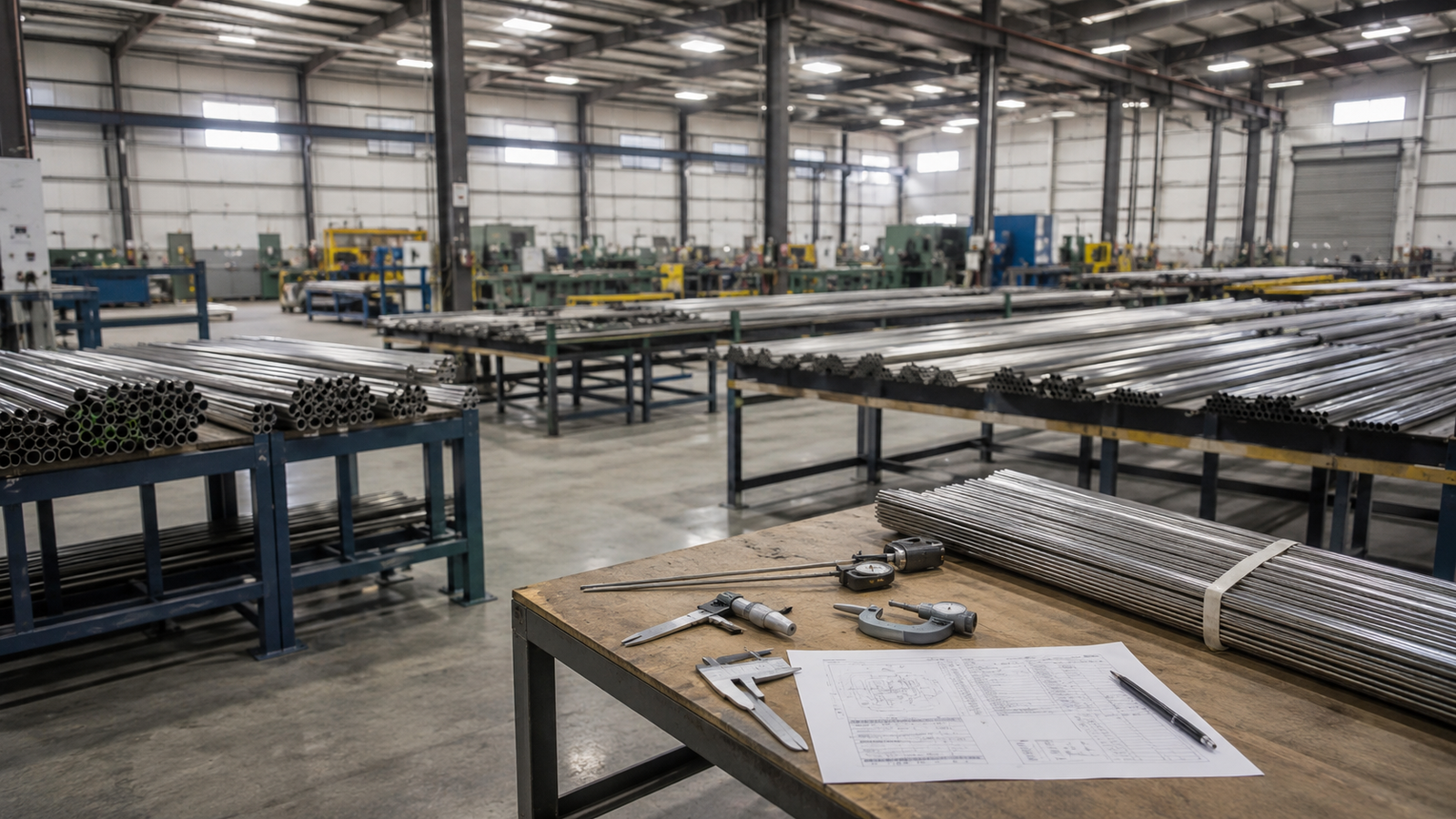
AMPP defines pitting corrosion as a localized form of corrosion that produces cavities or holes in a material and notes that pitting is often considered more dangerous than uniform corrosion because it can be difficult to detect, predict and design against: AMPP Pitting Corrosion.
NASA’s corrosion engineering resources also state that pitting is most likely to occur in the presence of chloride ions together with depolarizers such as oxygen or oxidizing salts: NASA Forms of Corrosion.
This is why heat exchanger tube buyers should not rely only on a general corrosion rate or a material name. Pitting risk must be reviewed according to the real service environment.
What Is Pitting Corrosion?
Pitting corrosion is a localized corrosion mechanism that attacks small areas of a metal surface.
Unlike general corrosion, which may reduce thickness more uniformly, pitting may create deep local cavities. In heat exchanger tubes, this is especially important because a small pit can grow through the tube wall and become a leak path.
Pitting corrosion is dangerous because the total material loss may be small, but local penetration can still be severe.
Why Pitting Is Hard to Detect
Pitting can be difficult to detect early because:
- The surrounding tube surface may still look acceptable.
- The pit opening may be small.
- Deposits or scale may hide the pit.
- General wall thickness measurements may miss localized damage.
- Leakage may appear suddenly after local penetration.
- Pitting may occur only in certain zones, such as stagnant areas or under deposits.
For heat exchanger tubes, this means routine visual inspection alone may not be enough for critical applications.
How Does a Pit Start and Grow?
Pitting often begins where the protective surface condition is locally weakened or where the local environment becomes more aggressive than the bulk fluid.
Possible initiation points include:
- Surface scratches
- Inclusions
- Embedded foreign particles
- Deposits
- Crevices
- Weld defects
- Areas with poor cleaning
- Stagnant zones
- Damaged passive film
- Areas with local chemistry changes
Once a pit starts, the chemistry inside the pit may become more aggressive. The pit may become acidic and chloride-rich compared with the bulk fluid, which can support further local metal dissolution.
Simplified Pitting Process
| Stage | What Happens | Buyer Review Point |
|---|---|---|
| Passive Film Weakening | Local protection is damaged or unstable | Surface condition, chloride level, temperature, deposits |
| Pit Initiation | A small localized attack begins | Material grade and environment compatibility |
| Pit Propagation | Local chemistry inside the pit becomes more aggressive | pH, chloride concentration, stagnation, oxygen difference |
| Penetration | Pit grows deeper and may reach through-wall | Wall thickness, inspection interval, service severity |
| Leakage | Tube wall is perforated | Replacement material and root-cause review |
This is why replacement material should not be selected before understanding the actual pitting mechanism.
Are Standard Material Specifications Enough to Prevent Pitting?
No. Standard material specifications are necessary, but they are not enough by themselves to predict pitting behavior in every real heat exchanger.
A material standard may define chemical composition, mechanical properties, manufacturing method, heat treatment and testing requirements. However, pitting resistance depends strongly on the actual environment.
Standard specifications provide a baseline. They do not replace application review, corrosion testing, service history, operating data, or failure analysis.
The NIST corrosion performance database shows that corrosion observations are connected to particular environments, including concentrations and temperatures: NIST Corrosion Performance Databases.
This means the buyer should provide real operating information, not only the grade name.
What Standard Specifications Usually Cover
| Item | Standard Specification May Cover | What Buyers Still Need to Review |
|---|---|---|
| Chemical Composition | Alloy element ranges | Actual corrosion environment and contaminants |
| Mechanical Properties | Tensile strength, yield strength, elongation | Pressure, vibration, thermal cycling and fatigue risk |
| Manufacturing Route | Seamless, welded, cold-worked, annealed | Weld quality, surface finish and inspection scope |
| Heat Treatment | Required condition | Suitability for corrosion mechanism |
| Testing | Basic standard tests | Project-specific corrosion, ECT, UT, hydrostatic or PMI needs |
| Dimensions | OD, wall thickness, tolerance | Fit, pressure, heat transfer and corrosion allowance |
| Documentation | MTR / MTC if required | Heat number traceability and certificate level |
ASTM Tests Related to Pitting Evaluation
ASTM G48 is a common laboratory test method for pitting and crevice corrosion resistance of stainless steels and related alloys by use of ferric chloride solution: ASTM G48.
ASTM G150 covers a procedure for evaluating the pitting resistance of stainless steel and related alloys based on the determination of a potential-independent critical pitting temperature, or CPT: ASTM G150.
These tests can be useful for comparing materials, screening candidate alloys, or supporting engineering decisions. But laboratory test results should not be treated as a guarantee of performance in all real plant conditions.
What Environmental Factors Drive Pitting Corrosion?
Pitting corrosion is strongly influenced by fluid chemistry and operating environment.
Important factors include chloride concentration, temperature, pH, oxygen condition, oxidizers, stagnation, flow velocity, fouling, deposits, crevices, surface condition, cleaning chemicals, and shutdown conditions.
Key Environmental Factors
| Factor | How It Can Affect Pitting Risk |
|---|---|
| Chloride Concentration | Chlorides are a common trigger for passive film breakdown in many alloys |
| Temperature | Higher temperature may increase localized corrosion risk in susceptible materials |
| pH | Acidic local chemistry can support pit growth |
| Oxygen / Oxidizers | May support passivation in some systems but can also influence cathodic reactions |
| Stagnation | Can allow local chemistry and deposits to build up |
| Flow Velocity | Affects deposits, oxygen supply, erosion, and heat transfer |
| Fouling / Scale | Can create under-deposit corrosion cells |
| Crevices | Create local oxygen and chemistry differences |
| Cleaning Chemicals | May be more aggressive than normal service fluid |
| Surface Condition | Scratches, embedded particles or contamination may initiate local attack |
| Shutdown Conditions | Stagnant fluid during shutdown may be more aggressive than normal operation |
Why Water Chemistry Alone May Not Be Enough
A simple water analysis may not capture all pitting risks.
Buyers should also consider:
- Seasonal water chemistry changes
- Biocide or chemical treatment
- Chlorination practice
- Concentration cycles
- Evaporation or brine concentration
- Fouling and deposits
- Local hot spots
- Stagnant zones
- Cleaning chemicals
- Shutdown and startup conditions
For heat exchanger tubes, the most aggressive condition may not be the normal operating condition. It may occur during shutdown, cleaning, low-flow operation, or under deposits.
How Do Fouling and Deposits Contribute to Pitting?
Fouling and deposits can make pitting more likely because the local environment under a deposit can be different from the bulk fluid.
Under deposits, oxygen, pH and chloride concentration may change locally. This can create conditions where pitting or under-deposit corrosion begins.
Deposit-Related Pitting Risks
| Deposit Condition | Possible Risk |
|---|---|
| Scale | Reduces heat transfer and creates local chemistry differences |
| Biofilm | May create microenvironments on the tube surface |
| Suspended Solids | May settle and create stagnant local zones |
| Corrosion Products | May hide active corrosion and create secondary deposits |
| Poor Cleaning | Leaves aggressive deposits behind |
| Aggressive Cleaning | Cleaning chemicals may attack susceptible alloys |
For replacement tube projects, buyers should provide information about fouling history, cleaning method, water treatment and previous failure location.
Which Tube Materials Can Help Reduce Pitting Risk?
There is no single alloy that prevents pitting in every environment.
Nickel alloys, titanium alloys, duplex stainless steels, super austenitic stainless steels and other materials may all be evaluated depending on the actual service environment.
The correct material should be selected according to chloride level, temperature, pH, oxidizing or reducing condition, crevice risk, fouling risk, pressure, flow and cleaning method.
Material Options to Evaluate
| Material Family | When It May Be Considered | Important Caution |
|---|---|---|
| Austenitic Stainless Steel | General water or moderate service | Chloride, temperature and crevice risk must be reviewed |
| Duplex Stainless Steel | Higher chloride resistance and strength needs | Welding, phase balance and temperature limits matter |
| Super Austenitic Stainless Steel | Higher pitting resistance than common stainless steels | Cost, availability and actual chemistry must be checked |
| Nickel Alloys | Aggressive chemical, chloride or acid service depending on grade | Exact alloy must match medium, temperature and pH |
| Titanium Alloys | Seawater, brine and many oxidizing chloride environments | Crevice risk, reducing acids, hydrogen and cleaning chemistry need review |
ASTM B163 covers seamless nickel and nickel alloy tubes for condenser and heat-exchanger service: ASTM B163.
ASTM B338 covers seamless and welded titanium alloy tubes for surface condensers, evaporators and heat exchangers: ASTM B338.
A product standard is not the same as a corrosion guarantee. It defines tube requirements, while the material selection must still be checked against service conditions.
How Can Buyers Verify Pitting Resistance Claims?
Supplier claims such as “excellent pitting resistance” or “suitable for chloride service” should be supported by data, standards and documentation.
For critical heat exchanger applications, buyers should request batch-specific and project-specific information.
Documents and Tests Buyers May Request
| Document / Test | What It Helps Confirm |
|---|---|
| MTR / MTC | Batch-specific chemical composition and mechanical properties |
| Heat Number | Traceability to production batch |
| Product Standard | ASTM B338, ASTM B163, ASTM A213 or project standard |
| Chemical Analysis | Confirms alloy grade and key elements |
| Tensile Test | Confirms mechanical properties |
| Surface Inspection | Confirms visible surface condition |
| Dimensional Inspection | Confirms OD, wall thickness, length and tolerance |
| PMI / Grade Verification | Helps reduce material mix-up risk |
| Eddy Current Test | Helps detect tube discontinuities when required |
| Ultrasonic Test | Helps detect volumetric discontinuities when required |
| ASTM G48 | May help compare pitting / crevice resistance in ferric chloride solution |
| ASTM G150 | May help compare critical pitting temperature for stainless steels and related alloys |
| Third-Party Inspection | Adds independent verification for critical projects |
ASTM E1476 provides guidance for nondestructive identification and sorting of metals: ASTM E1476.
ASTM E426 is used as a guide for eddy current examination of seamless and welded tubular products: ASTM E426.
ASTM E8/E8M covers tension testing of metallic materials and determination of yield strength, tensile strength, elongation and reduction of area: ASTM E8/E8M.
ISO explains that the ISO 9000 family helps organizations improve product and service quality and consistently meet customer expectations: ISO 9000 Family.
However, ISO certification does not replace batch-specific MTR, heat number traceability, inspection records or corrosion risk review.
How Can Experienced Suppliers Help Reduce Pitting Risk?
Experienced suppliers cannot guarantee that pitting will never occur. But a qualified alloy supplier can help buyers ask the right technical questions before quoting or production.
A supplier can support buyers by helping clarify:
- Material grade
- Product standard
- Tube size and tolerance
- Tube-side and shell-side media
- Chloride concentration
- Temperature and pH
- Flow condition
- Fouling and deposits
- Cleaning method
- Surface condition
- Testing requirements
- MTR / MTC and heat number traceability
- Packaging and inspection needs
The value of supplier communication is not simply “experience.” The value is turning application details into a clearer material specification, quotation scope and inspection plan.
How Should Buyers Balance Cost and Pitting Risk?
The lowest initial tube price is not always the lowest-risk option.
A lower-cost tube may be suitable when the material and testing match the service. But if the selected material is vulnerable to pitting under the real environment, the project may face higher cleaning cost, leakage risk, downtime, replacement cost and investigation cost.
Buyers should compare life-cycle cost, not only purchase price.
The U.S. Environmental Protection Agency defines life-cycle cost as original cost minus salvage value plus operating costs, maintenance costs, renewal costs and decommissioning costs: EPA Life Cycle and Replacement Costs.
The U.S. Department of Energy’s O&M Best Practices Guide describes reactive maintenance as allowing machinery to run to failure and repairing or replacing damaged equipment when obvious problems occur: DOE O&M Best Practices Guide.
Cost Factors to Review
| Cost Factor | Why It Matters |
|---|---|
| Tube Purchase Price | Initial procurement cost |
| Testing and Inspection | PMI, ECT, UT, G48 / G150 testing if required |
| Cleaning and Maintenance | Fouling and deposits may increase cleaning work |
| Downtime | Leakage may require shutdown and replacement |
| Replacement | Tube bundle repair or replacement cost |
| Documentation | MTR, heat number and inspection records support troubleshooting |
| Delivery | Special alloy grades may have longer lead time |
| Risk Level | Critical systems may justify stricter material and testing requirements |
Buyer Checklist: Reducing Pitting Corrosion Risk
Before requesting heat exchanger tubes for chloride-containing or pitting-sensitive environments, buyers should prepare the following information.
| RFQ Item | What to Provide |
|---|---|
| Application | Condenser, evaporator, cooler, heater, seawater system, chemical heat exchanger |
| Material Family | Stainless steel, nickel alloy, titanium, duplex, or open to recommendation |
| Grade | Alloy 625, C276, Alloy 825, Titanium Grade 2, Grade 7, Grade 12, etc. |
| Product Standard | ASTM B163, ASTM B338, ASTM A213, ASME, EN, ISO or customer standard |
| Tube Type | Seamless, welded, straight tube, U-tube |
| Size | OD, wall thickness, length |
| Quantity | Pieces, meters, kilograms or tons |
| Tube-Side Medium | Seawater, brine, acid, cooling water, process fluid |
| Shell-Side Medium | Steam, cooling water, gas, chemical, process fluid |
| Chloride Level | Normal and maximum chloride concentration |
| Temperature | Normal, maximum, cleaning, shutdown condition |
| pH | Normal and upset condition |
| Oxidizing / Reducing Condition | Aerated, deaerated, oxidizing, reducing |
| Flow Condition | Velocity, stagnant zones, turbulence, solids |
| Fouling Risk | Scale, biofilm, suspended solids, deposits |
| Crevice Risk | Tube sheet, gasket, support, under-deposit areas |
| Cleaning Method | Mechanical cleaning, chemical cleaning, frequency |
| Surface Condition | Pickled, polished, bright, clean ID / OD |
| Testing | PMI, ECT, UT, hydrostatic, ASTM G48 / G150 if required |
| Documentation | MTR / MTC, heat number, certificate, inspection report |
| Inspection | Internal, customer or third-party inspection |
| Previous Failure | Photos, failed tube sample, location, operating history |
| Delivery | Required date, destination and packaging |
How Emily PIPE Supports Heat Exchanger Tube Buyers
Emily PIPE is a China-based manufacturer and exporter specializing in nickel alloy tubes, nickel alloy bars, titanium alloy tubes and titanium alloy bars. We support customers across chemical processing, oil and gas, marine engineering, aerospace, power generation, medical equipment, heat exchangers, desalination and other corrosion-resistant or high-temperature applications.
For pitting-sensitive heat exchanger tube projects, we can support:
- Nickel alloy seamless tubes
- Nickel alloy welded tubes
- Titanium seamless tubes
- Titanium welded tubes
- ASTM B163 nickel alloy tube requirements
- ASTM B338 titanium tube requirements
- Custom OD, wall thickness, length, tolerance and surface condition
- MTR / MTC and heat number traceability
- Dimensional and surface inspection
- PMI, eddy current, UT, hydrostatic, tensile, hardness and other testing support when required
- Third-party inspection support
- Export packaging and logistics support
Our role is not to claim that one material can eliminate all pitting corrosion risk. Our role is to help buyers review the real operating environment, confirm material and standard requirements, prepare documentation, and supply alloy tubes that match the required specification.
If you are selecting tubes for a pitting-sensitive heat exchanger application, please send your grade, standard, size, tube-side medium, shell-side medium, chloride level, temperature, pH, flow condition, fouling risk, cleaning method, testing requirement, documentation requirement and destination. Our team can help review your requirements and provide a suitable quotation.
FAQ: Pitting Corrosion in Heat Exchanger Tubes
1. What is pitting corrosion?
Pitting corrosion is a localized form of corrosion that creates small holes or cavities in a metal surface. In heat exchanger tubes, it can become a leakage risk if pits grow through the tube wall.
2. Why is pitting corrosion dangerous?
It can be difficult to detect early because total material loss may be small while local penetration can be deep.
3. What causes pitting corrosion in heat exchanger tubes?
Common contributors include chlorides, elevated temperature, low pH, deposits, stagnant zones, crevices, damaged surface condition, aggressive cleaning chemicals and unsuitable material selection.
4. Are material datasheets enough to predict pitting?
No. Datasheets and standards provide useful baseline information, but pitting resistance depends on the exact service environment.
5. What is ASTM G48?
ASTM G48 is a laboratory test method used to evaluate pitting and crevice corrosion resistance of stainless steels and related alloys in ferric chloride solution.
6. What is ASTM G150?
ASTM G150 is a test method used to evaluate pitting resistance based on critical pitting temperature for stainless steels and related alloys.
7. Do nickel alloys prevent pitting?
Some nickel alloys may offer strong pitting resistance in selected environments, but no nickel alloy is suitable for every medium. Grade selection must match chloride level, temperature, pH and crevice risk.
8. Do titanium tubes prevent pitting?
Titanium is often considered for seawater and many chloride-containing oxidizing environments, but crevice conditions, reducing acids, hydrogen, fouling and cleaning chemistry still need review.
Conclusion
Pitting corrosion in heat exchanger tubes is a localized corrosion risk that cannot be judged by material name alone.
To reduce pitting risk, buyers should review chloride concentration, temperature, pH, oxygen condition, fouling, deposits, crevices, flow condition, cleaning chemicals, surface condition, tube grade, product standard, testing and documentation.
For nickel alloy and titanium heat exchanger tubes, the safest approach is to combine application data, suitable material selection, clear standards, traceable MTR / MTC, heat number, inspection records and supplier technical communication.