
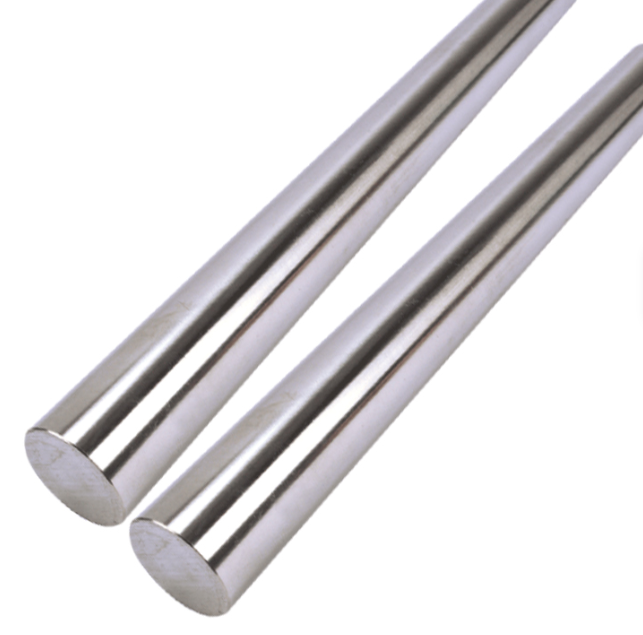
As the most cost-effective titanium grade for general-purpose heat exchangers, Titanium Grade 1 bar delivers 30-50% higher thermal conductivity than stainless steel and 60% weight reduction compared to steel. With over 20 years of production experience, Emily PIPE supplies precision-machined Titanium Grade 1 bars and fabricated heat exchanger components that meet the strictest international quality standards.
| Item | Details |
|---|---|
| Executive Standards | 1. International Material Standards: ASTM B348 (Titanium and Titanium Alloy Bars and Billets), ASTM B337 (Seamless Titanium Tubes), ASTM B338 (Welded Titanium Tubes), ASME SB348, ASME SB337, ASME SB338
2. Heat Exchanger Specific Standards: TEMA (Tubular Exchanger Manufacturers Association) Standards, HEI (Heat Exchange Institute) Standards 3. Regional Standards: DIN 17860, ISO 5832-2, JIS H4650, GB/T 2965 4. Testing Standards: ASTM E8 (Tensile), ASTM E23 (Impact), ASTM E10 (Hardness), ASTM E243 (Eddy Current Testing), ASTM A450 (Hydrostatic Testing) 5. Quality Management Standards: ISO 9001, ISO 14001, PED 2014/68/EU |
| Material Grade | 1. Main Grade: Titanium Grade 1 (Commercially Pure Titanium, Heat Exchanger Grade)
2. International Designations: UNS R50250, ASTM Grade 1, DIN 3.7025, ISO Ti1 3. Equivalent Grades: TA1 (China), Grade 1 (USA), Ti 99.5 (Germany), fully compatible with all global heat exchanger manufacturing standards 4. Special Grades: Ultra-high purity version for critical chemical applications; precision ground version for tight tolerance requirements |
| Chemical Composition (Weight %) | 1. Titanium (Ti): 99.5% minimum (base element)
2. Nitrogen (N): ≤0.03 3. Carbon (C): ≤0.08 4. Hydrogen (H): ≤0.015 5. Iron (Fe): ≤0.20 6. Oxygen (O): ≤0.18 7. Other Elements (each): ≤0.10 8. Other Elements (total): ≤0.40 Note: Strict control of interstitial elements (N, C, H, O) ensures maximum ductility, corrosion resistance and formability |
| Mechanical Properties (Annealed State) | 1. Tensile Strength (Room Temperature): 240 – 345 MPa
2. 0.2% Yield Strength (Room Temperature): ≥170 MPa 3. Elongation (δ5): ≥30% (excellent formability for complex bending and forming) 4. Reduction of Area: ≥50% 5. Hardness (HB): ≤120 6. Modulus of Elasticity: 105 GPa 7. Thermal Conductivity: 21.9 W/m·K (at 20℃) 8. Thermal Expansion Coefficient: 8.6 × 10⁻⁶ /℃ (20-100℃) 9. Melting Point: 1668℃ 10. Maximum Continuous Service Temperature: 315℃ in oxidizing environments |
| Dimensional Tolerance (Heat Exchanger Precision Grade) | 1. Hot Rolled Bars:
– Diameter 6mm – 50mm: ±0.3mm – Diameter 50mm – 150mm: ±0.5mm – Diameter 150mm – 300mm: ±0.8mm 2. Cold Drawn Bars: – Diameter 6mm – 30mm: ±0.03mm – Diameter 30mm – 80mm: ±0.05mm – Diameter 80mm – 150mm: ±0.10mm 3. Precision Ground Bars: – Diameter 6mm – 100mm: ±0.01mm 4. Rectangular/Square Bars: – Width/Thickness: ±0.05mm for dimensions ≤50mm; ±0.10mm for dimensions >50mm |
| Heat Exchanger Operating Conditions (Detailed) | 1. Temperature Range:
– Continuous service temperature: -253℃ to 315℃ (oxidizing environments) – Intermittent service temperature: up to 425℃ – Cryogenic service: maintains excellent ductility down to absolute zero, ideal for LNG and cryogenic heat exchangers 2. Pressure Range: – Design pressure: up to 100 bar (1450 psi) for seamless tubes – Design pressure: up to 60 bar (870 psi) for welded tubes – Pressure vessel grade: fully compliant with ASME Section VIII Div. 1 for pressure-containing components 3. Compatible Media: – Seawater, brackish water and brine solutions (all concentrations and temperatures) – Chloride-containing solutions (up to 200℃, no pitting or crevice corrosion) – Most organic acids (acetic, citric, formic, lactic) at all concentrations and temperatures – Inorganic acids (nitric, sulfuric <5%, hydrochloric <10%) at moderate temperatures – Oxidizing and reducing environments – Liquefied natural gas (LNG), liquid nitrogen and other cryogenic fluids 4. Industry-Specific Operating Conditions: – Seawater Desalination: Operating temperature 60-120℃, pressure 1-10 bar, seawater with 3.5% NaCl content – Chemical Processing: Operating temperature up to 200℃, pressure up to 40 bar, various corrosive chemical mixtures – Power Generation: Operating temperature up to 300℃, pressure up to 60 bar, cooling water and steam – Oil & Gas: Operating temperature up to 150℃, pressure up to 80 bar, sour gas and produced water |
| Heat Exchanger Tube Bundle Types (Detailed) | 1. U-Bend Tubes:
– Description: Tubes bent into U-shape with uniform bend radius, allowing for thermal expansion without additional expansion joints – Bend Radius Options: 1.5×OD, 2×OD, 3×OD, 4×OD and custom radii – Wall Thickness Range: 0.5mm – 5.0mm – Outer Diameter Range: 6mm – 50mm – Applications: Shell and tube heat exchangers, condensers, evaporators, reboilers – Advantages: Excellent thermal expansion compensation, easy replacement, lower maintenance cost – Quality Control: 100% visual and dimensional inspection after bending; no cracking or wall thinning allowed 2. Condenser Tubes: – Description: Straight seamless or welded tubes with precise dimensional tolerances for condenser applications – Outer Diameter Range: 10mm – 38mm (most common: 19.05mm, 25.4mm) – Wall Thickness Range: 0.7mm – 2.0mm (most common: 1.24mm, 1.65mm) – Length Range: Up to 24 meters – Applications: Power plant condensers, seawater condensers, refrigeration condensers – Advantages: High thermal efficiency, low fouling, long service life – Quality Control: 100% eddy current and hydrostatic testing; strict control of ovality and wall thickness variation 3. Evaporator Tubes: – Description: Tubes with enhanced surface finishes or internal/external fins for improved heat transfer – Surface Options: Smooth, corrugated, finned (low-fin, high-fin) – Fin Density: 19-40 fins per inch – Applications: Falling film evaporators, forced circulation evaporators, refrigeration evaporators – Advantages: Increased heat transfer area, higher efficiency, compact design 4. Straight Tubes: – Description: Straight seamless or welded tubes for fixed tube sheet heat exchangers – Length Range: Up to 12 meters (standard); up to 24 meters (custom) – Applications: Fixed tube sheet heat exchangers, coolers, heaters – Advantages: Lower cost, easier cleaning, higher pressure rating 5. Coiled Tubes: – Description: Tubes coiled into helical or spiral shapes for compact heat exchangers – Coil Diameter Range: 100mm – 3000mm – Applications: Compact heat exchangers, immersion heaters, waste heat recovery units – Advantages: High heat transfer efficiency, compact design, excellent thermal shock resistance |
| Surface Quality (Detailed) | 1. Standard Surface Finishes:
– Pickled and Passivated (Standard): Acid pickled to remove scale and oxides, then passivated to form a protective titanium oxide layer. Surface roughness Ra ≤ 3.2μm. Suitable for most general-purpose heat exchangers. – Mechanically Polished: Polished to surface roughness Ra ≤ 0.8μm. Reduces fouling and improves cleanability. Ideal for food, pharmaceutical and high-purity applications. – Electropolished: Ultra-smooth surface with Ra ≤ 0.2μm. Maximum corrosion resistance and minimum fouling. Used in critical pharmaceutical and semiconductor applications. – Sand Blasted: Uniform matte finish with Ra ≤ 6.3μm. Improves coating adhesion for specialized applications. 2. Surface Defect Control Standards: – No cracks, laps, seams, inclusions or other harmful defects allowed on the entire surface – Minor scratches: depth ≤ 5% of nominal wall thickness, length ≤ 50mm, no more than 1 per meter – Minor dents: depth ≤ 3% of nominal wall thickness, diameter ≤ 5mm, no more than 1 per meter – Surface oxidation: no heavy oxidation or discoloration allowed 3. Cleanliness Requirements: – All tubes are thoroughly cleaned inside and out to remove oil, grease, dirt and machining residues – Residual oil content: ≤ 20mg/m² for standard grade; ≤ 5mg/m² for high-purity grade – No foreign particles or debris allowed inside the tubes – Cleaned tubes are immediately capped and sealed to prevent contamination during transportation |
| Straightness (Detailed) | 1. Straightness Tolerance Standards:
– Standard Grade: ≤ 1.0mm per meter length – Precision Grade: ≤ 0.5mm per meter length – Ultra-Precision Grade: ≤ 0.2mm per meter length – Maximum total straightness deviation: ≤ 3mm for tubes up to 6 meters long; ≤ 5mm for tubes up to 12 meters long 2. Measurement Method: – Straightness is measured using a laser straightness gauge or a precision straight edge along the entire length of the tube – Measurements are taken at multiple points around the circumference to ensure accuracy – All measurements are performed at room temperature (20±5℃) 3. Production Control Measures: – Multiple straightening operations during production: hot straightening after rolling, cold straightening after annealing – Final precision straightening using CNC straightening machines – 100% straightness inspection for all heat exchanger tubes – Tubes that do not meet straightness requirements are re-straightened or rejected |
| Eddy Current Testing (ET) (Detailed) | 1. Executive Standards:
– ASTM E243: Standard practice for electromagnetic (eddy current) examination of seamless and welded copper and copper alloy tubes – ASTM E309: Standard practice for electromagnetic (eddy current) examination of steel tubular products using magnetic saturation – TEMA RCB-7.4: Eddy current testing requirements for heat exchanger tubes 2. Testing Equipment: – Multi-frequency eddy current testing machines with 4-8 channels – Automatic data acquisition and recording system – Calibration standards with artificial defects (notches, holes) of specified sizes 3. Testing Parameters: – Testing frequency: 10kHz – 100kHz (selected based on tube diameter and wall thickness) – Inspection speed: 0.5m/s – 2.0m/s – Sensitivity: calibrated to detect defects as small as 5% of nominal wall thickness 4. Defect Detection Capability: – Longitudinal and circumferential cracks – Pitting and corrosion defects – Wall thickness variations – Inclusions and laminations – Weld defects (for welded tubes) 5. Acceptance Criteria: – No defects that produce a signal equal to or greater than the calibration standard signal are allowed – Minor signals below the calibration threshold are evaluated based on size and location – All defective tubes are marked and rejected 6. Documentation: – 100% of tubes are tested and documented – Each shipment includes an eddy current test report with calibration records and test results |
| Hydrostatic Testing (Detailed) | 1. Executive Standards:
– ASTM A450: Standard specification for general requirements for carbon, low-alloy, and alloy steel tubes – ASME B31.3: Process piping code – TEMA RCB-7.3: Hydrostatic testing requirements for heat exchanger tubes 2. Test Pressure Calculation: – Test pressure = 1.5 × design pressure – Minimum test pressure: 10 bar (145 psi) – Maximum test pressure: limited by the yield strength of the material (not exceeding 80% of yield strength) 3. Test Procedure: – Tubes are filled with clean water at ambient temperature – Air is completely vented from the system – Pressure is gradually increased to the specified test pressure – Pressure is held for a minimum of 10 seconds per meter of tube length, but not less than 30 seconds – Tubes are visually inspected for leaks, bulging or deformation during the holding period 4. Acceptance Criteria: – No leakage through the tube wall or at the end closures – No permanent deformation or bulging of the tube – No pressure drop during the holding period 5. Post-Test Processing: – Tubes are thoroughly drained of water after testing – Tubes are dried with compressed air to prevent water spots and corrosion – Tubes are immediately capped and sealed after drying 6. Documentation: – Each shipment includes a hydrostatic test report with test pressure, holding time and results |
| Fixed Length | 1. Standard Fixed Lengths:
– 1000mm, 2000mm, 3000mm, 4000mm, 5000mm, 6000mm – Most common for heat exchangers: 3000mm, 4000mm, 6000mm 2. Custom Lengths: – Any length from 100mm to 12000mm available upon request – Special lengths up to 24000mm available for large-scale heat exchangers 3. Length Tolerance: – Standard tolerance: ±3mm for lengths up to 6000mm – Precision tolerance: ±1mm for lengths up to 6000mm – Tolerance for lengths over 6000mm: ±5mm 4. Cutting Services: – Precision cutting to exact customer specifications – Cutting methods: band saw, circular saw, CNC lathe – No burrs or sharp edges on cut ends |
| Tube End Processing Standards (Detailed) | 1. Plain End (Standard):
– Description: Square cut end with no additional machining – End Squareness: ≤ 0.5mm for tubes up to 50mm OD – Burr Removal: All burrs are removed from both inside and outside edges – Applications: General-purpose heat exchangers, welded connections 2. Chamfered End: – Description: Beveled end for welding or tube sheet expansion – Standard Chamfer Angles: 30°, 37.5°, 45° – Chamfer Depth: 1-3mm depending on wall thickness – Applications: Welded tube sheet connections, butt welding 3. Threaded End: – Description: Machined threads on the tube end – Thread Standards: NPT, BSPT, BSPP, metric threads – Thread Tolerance: Class 2A for external threads – Applications: Instrumentation connections, small-bore heat exchangers 4. Flared End: – Description: Expanded end for flared tube connections – Flare Angles: 37°, 45°, 90° – Flare Diameter: 1.2-1.5×OD – Applications: Hydraulic and pneumatic connections, refrigeration systems 5. Swaged End: – Description: Reduced or expanded diameter end for fitting connections – Reduction/Expansion Ratio: Up to 30% of original diameter – Applications: Tube-to-tube connections, manifold assemblies 6. Tube End Protection: – All tube ends are protected with plastic caps during transportation – Heavy-duty metal caps available for large diameter tubes – Protective caps are removed only at the time of installation |
| Why Choose Us (Emily PIPE) | 1. 20+ Years of Titanium Heat Exchanger Expertise: We have been manufacturing and supplying titanium heat exchanger components to global industrial markets for over 20 years, with deep understanding of the unique requirements of different industries and applications.
2. Full-Process Quality Control: We implement a comprehensive quality control system from raw material inspection to finished product testing, including 100% eddy current testing and hydrostatic testing for all heat exchanger tubes. 3. Advanced Production Equipment: Our production facilities are equipped with state-of-the-art titanium processing equipment, including precision rolling mills, CNC bending machines, and automatic welding machines. 4. Complete Certification: Our products meet all major international standards and hold certifications including ASTM, ASME, PED and ISO 9001, ensuring compliance with global project requirements. 5. Customization Capability: We can produce custom sizes, lengths, surface finishes and tube end processing according to your drawings and technical specifications, including complex U-bend and coiled tube bundles. 6. One-Stop Solution: We provide complete heat exchanger solutions from material selection and component manufacturing to assembly and testing, reducing your supply chain complexity and costs. 7. Global Logistics Support: We have extensive experience in international shipping and can arrange door-to-door delivery to your facility anywhere in the world with reliable lead times. 8. Professional Technical Support: Our team of metallurgical engineers and heat exchanger specialists provides expert guidance on material selection, design optimization and troubleshooting. |
| Inquiry Guidance Words | 1. If you need high-quality Titanium Grade 1 bars or heat exchanger tubes for your project, please send us your specific requirements including dimensions (outer diameter, wall thickness, length), quantity, required standards, surface finish, tube end processing and delivery date, and we will provide a detailed quotation within 12 hours.
2. For any questions about material properties, corrosion resistance in specific operating conditions, testing requirements or heat exchanger design, our titanium specialists are available to assist you promptly. 3. Emily PIPE is your trusted partner for high-performance titanium heat exchanger solutions. Contact us today to discuss how our products can help you improve the efficiency, reliability and service life of your heat exchange equipment. |
| Supplementary Industry Information | 1. Comprehensive Test Reports: Each batch comes with a full Material Test Report (MTR) including chemical composition analysis, mechanical properties testing, heat treatment records, eddy current test results and hydrostatic test results.
2. Full Material Traceability: Every product comes with a unique heat number and complete traceability documentation from raw material ore to finished product, meeting the strictest industrial requirements. 3. Value-Added Processing: We offer comprehensive value-added services including precision cutting, CNC machining, bending, welding, tube end processing and assembly, providing ready-to-install heat exchanger components. 4. Specialized Packaging: We use protective packaging designed for titanium products, including plastic end caps, anti-corrosion wrapping and wooden crates to prevent damage during transportation. 5. Prototype Development Support: We support small batch prototype orders with fast turnaround times to help you accelerate product development and testing. 6. Mass Production Capability: We have the capacity to produce thousands of tons of titanium heat exchanger components per year to support large-scale industrial projects. 7. Sustainability Advantage: Titanium is 100% recyclable and has a much longer service life than conventional materials, making it the most sustainable choice for heat exchanger applications. 8. Market Growth: The global titanium heat exchanger market is projected to grow at a CAGR of over 8% through 2030, driven by increasing demand from seawater desalination, chemical processing and power generation industries. |