
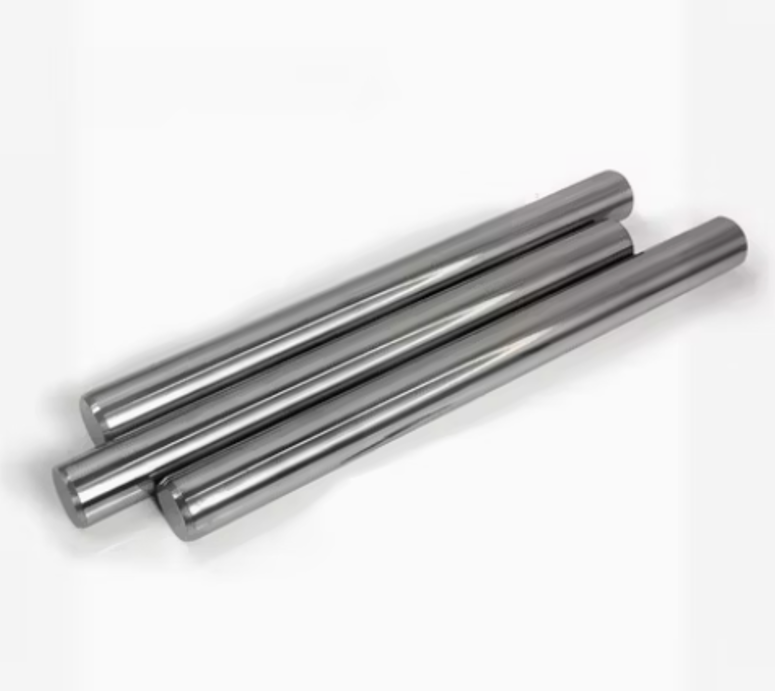
As the industry-standard high-temperature alloy for critical heat exchange applications, Inconel 600 bar features outstanding thermal stability, excellent weldability and good formability, making it the ideal material for manufacturing heat exchanger tubes, tube sheets, baffles, supports and other structural components in power generation, chemical processing and petrochemical industries.
| Item | Details |
|---|---|
| Executive Standards | 1. International Material Standards: ASTM B166, ASME SB166, ASTM B168, ASME SB168, DIN 17742, EN 2.4816
2. Heat Exchanger Specific Standards: TEMA (Tubular Exchanger Manufacturers Association), HEI (Heat Exchange Institute), API 660, API 661 3. Corrosion Service Standards: NACE MR0175/ISO 15156, NACE MR0103 4. Testing Standards: ASTM E8 (Tensile), ASTM E23 (Impact), ASTM A450 (Hydrostatic), ASTM E243 (Eddy Current), ASTM A388 (Ultrasonic) 5. Quality Management Standards: ISO 9001, ISO 14001, AS9100, PED 2014/68/EU |
| Material Grade | 1. Main Grade: Inconel 600 (Nickel-Chromium-Iron Superalloy, High-Temperature Heat Exchanger Grade)
2. International Designations: UNS N06600, W.Nr. 2.4816, Alloy 600, NiCr15Fe 3. Equivalent Grades: NS3102 (China), Inconel 600 (USA), Nicrofer 7216 (Germany), fully compatible with all global heat exchanger manufacturing standards 4. Special Grade: Ultra-low carbon version available for maximum resistance to intergranular corrosion in high-temperature applications |
| Chemical Composition (Weight %) | 1. Nickel (Ni): 72.0% minimum (base element for high-temperature stability and corrosion resistance)
2. Chromium (Cr): 14.0 – 17.0 (for oxidation resistance and high-temperature strength) 3. Iron (Fe): 6.0 – 10.0 (for improved formability and cost-effectiveness) 4. Manganese (Mn): ≤1.0 5. Silicon (Si): ≤0.50 6. Carbon (C): ≤0.15 (standard grade); ≤0.05 (low carbon grade) 7. Sulfur (S): ≤0.015 8. Phosphorus (P): ≤0.020 9. Copper (Cu): ≤0.50 10. Aluminum (Al): ≤0.35 11. Titanium (Ti): ≤0.30 |
| Mechanical Properties (Annealed State) | 1. Tensile Strength (Room Temperature): 550 – 700 MPa
2. 0.2% Yield Strength (Room Temperature): ≥240 MPa 3. Elongation (δ5): ≥40% (excellent formability for complex components) 4. Reduction of Area: ≥50% 5. Hardness (HB): 120 – 180 6. Impact Toughness (Akv, Room Temperature): ≥180 J 7. Tensile Strength (500℃): ≥420 MPa 8. Tensile Strength (800℃): ≥220 MPa 9. Tensile Strength (1000℃): ≥100 MPa 10. Modulus of Elasticity: 207 GPa 11. Thermal Expansion Coefficient: 13.3 × 10⁻⁶ /℃ (20-100℃) |
| Dimensional Tolerance (Heat Exchanger Precision Grade) | 1. Diameter Tolerance:
– Precision Grade (≤50mm): ±0.05mm – Standard Grade (50-100mm): ±0.10mm – Heavy Section (100-300mm): ±0.20mm – Ultra-Precision Grade available upon request: ±0.02mm 2. Length Tolerance: – Fixed Length (1m-6m): ±0.5mm/m – Maximum Full-Length Tolerance: ≤2.0mm – Custom Length up to 12m available 3. Roundness Tolerance: ≤0.01mm (≤50mm); ≤0.02mm (50-100mm); ≤0.03mm (100-300mm) 4. Concentricity Tolerance: ≤0.02mm for precision machined bars |
| Heat Exchanger Operating Conditions (Detailed) | 1. Power Generation Industry:
– Fossil fuel power plants: Superheater tubes, reheater tubes, steam generator tubes, temperatures up to 750℃, pressures up to 250 bar – Nuclear power plants: Steam generator tubes, pressurizer tubes, primary and secondary coolant systems, temperatures up to 350℃, pressures up to 150 bar – Waste-to-energy plants: Flue gas heat exchangers, boiler tubes, temperatures up to 900℃ – Concentrated solar power (CSP) plants: Receiver tubes, heat transfer fluid systems, temperatures up to 650℃ 2. Chemical Processing Industry: – Caustic soda production: Evaporator tubes, heater tubes, 50% NaOH solution, temperatures up to 150℃ – Chlorine production: Electrolyzer components, heat exchangers, wet chlorine gas, temperatures up to 120℃ – Organic chemical production: High-temperature reactors, distillation columns, temperatures up to 500℃ – Fertilizer manufacturing: Ammonia synthesis converters, urea reactors, temperatures up to 550℃ 3. Petrochemical Industry: – Refinery applications: Catalytic reformers, hydrocrackers, desulfurization units, temperatures up to 650℃ – Natural gas processing: Sour gas treatment, amine scrubbers, temperatures up to 250℃ – Ethylene production: Cracking furnaces, quench coolers, temperatures up to 1000℃ 4. Heat Treatment Industry: – Industrial furnaces: Radiant tubes, muffles, retorts, temperatures up to 1095℃ – Heat treatment fixtures: Baskets, trays, supports, temperatures up to 1050℃ 5. Extreme Operating Conditions: – Maximum continuous operating temperature: 1095℃ in oxidizing environments – Maximum continuous operating temperature: 950℃ in reducing environments – Pressure rating: up to 300 bar depending on design and temperature – Excellent resistance to thermal cycling and thermal shock |
| Heat Exchanger Tube Bundle Applications (Detailed) | 1. U-Bend Tubes:
– Application: Shell and tube heat exchangers, condensers, evaporators requiring thermal expansion compensation in high-temperature environments – Technical Requirements: Minimum bend radius 1.5× tube diameter, no wall thinning >12% at bend, no cracking or wrinkling – Inconel 600 Advantage: Excellent hot and cold formability, maintains full mechanical properties after bending, no post-bend heat treatment required for most applications – Available Sizes: OD 6mm – 50mm, wall thickness 0.5mm – 5mm, bend radii 1.5D – 10D 2. Condenser Tubes: – Application: Power plant surface condensers, refinery condensers, nuclear power plant steam generators – Technical Requirements: High corrosion resistance to cooling water, excellent thermal conductivity, tight dimensional tolerances, resistance to vibration-induced fatigue – Inconel 600 Advantage: Immune to chloride-induced stress corrosion cracking, 10x longer service life than stainless steel in high-temperature cooling water – Available Sizes: OD 10mm – 30mm, wall thickness 0.8mm – 3mm, lengths up to 12m 3. Evaporator Tubes: – Application: Chemical evaporators, caustic soda evaporators, desalination plants, food processing evaporators – Technical Requirements: Resistance to fouling, excellent heat transfer properties, resistance to thermal cycling – Inconel 600 Advantage: Smooth surface reduces fouling, excellent thermal conductivity, withstands repeated heating and cooling cycles without deformation – Available Sizes: OD 12mm – 40mm, wall thickness 1.0mm – 4mm 4. Reboiler Tubes: – Application: Distillation columns, chemical processing reboilers, refinery reboilers – Technical Requirements: High-temperature strength, resistance to thermal fatigue, resistance to process fluids – Inconel 600 Advantage: Maintains strength at elevated temperatures, excellent resistance to thermal fatigue, no thermal deformation even after long-term high-temperature service – Available Sizes: OD 16mm – 50mm, wall thickness 1.5mm – 5mm 5. Superheater and Reheater Tubes: – Application: Fossil fuel power plants, waste-to-energy plants, industrial boilers – Technical Requirements: Exceptional high-temperature oxidation resistance, high creep strength, resistance to sulfidation – Inconel 600 Advantage: Forms a protective chromium oxide film at high temperatures, excellent creep resistance, service life up to 20 years in boiler applications – Available Sizes: OD 20mm – 60mm, wall thickness 2.0mm – 6mm 6. Tube Sheets and Baffles: – Application: Structural components of high-temperature shell and tube heat exchangers – Technical Requirements: Flatness tolerance, hole position accuracy, high-temperature strength, corrosion resistance – Inconel 600 Advantage: Excellent machinability, maintains dimensional stability at high temperatures, compatible with all tube materials 7. Support Rods and Spacers: – Application: Supporting tube bundles in high-temperature heat exchangers – Technical Requirements: Straightness, high-temperature strength, corrosion resistance – Inconel 600 Advantage: Excellent straightness, immune to galvanic corrosion with Inconel 600 tubes, long service life at elevated temperatures |
| Surface Quality Requirements (Detailed) | 1. Standard Pickled Surface (ASTM B166):
– Surface Finish: Ra ≤3.2μm – Process: Hot rolled, annealed, pickled and passivated – Appearance: Uniform silver-gray matte finish, free of scale, oxides and discoloration – Application: General purpose heat exchanger components, tube sheets, baffles, supports – Defect Control: No cracks, folds, seams, pits, inclusions or other harmful defects allowed; minor surface imperfections ≤0.05mm deep acceptable 2. Mechanically Polished Surface: – Surface Finish: Ra ≤1.6μm (standard polish), Ra ≤0.8μm (fine polish) – Process: Pickled surface followed by centerless grinding or belt polishing – Appearance: Uniform bright metallic finish, smooth and reflective – Application: Heat exchanger tubes requiring reduced fouling, food processing applications, pharmaceutical industry – Defect Control: No visible surface defects, uniform surface texture, no grinding marks or chatter marks 3. Electropolished Surface: – Surface Finish: Ra ≤0.4μm (standard electropolish), Ra ≤0.2μm (ultra-fine electropolish) – Process: Mechanically polished surface followed by electrochemical polishing – Appearance: Mirror-like finish, extremely smooth and clean – Application: High-purity pharmaceutical applications, semiconductor manufacturing, ultra-clean heat exchangers – Defect Control: Absolutely no surface defects, uniform electropolishing across entire surface, no pitting or staining 4. Special Surface Treatments: – Passivation: All surfaces passivated according to ASTM A967 to enhance corrosion resistance – Shot Peening: Available for improved fatigue resistance in high-vibration applications – Aluminizing: Available for enhanced high-temperature oxidation resistance up to 1200℃ 5. Surface Inspection: – 100% visual inspection of all surfaces by trained inspectors – Surface roughness measurement using calibrated profilometers at multiple points along each bar – Dye penetrant inspection available upon request for critical components |
| Straightness Requirements (Detailed) | 1. Standard Straightness (ASTM B166):
– Straightness Tolerance: ≤0.5mm/m for bars up to 6m in length – Maximum Full-Length Straightness Error: ≤3.0mm for 6m long bars – Application: General purpose heat exchanger components, baffles, supports, tube sheets 2. Precision Straightness: – Straightness Tolerance: ≤0.25mm/m for bars up to 6m in length – Maximum Full-Length Straightness Error: ≤1.5mm for 6m long bars – Application: Heat exchanger tubes, tube bundle support rods, long components requiring tight alignment 3. Ultra-Precision Straightness: – Straightness Tolerance: ≤0.1mm/m for bars up to 6m in length – Maximum Full-Length Straightness Error: ≤0.6mm for 6m long bars – Application: High-precision heat exchangers, nuclear power applications, aerospace heat exchangers 4. Straightening Process: – All bars undergo multi-roll straightening after annealing – Precision bars undergo additional centerless grinding and straightening – Straightness verified using laser straightness measurement systems with 0.01mm accuracy 5. Importance of Straightness: – Ensures proper alignment of tube bundles, preventing tube-to-tube contact and wear – Reduces vibration and noise in operating heat exchangers – Facilitates easy assembly and installation, reducing labor costs – Prevents stress concentrations that could lead to premature fatigue failure – Ensures uniform heat transfer across the entire tube bundle |
| Eddy Current Testing (ET) (Detailed) | 1. Testing Standard: ASTM E243, ASME V Article 8, TEMA RCB-7.3
2. Testing Frequency: 100% of all heat exchanger bars and tubes undergo eddy current testing 3. Equipment: Computerized multi-frequency eddy current testing systems with automatic defect marking and digital data recording 4. Testing Parameters: – Frequency Range: 10kHz – 2MHz depending on bar diameter and wall thickness – Sensitivity: Calibrated to detect artificial defects of 0.3mm depth (5% of wall thickness) or smaller – Defect Types Detected: Surface cracks, subsurface cracks, pits, inclusions, seams, laps and wall thickness variations 5. Testing Procedure: – Bars pass through encircling coils at controlled speed (1-5m/s) – System automatically records all test data and marks defective areas with paint – Defective sections are cut out and removed – Retesting performed on repaired sections to ensure compliance 6. Acceptance Criteria: – No defects exceeding 5% of wall thickness allowed – No linear defects of any length allowed – Isolated pits ≤0.3mm deep acceptable if spaced ≥50mm apart 7. Additional Testing Options: – Ultrasonic Testing (UT) according to ASTM A388 for internal defect detection – Dye Penetrant Testing (PT) according to ASTM E165 for surface defect detection – Magnetic Particle Testing (MT) not applicable as Inconel 600 is non-magnetic 8. Documentation: – Complete eddy current test report provided with each shipment – Test data stored digitally for minimum 15 years for traceability |
| Hydrostatic Pressure Testing (Detailed) | 1. Testing Standard: ASTM A450, ASME B31.3, TEMA RCB-7.2
2. Testing Frequency: 100% of all heat exchanger tubes undergo hydrostatic pressure testing 3. Test Pressure Calculation: – Standard Test Pressure: 1.5× design pressure – Minimum Test Pressure: 10 bar – Maximum Test Pressure: Limited by yield strength (≤80% of yield strength at test temperature) 4. Test Medium: – Deionized water with chloride content ≤25ppm to prevent corrosion – Optional corrosion inhibitors added for long-term storage – Water temperature maintained between 10℃ and 50℃ to prevent condensation 5. Testing Procedure: – Tubes are sealed at both ends with high-pressure hydraulic fittings – Water is pumped into the tube until test pressure is reached – Pressure held for minimum 10 seconds (standard) or 30 seconds (critical applications) – Visual inspection for leaks, bulging or deformation during pressure holding – Pressure released and tubes drained and dried after testing 6. Acceptance Criteria: – No leakage of any kind allowed – No permanent deformation or bulging allowed – No pressure drop during holding period allowed 7. Additional Testing Options: – Pneumatic pressure testing available upon request using dry nitrogen – Burst pressure testing available for design verification – Cyclic pressure testing available for fatigue life evaluation 8. Post-Testing Processing: – Tubes are thoroughly dried internally and externally using compressed air – Ends are capped immediately to prevent moisture ingress during storage and transportation – Optional passivation performed after testing to restore corrosion resistance |
| Fixed Length Specifications (Detailed) | 1. Standard Fixed Lengths:
– 1000mm, 2000mm, 3000mm, 4000mm, 5000mm, 6000mm – Length Tolerance: ±0.5mm/m, maximum ±2.0mm for 6m lengths – Squareness of Cut: ≤0.1mm per 100mm diameter 2. Custom Fixed Lengths: – Any length from 100mm to 12000mm available upon request – Length Tolerance: ±0.3mm for lengths ≤3m, ±0.5mm for lengths >3m – Ultra-precision cutting available with tolerance ±0.1mm 3. Long Length Products: – Maximum single length: 12000mm – Ideal for large heat exchangers requiring long tubes without welded joints – Reduces number of welds, improving reliability and reducing maintenance costs 4. Cutting Methods: – Band saw cutting for standard lengths – CNC lathe cutting for precision lengths with square ends – Abrasive cutting for small diameter bars – Water jet cutting available for sensitive materials 5. End Preparation: – All cut ends deburred and chamfered as standard – Optional end facing and turning available 6. Length Verification: – All lengths verified using calibrated measuring tapes or laser distance meters – 100% inspection of all cut lengths 7. Packaging by Length: – Bars bundled by length to facilitate easy identification and handling – Long bars packaged in steel frames to prevent bending during transportation |
| Tube End Processing Standards (Detailed) | 1. Plain Square End (Standard):
– Standard: ASME B16.25, TEMA RCB-7.4 – Dimensions: Ends cut square to within 0.1mm per 100mm diameter – Chamfer: 0.5×45° external chamfer to remove burrs – Application: General purpose tube-to-tubesheet welding, expansion joints 2. Beveled End for Welding: – Standard: ASME B16.25, AWS D10.9 – Bevel Angle: 30° ±2.5° (standard), 37.5° ±2.5° (heavy wall) – Root Face: 1.6mm ±0.8mm – Application: High-pressure piping, tube-to-tubesheet welding in critical applications 3. Chamfered End: – Standard: Customer specific – Chamfer Angles: 15°, 30°, 45°, 60° available – Chamfer Length: 1mm – 10mm depending on wall thickness – Application: Tube expansion, assembly into fittings 4. Expanded End: – Standard: TEMA RCB-7.5 – Expansion Ratio: Up to 15% of original diameter – Length of Expansion: 10mm – 50mm depending on tube diameter – Application: Tube-to-tubesheet expansion joints, quick connect fittings 5. Swaged End (Reduced End): – Standard: ASME B16.19 – Reduction Ratio: Up to 50% of original diameter – Length of Swage: 2× diameter minimum – Application: Connection to smaller diameter piping, nozzles 6. Flared End: – Standard: SAE J514, ISO 8434 – Flare Angle: 37° (JIC), 45° (SAE), 60° (metric) – Application: Flare fittings, hydraulic connections 7. Threaded End: – Standard: NPT, BSPP, BSPT, metric threads – Thread Class: Class 2A (external), Class 2B (internal) – Application: Threaded connections, instrumentation fittings 8. End Protection: – All tube ends protected with plastic caps during storage and transportation – Heavy-duty metal caps available for heavy wall tubes – Ends sealed to prevent moisture and contamination ingress |
| Why Choose Us (Emily PIPE) | 1. 20+ Years of Superalloy Expertise: We have been manufacturing and exporting high-performance nickel alloy heat exchanger components for over 20 years, with deep understanding of the unique requirements of high-temperature industrial environments.
2. Complete International Certifications: Our production facilities are certified to ISO 9001, ISO 14001, AS9100 and PED, with all products complying with ASTM, ASME, NACE and API standards. 3. Dedicated Inconel 600 Production Line: We operate a dedicated production line for Inconel 600 products, ensuring strict control over chemical composition, mechanical properties and surface quality. 4. Full-Process Quality Control: We implement a comprehensive quality control system from raw material inspection to finished product testing, including 100% eddy current testing and hydrostatic testing for all heat exchanger tubes. 5. Advanced Customization Capability: We can produce custom sizes, lengths, surface finishes and end treatments according to your drawings and technical specifications, including complex U-bend tubes and tube sheets. 6. In-House Testing Laboratory: We operate a fully equipped testing laboratory that can perform chemical analysis, mechanical testing, corrosion testing and non-destructive testing, providing third-party verified test reports. 7. Global One-Stop Service: We handle everything from material production and custom processing to international shipping and customs clearance, with reliable logistics partners ensuring on-time delivery to any industrial facility worldwide. 8. Professional Technical Support: Our team of metallurgical engineers and heat exchanger specialists provides expert guidance on material selection, design optimization and fabrication techniques. |
| Inquiry Guidance Words | 1. If you need high-quality Inconel 600 heat exchanger bars or tubes for your high-temperature industrial project, please send us your specific requirements including dimensions, quantity, required standards, operating conditions and delivery date, and we will provide a detailed quotation within 12 hours.
2. For any questions about material properties, high-temperature performance, testing requirements or heat exchanger design recommendations, our alloy specialists are available to assist you promptly. 3. Emily PIPE is your trusted partner for high-performance nickel alloy heat exchanger solutions. Contact us today to discuss how our Inconel 600 products can help you improve the reliability and service life of your heat exchangers in the most demanding high-temperature operating conditions. |
| Supplementary Industry Information | 1. Comprehensive Test Reports: Each batch comes with a full Material Test Report (MTR) including chemical composition analysis, mechanical properties testing, heat treatment records, eddy current test results and hydrostatic test results.
2. Full Material Traceability: Every bar and tube comes with a unique heat number and complete traceability documentation from raw material ore to finished product, meeting the strictest industrial project requirements. 3. Value-Added Processing: We offer comprehensive value-added services including precision cutting, machining, bending, welding, end forming and assembly, providing ready-to-install heat exchanger components. 4. Professional Industrial Packaging: We use protective plastic caps on both ends, anti-corrosion wrapping, wooden crates and steel frames to prevent damage during long-distance international transportation. 5. Urgent Order Support: We maintain a large inventory of standard Inconel 600 bar and tube sizes, enabling us to fulfill urgent orders within 7-15 days. 6. Prototype Development Support: We support small batch prototype orders with fast turnaround times to help you accelerate product development and testing. 7. After-Sales Service: We provide lifetime technical support for all our products, including on-site assistance for fabrication, installation and troubleshooting. 8. Sustainability Commitment: All our products are manufactured using sustainable practices and are 100% recyclable, helping you meet your environmental targets. |