
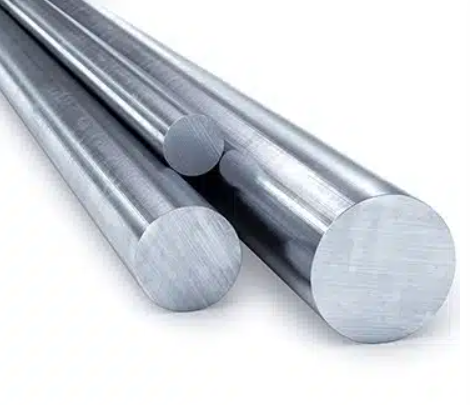
As the strongest unalloyed titanium material for automotive applications, Titanium Grade 4 bar offers 40% higher strength than Grade 2 and 20% higher strength than Grade 3, making it the ideal cost-effective alternative to titanium alloys for demanding automotive components where failure is not an option.
| Item | Details |
|---|---|
| Executive Standards | 1. International Material Standards: ASTM B348, AMS 4944, DIN 17860, ISO 5832-4
2. Automotive Industry Standards: IATF 16949, ISO 9001, ISO 14001, VDA 6.3 3. Testing Standards: ASTM E8 (Tensile), ASTM E23 (Impact), ASTM G48 (Corrosion), ASTM B670 (Formability) |
| Material Grade | 1. Main Grade: Titanium Grade 4 (Commercially Pure Titanium, Ultra-High-Strength Automotive Grade)
2. International Designations: UNS R50700, W.Nr. 3.7065, Ti Grade 4 3. Equivalent Grades: GB TA4, JIS TP550C, fully compatible with all global automotive manufacturing standards |
| Chemical Composition (Weight %) | 1. Titanium (Ti): 98.5% minimum
2. Oxygen (O): 0.35 – 0.40 (key strengthening element, highest among pure titanium grades) 3. Iron (Fe): 0.30 – 0.50 (higher than Grade 3 for enhanced mechanical properties) 4. Carbon (C): ≤0.08 5. Nitrogen (N): ≤0.05 6. Hydrogen (H): ≤0.015 7. Other Elements (each): ≤0.10 8. Other Elements (total): ≤0.40 |
| Mechanical Properties (Annealed State) | 1. Tensile Strength: 550 – 700 MPa (40% higher than Grade 2, 20% higher than Grade 3)
2. 0.2% Yield Strength: ≥485 MPa (76% higher than Grade 2, 28% higher than Grade 3) 3. Elongation (δ5): ≥15% (sufficient for standard automotive forming operations) 4. Reduction of Area (ψ): ≥30% 5. Hardness (HB): 160 – 220 6. Density: 4.51 g/cm³ (45% lighter than steel, 60% lighter than stainless steel) 7. Melting Point: 1668℃ 8. Thermal Conductivity: 15.2 W/(m·K) 9. Fatigue Strength (10⁷ Cycles): ≥270 MPa |
| Dimensional Tolerance (Automotive Grade Precision) | 1. Diameter Tolerance: Precision Grade (≤50mm): ±0.04mm; Standard Grade (50-100mm): ±0.08mm; Heavy Section (100-300mm): ±0.15mm
2. Length Tolerance: Fixed Length (1m-6m): ±0.4mm/m; Maximum Full-Length Tolerance: ≤1.5mm; Custom Length up to 12m available 3. Straightness: ≤0.25mm/m, Full-Length Straightness Error: ≤0.8mm/6m 4. Roundness: ≤0.01mm (≤50mm); ≤0.015mm (50-100mm); ≤0.02mm (100-300mm) 5. Surface Finish: Ra ≤1.6μm standard, optional polished finish Ra ≤0.4μm for high-performance applications |
| Why the Automobile Manufacturing Industry Uses This Material (Detailed) | 1. Unrivaled Strength-to-Weight Ratio Among Pure Titanium: Titanium Grade 4 offers the highest strength of any commercially pure titanium grade, with tensile strength approaching that of low-alloy steels while being 45% lighter. This unique combination allows manufacturers to reduce component wall thickness by up to 35% compared to Grade 2, resulting in even greater weight savings without compromising structural integrity or crash safety performance.
2. Superior Corrosion Resistance for Harsh Environments: Like all pure titanium grades, Grade 4 forms a dense, self-healing titanium oxide film that provides exceptional resistance to road salt, de-icing chemicals, exhaust gases, moisture and atmospheric corrosion. It outperforms stainless steel, aluminum and even some titanium alloys in all automotive environments, ensuring components last the entire 15+ year lifetime of the vehicle without rusting, pitting or corroding. 3. Excellent High-Temperature Performance: Titanium Grade 4 maintains its mechanical properties up to 480℃, 30℃ higher than Grade 3 and 80℃ higher than Grade 2. This makes it ideal for the most extreme high-temperature automotive components such as turbocharger parts and high-performance exhaust systems. It does not warp, deform or suffer from thermal fatigue and creep even under repeated thermal cycling. 4. Outstanding Fatigue and Impact Resistance: Automotive components are subjected to millions of cycles of vibration, stress and impact during their lifetime. Titanium Grade 4 has the highest fatigue strength of any pure titanium grade, significantly reducing the risk of component failure due to fatigue. This is particularly critical for safety-critical components such as chassis parts and suspension systems. 5. Cost-Effective Alternative to Titanium Alloys: While titanium alloys like Grade 5 (Ti-6Al-4V) offer higher ultimate strength, they are significantly more expensive and more difficult to process. Titanium Grade 4 provides 80-90% of the strength of Grade 5 at 30-40% lower cost, making it the most cost-effective high-strength solution for mass production automotive applications. 6. Good Formability and Weldability: Despite its high strength, Titanium Grade 4 still maintains good formability and can be bent, forged, machined and welded using standard automotive manufacturing techniques. Welded joints retain over 80% of the base metal strength, making it suitable for complex welded assemblies. 7. Enhanced Safety Performance: The high strength and energy absorption capabilities of Titanium Grade 4 make it ideal for safety-critical components. It can absorb more impact energy per unit weight than steel, improving crash safety while reducing overall vehicle weight, which also contributes to shorter stopping distances and better handling. |
| Application Scenarios & Corresponding Customers (Detailed) | Application Scenarios:
1. High-Stress Exhaust Components: High-performance exhaust headers, downpipes, turbocharger housings, catalytic converter shells, muffler components and exhaust manifold studs. Grade 4’s high strength and heat resistance make it ideal for these extreme high-temperature, high-vibration applications. 2. Heavy-Duty Suspension Components: Shock absorber tubes, strut housings, control arm tubes, stabilizer bars, coil spring retainers and suspension links. Its high strength-to-weight ratio reduces unsprung weight by up to 45%, dramatically improving ride quality, handling, responsiveness and traction. 3. Safety-Critical Chassis Components: Frame tubes, roll cages, subframe components, door impact beams, roof rails and crash energy absorption structures. Grade 4’s high strength and impact resistance improve crash safety while reducing overall vehicle weight. 4. High-Performance Engine Components: Valve guides, valve spring retainers, connecting rod tubes, turbocharger turbine housings and engine mount brackets. Its high strength and heat resistance make it suitable for these demanding underhood applications. 5. Electric Vehicle (EV) Structural Components: Battery pack structural tubes, battery tray reinforcements, motor housing components, suspension parts and chassis reinforcements. Its high strength and lightweight properties are particularly valuable for EVs, where every kilogram saved directly translates to increased range and improved performance. 6. Commercial Vehicle Components: Heavy-duty truck frame tubes, trailer chassis components, exhaust systems and suspension parts. Its durability and corrosion resistance make it ideal for commercial vehicle applications where reliability is critical and vehicles operate for 1+ million miles. 7. Off-Road and Recreational Vehicles: ATV/UTV frame components, suspension parts, exhaust systems and roll cages. Its high strength, impact resistance and corrosion resistance make it perfect for off-road applications where components are subjected to extreme abuse. 8. Motorsport and Racing Vehicles: Used extensively in all forms of motorsports for its combination of high strength, lightweight and heat resistance, including roll cages, exhaust systems, suspension components and chassis parts. Corresponding Customers: 1. Global automotive OEMs (passenger cars, SUVs, trucks and commercial vehicles) 2. Electric vehicle manufacturers (Tesla, BYD, NIO, Xpeng, Rivian, Lucid Motors) 3. Automotive tier 1 suppliers specializing in chassis systems, suspension systems and exhaust systems 4. High-performance and luxury vehicle manufacturers (Ferrari, Lamborghini, Porsche, BMW M, Mercedes-AMG) 5. Commercial vehicle manufacturers (heavy-duty trucks, buses, delivery vans and construction equipment) 6. Off-road and recreational vehicle manufacturers (ATVs, UTVs, motorcycles and snowmobiles) 7. Automotive aftermarket companies producing high-performance parts and racing components 8. Motorsport teams and racing organizations (Formula 1, NASCAR, rally racing, drag racing) |
| Corresponding User Needs in Automobile Manufacturing Industry (Detailed) | 1. Maximum Strength Demand: Manufacturers need materials that can withstand the highest loads and stresses while maintaining lightweight properties. Titanium Grade 4’s exceptional strength makes it ideal for these high-stress applications.
2. Extreme Durability and Reliability Demand: Automotive components must be reliable and durable, with a service life of at least 10 years or 150,000 miles. Titanium Grade 4’s excellent corrosion resistance, fatigue resistance and impact toughness ensure components will last the entire lifetime of the vehicle, even in the harshest conditions. 3. Aggressive Lightweighting Demand: With increasingly strict fuel efficiency and emissions regulations, manufacturers are under immense pressure to reduce vehicle weight. Titanium Grade 4 provides the highest strength-to-weight ratio of any pure titanium grade, enabling maximum weight savings without compromising performance or safety. 4. Cost-Effectiveness Demand: While titanium has a higher initial cost than steel, manufacturers are increasingly recognizing the total lifecycle cost benefits of titanium. Titanium Grade 4 provides a more cost-effective high-strength solution compared to titanium alloys, making it suitable for mass production automotive applications. 5. Safety Performance Demand: Automotive manufacturers are constantly striving to improve vehicle safety. Titanium Grade 4’s high strength and energy absorption capabilities make it ideal for safety-critical components, improving crash safety while reducing overall vehicle weight. 6. Mass Production Capability Demand: Automotive manufacturers require materials that can be processed using existing manufacturing techniques and are suitable for high-volume production. Titanium Grade 4’s good formability and weldability make it compatible with standard automotive manufacturing processes. 7. Environmental Compliance Demand: The automotive industry is facing increasingly strict environmental regulations. Titanium Grade 4 is 100% recyclable and helps reduce vehicle emissions through lightweighting, making it an environmentally friendly material choice that helps manufacturers meet their carbon neutrality targets. 8. Consistent Quality Demand: Automotive manufacturing requires materials with highly consistent mechanical properties and chemical composition. Manufacturers need suppliers with strict quality control systems and complete material traceability to ensure reliable performance and assembly. |
| Common Related Products in Automobile Manufacturing Industry | 1. Titanium Grade 4 Tube: Used for manufacturing fluid transfer lines, exhaust components and suspension tubes
2. Titanium Grade 4 Sheet/Plate: Used for body panels, floor pans, heat shields, battery trays and structural components 3. Titanium Grade 4 Welding Wire: ERTi-4 welding wire specifically designed for welding Titanium Grade 4 components, ensuring excellent weld strength and corrosion resistance 4. Titanium Grade 4 Forgings: Used for high-strength components such as connecting rods, suspension arms and engine mounts 5. Titanium Grade 3 Bar: Used for applications requiring slightly lower strength and better formability 6. Titanium Grade 5 (Ti-6Al-4V) Bar: Used for ultra-high-strength applications where maximum strength is required 7. Titanium Exhaust Systems: Complete high-performance titanium exhaust systems manufactured from Grade 4 bar and tube 8. Titanium Suspension Components: Shock absorber tubes, strut housings and control arms made from Titanium Grade 4 bar 9. Titanium Fasteners: Grade 4 titanium bolts, nuts, screws and studs for high-strength automotive assembly |
| Why Choose Us (Emily PIPE) | 1. 20+ Years of Titanium Automotive Expertise: We have been supplying high-performance titanium materials to the global automotive industry for over 20 years, with deep understanding of automotive manufacturing requirements and challenges.
2. IATF 16949 Certified: Our production facilities are fully certified to IATF 16949, the international standard for automotive quality management systems, ensuring compliance with the strictest automotive industry requirements. 3. Grade 4 Specialization: We specialize in producing high-quality Titanium Grade 4 bar with precise control over oxygen and iron content to ensure consistent strength and formability. 4. Full Material Traceability: Every bar comes with a unique heat number and complete traceability documentation from raw material ore to finished product, meeting automotive industry traceability requirements. 5. Advanced Customization Capability: We can produce custom sizes, lengths, surface finishes and heat treatments according to your drawings and technical specifications. 6. Professional Technical Support: Our team of metallurgical engineers provides expert guidance on material selection, machining parameters, welding procedures and design optimization for automotive applications. 7. Global One-Stop Service: We handle everything from material production and custom processing to international shipping and customs clearance, with reliable logistics partners ensuring on-time delivery to any automotive manufacturing facility worldwide. |
| Inquiry Guidance Words | 1. If you need ultra-high-strength Titanium Grade 4 bar for your automotive manufacturing project, please send us your specific requirements including dimensions, quantity, required certifications and delivery date, and we will provide a detailed quotation within 12 hours.
2. For any questions about material strength characteristics, mechanical properties, welding guidelines or automotive application recommendations, our titanium specialists are available to assist you promptly. 3. Emily PIPE is your trusted partner for high-quality automotive titanium materials. Contact us today to discuss how our Titanium Grade 4 bar can help you achieve your lightweighting, performance and safety goals with reliable, cost-effective solutions. |
| Supplementary Information | 1. Comprehensive Test Reports: Each batch comes with a full Material Test Report (MTR) including chemical composition analysis, mechanical properties testing, hardness testing and non-destructive inspection results.
2. 100% Non-Destructive Testing: All bars undergo 100% ultrasonic testing and surface inspection to ensure no internal or surface defects. 3. Professional Automotive Packaging: We use protective plastic caps on both ends, anti-corrosion wrapping and wooden crates to prevent damage during transportation. 4. Urgent Order Support: We maintain a large inventory of standard Titanium Grade 4 bar sizes, enabling us to fulfill urgent orders within 7-15 days. 5. Prototype Development Support: We support small batch prototype orders with fast turnaround times to help you accelerate product development and testing. 6. After-Sales Service: We provide lifetime technical support for all our products, including on-site assistance for machining and welding issues. 7. Sustainability Commitment: All our titanium products are manufactured using sustainable practices and are 100% recyclable, helping you meet your environmental targets. |