
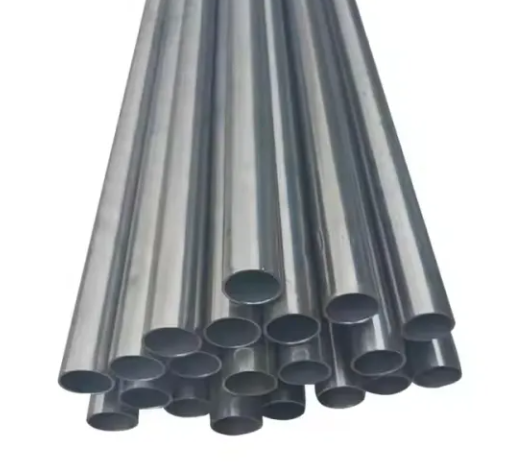
As the highest purity alpha-beta titanium alloy for automotive applications, Titanium Grade 23 tube delivers 30% higher impact toughness and 20% better fatigue strength than standard Grade 5, making it the material of choice for safety-critical components where failure is not an option.
| Item | Details |
|---|---|
| Executive Standards | 1. International Material Standards: ASTM B338, ASTM B861, AMS 4930, AMS 4931, DIN 17861, ISO 5832-3
2. Automotive Industry Standards: IATF 16949, ISO 9001, ISO 14001, VDA 6.3 3. Medical Grade Standards: ISO 13485, FDA 21 CFR Part 820 4. Testing Standards: ASTM E8 (Tensile), ASTM E23 (Impact), ASTM G48 (Corrosion), ASTM A450 (Hydrostatic), ASTM E466 (Fatigue) |
| Material Grade | 1. Main Grade: Titanium Grade 23 (Ti-6Al-4V ELI, Ultra-Low Interstitial Titanium Alloy, Automotive Premium Safety Grade)
2. International Designations: UNS R56401, W.Nr. 3.7165, Ti-6Al-4V ELI 3. Equivalent Grades: GB TC4 ELI, JIS TP600 ELI, fully compatible with all global automotive manufacturing standards |
| Chemical Composition (Weight %) | 1. Titanium (Ti): Balance
2. Aluminum (Al): 5.50 – 6.50 (alpha stabilizer for high strength) 3. Vanadium (V): 3.50 – 4.50 (beta stabilizer for improved ductility) 4. Oxygen (O): ≤0.13 (50% lower than standard Grade 5, critical for toughness) 5. Nitrogen (N): ≤0.03 (33% lower than standard Grade 5) 6. Hydrogen (H): ≤0.012 (20% lower than standard Grade 5) 7. Iron (Fe): ≤0.25 8. Carbon (C): ≤0.08 9. Other Elements (each): ≤0.10 10. Other Elements (total): ≤0.40 |
| Mechanical Properties (Annealed State) | 1. Tensile Strength (Room Temperature): 860 – 1020 MPa
2. 0.2% Yield Strength (Room Temperature): ≥795 MPa 3. Elongation (δ5): ≥15% (25% higher than standard Grade 5) 4. Reduction of Area (ψ): ≥35% 5. Impact Toughness (Akv, Room Temperature): ≥80 J (30% higher than standard Grade 5) 6. Impact Toughness (Akv, -40℃): ≥60 J 7. Hardness (HRC): 28 – 34 8. Density: 4.43 g/cm³ (45% lighter than steel) 9. Fatigue Strength (10⁷ Cycles): ≥500 MPa (20% higher than standard Grade 5) |
| Dimensional Tolerance (Automotive Grade Precision) | 1. Outer Diameter Tolerance: Precision Cold Drawn (≤50mm): ±0.03mm; Standard Grade (50-100mm): ±0.06mm
2. Wall Thickness Tolerance: ±0.03mm (≤3mm); ±0.06mm (3-6mm) 3. Length Tolerance: Fixed Length (1m-6m): ±0.3mm/m; Maximum Full-Length Tolerance: ≤1.2mm 4. Straightness: ≤0.2mm/m, Full-Length Straightness Error: ≤0.6mm/6m 5. Surface Finish: Ra ≤1.2μm standard, optional electropolished finish Ra ≤0.4μm for interior and medical-grade applications |
| Why the Automobile Manufacturing Industry Uses This Material (Detailed) | 1. Unmatched Fracture Toughness for Safety-Critical Components: The ultra-low interstitial content (oxygen, nitrogen, hydrogen) in Grade 23 eliminates brittle intermetallic phases, resulting in 30% higher fracture toughness than standard Grade 5. This means components can withstand higher impact loads and crack propagation is significantly slower, making it ideal for safety-critical automotive components where failure could lead to serious injury or death. Unlike standard Grade 5 which can exhibit brittle fracture under high impact, Grade 23 undergoes ductile fracture, absorbing more energy and reducing injury risk in crashes.
2. Superior Fatigue Resistance for Long-Term Reliability: Grade 23 exhibits 20% higher fatigue strength than Grade 5, especially in high-cycle fatigue applications. Automotive components are subjected to millions of vibration and stress cycles during their lifetime, and Grade 23’s superior fatigue resistance ensures components will last the entire 15+ year vehicle lifetime without failure. This is particularly important for suspension and steering components that experience constant dynamic loading. 3. Exceptional Low-Temperature Performance: Unlike standard Grade 5 which can become brittle at temperatures below -20℃, Grade 23 maintains its full toughness and ductility down to -196℃. This makes it ideal for vehicles operating in extreme cold climates such as northern Europe, Canada and Alaska, as well as for cryogenic applications in hydrogen fuel cell vehicles where temperatures can drop to -253℃. 4. Excellent Biocompatibility for Interior Components: Grade 23 is the gold standard material for medical implants due to its exceptional biocompatibility. It is non-toxic, non-allergenic and does not cause skin irritation, making it ideal for automotive interior components that come into direct contact with human skin, such as steering wheels, shift knobs, door handles and seat adjustment mechanisms. This provides a premium and safe interior experience for luxury vehicle owners. 5. Enhanced Hydrogen Embrittlement Resistance: The ultra-low hydrogen content in Grade 23 significantly reduces the risk of hydrogen embrittlement, a major failure mode for titanium components in automotive applications. This makes it ideal for use in hydrogen fuel cell vehicles, where components are exposed to high-pressure hydrogen gas, as well as in conventional vehicles where road salt and moisture can cause hydrogen absorption. 6. Consistent and Predictable Performance: The strict control over interstitial elements in Grade 23 results in highly consistent mechanical properties from batch to batch. This predictability is critical for automotive manufacturers, who require materials with consistent performance to ensure the safety and reliability of their vehicles. Grade 23’s tight chemical composition controls eliminate variability in strength and toughness. 7. Proven Reliability in Extreme Applications: Grade 23 has been used extensively in aerospace and medical applications for decades, where reliability is paramount. It is used in aircraft structural components, surgical implants and prosthetics, where failure is not an option. Its proven track record in these extreme applications makes it the material of choice for high-performance and luxury automotive components. |
| Application Scenarios & Corresponding Customers (Detailed) | Application Scenarios:
1. Safety-Critical Components: Airbag inflator housings, seat belt retractor components, steering column components, crash energy absorption structures, roll cage components and brake system parts. Grade 23’s exceptional fracture toughness and impact resistance ensure these components will perform as designed in the event of a crash, saving lives and reducing injuries. 2. Suspension and Steering Systems: Control arms, wishbones, trailing arms, shock absorber tubes, steering rack components, stabilizer bars and tie rod ends. Its high strength-to-weight ratio reduces unsprung weight by up to 50%, dramatically improving ride quality, handling, responsiveness and traction. 3. Electric Vehicle (EV) Components: Battery pack structural tubes, battery tray reinforcements, motor housing components, inverter housings, thermal management system tubes and high-voltage cable conduits. Its high strength, lightweight properties and excellent thermal conductivity improve battery safety, reduce overall vehicle weight and extend driving range. 4. Hydrogen Fuel Cell Vehicles: Hydrogen storage tank components, fuel cell stack structural parts, hydrogen delivery tubes, pressure vessel components and fuel cell cooling system tubes. Its excellent low-temperature performance and hydrogen embrittlement resistance make it the only reliable material for these applications. 5. Interior Luxury Components: Steering wheel frames, shift knob bases, door handle components, seat adjustment mechanisms, decorative trim and center console parts. Its biocompatibility, premium appearance and corrosion resistance make it ideal for luxury vehicle interiors. 6. High-Performance and Racing Vehicles: Used extensively in motorsports for chassis components, suspension parts, exhaust systems, engine components and roll cages where maximum strength, minimum weight and maximum reliability are critical. It is particularly popular in endurance racing where component reliability is paramount. 7. Commercial Vehicle Components: Heavy-duty truck suspension parts, brake system components, structural parts and fuel system components. Its long service life and low maintenance requirements make it ideal for commercial vehicles which operate for 15-20 years and 1+ million miles. Corresponding Customers: 1. Global ultra-luxury automotive OEMs (Mercedes-Maybach, Bentley, Rolls-Royce, Aston Martin) 2. High-performance supercar manufacturers (Ferrari, Lamborghini, McLaren, Bugatti, Porsche) 3. Premium electric vehicle manufacturers (Tesla Plaid, Lucid Motors, Rimac, NIO EP9, Polestar) 4. Hydrogen fuel cell vehicle manufacturers (Toyota Mirai, Hyundai Nexo, BMW iX5 Hydrogen, Honda Clarity) 5. Automotive tier 1 suppliers specializing in safety systems (Autoliv, ZF, TRW, Continental, Bosch) 6. Professional motorsport teams and racing organizations (Formula 1, Le Mans, NASCAR, IndyCar) 7. Automotive aftermarket companies producing luxury and high-performance upgrade parts |
| Corresponding User Needs in Automobile Manufacturing Industry (Detailed) | 1. Zero-Failure Safety Demand: Luxury and high-performance vehicle manufacturers have zero tolerance for component failure, especially in safety-critical systems. Grade 23’s exceptional fracture toughness, impact resistance and fatigue strength ensure the highest level of safety and reliability, even in the most extreme conditions.
2. Extreme Low-Temperature Performance Demand: Vehicles operating in Arctic and sub-Arctic regions require materials that maintain their toughness and ductility at temperatures as low as -40℃ and below. Grade 23’s excellent low-temperature performance makes it the only material that can meet this requirement. 3. Biocompatibility and Hypoallergenic Demand: Luxury vehicle buyers expect the highest level of comfort and safety, including materials that are safe for direct contact with human skin. Grade 23’s medical-grade biocompatibility eliminates the risk of skin irritation and allergic reactions, providing a premium interior experience. 4. Hydrogen Compatibility Demand: With the global push for hydrogen fuel cell technology, manufacturers need materials that are resistant to hydrogen embrittlement and can withstand high-pressure hydrogen environments. Grade 23’s ultra-low hydrogen content and excellent hydrogen resistance make it the ideal material for these applications. 5. Consistent Quality and Predictability Demand: Automotive manufacturing requires materials with highly consistent mechanical properties and chemical composition to ensure reliable performance and assembly. Grade 23’s strict production controls ensure batch-to-batch consistency, eliminating variability and reducing production defects. 6. Aggressive Lightweighting Demand: Reducing vehicle weight is critical for improving fuel efficiency, reducing emissions and extending electric vehicle range. Grade 23’s high strength-to-weight ratio enables significant weight savings without compromising strength or safety, making it ideal for lightweighting initiatives. 7. Full Traceability and Documentation Demand: Safety-critical automotive components require complete material traceability from raw material ore to finished product. Manufacturers need suppliers who can provide comprehensive documentation and traceability records to meet regulatory requirements. 8. Certification and Compliance Demand: Automotive manufacturers require materials that meet the strictest international quality and safety standards. Grade 23’s IATF 16949 and ISO 13485 certifications ensure compliance with global automotive and medical regulations. |
| Common Related Products in Automobile Manufacturing Industry | 1. Titanium Grade 23 Bar: Used for manufacturing solid components such as fasteners, fittings, brackets, suspension components, steering parts and valve stems
2. Titanium Grade 23 Sheet/Plate: Used for body panels, floor pans, heat shields, battery trays, structural components and interior trim 3. Titanium Grade 23 Welding Wire: ERTi-23 welding wire specifically designed for welding Grade 23 components, ensuring excellent weld toughness, strength and corrosion resistance 4. Titanium Grade 23 Forgings: Used for high-strength components such as crankshafts, connecting rods, suspension arms, chassis parts and airbag inflator housings 5. Titanium Grade 5 Tube: Used for applications where extreme toughness is not required, providing a cost-effective high-strength solution 6. Titanium Grade 18 Tube: Used for applications requiring high strength and crevice corrosion resistance 7. Titanium Grade 23 Airbag Components: Complete airbag inflator housings and safety system components ready for installation 8. Titanium Grade 23 Suspension Components: Control arms, wishbones, shock absorber tubes and stabilizer bars made from Grade 23 tube 9. Titanium Grade 23 Fasteners: High-strength corrosion-resistant bolts, nuts, screws and studs for automotive assembly |
| Why Choose Us (Emily PIPE) | 1. 20+ Years of Titanium Automotive Expertise: We have been supplying high-performance titanium materials to the global automotive industry for over 20 years, with deep understanding of safety-critical and luxury component requirements.
2. Dual IATF 16949 & ISO 13485 Certification: Our production facilities are certified to both IATF 16949 (automotive) and ISO 13485 (medical) quality management systems, ensuring compliance with the strictest industry standards. 3. Grade 23 Specialization: We specialize in producing high-quality Titanium Grade 23 tube with precise control over interstitial elements (oxygen, nitrogen, hydrogen) to ensure consistent toughness and mechanical properties. 4. Advanced Quality Control: We implement a dedicated quality control process for Grade 23 products, including 100% non-destructive testing, chemical composition analysis and mechanical properties testing for every batch. 5. Full Material Traceability: Every tube comes with a unique heat number and complete traceability documentation from raw material ore to finished product, including interstitial element verification, meeting the most demanding automotive traceability requirements. 6. Professional Technical Support: Our team of metallurgical engineers and automotive specialists provides expert guidance on material selection, welding procedures, heat treatment and design optimization for Grade 23 applications. 7. Global One-Stop Service: We handle everything from material production and custom processing to international shipping and customs clearance, with reliable logistics partners ensuring on-time delivery to any automotive manufacturing facility worldwide. |
| Inquiry Guidance Words | 1. If you need high-toughness Titanium Grade 23 tube for your safety-critical, luxury or hydrogen fuel cell vehicle project, please send us your specific requirements including dimensions, quantity, required certifications and delivery date, and we will provide a detailed quotation within 12 hours.
2. For any questions about fracture toughness, low-temperature performance, biocompatibility or automotive application recommendations, our titanium alloy specialists are available to assist you promptly. 3. Emily PIPE is your trusted partner for premium automotive titanium materials. Contact us today to discuss how our Titanium Grade 23 tube can help you achieve the highest levels of safety, performance and luxury in your vehicles. |
| Supplementary Information | 1. Comprehensive Test Reports: Each batch comes with a full Material Test Report (MTR) including chemical composition analysis (with verified interstitial element content), mechanical properties testing, impact toughness testing and non-destructive inspection results.
2. 100% Non-Destructive Testing: All tubes undergo 100% eddy current testing, ultrasonic testing and hydrostatic testing to ensure no defects and pressure integrity. 3. Medical-Grade Surface Treatment: We offer optional electropolishing and passivation services to meet medical-grade surface finish requirements for interior components. 4. Professional Automotive Packaging: We use protective plastic caps on both ends, anti-corrosion wrapping and wooden crates to prevent damage during transportation. 5. Urgent Order Support: We maintain a strategic inventory of standard Titanium Grade 23 tube sizes, enabling us to fulfill urgent orders within 7-15 days. 6. Prototype Development Support: We support small batch prototype orders with fast turnaround times to help you accelerate product development and testing. 7. After-Sales Service: We provide lifetime technical support for all our products, including on-site assistance for welding, forming and assembly issues. 8. Sustainability Commitment: All our titanium products are manufactured using sustainable practices and are 100% recyclable, helping you meet your environmental targets. |