
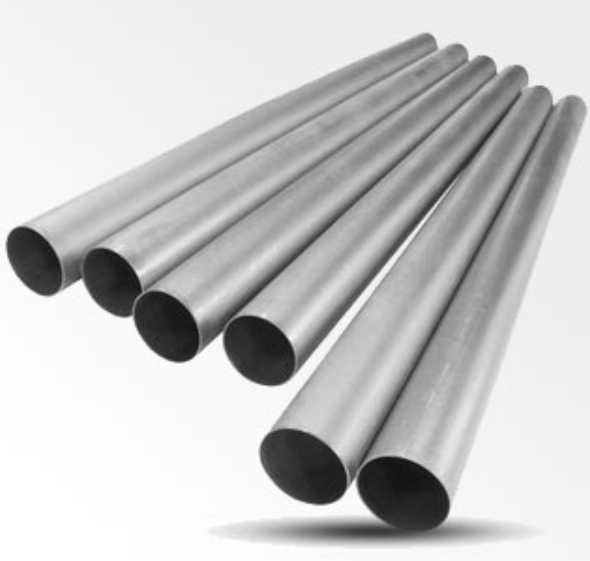
As a core lightweight material for modern automobiles, Titanium Grade 2 tube can effectively reduce vehicle weight, improve fuel efficiency and enhance vehicle performance, while maintaining excellent durability and corrosion resistance in harsh automotive operating environments.
| Item | Details |
|---|---|
| Executive Standards | 1. International Material Standards: ASTM B338, ASTM B861, AMS 4942, DIN 17861, ISO 5832-2
2. Automotive Industry Standards: IATF 16949, ISO 9001, ISO 14001 3. Testing Standards: ASTM E8 (Tensile), ASTM E23 (Impact), ASTM G48 (Corrosion), ASTM A450 (Hydrostatic) |
| Material Grade | 1. Main Grade: Titanium Grade 2 (Commercially Pure Titanium, Automotive Grade)
2. International Designations: UNS R50400, W.Nr. 3.7035, Ti Grade 2 3. Equivalent Grades: GB TA2, JIS TP340, fully compatible with all global automotive manufacturing standards |
| Chemical Composition (Weight %) | 1. Titanium (Ti): 99.2% minimum
2. Oxygen (O): ≤0.25 3. Iron (Fe): ≤0.30 4. Carbon (C): ≤0.08 5. Nitrogen (N): ≤0.03 6. Hydrogen (H): ≤0.015 7. Other Elements (each): ≤0.10 8. Other Elements (total): ≤0.40 |
| Mechanical Properties (Annealed State) | 1. Tensile Strength: 345 – 515 MPa
2. 0.2% Yield Strength: ≥275 MPa 3. Elongation (δ5): ≥20% 4. Reduction of Area (ψ): ≥40% 5. Hardness (HB): 110 – 170 6. Density: 4.51 g/cm³ (about 60% of steel) 7. Melting Point: 1668℃ 8. Thermal Conductivity: 16.4 W/(m·K) |
| Dimensional Tolerance (Automotive Grade Precision) | 1. Outer Diameter Tolerance: Precision Grade (≤50mm): ±0.05mm; Standard Grade (50-100mm): ±0.10mm
2. Wall Thickness Tolerance: ±0.05mm (≤3mm); ±0.10mm (3-6mm) 3. Length Tolerance: Fixed Length (1m-6m): ±0.5mm/m; Maximum Full-Length Tolerance: ≤2.0mm 4. Straightness: ≤0.3mm/m, Full-Length Straightness Error: ≤1.0mm/6m 5. Surface Finish: Ra ≤1.6μm standard, optional polished finish Ra ≤0.8μm |
| Why the Automobile Manufacturing Industry Uses This Material (Detailed) | 1. Unmatched Lightweight Advantage: Titanium Grade 2 is 45% lighter than steel and 60% lighter than stainless steel, while providing comparable strength. This significant weight reduction directly translates to improved fuel efficiency (up to 10% improvement for every 10% weight reduction), reduced emissions and enhanced vehicle performance. For electric vehicles, lightweighting extends battery range by up to 15%, making titanium an essential material for EV development.
2. Superior Corrosion Resistance: Unlike steel, which rusts quickly when exposed to road salt, moisture and environmental contaminants, Titanium Grade 2 forms a self-healing titanium oxide film that provides exceptional corrosion resistance. It is immune to road salt corrosion, exhaust gas corrosion and atmospheric corrosion, ensuring components last the entire lifetime of the vehicle without rusting or deteriorating. 3. Excellent High-Temperature Performance: Titanium Grade 2 maintains its mechanical properties up to 400℃, making it ideal for exhaust system components that operate at high temperatures. It does not warp, deform or lose strength under repeated thermal cycling, unlike steel which can suffer from thermal fatigue and creep. 4. Outstanding Fatigue Resistance: Automotive components are subjected to millions of cycles of vibration and stress during their lifetime. Titanium Grade 2 has excellent fatigue resistance, significantly reducing the risk of component failure due to fatigue. This is particularly important for suspension components, exhaust systems and engine parts. 5. Good Formability and Weldability: Titanium Grade 2 can be easily formed, bent, expanded and welded using standard automotive manufacturing techniques. It does not require special processing equipment, making it suitable for mass production. Welded joints retain 90%+ of the base metal strength and corrosion resistance. 6. Low Maintenance Requirements: Titanium components require no painting, coating or corrosion protection, reducing manufacturing costs and maintenance requirements over the vehicle’s lifetime. They also maintain their appearance indefinitely, without rusting or discoloring. 7. Environmental Benefits: Titanium is 100% recyclable, making it an environmentally friendly material choice. It also helps reduce vehicle emissions through lightweighting, supporting the automotive industry’s transition to sustainable manufacturing. |
| Application Scenarios & Corresponding Customers (Detailed) | Application Scenarios:
1. Exhaust Systems: Exhaust pipes, mufflers, catalytic converter shells, headers and tailpipes. Titanium exhaust systems are up to 50% lighter than steel systems, improving performance and fuel efficiency while providing a distinctive sound. 2. Suspension Systems: Shock absorber tubes, coil springs, control arms and stabilizer bars. Titanium suspension components reduce unsprung weight, improving ride quality, handling and responsiveness. 3. Engine Components: Valve springs, retainers, connecting rods, intake and exhaust valves, and turbocharger components. Titanium engine components reduce reciprocating mass, allowing higher engine speeds and improved performance. 4. Chassis Components: Frame tubes, roll cages, subframes and structural reinforcements. Titanium chassis components provide high strength and stiffness while reducing overall vehicle weight. 5. Fuel Systems: Fuel lines, fuel rails and fuel tank components. Titanium is compatible with all types of fuels and provides excellent corrosion resistance. 6. Cooling Systems: Radiator tubes, coolant lines and heat exchanger components. Titanium’s excellent thermal conductivity and corrosion resistance make it ideal for cooling system applications. 7. Electric Vehicle Components: Battery pack structural components, motor housings, cooling system tubes and suspension parts. Titanium’s lightweight properties are particularly valuable for electric vehicles, where weight reduction directly translates to increased range. 8. High-Performance and Luxury Vehicles: Used extensively in sports cars, supercars and luxury vehicles to improve performance, reduce weight and enhance exclusivity. Corresponding Customers: 1. Global automotive manufacturers (passenger cars, SUVs, trucks and commercial vehicles) 2. High-performance and luxury vehicle manufacturers (Ferrari, Lamborghini, Porsche, BMW, Mercedes-Benz) 3. Electric vehicle manufacturers (Tesla, BYD, NIO, Xpeng, Rivian) 4. Automotive component suppliers (exhaust system manufacturers, suspension system manufacturers, engine component suppliers) 5. Automotive aftermarket companies (performance parts manufacturers, tuning companies) 6. Motorsport teams and racing organizations (Formula 1, NASCAR, rally racing) 7. Commercial vehicle manufacturers (trucks, buses, delivery vehicles) |
| Corresponding User Needs in Automobile Manufacturing Industry (Detailed) | 1. Lightweighting Demand: The automotive industry is under increasing pressure to reduce vehicle weight to meet stricter fuel efficiency and emissions standards. Titanium Grade 2 tube provides an effective lightweight solution without compromising strength or durability.
2. Performance Improvement Demand: High-performance and luxury vehicle manufacturers demand materials that can improve vehicle performance, handling and acceleration. Titanium’s high strength-to-weight ratio and low density make it ideal for these applications. 3. Durability and Reliability Demand: Automotive components must be reliable and durable, with a service life of at least 10 years or 150,000 miles. Titanium Grade 2’s excellent corrosion resistance and fatigue resistance ensure components last the entire lifetime of the vehicle. 4. Cost-Effectiveness Demand: While titanium has a higher initial cost than steel, its longer service life, lower maintenance requirements and performance benefits provide a better total lifecycle cost. Manufacturers are increasingly recognizing the value proposition of titanium in automotive applications. 5. Mass Production Capability Demand: Automotive manufacturers require materials that can be processed using existing manufacturing techniques and are suitable for high-volume production. Titanium Grade 2’s good formability and weldability make it compatible with standard automotive manufacturing processes. 6. Environmental Compliance Demand: The automotive industry is facing increasingly strict environmental regulations. Titanium’s recyclability and ability to reduce vehicle emissions make it an environmentally friendly material choice that helps manufacturers meet regulatory requirements. 7. Customization Demand: Different vehicle models and applications have different requirements for tube dimensions, wall thickness and surface finish. Manufacturers need suppliers who can provide custom solutions to meet their specific needs. 8. Quality and Consistency Demand: Automotive manufacturing requires consistent material quality to ensure component reliability and performance. Manufacturers need suppliers with strict quality control systems and complete material traceability. |
| Common Related Products in Automobile Manufacturing Industry | 1. Titanium Grade 2 Bar: Used for manufacturing solid components such as bolts, nuts, fasteners, valve stems and connecting rods
2. Titanium Grade 2 Sheet/Plate: Used for body panels, floor pans, heat shields and structural components 3. Titanium Grade 5 (Ti-6Al-4V) Tube: Used for high-strength applications such as roll cages, chassis components and suspension parts 4. Titanium Welding Wire: ERTi-2 welding wire for welding Titanium Grade 2 components, ensuring weld strength and corrosion resistance 5. Titanium Fasteners: High-strength titanium bolts, nuts, screws and studs for automotive assembly 6. Titanium Springs: Titanium coil springs for suspension systems, providing significant weight reduction and improved performance 7. Titanium Exhaust Systems: Complete titanium exhaust systems, including headers, mufflers and tailpipes 8. Titanium Heat Exchangers: Used for engine cooling systems, intercoolers and oil coolers |
| Why Choose Us (Emily PIPE) | 1. 20+ Years of Titanium Industry Experience: We have been manufacturing and exporting titanium products for over 20 years, with extensive experience in supplying materials to the global automotive industry.
2. Automotive-Grade Quality Control: We implement a strict quality control system specifically for automotive applications, ensuring consistent material quality and performance. 3. Complete International Certifications: Our products hold IATF 16949, ISO 9001, ASTM and AMS certifications, meeting the strictest automotive industry requirements. 4. Full Material Traceability: Every tube comes with a unique heat number and complete traceability documentation from raw material to finished product, meeting automotive industry quality management requirements. 5. Advanced Customization Capability: We can produce custom sizes, lengths, wall thicknesses and surface finishes according to your drawings and technical specifications. 6. Professional Technical Support: Our team of metallurgical engineers provides expert material selection guidance, welding parameters and processing recommendations for automotive applications. 7. Global One-Stop Service: We handle everything from material selection and production to international shipping and customs clearance, with reliable logistics partners ensuring on-time delivery to any location worldwide. |
| Inquiry Guidance Words | 1. If you need Titanium Grade 2 tube for your automotive manufacturing project, please send us your specific requirements including dimensions, quantity, required certifications and delivery date, and we will provide a detailed quotation within 12 hours.
2. For any questions about material properties, processing technology, welding guidelines or automotive applications, our industry specialists are available to assist you promptly. 3. Emily PIPE is your trusted partner for high-quality titanium automotive materials. Contact us today to discuss how we can support your lightweighting and performance improvement goals with reliable, cost-effective titanium solutions. |
| Supplementary Information | 1. Comprehensive Test Reports: Each batch comes with a full Material Test Report (MTR), including chemical composition, mechanical properties, non-destructive testing results and corrosion resistance data.
2. Professional Packaging: We use anti-corrosion wrapping, wooden crates and steel strapping to protect products during transportation, with clear identification and traceability labels. 3. Urgent Order Support: We maintain a large inventory of standard Titanium Grade 2 tube sizes, enabling us to fulfill urgent orders within 5-7 days. 4. Small Batch Production: We support small batch orders for prototype development, testing and low-volume production, with no minimum order quantity for standard sizes. 5. After-Sales Service: We provide lifetime technical support for all our products, including on-site assistance for material-related issues and replacement parts for warranty claims. 6. Sustainability: All our titanium products are 100% recyclable, and we are committed to sustainable manufacturing practices that minimize environmental impact. |