
| Item | Details |
|---|---|
| Executive Standards |
1. Primary Product Standard: ASTM B348/B348M-25 — Standard Specification for Titanium and Titanium Alloy Bars and Billets. 2. Material Designation: Titanium Grade 23, Ti-6Al-4V ELI, UNS R56407. 3. Standard Requirements: Chemical composition, tensile properties, dimensions, tolerances, workmanship, marking, sampling, testing, and certification shall follow the applicable edition of ASTM B348/B348M and the purchase order. 4. Additional Specifications: AMS or project-specific requirements can be reviewed only when they are explicitly stated in the RFQ and contractually confirmed. 5. Specification Boundary: ASTM F136 is a separate surgical-implant material specification and is not claimed as the default standard for this ASTM B348 Grade 23 bar page. |
| Material Grade and Product Scope |
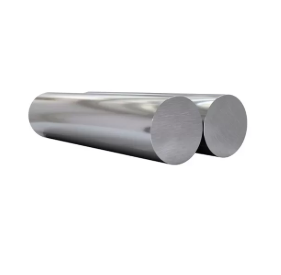
1. Grade: Titanium Grade 23. 2. UNS Designation: UNS R56407. 3. Nominal Alloy Description: Ti-6Al-4V ELI, an extra-low-interstitial alpha-beta titanium alloy. 4. Product Forms: Round bar, rod, billet, cut-to-length pieces, and machining stock within the confirmed production or sourcing range. 5. Supply Condition: Annealed unless another condition is specifically agreed and permitted by the applicable specification. 6. Grade Selection: Grade 23 should not be substituted with Grade 5 or another Ti-6Al-4V specification without technical and purchaser approval. |
| Chemical Composition (Weight %) |
Reference limits for Ti-6Al-4V ELI Grade 23; the current standard and Material Test Certificate control final acceptance: 1. Aluminum (Al): 5.5–6.5 2. Vanadium (V): 3.5–4.5 3. Iron (Fe): ≤0.25 4. Oxygen (O): ≤0.13 5. Carbon (C): ≤0.08 6. Nitrogen (N): ≤0.05 7. Hydrogen (H): ≤0.0125 8. Residual Elements (each): ≤0.10 9. Residual Elements (total): ≤0.30 10. Titanium (Ti): Balance The lower interstitial-element limits are an important distinction between Grade 23 ELI and conventional Grade 5 Ti-6Al-4V. |
| Mechanical Properties (Annealed Bar) |
1. Minimum Tensile Strength: 828 MPa (120 ksi). 2. Minimum 0.2% Offset Yield Strength: 759 MPa (110 ksi). 3. Minimum Elongation: 10%, subject to the applicable product size, specimen orientation, and test requirements. 4. Property Verification: Tensile results shall be linked to the supplied heat or lot and reported on the Material Test Certificate. 5. Engineering Boundary: Raw-bar tensile values do not independently establish fatigue life, fracture-critical performance, allowable design stress, or final-component approval. |
| Physical and Thermal Properties |
The following values are typical reference data, not ASTM B348 acceptance limits: 1. Density: approximately 4.43–4.47 g/cm³ (0.160 lb/in³). 2. Melting Range: approximately 1538–1649°C (2800–3000°F). 3. Beta Transus Temperature: approximately 977°C, depending on chemistry and processing history. 4. Thermal Expansion Coefficient: approximately 8.6 µm/m·°C over 20–100°C. 5. Thermal Conductivity: approximately 6.7 W/m·K at room temperature. 6. Elastic Modulus: approximately 110–114 GPa at room temperature. Physical properties may vary with direction, temperature, chemistry, heat treatment, microstructure, and manufacturing history. |
| Grade 23 Compared with Grade 5 |
1. Grade 23 and Grade 5 are both Ti-6Al-4V alpha-beta titanium alloys. 2. Grade 23 uses lower specified limits for oxygen, iron, and other interstitial elements. 3. The ELI chemistry can support improved ductility, fracture toughness, damage tolerance, and low-temperature performance. 4. Grade 23 may provide slightly lower strength than some Grade 5 conditions; the actual trade-off depends on chemistry, product form, size, processing, and heat treatment. 5. Grade 23 should be selected from the actual component requirements rather than treated as an automatic upgrade for every Grade 5 application. |
| Size, Length, and Tolerances |
1. Diameter: Project-specific diameters are available subject to manufacturing route, material availability, quantity, surface finish, and required tolerance. 2. Length: Standard mill lengths and custom cut lengths can be reviewed according to the purchase order. 3. Dimensional Basis: Diameter, length, straightness, out-of-roundness, and cut-end requirements shall follow ASTM B348/B348M unless tighter requirements are agreed in writing. 4. Custom Tolerances: Tighter tolerances require a feasibility review covering bar size, length, finish, machining allowance, inspection method, and measurement uncertainty. 5. Drawing Review: Buyers should provide the final component drawing or required machining allowance when dimensional control is critical. |
| Surface Finish and Machining |
1. Possible Surface Conditions: As-rolled, forged, peeled, rough turned, centerless ground, or polished, depending on size and production route. 2. Cutting Services: Saw cutting and cut-to-length supply can be arranged according to agreed length tolerances. 3. Machining Guidance: Ti-6Al-4V ELI generally requires rigid tooling, controlled cutting speed, suitable feed, sharp tools, and adequate non-chlorinated coolant. 4. Machining Services: Facing, chamfering, turning, drilling, and CNC machining can be reviewed against customer drawings. 5. Surface Acceptance: Bars shall be free from injurious defects that violate the applicable standard or make the material unsuitable for the intended fabrication. |
| Heat Treatment and Fabrication Guidance |
1. Grade 23 bar is commonly supplied and used in the annealed condition. 2. Producer reference data indicate annealing and stress-relieving ranges, but these should not be applied as universal processing instructions for every bar size or finished component. 3. Heat treatment affects strength, ductility, fatigue behaviour, fracture toughness, residual stress, and microstructure. 4. Forging, forming, solution treatment, ageing, or stress relieving should follow a qualified procedure matched to the product size and required final properties. 5. Unapproved reheating or processing may prevent the finished component from retaining the properties reported for the original bar. |
| Forming, Forging, and Cold Work |
1. Grade 23 generally offers better formability and damage tolerance than conventional Grade 5, but room-temperature forming can still be difficult. 2. Hot forming or forging temperatures, reductions, strain rates, and finishing temperatures must be controlled to avoid undesirable microstructure or surface contamination. 3. Cold working increases strength and residual stress while reducing remaining ductility. 4. Post-forming heat treatment should be selected from the required final properties and qualified manufacturing route. 5. Raw-bar suppliers should not approve final forging or forming procedures without reviewing the component design and process specification. |
| Welding and Contamination Control |
1. Grade 23 can be welded in the annealed condition using qualified titanium welding procedures. 2. The molten weld pool and adjacent heated surfaces require effective shielding from oxygen, nitrogen, and hydrogen. 3. Joint surfaces, tools, filler material, and shielding gas must be clean and suitable for titanium fabrication. 4. Improper pickling, heat treatment, forging, brazing, or welding can introduce hydrogen, oxygen, nitrogen, or carbon contamination and reduce ductility. 5. The final welded component should be evaluated against its applicable fabrication code, inspection requirements, and service conditions. |
| Inspection and Quality Control |
1. Standard Verification: Chemical composition, tensile properties, dimensions, surface condition, workmanship, marking, and documentation. 2. Optional PMI: Positive Material Identification can be arranged when required to verify material identity. 3. Optional Ultrasonic Testing: UT can be arranged when a suitable method, reference standard, coverage, and acceptance criteria are specified. 4. Optional Hardness Testing: Hardness testing can be added when technically relevant and contractually required. 5. Dimensional Report: Diameter, length, straightness, surface condition, and other agreed characteristics can be documented. 6. Third-Party Inspection: Independent inspection can be coordinated at agreed hold or witness points. |
| Documentation and Traceability |
1. Material Test Certificate with heat-specific chemical composition and mechanical properties. 2. Heat number and lot identification linked to labels, packing lists, and inspection records. 3. EN 10204 3.1 documentation when specified in the contract. 4. Dimensional, PMI, UT, hardness, or third-party inspection reports when ordered. 5. Product form, grade, UNS designation, applicable standard, supply condition, and size identified on the certification package. 6. ASTM B348 compliance does not automatically prove compliance with ASTM F136, AMS specifications, or the requirements of a finished aerospace or medical component. |
| Aviation Application Guidance |
Grade 23 bar may be considered for fracture-sensitive, weight-sensitive, and low-temperature aerospace components where the approved design specification permits Ti-6Al-4V ELI. Possible component categories include machined fittings, pins, shafts, fasteners, structural hardware, brackets, and other drawing-controlled parts. Aviation use requires review of the exact material specification, melting route, product condition, inspection plan, traceability, special-process approvals, and customer qualification requirements. ASTM B348 alone does not constitute aerospace component approval. |
| Marine and Offshore Application Guidance |
Grade 23 can be considered for selected marine and offshore components requiring a combination of low density, strength, general seawater corrosion resistance, toughness, and fatigue performance. Possible uses include shafts, pins, fasteners, connectors, instrument components, and custom-machined hardware. Material selection must still consider galvanic coupling, crevice geometry, cathodic protection, hydrogen exposure, mechanical loading, fatigue, temperature, and the complete service environment. |
| Typical Components |
1. Aerospace fittings, pins, shafts, brackets, and fasteners. 2. Marine and offshore connectors, shafts, pins, and corrosion-resistant hardware. 3. Cryogenic or low-temperature machining stock where project specifications permit Grade 23. 4. Fracture-sensitive and fatigue-sensitive precision components. 5. Custom-machined parts manufactured according to approved drawings. Application examples are preliminary screening references and do not replace customer or engineering approval. |
| Packaging and Marking |
1. Bars can be bundled, wrapped, or packed in export wooden cases according to diameter, length, quantity, finish, and transport method. 2. Protective separators, moisture-resistant wrapping, and end protection can be added when required. 3. Ground or polished bars can receive additional protection against rubbing and scratching. 4. Different heats or lots can be separated and clearly identified. 5. Product labels can include grade, UNS number, standard, size, heat number, lot number, quantity, and purchase-order reference. |
| Why Choose Emily PIPE |
1. More than 20 years of alloy-material production and export experience. 2. Supply support for standard and project-specific titanium bar requirements. 3. Review of grade, standard, size, tolerance, finish, inspection, documentation, and packing before quotation. 4. Material traceability and inspection documentation according to agreed purchase requirements. 5. PMI, ultrasonic, dimensional, surface, mechanical, and third-party inspection support when specified. 6. Cut-to-length, finishing, machining coordination, and export packaging services subject to technical review. 7. Direct communication for drawings, specifications, delivery requirements, and quotation clarification. |
| RFQ Information Required |
For an accurate quotation, please provide: 1. Titanium Grade 23, Ti-6Al-4V ELI, and UNS R56407 confirmation. 2. ASTM B348/B348M edition and any additional project specification. 3. Bar diameter, length, quantity, and unit of measurement. 4. Annealed condition or other required delivery condition. 5. Diameter, length, straightness, and surface-finish requirements. 6. Required machining allowance or finished-component drawing. 7. Inspection, melting-route, and documentation requirements. 8. Marking, packaging, destination, Incoterms, and required delivery date. 9. Application and loading conditions when material-selection support is requested. |
| Buyer Questions |
What is Titanium Grade 23? How does Grade 23 differ from Grade 5? Does ASTM B348 Grade 23 automatically comply with ASTM F136? Can Grade 23 bar be supplied to custom sizes? Which documents are available? |
Packaging
Export packaging is selected according to bar diameter, length, quantity, surface finish, and transport method. Available controls can include bundling, waterproof wrapping, protective separators, wooden cases, end protection, heat separation, and clear product identification.
Get Consultation & Quote
Send the required grade, ASTM B348/B348M edition, diameter, length, quantity, tolerance, surface finish, inspection documents, destination, and delivery date to emilymetalsh@163.com. Drawings and application requirements can also be reviewed when custom machining or material-selection support is needed.