
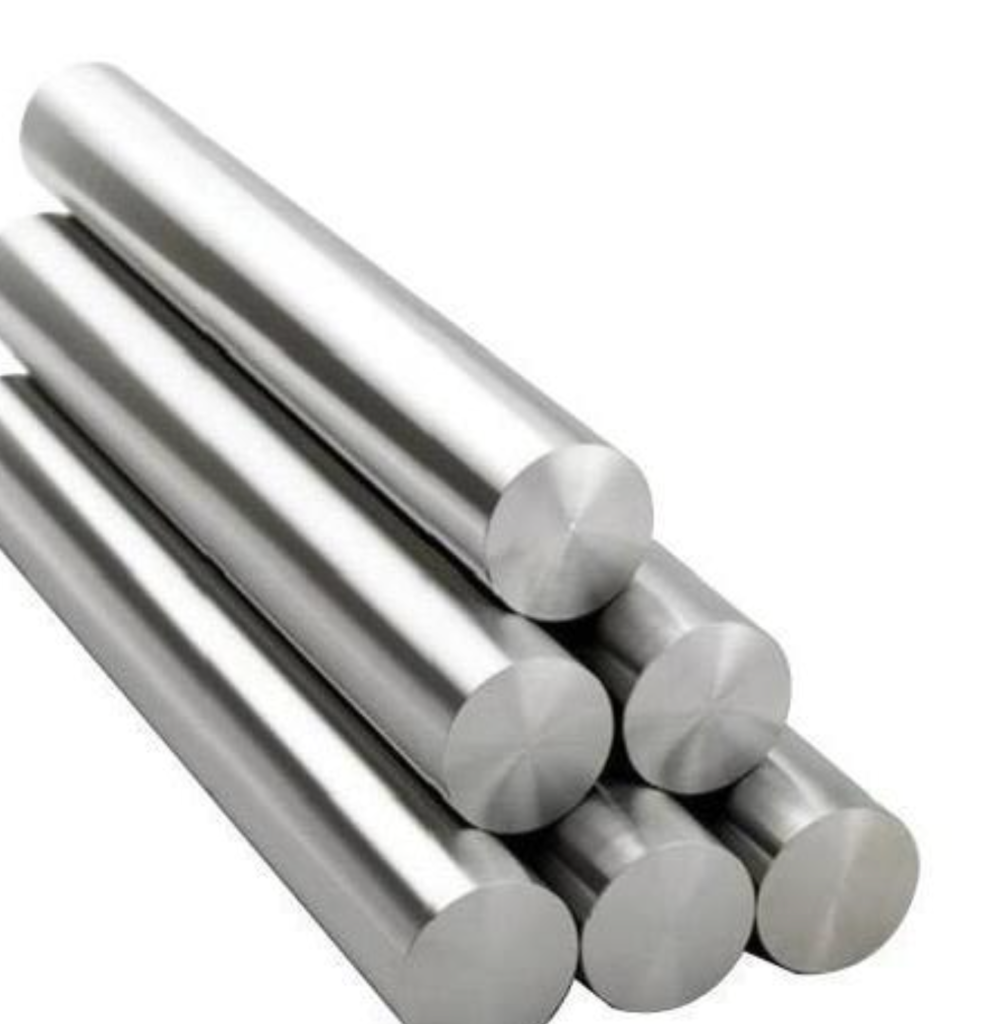
As the most widely used superalloy bar in modern aviation, Inconel 625 maintains full mechanical properties up to 980℃ while offering superior resistance to jet fuel, hydraulic fluids, salt spray and high-temperature oxidation. With over 20 years of aerospace alloy production experience, Emily PIPE supplies precision-manufactured Inconel 625 bars in all standard and custom sizes that meet the strictest AMS aerospace material standards and AS9100 quality management requirements.
| Item | Details |
|---|---|
| Executive Standards | 1. Aerospace Material Standards: AMS 5666 (Annealed Bar), AMS 5667 (Solution Treated and Aged Bar), AMS 5668 (Forgings), AMS 5669 (Wire)
2. International Material Standards: ASTM B446 (Bar and Rod), ASTM B564 (Forgings), ASME SB446, ASME SB564, DIN 17752, EN 2.4856 3. Pressure Vessel Standards: ASME Section VIII Div. 1, PED 2014/68/EU 4. Testing Standards: ASTM E8, ASTM E23, ASTM E10, ASTM G48, ASTM E243, ASTM E1444 (Magnetic Particle), ASTM A388 (Ultrasonic) 5. Quality Management Standards: AS9100D, ISO 9001, ISO 14001, NADCAP (Non-Destructive Testing) |
| Material Grade | 1. Main Grade: Inconel 625 (Aerospace Grade, Niobium-Molybdenum Stabilized Nickel-Chromium Superalloy Bar)
2. International Designations: UNS N06625, W.Nr. 2.4856, Alloy 625, NiCr22Mo9Nb 3. Equivalent Grades: NS3306 (China), Inconel 625 (USA), Nicrofer 6020 (Germany), fully compatible with all global aerospace manufacturing standards 4. Special Grades: Inconel 625LCF (Low Carbon Fatigue) for high-cycle fatigue applications; Inconel 625 Plus for enhanced high-temperature strength; ultra-low sulfur version for maximum weldability; precision forged grade for heavy-duty components |
| Chemical Composition (Weight %) – Aerospace Grade | 1. Nickel (Ni): 58.0% minimum (base element for overall corrosion resistance and thermal stability)
2. Chromium (Cr): 20.0 – 23.0 (for oxidation resistance and high-temperature strength) 3. Molybdenum (Mo): 8.0 – 10.0 (for reducing acid resistance and crevice corrosion resistance) 4. Niobium + Tantalum (Nb+Ta): 3.15 – 4.15 (stabilizes against intergranular corrosion and enhances strength) 5. Iron (Fe): ≤5.0 (for improved formability and cost-effectiveness) 6. Cobalt (Co): ≤1.0 7. Carbon (C): ≤0.010 (ultra-low content to prevent intergranular corrosion and improve toughness) 8. Silicon (Si): ≤0.50 9. Manganese (Mn): ≤0.50 10. Phosphorus (P): ≤0.015 11. Sulfur (S): ≤0.005 (ultra-low content for enhanced weldability and fatigue resistance) 12. Aluminum (Al): ≤0.40 13. Titanium (Ti): ≤0.40 |
| Mechanical Properties (Aerospace Grade) | Annealed State (AMS 5666):
1. Tensile Strength (Room Temperature): 760 – 930 MPa 2. 0.2% Yield Strength (Room Temperature): ≥415 MPa 3. Elongation (δ5): ≥45% 4. Reduction of Area: ≥55% 5. Hardness (HB): 180 – 230 Solution Treated and Aged State (AMS 5667): 1. Tensile Strength (Room Temperature): 930 – 1100 MPa 2. 0.2% Yield Strength (Room Temperature): ≥760 MPa 3. Elongation (δ5): ≥30% 4. Reduction of Area: ≥40% 5. Hardness (HRC): 28 – 36 High-Temperature Properties: 1. Tensile Strength (600℃): ≥520 MPa 2. Tensile Strength (800℃): ≥320 MPa 3. Creep Rupture Strength (650℃, 1000h): ≥170 MPa 4. Modulus of Elasticity: 208 GPa 5. Thermal Expansion Coefficient: 12.8 × 10⁻⁶ /℃ (20-100℃) 6. Maximum Continuous Service Temperature: 980℃ |
| Dimensional Tolerance (Aerospace Precision Grade) | 1. Hot Rolled Bars:
– Diameter 6mm – 50mm: ±0.3mm – Diameter 50mm – 150mm: ±0.5mm – Diameter 150mm – 300mm: ±0.8mm 2. Cold Drawn Bars: – Diameter 6mm – 30mm: ±0.03mm – Diameter 30mm – 80mm: ±0.05mm – Diameter 80mm – 150mm: ±0.10mm 3. Precision Ground Bars: – Diameter 6mm – 100mm: ±0.01mm 4. Rectangular/Square Bars: – Width/Thickness: ±0.05mm for dimensions ≤50mm; ±0.10mm for dimensions >50mm 5. Length Tolerance: – Fixed Length (1m – 6m): ±2mm – Custom Length up to 12m available 6. Straightness Tolerance: ≤0.5mm/m for precision grade; ≤0.3mm/m for ultra-precision grade |
| Why This Material Is Used in Aviation (Detailed) | 1. Unmatched Extreme High-Temperature Performance:
– Inconel 625 maintains full mechanical strength and oxidation resistance up to 980℃, making it the only viable material for components operating in the hot sections of modern jet engines. – Forms a dense, adherent chromium oxide scale that resists spalling during extreme thermal cycling, preventing material degradation in combustion chambers and turbine sections. – Superior creep resistance allows for long-term operation at high temperatures and stresses without deformation or failure, critical for aircraft engine components that must operate reliably for thousands of hours. 2. Exceptional Creep and Fatigue Resistance: – Outstanding high-cycle fatigue resistance allows it to withstand millions of thermal and mechanical cycles encountered in aircraft engine operation, including takeoff, cruise and landing cycles. – Excellent low-cycle fatigue resistance ensures reliability during rapid temperature changes and load variations. – Superior creep-fatigue interaction resistance prevents premature failure in components subjected to combined high temperatures and cyclic loading. 3. Universal Corrosion Resistance for Aerospace Environments: – Completely resistant to corrosion from all aviation fluids including jet fuels (Jet A, Jet A-1, JP-8), hydraulic fluids (Skydrol), lubricants and de-icing solutions. – Excellent resistance to salt spray and marine atmospheres, critical for aircraft operating in coastal regions and naval aviation applications. – Immune to pitting, crevice corrosion and stress corrosion cracking in chloride-containing environments. – Resists high-temperature oxidation and sulfidation from engine exhaust gases. 4. Superior Weldability and Fabricability: – The niobium addition stabilizes the alloy against intergranular corrosion in weld heat-affected zones, eliminating the need for post-weld heat treatment—a critical advantage in aerospace manufacturing. – Excellent weldability with all conventional welding processes used in aerospace, including TIG, MIG, laser and electron beam welding. – Retains 100% of its corrosion resistance and mechanical properties after welding, ensuring long-term reliability of welded joints. – Excellent forgeability allows for the production of complex shapes such as turbine blades, engine mounts and structural components without cracking or defects. 5. Outstanding Strength-to-Weight Ratio: – Offers significantly higher strength than stainless steel at elevated temperatures while being only slightly heavier, resulting in substantial weight savings for aircraft structures. – Higher strength allows for smaller cross-sections and lighter components, improving fuel efficiency and payload capacity. – Excellent structural efficiency makes it ideal for both engine and airframe applications where weight reduction is critical. 6. Proven Long-Term Reliability and Safety: – Over 50 years of proven performance in commercial and military aviation applications, with an impeccable safety record. – Extensively tested and qualified by all major aircraft and engine manufacturers. – Excellent fracture toughness ensures that any potential defects will not propagate catastrophically, enhancing aircraft safety. |
| Application Scenarios and Corresponding Customers (Detailed) | 1. Commercial and Military Jet Engines:
– Applications: Turbine blades, turbine discs, combustion chamber components, fuel nozzles, afterburner parts, engine mounts, thrust reverser components, bleed air system valves and fasteners – Customers: General Electric Aviation, Pratt & Whitney, Rolls-Royce, Safran Aircraft Engines, CFM International, IAE, Honeywell Aerospace 2. Airframe Structures: – Applications: Wing leading edge components, tail section structures, landing gear components, structural brackets, actuator rods, hinge pins and high-strength fasteners – Customers: Boeing, Airbus, Embraer, Bombardier, Gulfstream, Dassault Aviation, Lockheed Martin, Boeing Defense 3. Aerospace Hydraulic and Pneumatic Systems: – Applications: Valve bodies, actuator components, manifold blocks, piston rods, cylinder liners, pressure vessels and high-strength fittings – Customers: Parker Hannifin, Eaton Aerospace, Moog Inc., Safran Landing Systems, UTC Aerospace Systems 4. Aerospace Fuel Systems: – Applications: Fuel pump shafts, fuel injector components, fuel manifold blocks, valve stems and fuel system fasteners – Customers: Parker Hannifin, Eaton Aerospace, Woodward, Safran Electrical & Power 5. Landing Gear Systems: – Applications: Landing gear axles, strut components, torque links, brake system parts and high-strength fasteners – Customers: Safran Landing Systems, Collins Aerospace, Liebherr Aerospace, UTC Aerospace Systems 6. Space and Missile Systems: – Applications: Rocket engine components, thrust chamber structures, nozzle extensions, fuel system parts, structural components and fasteners for launch vehicles and satellites – Customers: SpaceX, NASA, Blue Origin, United Launch Alliance, Northrop Grumman, Raytheon |
| Customer Requirements in This Industry (Detailed) | 1. Performance Requirements:
– High-Temperature Strength: Must maintain sufficient strength and ductility across the entire operating temperature range (-253℃ to 980℃). – Creep and Fatigue Resistance: Must withstand thousands of hours of high-temperature operation and millions of thermal and mechanical cycles without failure. – Corrosion Resistance: Must resist corrosion from all aviation fluids, salt spray and high-temperature exhaust gases for the entire service life of the aircraft (up to 30 years). – Fracture Toughness: Must have excellent fracture toughness to prevent catastrophic failure in critical components. – Weldability: Must be easily weldable without post-weld heat treatment while retaining full mechanical properties. – Forgeability: Must be forgeable into complex shapes without cracking or defects. 2. Quality and Compliance Requirements: – AS9100 Certification: Must comply with the AS9100 aerospace quality management system standard. – AMS Standard Compliance: Must meet all requirements of the applicable AMS aerospace material specifications. – Full Material Traceability: Must provide 100% traceability from raw material ore to finished product, including all processing steps and test results. – NADCAP Certification: Non-destructive testing must be performed by NADCAP-accredited facilities. – First Article Inspection (FAI): Must provide complete first article inspection reports for all new parts. – Material Certification: Must provide comprehensive material test reports (MTR) with each shipment, including chemical analysis, mechanical properties and non-destructive test results. 3. Manufacturing Requirements: – Precision Dimensional Tolerances: Must meet extremely tight dimensional tolerances to ensure proper fit and assembly in aircraft systems. – Surface Quality: Must have a smooth, defect-free surface to prevent fatigue crack initiation. – Internal Quality: Must be free from internal defects such as inclusions, porosity and segregation, verified by 100% ultrasonic testing. – Consistent Quality: Must have uniform chemical composition and mechanical properties across all batches and throughout the entire cross-section of the bar. – Cleanliness Requirements: Must meet strict cleanliness standards to prevent contamination of aircraft systems. – Custom Fabrication Capability: Must be able to produce custom sizes, shapes and configurations according to customer drawings. 4. Supply Chain Requirements: – Reliable Delivery: Must provide on-time delivery to support aircraft production schedules. – Long-Term Supply Assurance: Must be able to provide a stable supply of material for the entire lifecycle of aircraft programs (up to 50 years). – Small Batch Capability: Must be able to produce small batch quantities for prototype development and spare parts. – Global Supply Capability: Must be able to supply to manufacturing facilities worldwide with consistent quality and lead times. – Emergency Response: Must be able to respond quickly to unexpected demand spikes and AOG (Aircraft On Ground) situations. 5. Cost Requirements: – Competitive Pricing: Must offer competitive pricing while maintaining the highest quality standards. – Low Total Cost of Ownership: Must provide lower total cost of ownership through longer service life, reduced maintenance and fewer replacement costs. – Value-Added Services: Must offer value-added services such as cutting, turning, milling and heat treatment to reduce customer manufacturing costs. |
| Common Related Products in This Industry | 1. Inconel 625 Round Bars: Available in diameters from 6mm to 300mm in various lengths and tempers
2. Inconel 625 Square/Rectangular Bars: Custom sizes available for structural applications 3. Inconel 625 Hexagonal Bars: Used for manufacturing nuts, bolts and other fasteners 4. Inconel 625 Forgings: Custom forgings including turbine discs, engine mounts, valve bodies and structural components 5. Inconel 625 Fasteners: Bolts, nuts, screws, studs, washers and rivets in all standard and custom sizes 6. Inconel 625 Wire: Solid wire and welding wire for manufacturing springs, fasteners and welding applications 7. Inconel 625 Welding Materials: Electrodes, wires and filler metals specifically formulated for aerospace welding applications 8. Inconel 625 Machined Components: Precision-machined parts including shafts, pins, valves, fittings and sensor housings 9. Inconel 625 Sheets and Plates: Used for manufacturing engine nacelles, heat shields and structural components 10. Inconel 625 Pipes and Tubes: Used for aerospace hydraulic, fuel and environmental control systems |
| Why Choose Us (Emily PIPE) | 1. 20+ Years of Aerospace Alloy Expertise: We have been supplying high-performance Inconel 625 bar products to the global aerospace industry for over 20 years, with deep understanding of the unique requirements of aircraft engine and airframe applications.
2. AS9100 Certified: Our production facilities are fully certified to AS9100D, the international standard for aerospace quality management systems. 3. Dedicated Aerospace Bar Production Line: We operate a dedicated clean production line for aerospace-grade Inconel 625 bars, ensuring strict control over chemical composition, mechanical properties and internal quality. 4. Full-Process Quality Control: We implement a comprehensive quality control system from raw material inspection to finished product testing, including 100% ultrasonic testing and magnetic particle testing for all aerospace-grade bars. 5. AMS Standard Compliance: All our products are manufactured in strict accordance with AMS 5666, AMS 5667 and other applicable aerospace material standards. 6. Advanced Customization Capability: We can produce custom sizes, lengths, tempers and surface finishes according to your drawings and technical specifications, including precision-machined bars and forged blanks. 7. Global Aerospace Supply Chain Experience: We have extensive experience supplying to major aircraft and engine manufacturers worldwide, with reliable logistics partners ensuring on-time delivery to manufacturing facilities anywhere in the world. 8. Professional Aerospace Technical Support: Our team of metallurgical engineers and aerospace specialists provides expert guidance on material selection, design optimization and manufacturing techniques for aerospace applications. |
| Supplementary Industry Information | 1. Comprehensive Test Reports: Each batch comes with a full Material Test Report (MTR) including chemical composition analysis, mechanical properties testing, heat treatment records and non-destructive test results. First Article Inspection (FAI) reports are available upon request.
2. Full Material Traceability: Every bar comes with a unique heat number and complete traceability documentation from raw material ore to finished product, meeting the strictest aerospace industry requirements. 3. Value-Added Processing: We offer comprehensive value-added services including precision cutting, CNC turning, milling, grinding, heat treatment and surface finishing, providing ready-to-machine aerospace components. 4. Prototype Development Support: We support small batch prototype orders with fast turnaround times to help you accelerate product development and testing for new aerospace programs. 5. Long-Term Supply Assurance: We maintain strategic inventory levels to ensure a stable supply of material for the entire lifecycle of aircraft programs. 6. AOG Emergency Service: We provide 24/7 emergency response service for Aircraft On Ground (AOG) situations, with expedited production and shipping available. 7. Market Growth: The global aerospace Inconel 625 bar market is projected to grow at a CAGR of over 8% through 2030, driven by increasing demand for new commercial aircraft, military aircraft and space launch vehicles. 8. Sustainability Commitment: All our products are manufactured using sustainable practices and are 100% recyclable, helping you meet your environmental targets and comply with global sustainability regulations. |
| Packaging | 1. Plastic Caps: All bar ends are protected with heavy-duty polyethylene caps to prevent damage and contamination during transportation
2. Waterproof Film: Each bar is individually wrapped in waterproof and anti-corrosion film to protect against moisture and rust 3. Bundle Packing: Bars of the same size are bundled together with steel straps and wooden spacers to prevent contact and damage 4. Wooden Case: Bundles are packed in sturdy fumigated wooden cases with steel reinforcement to prevent damage during international shipping 5. Export Standard Packing: All packaging complies with international export standards and ISPM 15 regulations for wooden packaging 6. Marking: Each package is clearly marked with product specifications, heat number, quantity, gross weight, net weight and destination information |
Looking for inconel bar? Send us your size, quantity and application. We will provide a suitable solution and competitive quotation.