
How Should Buyers Select Nickel Alloys for CO2 Compressors, Valves, and Piping Components?
Selecting a nickel alloy for CO₂ equipment is not simply a matter of identifying the most corrosion-resistant grade.
A compressor casing, rotating shaft, valve body, valve stem, throttling trim, process pipe, fitting, weld overlay, and small-bore instrument tube perform different functions.
Some components are controlled mainly by corrosion resistance. Others are controlled by strength, fatigue, minimum design metal temperature, pressure rating, dimensional stability, weldability, or resistance to environment-assisted cracking.
Buyers should therefore select nickel alloys by component duty and product form. Alloy 625, Alloy 825, C-22, C-276, and Alloy 718 may all be relevant to CO₂ equipment, but they solve different problems and should not be ranked on one universal scale.
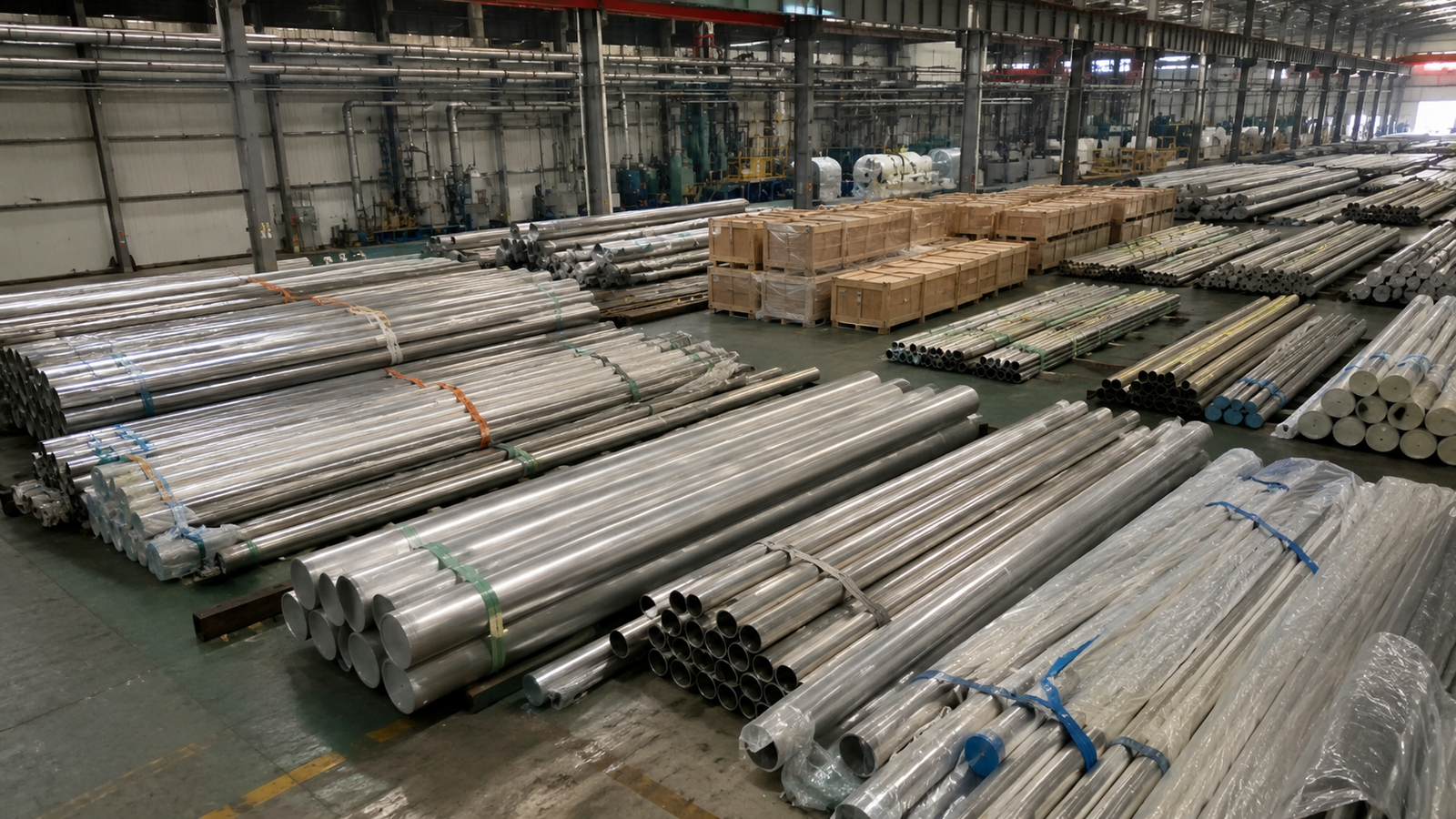
Image credit: Implicit Matrix, Wikimedia Commons, CC BY 4.0.
This article assumes that the CO₂ phase, water, H₂S, oxygen, chlorides, temperature, and credible upset conditions have already been defined.
For environmental qualification, see How Do Water and Impurities Change Alloy Selection for Wet CO2 Service?.
The question addressed here is different:
How should those environmental requirements be translated into materials for each compressor, valve, and piping component?
Start by Classifying the Component Duty
A useful first step is to classify each component into one of four functions.
| Component Function | Main Requirements | Typical Examples |
|---|---|---|
| Pressure boundary | Pressure rating, corrosion, toughness, weldability, and code compliance | Compressor casing, valve body, pipe, flange, fitting |
| High-strength moving part | Yield strength, fatigue, dimensional stability, temperature, and cracking resistance | Shaft, impeller, rotor, valve stem |
| Wetted wear or throttling part | Corrosion, galling, erosion, pressure drop, and surface integrity | Valve trim, plug, ball, seat ring, choke component |
| Corrosion barrier | Corrosion resistance, weld integrity, dilution control, and inspectability | Weld overlay, cladding, sleeve, lined bore |
One alloy may perform more than one function, but the required material condition can be different.
For example:
- Solution-annealed Alloy 625 pipe is not identical to cold-worked Alloy 625 bar.
- Alloy 718 bar is not interchangeable with Alloy 625 tube.
- A C-276 wetted trim does not automatically make a valve body suitable for the same environment.
- A nickel-alloy overlay does not give the base metal the mechanical properties of a solid nickel-alloy forging.
How Should Compressor Components Be Evaluated?
API Standard 617 provides a framework for axial and centrifugal compressors and expander-compressors, but the compressor manufacturer must still assign materials to individual parts.
Compressor Casings and Nozzles
The casing is a pressure boundary.
Its material review should include:
- Maximum operating pressure
- Design pressure
- Maximum operating temperature
- Minimum design metal temperature
- CO₂ phase
- Water or condensation
- Corrosive impurities
- Casting, forging, or fabricated construction
- Weldability
- Pressure-code listing
- NDE and pressure-test requirements
A solid nickel-alloy casing may be justified in a severely corrosive wet zone, but it should not be assumed necessary for a dehydrated and impurity-controlled CO₂ stream.
Possible alternatives may include:
- Carbon or low-alloy steel
- Stainless steel
- Solid nickel-alloy construction
- Nickel-alloy weld overlay on a qualified base material
- Replaceable corrosion-resistant internal components
The selection should be made with the compressor OEM and pressure-equipment design authority.
Impellers, Rotors, and Shafts
Rotating components are not selected only for corrosion resistance.
They may be controlled by:
- Yield and tensile strength
- High-cycle fatigue
- Low-cycle fatigue
- Fracture toughness
- Rotordynamic design
- Stress concentration
- Fretting
- Temperature
- Environment-assisted cracking
- Dimensional stability after heat treatment
Precipitation-hardened Alloy 718 may be considered where high strength is required.
However, its suitability depends on:
- Heat-treatment condition
- Hardness
- Product specification
- H₂S environment where applicable
- Residual stress
- Forging quality
- NDE
- OEM qualification
A highly corrosion-resistant solution-annealed alloy should not automatically replace a qualified high-strength rotor material.
Compressor Fasteners
Fasteners and tie bolts may experience high preload and cyclic loading.
The material review should define:
- Required strength
- Toughness
- Thread condition
- Coating or plating
- Galvanic coupling
- H₂S restrictions
- Maximum hardness
- Operating temperature
- Assembly procedure
Alloy 718 and other precipitation-hardened nickel alloys may be relevant, but the correct condition must be specified.
Interstage and Auxiliary Tubing
Interstage cooling can create a different corrosion circuit from the hot compressor discharge.
Small-bore tubing may be exposed to:
- Condensed water
- Analyzer samples
- Seal gas
- Drain liquids
- Lubrication or barrier fluids
- Intermittent wet CO₂
- Vibration
Possible nickel-alloy tubing candidates include Alloy 625, Alloy 825, C-22, or C-276, depending on the liquid chemistry and pressure.
The tubing specification should define the exact alloy, UNS number, product standard, OD, wall, length, condition, pressure test, NDT, surface, and connection system.
How Should Valve Materials Be Split?
A valve should not be assigned one material name without distinguishing its components.
| Valve Component | Primary Material Requirement |
|---|---|
| Body and bonnet | Pressure rating, toughness, corrosion, casting or forging quality |
| Stem | Strength, fatigue, galling, corrosion, and dimensional stability |
| Ball, disc, or plug | Corrosion, wear, surface integrity, and sealing geometry |
| Seat ring | Corrosion, galling, wear, and compatibility with the sealing element |
| Cage and trim | Throttling erosion, pressure drop, corrosion, and vibration |
| Bolting | Strength, temperature, cracking resistance, and preload retention |
| Overlay or cladding | Corrosion barrier, weld quality, dilution, and thickness |
| Soft seat, packing, and seal | CO₂ compatibility, temperature, decompression, and extrusion resistance |
Metal selection does not qualify elastomers or polymers. Sealing materials require a separate valve and seal-system review.
Valve Body and Bonnet
ASME B16.34-2025 covers pressure-temperature ratings, materials, NDE, testing, and marking for applicable valve construction.
For pipeline valves, API Specification 6D may also be invoked.
A body material must satisfy:
- Applicable pressure class
- Design temperature
- Minimum temperature
- Product-form requirements
- Corrosion allowance
- Weldability
- NDE
- Pressure testing
- Project material specification
A nickel-alloy valve body may be manufactured from a forging, casting, fabricated product, or another approved route. A bar specification should not be substituted automatically for a pressure-boundary forging specification.
Valve Stems
The valve stem may require more strength than the valve body.
Possible candidates include Alloy 625 or Alloy 718, but they serve different priorities.
| Selection Priority | Possible Direction |
|---|---|
| Corrosion resistance with moderate-to-high strength | Alloy 625 may be screened |
| Higher yield strength and fatigue resistance | Alloy 718 may be screened |
| Severe mixed acid or localized corrosion | C-22 or C-276 may be screened, subject to strength |
| Sour service | Exact alloy condition and ISO 15156 limits must be reviewed |
The stem should not be selected only by comparing bulk corrosion rates.
Valve Trim and Throttling Components
Control valves, chokes, and pressure-reducing valves can experience:
- High local velocity
- Temperature reduction
- Two-phase flow
- Cavitation or flashing
- Vibration
- Particle impact
- Galling
- Localized corrosion
A corrosion-resistant alloy cannot compensate for an unsuitable valve geometry or operating point.
Depending on the controlling mechanism, the trim may use:
- Solid Alloy 625
- Solid C-22 or C-276
- Alloy 718 for strength-critical components
- Nickel-alloy weld overlay
- Surface treatment or hard-facing qualified for the environment
- Replaceable trim components
The complete trim design should remain with the valve manufacturer.
Solid Alloy or Weld Overlay?
| Construction | Potential Advantage | Important Limitation |
|---|---|---|
| Solid nickel-alloy body | Uniform corrosion-resistant material | High cost, availability, casting or forging limits |
| Carbon or low-alloy body with weld overlay | Uses a lower-cost structural base with a corrosion-resistant wetted surface | Overlay thickness, dilution, defects, repair, and inspection require control |
| Stainless body with upgraded trim | Limits nickel alloy to the highest-risk components | Body corrosion must still remain acceptable |
| Replaceable nickel-alloy sleeve or seat | Easier maintenance and localized upgrade | Crevices, fit, and galvanic effects require review |
A project should specify whether the requirement applies to the complete pressure boundary, only the wetted surface, or only the trim.
How Should CO2 Piping Components Be Selected?
ASME B31.3-2024 covers materials, design, fabrication, examination, inspection, and testing for applicable process piping.
For pipeline transportation from capture to storage, ISO 27913:2024 provides a CO₂-specific system framework.
Large-Bore Transport Piping
Solid nickel alloy is rarely the automatic economic choice for an entire long-distance CO₂ pipeline.
Where the stream is adequately dehydrated and impurities are controlled, a qualified carbon-steel pipeline system may be more appropriate.
Nickel alloys may instead be considered for:
- Compressor-station wet sections
- Drain and condensate systems
- Chemical-injection lines
- Sample systems
- Valve trim
- Local piping exposed to off-spec liquids
- Weld overlay
- Injection-well components
- High-risk transition sections
Process Pipe and Tube
Possible product standards include:
| Alloy | Pipe or Tube Standard | Typical Product Role |
|---|---|---|
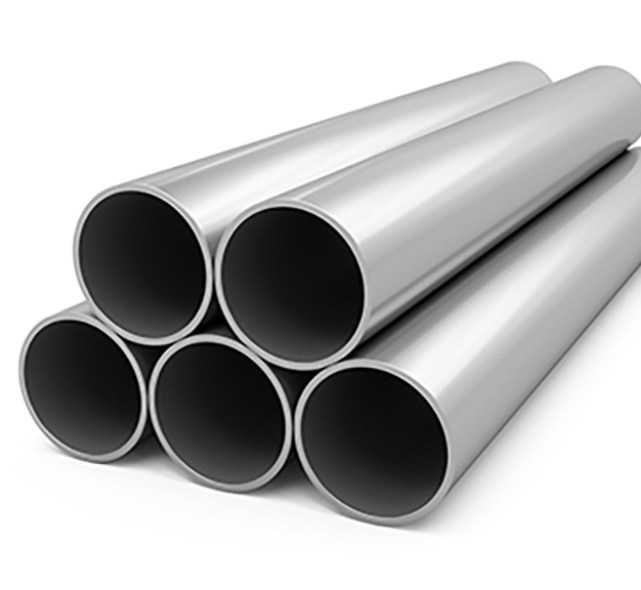
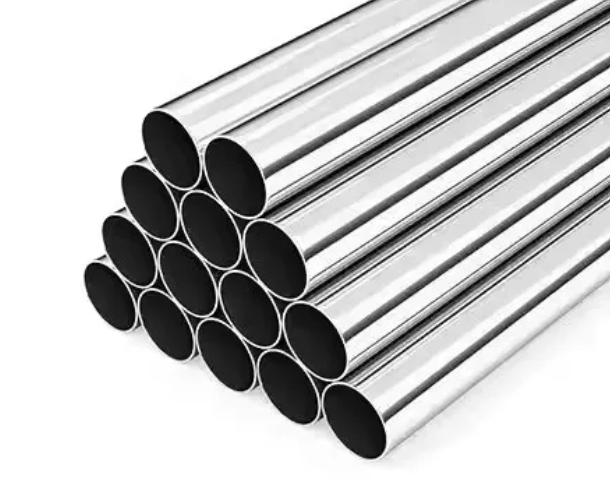
| Alloy 625 / UNS N06625 | ASTM B444-23 | Seamless pipe, process tube, auxiliary tube, and high-pressure small bore |
| Alloy 825 / UNS N08825 | ASTM B423-22 | Seamless pipe and tube for general corrosive service |
| Alloy C-22 / UNS N06022 | ASTM B622-23 | Seamless pipe and tube for severe corrosion screening |
| Alloy C-276 / UNS N10276 | ASTM B622-23 | Seamless pipe and tube for severe mixed aqueous environments |
The product standard verifies manufacturing and product requirements.
It does not prove suitability for the actual CO₂ stream.
Fittings and Flanges
The piping specification should separately define:
- Fitting material
- Flange material
- Forging standard
- Pressure rating
- Weld end
- Matching or compatible filler metal
- NDE
- Heat treatment
- Dimensional standard
- Corrosion qualification
Applicable nickel-alloy product forms may include forgings under ASTM B564-25 and wrought fittings under ASTM B366/B366M, subject to the grade and project code.
A pipe certificate cannot be used automatically to approve a flange or valve forging.
Which Nickel Alloy Fits Which Function?
| Alloy | Best Starting Role | Important Limitation |
|---|---|---|
| Alloy 625 / N06625 | Corrosion-resistant tubing, piping, valve trim, overlay, stems, bars, and selected pressure components | Exact condition, strength, cold work, H₂S limits, and code listing must be confirmed |
| Alloy 825 / N08825 | Pipe, tube, bar, and selected components in moderately severe wet, chloride, or sour aqueous service | Lower strength than precipitation-hardened alloys; not a default rotor material |
| Alloy C-22 / N06022 | Wetted components exposed to selected oxidizing, chloride, or mixed acid conditions | Cost, availability, strength, and product-form limits |
| Alloy C-276 / N10276 | Wetted trim, tubing, or local components in severe mixed acidic environments | Corrosion resistance does not automatically provide rotor strength or sour-service qualification |
| Alloy 718 / N07718 | High-strength shafts, stems, fasteners, forgings, and selected rotating components | Heat treatment, hardness, fatigue, weldability, and environment qualification control suitability |
| Alloy 400 / N04400 | Special reducing, alkaline, hydrofluoric-acid, or selected marine conditions | Not a default material for CO₂ compressors, valves, or piping |
Alloy 625 vs Alloy 718
These alloys should not be presented as direct substitutes.
| Requirement | Alloy 625 | Alloy 718 |
|---|---|---|
| Main strengthening approach | Solid-solution strengthening; may also be cold worked | Precipitation hardening |
| Main selection strength | Broad corrosion resistance and fabricability | Higher mechanical strength |
| Common product forms relevant here | Pipe, tube, bar, forging, fitting, overlay | Bar, forging, forging stock, high-strength component |
| Pressure piping | Common candidate when environmentally justified | Not normally the first pipe-and-tube selection |
| Valve stem or shaft | Possible where its strength is sufficient | Possible where higher strength is required |
| Sour-service approval | Condition-specific | Particularly sensitive to approved condition and hardness |
| Welding | Generally more suitable for corrosion-resistant fabrication and overlay | Heat treatment and weld procedure require closer control |
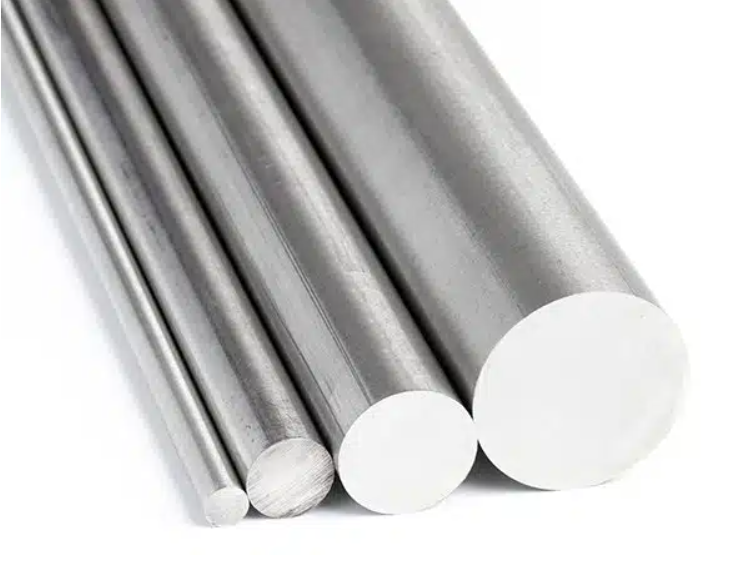
Alloy 625 bar is covered by ASTM B446-26.
Alloy 718 bar and forging products may be specified under ASTM B637-26.
The component designer must still specify the required grade, condition, properties, dimensions, and qualification.
Alloy 625 vs Alloy 825
| Selection Factor | Alloy 625 | Alloy 825 |
|---|---|---|
| Strength | Generally offers a higher-strength option depending on condition | Commonly selected more for corrosion service than high structural strength |
| Corrosion family | Ni-Cr-Mo-Nb | Ni-Fe-Cr-Mo-Cu |
| Pipe and tube standard | ASTM B444 | ASTM B423 |
| Bar standard | ASTM B446 | ASTM B425 |
| Possible component use | High-pressure tubing, trim, overlay, bar, selected pressure components | Pipe, tube, bar, and selected wet-service components |
| Main decision question | Is its greater strength or corrosion range required? | Can it meet the environment and mechanical requirement at lower complexity? |
Neither alloy should be approved from trade-name reputation alone.
When Is a Nickel Alloy Not Necessary?
A technically credible article should also identify when the premium material may not be justified.
Nickel alloy may be unnecessary when:
- CO₂ is reliably dehydrated
- Reactive impurities are controlled
- Condensation cannot occur within the design envelope
- Carbon steel or stainless steel satisfies the applicable code
- Corrosion allowance and monitoring are adequate
- Minimum-temperature toughness is satisfied
- No H₂S qualification requires a CRA
- The component is isolated from the wet process
- The OEM has qualified another material
Over-specifying a nickel alloy can increase:
- Raw-material cost
- Machining time
- Welding complexity
- Procurement lead time
- Repair difficulty
- Spare-part cost
The objective is not to maximize nickel content.
It is to use the correct material in the correct component.
Component-Specific Selection Checklist
Compressor
- [ ] Casing pressure and temperature
- [ ] Minimum design metal temperature
- [ ] Wet and dry compressor stages
- [ ] Interstage condensation
- [ ] Impeller and rotor strength
- [ ] Shaft fatigue
- [ ] H₂S or cracking requirements
- [ ] Fastener strength and hardness
- [ ] Seal-system material compatibility
- [ ] Auxiliary tubing chemistry
Valve
- [ ] Body and bonnet pressure rating
- [ ] Stem strength
- [ ] Trim corrosion
- [ ] Pressure drop
- [ ] Minimum outlet temperature
- [ ] Flashing or cavitation
- [ ] Particle or erosion risk
- [ ] Solid alloy or overlay
- [ ] Seat and packing compatibility
- [ ] Pipeline or process-valve standard
Piping
- [ ] Process piping or transport pipeline
- [ ] Solid alloy, clad, or overlay
- [ ] Pipe and fitting product standards
- [ ] Flange and forging material
- [ ] Welding filler and procedure
- [ ] Small-bore tubing
- [ ] Drain and condensate systems
- [ ] Low points and dead legs
- [ ] NDE and pressure test
- [ ] Final environmental qualification
What Buyers Should Include in the RFQ
| RFQ Category | Required Information |
|---|---|
| Component | Compressor casing, shaft, valve body, stem, trim, pipe, fitting, tube, or bar |
| Equipment standard | API 617, API 6D, ASME B16.34, ASME B31.3, ISO 27913, or project specification |
| CO₂ phase | Gas, liquid, dense phase, supercritical, or multiphase |
| Water | Normal, maximum, condensation, and upset condition |
| Impurities | H₂S, O₂, chlorides, SOx, NOx, CO, H₂, organic acids, and solids |
| Pressure | Operating, design, differential, and transient |
| Temperature | Operating, design, minimum, maximum, and depressurization |
| Component load | Pressure, rotation, fatigue, preload, throttling, or vibration |
| Material | Exact grade and UNS number |
| Product form | Seamless tube, pipe, bar, forging, fitting, solid trim, or overlay |
| Condition | Annealed, solution annealed, cold worked, or precipitation hardened |
| Dimensions | OD, wall, diameter, length, tolerance, and quantity |
| Strength | Yield, tensile, hardness, fatigue, or OEM requirements |
| Sour service | Applicable ISO 15156 or project qualification |
| Overlay | Alloy, thickness, process, dilution, NDE, and acceptance |
| Welding | Filler metal, procedure, PWHT, and corrosion qualification |
| Testing | Mechanical, NDE, pressure, corrosion, or cracking tests |
| Documentation | MTC, heat treatment, NDE, dimensions, traceability, and conformity |
| Design authority | Compressor OEM, valve manufacturer, piping engineer, or materials engineer |
A request stating only “Alloy 625 for a CO₂ compressor” is not sufficient to prepare a technically reliable offer.
Frequently Asked Questions
Is Alloy 625 the best nickel alloy for every CO₂ component?
No. Alloy 625 is a versatile corrosion-resistant alloy, but Alloy 718 may be more suitable for high-strength shafts or stems, Alloy 825 may suit selected piping duties, and C-22 or C-276 may require evaluation for more aggressive liquid phases.
Can the same alloy be used for a valve body and stem?
It can be, but it is not always optimal. The body is a pressure boundary, while the stem may require higher strength, fatigue resistance, galling resistance, and dimensional stability.
Is Alloy 718 more corrosion-resistant than Alloy 625?
That is not the correct comparison. Alloy 718 is primarily selected for high strength after precipitation hardening. Alloy 625 is more commonly selected when corrosion resistance and fabrication are central requirements.
Can Alloy 825 replace Alloy 625 in CO₂ piping?
Possibly, when its mechanical properties and environmental resistance satisfy the project. The comparison should include aqueous chemistry, pressure, temperature, wall calculation, fabrication, and sour-service requirements.
Should C-276 be used for severe sour CO₂ valves?
C-276 may be a candidate for a severely corrosive wetted surface, but H₂S-related cracking, strength, product form, valve design, and applicable standards still require separate qualification.
Is Monel 400 recommended for CO₂ piping?
Not as a general rule. Its selection should be based on a specific reducing, alkaline, hydrofluoric-acid, or marine condition—not merely on the presence of CO₂.
Does ASTM B444 prove Alloy 625 is suitable for a compressor?
No. ASTM B444 verifies Alloy 625 seamless pipe and tube requirements. It does not qualify a compressor casing, rotor, valve body, or complete CO₂ operating environment.
Is a solid nickel-alloy valve always better than a weld-overlaid valve?
No. Solid construction provides uniform material, while overlay can provide a corrosion-resistant surface over a qualified structural base. The correct choice depends on pressure, size, corrosion, weld quality, inspection, repair, and cost.
Why might the compressor shaft use a different alloy from the process piping?
The shaft may be controlled by strength, fatigue and rotordynamics, while the piping is controlled mainly by pressure containment, corrosion and weldability.
What should buyers send for a nickel-alloy component quotation?
Send the exact component, CO₂ composition, water and impurities, pressure, temperature, minimum temperature, product form, dimensions, material condition, equipment standard, mechanical properties, sour-service limits, inspection, and documentation requirements.
Conclusion
Nickel-alloy selection for CO₂ compressors, valves, and piping components should follow the component function.
The pressure boundary, rotating part, valve trim, pipe, fitting, bar, and weld overlay do not require the same material properties.
A practical selection approach is to:
- Define the CO₂ environmental envelope.
- Identify the component function.
- Separate corrosion requirements from strength and fatigue requirements.
- Select the correct alloy family.
- Select the correct product form and material condition.
- Confirm the applicable equipment and product standards.
- Qualify H₂S or other environment-assisted cracking risks.
- Verify minimum temperature, pressure rating, welding, NDE, and documentation.
Alloy 625 is a strong candidate for many corrosion-resistant tubes, pipes, trim components, bars, and overlays.
Alloy 825 may be appropriate for selected wet-service pipe, tube, and bar applications.
C-22 and C-276 may be screened for highly aggressive wetted components.
Alloy 718 may be appropriate where high strength is more important than using a general corrosion-resistant piping alloy.
Monel 400 should not be treated as a default CO₂ material.
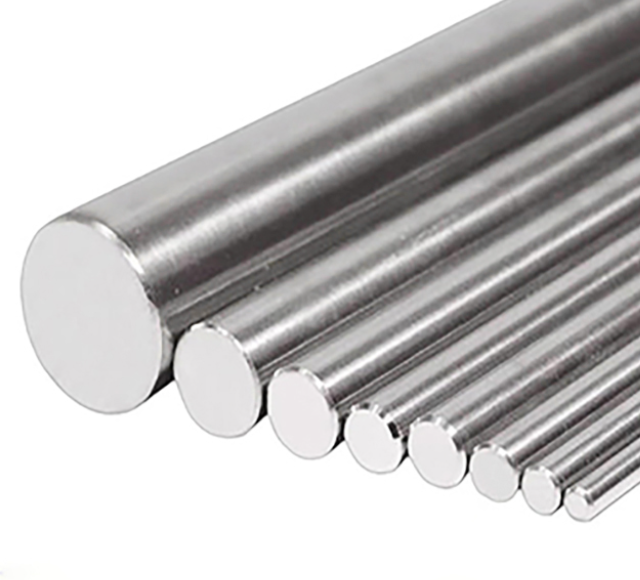
For nickel-alloy tube or bar enquiries, Emily PIPE can review the requested alloy, UNS designation, product standard, product form, condition, dimensions, NDE, pressure testing, certification, and packaging requirements.
Final approval of compressor rotating parts, valve design, piping code compliance, and environmental compatibility should remain with the equipment OEM, valve manufacturer, piping designer, and responsible materials or corrosion engineer.