
How Should Buyers Select and Qualify Materials for Black Mass Slurry Equipment?
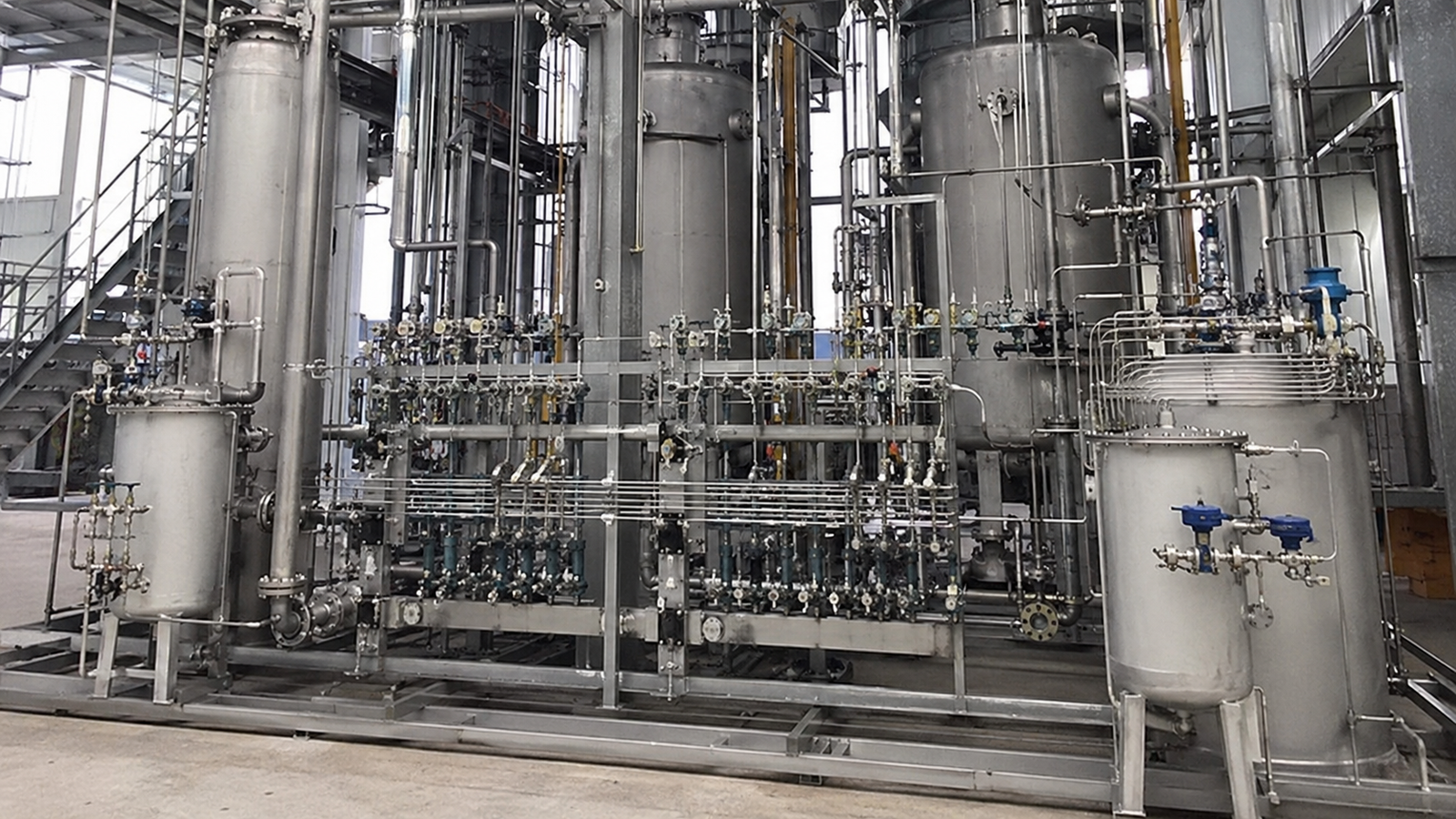
Image credit: Santeri Viinamäki, Wikimedia Commons, CC BY-SA 4.0.
Material selection for black mass slurry equipment cannot be based on one list of corrosion-resistant alloys.
Black mass may contain cathode active material, graphite, copper, aluminium, binders, electrolyte-derived compounds, residual steel, plastics, and other materials carried through the pretreatment process. Its composition, particle distribution, remaining reactive species, and leaching behaviour can change with battery chemistry and upstream separation efficiency.
The slurry also changes as it passes through the recycling process.
Freshly prepared leach slurry, partially reacted slurry, clarified leach solution, filter cake, wash water, precipitation slurry, and purified product solution do not expose equipment to the same combination of corrosion, abrasion, impact, deposits, and contamination risk.
Buyers should therefore select and qualify materials separately for each black mass process zone. The specification should define the feed envelope, liquid chemistry, solid phase, temperature, flow, equipment geometry, dominant degradation mechanism, permissible contamination, material architecture, qualification tests, and change-control requirements. No single nickel alloy, titanium grade, stainless steel, lining, or coating is automatically suitable for the complete battery recycling plant.
The correct question is not:
“Which alloy is best for battery recycling equipment?”
It is:
“Which material system can control the dominant damage mechanism in this equipment zone while meeting purity, mechanical, maintenance, and manufacturing requirements?”
Black Mass Is Not a Standardized Slurry
The term black mass describes a recycling intermediate, not one fixed chemical or physical specification.
Its composition may vary with:
- Battery chemistry
- NMC nickel content
- LFP, LCO, NCA, LMO, or mixed feed
- Cell format
- State of charge
- Mechanical shredding
- Thermal pretreatment
- Binder removal
- Copper and aluminium separation
- Graphite recovery
- Particle classification
- Washing
- Storage and moisture exposure
A JRC review of lithium-ion battery recycling unit operations shows that industrial processes use different combinations of mechanical, thermal, pyrometallurgical, and hydrometallurgical operations.
Those upstream choices change the material entering the leach circuit.
Minimum Black Mass Feed Envelope
| Feed Characteristic | Why It Matters to Equipment Materials |
|---|---|
| Battery chemistry | Changes metals, oxides, phosphates, graphite, and leaching chemistry |
| Particle-size distribution | Affects suspension, settling, abrasion, impact, and filtration |
| Particle shape | Angular particles may cut surfaces differently from rounded particles |
| Solids concentration | Influences impact frequency, viscosity, mixing, and pumping |
| Copper content | Can alter electrochemical conditions and downstream impurity limits |
| Aluminium content | Can react with leach chemistry and influence solids behaviour |
| Iron or steel contamination | Affects both abrasion and product purity |
| Graphite content | Changes lubrication, settling, rheology, and filtration |
| Fluorine-bearing species | May create additional corrosion or treatment requirements |
| Residual electrolyte | Can change water chemistry and introduce organic or fluorinated compounds |
| Moisture | Affects storage reactions and initial slurry chemistry |
| Thermal history | Changes binders, fluorides, carbon, metals, and particle structure |
A material qualification based on one feed batch may not remain valid after the plant changes from an NMC-rich feed to LFP or mixed black mass.
Map Materials to the Process Zone
A hydrometallurgical battery recycling plant may include:
- Black mass storage and feeding
- Slurry make-up
- Acid or alkaline leaching
- Reductant or oxidant addition
- Slurry transfer
- Solid–liquid separation
- Residue washing
- Impurity removal
- Solvent extraction or ion exchange
- Metal precipitation
- Crystallization
- Product purification
- Wastewater treatment
The material risk changes across these zones.
| Process Zone | Likely Dominant Material Concerns |
|---|---|
| Dry black mass feeding | Dust abrasion, static electricity, contamination, and particle ingress |
| Slurry make-up | Wet abrasion, local acid concentration, mixer impact, and incomplete dilution |
| Leach reactor | Acid corrosion, redox chemistry, solids, agitator loading, temperature, and deposits |
| Reagent injection | Locally concentrated acid, oxidant, reductant, or alkali |
| Slurry transfer line | Settling, elbows, restrictions, velocity, and intermittent flushing |
| Slurry pump | Impeller impact, recirculation, seal zone, cavitation, and replaceable wear components |
| Slurry valve | Throttling, solids entrapment, seat wear, crevices, and cycling |
| Filter or centrifuge | Cake abrasion, differential pressure, crevices, and cleaning chemicals |
| Clarified leach solution | Lower solids but potentially more aggressive dissolved chemistry |
| Impurity removal | pH changes, precipitation, new solids, and reagent concentration |
| Purified product circuit | Contamination control may become more important than heavy abrasion |
| Waste and residue handling | Variable pH, salts, solids, and intermittent stagnant conditions |
The same material may be acceptable in a clarified solution line and unsuitable in the upstream leach slurry.
Identify the Dominant Failure Mode Before Selecting the Material
Black mass equipment can experience several different mechanisms.
| Observed or Expected Damage | Main Question |
|---|---|
| Uniform wall loss | Is general corrosion controlling? |
| Local pits or crevice attack | Are chlorides, fluorides, oxidants, deposits, or gaps controlling? |
| Smooth directional thinning | Is fine-particle abrasion or flow-assisted corrosion involved? |
| Deep grooves | Are large or angular particles cutting the surface? |
| Craters near an inlet | Is jet impingement occurring? |
| Damage near a valve or pressure drop | Are flashing, cavitation, or local velocity involved? |
| Loss beneath a lining | Has permeation, blistering, or bond failure occurred? |
| Cracking at a weld | Are residual stress, weld metallurgy, corrosion fatigue, or SCC involved? |
| Product contamination | Is the material releasing unacceptable Fe, Ni, Cr, Mo, Cu, or other elements? |
| Repeated plugging | Is the geometry or slurry transport condition unsuitable? |
The material should be selected for the controlling mechanism.
A more corrosion-resistant alloy may provide limited improvement when the main problem is a concentrated particle jet.
A harder wear material may fail rapidly when the liquid chemically attacks its matrix or binder.
For a more detailed explanation of flow, particles, bends, and local damage, see Erosion-Corrosion in Alloy Tubes: Causes and Control.
Consider Material Architecture, Not Only Alloy Grade
The solution does not always need to be a complete solid-alloy component.
Solid Corrosion-Resistant Alloy
Possible advantages:
- Uniform chemistry throughout the wall
- No lining bond to fail
- Easier local repair in some constructions
- Suitable for complex pressure-containing components when code-approved
Possible limitations:
- High initial material cost
- Machining and welding complexity
- Limited wear resistance in severe slurry impact
- Long lead time for large components
Cladding or Weld Overlay
Possible advantages:
- Corrosion-resistant wetted layer over a structural base
- Reduced use of expensive alloy
- Useful for vessels, large nozzles, and selected valve bodies
Possible limitations:
- Dilution
- Cracks, lack of fusion, or porosity
- Difficult repair geometry
- Overlay thickness and NDT requirements
- Limited resistance to deep abrasive loss
Rubber, Polymer, or Composite Lining
Possible advantages:
- Strong resistance to selected chemical solutions
- Isolation of metal from the process
- Potentially lower cost
- Replaceable protection
Possible limitations:
- Temperature
- Permeation
- Swelling
- Vacuum
- Mechanical impact
- Bond failure
- Difficult inspection beneath the lining
- Contamination or extractables
Ceramic or Hard Wear Lining
Possible advantages:
- High resistance to selected abrasive particles
- Useful at local impact zones
Possible limitations:
- Brittleness
- Thermal shock
- Joining and edge protection
- Acid compatibility
- Cracking and local detachment
- Difficult repair
Replaceable Wear Components
Possible examples:
- Pump liners
- Throat bushes
- Valve seats
- Orifice inserts
- Elbow liners
- Agitator blades
- Nozzle inserts
Replaceable parts can be more effective than increasing the alloy grade of an entire machine.
Preliminary Material Screening
The following table is a starting framework, not a universal recommendation.
| Material Family | Possible Starting Role | Important Limits |
|---|---|---|
| 316L stainless steel | Selected downstream, lower-temperature, low-solids, or purified circuits | Hot acids, chlorides, fluorides, crevices, and contamination requirements |
| Alloy 20 | Candidate for selected sulfuric-acid circuits | Chlorides, oxidants, slurry wear, weld condition, and temperature |
| Duplex or super duplex | Candidate for selected chloride-containing or moderately acidic circuits | Strong hot acids, phase balance, welding, erosion, and temperature |
| Alloy 825 | Candidate for selected sulfuric, phosphoric, chloride, and mixed aqueous solutions | Not a universal high-abrasion material; strength and chemistry require verification |
| Alloy 625 | Candidate where corrosion resistance, strength, and fabrication are all required | Severe slurry abrasion, fluorides, exact acid chemistry, and local impact |
| Alloy C-22 | Candidate for selected oxidizing chloride and mixed-acid solutions | Abrasion, availability, product form, welding, and actual redox chemistry |
| Alloy C-276 | Candidate for selected severe mixed acid and chloride solutions | Fluoride/HF conditions, abrasion, mechanical requirements, and cost |
| Titanium Grade 2 | Candidate for many oxidizing chloride and selected organic-acid circuits | Fluorides, reducing acids, erosion, galling, and crevice conditions |
| Titanium Grade 7 | Candidate where palladium-alloyed titanium is approved for a defined environment | Does not eliminate titanium’s fluoride, wear, and hydrogen limitations |
| High-chromium wear alloy | Possible for predominantly abrasive zones | May have limited corrosion resistance and weldability |
| Rubber or polymer lining | Selected tanks, pipes, and low-impact chemical zones | Temperature, permeation, vacuum, abrasion, and bond integrity |
| Ceramic lining | Local severe abrasion zones | Brittleness, impact, thermal shock, and joint design |
The buyer should avoid generic requests such as:
- “Hastelloy for black mass”
- “Titanium for battery recycling”
- “High-PREN material”
- “Wear-resistant stainless steel”
The grade, product form, condition, and qualification method must be defined.
Do Not Use Nickel Content or PREN as a Universal Ranking
Nickel content alone does not predict performance in:
- Sulfuric acid
- Hydrochloric acid
- Nitric acid
- Organic acids
- Fluoride-bearing solutions
- Reducing or oxidizing leach systems
- Abrasive black mass slurry
PREN can support comparison among selected stainless steels in chloride-related applications.
It does not include:
- Acid type
- Redox potential
- Fluoride
- Slurry abrasion
- Mechanical impact
- Weld condition
- Lining performance
- Product contamination
ASTM G48-25 compares pitting and crevice-corrosion initiation in a defined ferric-chloride environment.
A high result in ASTM G48 does not qualify a material for an H₂SO₄–H₂O₂ black mass leach.
Why Actual Black Mass Composition Matters
Industrial black mass may contain more than cathode powder.
An industrial black mass leaching study showed that copper and aluminium present in the material can participate in the leaching reactions and change reductant consumption and dissolution behaviour.
Recent research has also identified fluorinated lithium salts in recycled black mass.
These findings have direct materials implications.
Material Qualification Should Consider
- Current collector carryover
- Graphite
- Steel fragments
- Binder residue
- Electrolyte-derived fluorine
- Process water
- Thermal decomposition products
- Mixed battery chemistries
- Recycled reagent streams
A laboratory slurry made from pure cathode powder and silica may reproduce abrasion but fail to reproduce the actual electrochemical environment.
Establish a Black Mass Feed Envelope
A qualification program should define normal and credible worst-case feed.
| Parameter | Normal Condition | Qualification or Upset Condition |
|---|---|---|
| Battery chemistry | Typical production mix | Highest-risk accepted chemistry |
| Solids concentration | Normal operating range | Maximum solids or low-liquid event |
| Particle size | Routine distribution | Maximum coarse-particle fraction |
| Copper | Typical content | Maximum carryover |
| Aluminium | Typical content | Maximum carryover |
| Iron or steel | Typical contamination | Maximum accepted contamination |
| Graphite | Normal fraction | Highest expected fraction |
| Fluorine | Normal measured level | Maximum feed specification |
| Moisture | Normal storage condition | Wet or aged feed |
| Acid demand | Normal | Highest reagent demand |
| Redox demand | Normal | Maximum oxidant or reductant addition |
Material approval should state which envelope was evaluated.
If the plant later accepts a significantly different feed, a technical review should determine whether requalification is necessary.
Which Tests Answer Which Question?
No single test can qualify black mass slurry equipment.
| Test | Main Question Answered | Main Limitation |
|---|---|---|
| ASTM G31-21(2025) | How does a material behave in a defined static or controlled liquid exposure? | Does not reproduce most particle and flow effects |
| ASTM G48-25 | How do stainless and related alloys compare for localized corrosion initiation in ferric chloride? | Test solution is not the black mass process |
| ASTM G75-24 | How abrasive is a slurry, or how do materials compare in that slurry? | Primarily a relative abrasion index |
| ASTM G119-09(2021) | Is combined wear and corrosion producing additional synergistic loss? | Requires carefully designed separate and combined tests |
| Wet abrasion test | How does a material resist scratching abrasion under a standard condition? | May not include actual process chemistry or impact |
| Jet-impingement test | How does the material respond to localized impact and mass transfer? | Does not reproduce the entire equipment geometry |
| Slurry flow loop | How do chemistry, solids, velocity, and geometry interact? | More expensive and still limited by scale |
| Pilot-plant coupon | How does material behave in a representative process location? | Requires time and reliable exposure records |
| Field spool or replaceable insert | How does the complete material system perform in actual operation? | Requires controlled monitoring and failure management |
| Extractables or contamination test | Does the material add unacceptable elements to the process? | Does not establish mechanical durability |
A strong qualification plan uses several complementary methods.
A Practical Four-Part Qualification Matrix
Part 1: Corrosion-Only Test
Use filtered process solution or a representative synthetic solution.
Evaluate:
- General corrosion
- Pitting
- Crevice corrosion
- Weld attack
- Stress corrosion where relevant
- Metal release
Part 2: Abrasion-Only Test
Use a chemically controlled or noncorrosive slurry to compare mechanical loss.
Evaluate:
- Volume loss
- Surface grooves
- Impact damage
- Particle sensitivity
- Coating or lining durability
Part 3: Combined Slurry Test
Use representative liquid chemistry and actual or representative black mass solids.
Evaluate:
- Total material loss
- Localized attack
- Passive-film removal and recovery
- Weld response
- Lining damage
- Particle embedment
- Corrosion products
Part 4: Pilot or Field Verification
Install coupons, test inserts, replaceable parts, or a trial spool in the actual equipment zone.
Record:
- Exposure time
- Throughput
- Feed batches
- Temperature
- Reagents
- Solids
- Flow
- Shutdowns
- Cleaning cycles
- Material loss
- Surface morphology
This hierarchy provides stronger evidence than one supplier datasheet or one static immersion result.
Use Representative Test Specimens
The test specimen should represent the proposed finished material.
Questions to confirm include:
- Is the material plate, tube, bar, casting, forging, overlay, or lining?
- Does the specimen have the final heat treatment?
- Is the production weld included?
- Is a heat-affected zone present?
- Does the specimen have the final surface?
- Are crevices reproduced?
- Is the coating thickness representative?
- Is the lining bonded using the production procedure?
- Is the actual manufacturing direction relevant?
- Has cold work changed the final condition?
A polished laboratory coupon may perform differently from:
- A rough cast pump component
- A welded pipe
- A cold-worked tube
- A machined shaft
- A repaired overlay
- A field-bonded lining
Contamination May Control Downstream Material Selection
Upstream leach circuits are usually dominated by corrosion and slurry damage.
Downstream purification and battery-grade product circuits may be more sensitive to material contribution.
Possible unwanted elements include:
- Iron
- Chromium
- Nickel
- Molybdenum
- Copper
- Titanium
- Silicon
- Cobalt from previous campaigns
The acceptable limit depends on:
- Product specification
- Purification process
- Analytical detection limit
- Reagent purity
- Existing impurity budget
- Ability to remove the introduced element
This can create a counterintuitive decision.
A material with acceptable wall-loss performance may still be unsuitable if it adds an element that is difficult to remove from the final product.
The RFQ should therefore state whether the equipment is located in:
- Raw leach slurry
- Intermediate separation
- Purified lithium solution
- Nickel or cobalt product solution
- Final crystallization
- Product drying or packaging
Special Attention to Pumps, Valves, and Agitators
This article does not replace the detailed component design required for pump shafts and valve stems.
However, the complete equipment material map should distinguish:
Slurry Pump
- Casing or liner
- Impeller
- Throat bush
- Shaft sleeve
- Shaft
- Mechanical seal
- Fasteners
Valve
- Body
- Stem
- Ball, disc, or plug
- Seat
- Cage or trim
- Packing
- Lining
Agitator
- Shaft
- Blades
- Hub
- Fasteners
- Seal area
- Baffles
Different components may use different materials.
For detailed bar-stock requirements for shafts and stems, see Alloy Bars for Pump Shafts and Valve Stems.
When Should a Material Be Requalified?
Material requalification may be required when there is a meaningful change in:
- Battery chemistry
- Black mass supplier
- Pretreatment method
- Thermal treatment
- Particle-size distribution
- Solids loading
- Copper or aluminium content
- Fluorine content
- Leach acid
- Oxidant or reductant
- Temperature
- Slurry velocity
- Equipment geometry
- Lining system
- Welding procedure
- Cleaning chemistry
The project should define which changes require:
- Document review
- Additional coupon testing
- Pilot testing
- Full material reapproval
Without change control, a material may continue to be used outside the environment for which it was originally qualified.
What Buyers Should Include in the RFQ
| RFQ Category | Required Information |
|---|---|
| Recycling route | Hydrometallurgy, combined process, or another route |
| Process zone | Slurry make-up, leach, transfer, filtration, purification, precipitation, or waste |
| Black mass chemistry | NMC, LFP, LCO, NCA, mixed, and expected proportions |
| Pretreatment | Shredding, thermal treatment, washing, and metal separation |
| Solids | Normal and maximum concentration |
| Particle size | Distribution, maximum size, and coarse fraction |
| Particle properties | Shape, density, hardness, and composition |
| Liquid chemistry | Acid, base, salt, oxidant, reductant, and concentration |
| Fluorine | Total fluoride, free fluoride, HF where relevant, and test method |
| Metals | Cu, Al, Fe, Ni, Co, Mn, Li, and other dissolved species |
| pH | Normal, minimum, maximum, and transient |
| Redox potential | Normal and upset range where available |
| Temperature | Normal, maximum, minimum, startup, and cleaning |
| Pressure | Operating and design |
| Flow | Flow rate, velocity, recirculation, and intermittent conditions |
| Equipment | Vessel, pipe, tube, pump, valve, agitator, filter, or centrifuge |
| Geometry | Bends, nozzles, restrictions, injection points, and low points |
| Material architecture | Solid alloy, clad, overlay, lined, coated, or replaceable |
| Proposed material | Exact grade, UNS designation, condition, and product form |
| Corrosion test | Solution, temperature, duration, aeration, and acceptance |
| Abrasion test | Slurry, particle data, method, and acceptance |
| Combined test | Actual slurry, flow, test duration, and evaluation |
| Contamination | Maximum acceptable material contribution |
| Inspection | NDT, thickness, surface, lining, and dimensional requirements |
| Documentation | MTC, heat treatment, test reports, and conformity |
| Feed change | Notification and requalification requirements |
| Quantity | Dimensions, pieces, total length, weight, and spares |
| Design authority | Party responsible for final equipment and material approval |
A request stating only:
“Need C-276 for battery recycling slurry”
does not provide enough information for a technically reliable quotation.
Common Material-Selection Mistakes
| Mistake | Why It Is Risky | Better Approach |
|---|---|---|
| Treating all black mass as one feed | Composition changes with battery chemistry and pretreatment | Define a feed envelope |
| Selecting one alloy for the complete plant | Process zones have different dominant risks | Build a corrosion-circuit map |
| Using a pure NMC powder test | Real black mass may contain Cu, Al, graphite and fluorinated species | Test representative industrial feed |
| Approving material from ASTM G31 alone | Static solution does not include slurry wear | Add abrasion and combined testing |
| Approving material from ASTM G75 alone | Abrasion index does not prove chemical compatibility | Add corrosion and synergy testing |
| Using G48 or PREN as final approval | Ferric chloride is not the leach process | Use process-representative chemistry |
| Assuming C-276 solves fluoride risk | Fluoride chemistry and HF conditions require separate data | Measure and reproduce actual fluorine conditions |
| Assuming titanium resists every chloride slurry | Fluoride, reducing acids and abrasion may control | Review the exact chemistry |
| Choosing the hardest alloy | Hardness alone does not control corrosion–wear synergy | Evaluate total material loss |
| Using solid alloy everywhere | Cost may increase without solving local impact | Compare lining, overlay and replaceable parts |
| Ignoring product contamination | Corroded material may affect downstream purity | Define a contamination budget |
| Testing only parent material | Welds, coatings and linings may control failure | Test the finished material system |
| Ignoring feed changes | New battery chemistry may exceed the qualified envelope | Establish change control |
| Asking only for an MTC | MTC does not prove black mass slurry performance | Require qualification evidence |
Frequently Asked Questions
What is the best material for black mass slurry equipment?
There is no universal best material. The correct choice depends on the black mass composition, liquid chemistry, particle characteristics, temperature, equipment zone, geometry, contamination limits, and maintenance strategy.
Is Alloy C-276 suitable for black mass leaching?
It may be a strong candidate for selected mixed-acid and chloride conditions. Its performance must still be verified for the actual acid, fluoride content, redox condition, solids, temperature, welds, and abrasion.
Is Alloy 625 better than C-276 for slurry equipment?
Not universally. Alloy 625 may offer a useful combination of corrosion resistance, strength, and fabrication, while C-276 may offer stronger resistance in selected chemical environments. Neither is automatically more resistant to black mass abrasion.
Can titanium be used in battery recycling equipment?
Titanium may be suitable in selected oxidizing chloride or organic-acid circuits. Fluorides, HF, reducing acids, abrasion, crevices, galling, and hydrogen conditions require specific review.
Is 316L always unsuitable?
No. It may be suitable in selected downstream, low-temperature, low-solids, or purified circuits. It should not be assumed suitable for hot acidic black mass leaching without supporting evidence.
Can ASTM G75 predict pump life?
No. ASTM G75 provides relative slurry abrasivity and material-response indices under its test conditions. Pump life also depends on geometry, velocity, cavitation, component design, corrosion, and operating history.
Can ASTM G119 be used for black mass slurry?
Yes, it provides a framework for evaluating wear–corrosion synergism in liquid solutions or slurries. The project still needs to design representative corrosion-only, wear-only, and combined exposures.
Why is actual black mass needed for testing?
Actual black mass may contain graphite, Cu, Al, Fe, binders, fluorinated species, and mixed cathode chemistries that change both abrasion and solution chemistry.
Should the entire reactor be made from a nickel alloy?
Not automatically. Solid alloy, cladding, lining, local wear protection, and replaceable parts should be compared according to pressure, temperature, damage location, inspection, and maintenance.
How should material contamination be evaluated?
Expose the finished material system to a representative solution or slurry and measure relevant elements released into the liquid. Acceptance limits should follow the project’s impurity budget and final product specification.
When should material qualification be repeated?
Requalification should be considered after significant changes in battery chemistry, black mass supplier, pretreatment, solids, fluorine, leach chemistry, temperature, equipment geometry, lining, or fabrication.
What should buyers send for quotation?
Send the process zone, black mass chemistry, particle data, solids loading, complete liquid chemistry, fluorine, temperature, flow, equipment type, proposed material, dimensions, qualification tests, contamination limits, inspection, and documentation requirements.
Conclusion
Material selection for black mass slurry equipment should begin with the process zone and feed envelope—not with a preferred alloy brand.
The qualification process should determine:
- What the black mass contains
- How the slurry changes during processing
- Which damage mechanism controls each equipment zone
- Whether solid alloy, lining, overlay, or replaceable protection is most appropriate
- Which test method answers each technical question
- Whether the finished material system affects product purity
- Which feed or process changes require requalification
Static corrosion data, slurry-abrasion data, alloy composition, hardness, and supplier experience are all useful inputs.
None is sufficient by itself.
For nickel-alloy or titanium tube and bar enquiries related to battery recycling equipment, buyers should provide the black mass feed envelope, process chemistry, temperature, solids, particle distribution, equipment location, dimensions, product form, material condition, testing, contamination, inspection, and documentation requirements.
Emily PIPE can review whether the requested nickel-alloy or titanium tube or bar grade, dimensions, condition, surface, NDT, certification, and packaging scope are technically manufacturable.
Final materials approval, equipment design, lining selection, slurry hydraulics, corrosion testing, and expected operating life should remain with the recycling-process licensor, equipment manufacturer, and responsible materials or corrosion engineer.