
How Should Buyers Specify Alloy Bars for Pump Shafts and Valve Stems in Nickel, Cobalt, and Lithium Recovery?
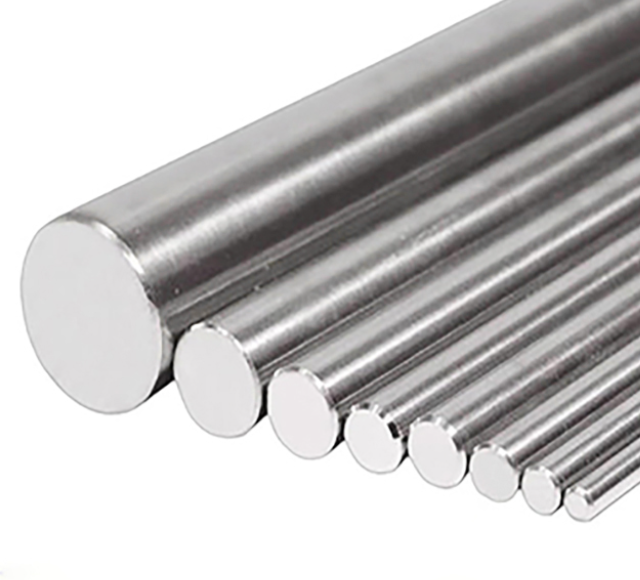
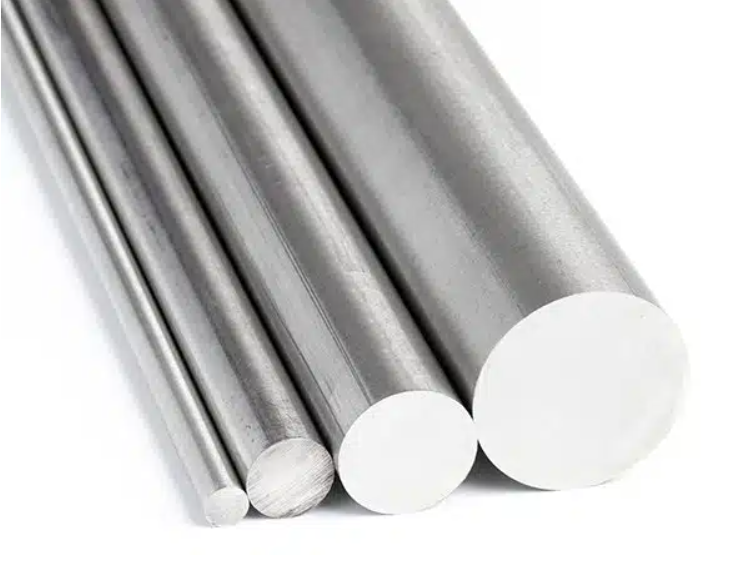
Alloy bars used to machine pump shafts and valve stems must satisfy a different set of requirements from pump casings, valve bodies, impellers, piping, or heat-exchanger tubes.
A pump shaft may be controlled by bending fatigue, torsional load, straightness, runout, keyways, seal interfaces, and corrosion at partially wetted areas. A valve stem may be controlled by axial load, operating torque, threads, packing friction, galling, surface finish, and exposure to the process fluid.
Buyers should specify alloy bar stock for pump shafts and valve stems by defining the actual wetted boundary, process chemistry, operating temperature, mechanical load, required alloy and condition, bar manufacturing route, machining allowance, straightness, internal quality, surface condition, corrosion qualification, inspection, and final component drawing. An ASTM bar certificate alone does not qualify the finished shaft or stem.
Image credit: Bodibilguun, Wikimedia Commons, CC BY-SA 4.0.
The wrong procurement question is:
“Which alloy is best for nickel, cobalt, and lithium recovery?”
A more useful question is:
“Which alloy bar, material condition, and inspection scope are required for this specific wetted shaft or valve stem?”
First Confirm Whether the Bar Will Become a Wetted Component
Not every pump shaft or valve stem is fully exposed to the process liquid.
Pump Shaft Exposure
A shaft may be:
- Fully wetted
- Protected by a replaceable shaft sleeve
- Exposed only near the impeller
- Exposed at the mechanical-seal chamber
- Normally dry but vulnerable during seal failure
- Exposed during cleaning or shutdown
Valve Stem Exposure
A valve stem may be:
- Fully wetted
- Partially wetted below the packing
- Isolated by bellows
- Exposed only during cycling
- Exposed to condensed vapour
- Normally dry but exposed during packing leakage
| Exposure Condition | Material-Selection Consequence |
|---|---|
| Fully wetted | Bulk alloy must satisfy process compatibility |
| Protected by sleeve | Sleeve and shaft interface both require review |
| Partially wetted | Transition zone may control corrosion |
| Normally dry | Upset and leakage exposure still matter |
| Bellows isolated | Bellows material may govern process compatibility |
| High-purity service | Metal contribution and surface cleanliness may require limits |
A buyer should not pay for a fully corrosion-resistant shaft when only a replaceable sleeve is exposed—unless the failure scenario justifies it.
The opposite mistake is also common: selecting a lower-alloy shaft on the assumption that the sleeve or packing will never leak.
The recovered metal does not define the corrosion environment.
Nickel and Cobalt Recovery
Possible process stages include:
- Pressure acid leaching
- Atmospheric sulfuric-acid leaching
- Chloride leaching
- Slurry transfer
- Neutralization
- Solvent extraction
- Metal precipitation
- Crystallization
- Tailings and residue handling
Lithium Recovery
Possible routes include:
- Chloride-rich brine processing
- Direct lithium extraction
- Hard-rock acid leaching
- Battery black-mass leaching
- Solvent extraction
- Ion exchange
- Precipitation
- Lithium carbonate or hydroxide purification
Hydrometallurgical battery recycling can use inorganic acids, organic acids, ammonia, reducing agents, oxidizers, and residual electrolyte-related species.
The RFQ should therefore identify the exact process stage rather than stating only:
“Pump shaft for lithium recovery.”
Pump Shafts and Valve Stems Have Different Mechanical Duties
Pump Shaft
A pump shaft may experience:
- Bending from hydraulic and rotor loads
- Torsion from motor power transmission
- Cyclic fatigue
- Keyway stress concentration
- Thread stress
- Fretting beneath sleeves
- Seal-interface wear
- Vibration
- Corrosion fatigue
- Thermal distortion
Where API 610 or another pump standard is invoked, the pump manufacturer remains responsible for shaft sizing, deflection, critical speed, allowable stress, and rotor dynamics.
The bar supplier cannot determine shaft adequacy from diameter and alloy alone.
Valve Stem
A valve stem may experience:
- Axial thrust
- Opening and closing torque
- Thread shear
- Packing friction
- Repeated cycling
- Galling
- Surface wear
- Side load from misalignment
- Corrosion beneath packing
- Stress corrosion at threaded or reduced sections
ASME B16.34-2025 provides requirements for applicable valve construction, but the valve manufacturer must still qualify the stem design and material condition.
Bar Stock Is Not the Same as a Finished Shaft or Stem
A purchase order should identify which stage is being supplied.
| Supply Stage | Typical Scope |
|---|---|
| Mill-finished bar | Standard diameter tolerance and mill surface |
| Peeled or turned bar | Surface scale removed with machining allowance |
| Centerless-ground bar | Tighter diameter, straighter surface, improved finish |
| Rough-machined blank | Steps, shoulders, or center holes prepared |
| Near-net shaft or stem | Most dimensions machined, final finishing remains |
| Finished component | Final dimensions, threads, keyways, surface, runout, and inspection complete |
An ASTM bar standard normally controls chemistry, heat treatment, mechanical properties, product form, and specified dimensional requirements.
It does not automatically establish:
- Final shaft runout
- Bearing-journal tolerance
- Packing-area roughness
- Thread geometry
- Keyway radius
- Concentricity
- Surface hardening
- Final balance
- Component fatigue life
Those requirements belong in the component drawing or machining specification.
Preliminary Alloy-Bar Screening
The table below is a starting framework, not an application approval.
| Alloy Bar | Possible Reason to Consider | Important Limitation |
|---|---|---|
| Alloy 625 / UNS N06625 | Combination of corrosion resistance, strength, weldability, and availability in bar form | Exact acid, chloride, fluoride, temperature, cold work, and fatigue requirements must be verified |
| Alloy 825 / UNS N08825 | Candidate for selected sulfuric, phosphoric, chloride, and mixed aqueous services | Lower mechanical strength may limit highly loaded shafts or stems |
| Alloy C-276 / UNS N10276 | Candidate for severe mixed acid, chloride, and reducing/oxidizing liquid environments | High corrosion resistance does not automatically provide the required shaft fatigue or wear performance |
| Alloy C-22 / UNS N06022 | Candidate for selected oxidizing chloride and mixed-acid solutions | Must be compared using actual process chemistry; not universally superior to C-276 |
| Alloy 718 / UNS N07718 | Candidate where high strength, fatigue resistance, or preload capability controls the design | Not a default choice for strongly acidic wetted surfaces; heat treatment and corrosion qualification are critical |
| Titanium Grade 2 / UNS R50400 | Candidate for many oxidizing chloride solutions and selected brines | Reducing acids, fluorides, galling, erosion, and low modulus require review |
| Titanium Grade 7 / UNS R52400 | Candidate where a palladium-alloyed titanium grade is project-approved | Does not remove titanium’s fluoride, wear, galling, or hydrogen-related limitations |
| Super duplex stainless steel | May be sufficient in selected brines or less aggressive process stages | Temperature, acid concentration, phase balance, welding, and localized-corrosion limits apply |
| 316L stainless steel | May be suitable in lower-temperature downstream or purified solutions | Should not be assumed suitable for hot acid leaching or concentrated chloride stages |
The final selection should be made for one defined process stage and one defined component.
Alloy 625 vs C-276 for Pump Shafts and Valve Stems
These alloys solve different design problems.
| Selection Factor | Alloy 625 | Alloy C-276 |
|---|---|---|
| Product standard | ASTM B446-26 | ASTM B574-23 |
| General role | Corrosion resistance with a useful strength and fabrication balance | Severe mixed chemical and localized-corrosion resistance |
| Pump shaft use | Candidate where strength and corrosion both matter | Candidate where chemistry dominates and mechanical requirements can be satisfied |
| Valve stem use | Candidate for corrosion-resistant stems and trim | Candidate for severe wetted zones |
| Cold-worked condition | May increase strength but change residual stress and corrosion behaviour | Available conditions must be matched to the standard and drawing |
| Final approval | Requires process and mechanical verification | Requires process and mechanical verification |
C-276 should not automatically replace Alloy 625 merely because its corrosion reputation is stronger in some chemical environments.
The shaft or stem must still meet:
- Yield strength
- Fatigue
- Torsional load
- Straightness
- Machinability
- Surface finish
- Wear and galling
- Inspection requirements
Alloy 625 vs Alloy 718
The comparison is primarily about corrosion priority versus strength priority.
| Requirement | Alloy 625 | Alloy 718 |
|---|---|---|
| Main strengthening mechanism | Solid-solution strengthening; cold-worked conditions may also be available | Precipitation hardening |
| Typical reason for selection | Corrosion resistance and useful mechanical properties | High strength, fatigue, and elevated-temperature capability |
| Wetted acid service | Often a stronger starting candidate | Requires specific environmental qualification |
| High-load stem or shaft | May be sufficient depending on design | May be considered where higher strength is essential |
| Heat-treatment sensitivity | Condition must be specified | Solution and ageing treatment are central to performance |
| Product standard | ASTM B446 | ASTM B637-26 |
A buyer should not order “Alloy 718 bar” without specifying:
- Required condition
- Heat-treatment cycle
- Mechanical-property level
- Hardness
- Grain or microstructure requirements where applicable
- UT
- Final corrosion exposure
When Can Titanium Bar Be Considered?
Titanium may be appropriate for certain chloride-rich, oxidizing, or high-purity process stages.
Possible advantages include:
- Strong resistance in many oxidizing chloride solutions
- Low density
- Low metallic contribution for certain controlled applications
- Availability in bar form under ASTM B348/B348M-25
Important limitations include:
- Fluoride attack
- Poor performance in some reducing acids
- Galling at threads or sliding surfaces
- Lower elastic modulus
- Wear beneath packing or bearings
- Erosion from abrasive particles
- Crevice conditions
- Hydrogen absorption under certain electrochemical conditions
- Galvanic coupling
A titanium valve stem may require a qualified coating, surface treatment, bearing material, or anti-galling design.
A titanium pump shaft may require a larger diameter or different stiffness assessment than a steel or nickel-alloy shaft.
Why PREN Should Not Select a Nickel-Alloy Bar
PREN is commonly calculated from chromium, molybdenum, and nitrogen content to compare selected stainless steels.
It has several limitations in this application:
- Different formulas are used.
- Nickel alloys are not reliably ranked by one stainless-steel PREN equation.
- PREN does not account for sulfuric, hydrochloric, organic, or reducing-acid behaviour.
- It does not predict stress corrosion cracking.
- It does not represent abrasive slurry wear.
- It does not include bar heat treatment, surface, or stress.
- It does not predict pump-shaft fatigue or valve-stem galling.
ASTM G48-25 can compare pitting and crevice-corrosion initiation in a specified oxidizing ferric-chloride environment.
It cannot prove performance in a sulfuric-acid leach, chloride brine, ammonia solution, fluoride-bearing recycle stream, or organic-acid circuit.
Product Standard and Material Condition Must Be Specified Together
| Material | Current Bar Standard | Important Condition Question |
|---|---|---|
| Alloy 625 | ASTM B446-26 | Hot-worked, cold-worked, solution condition, surface and strength |
| Alloy 825 | ASTM B425-26 | Hot-finished or cold-drawn form and final properties |
| C-22 / C-276 | ASTM B574-23 | Solution-annealed or approved cold-worked condition |
| Titanium Grades 2 and 7 | ASTM B348/B348M-25 | Annealed condition and supplied surface |
| Alloy 718 | ASTM B637-26 | Solution treatment, ageing and required mechanical level |
For large or highly loaded parts, the OEM may require forged stock rather than ordinary rolled bar.
ASTM B472-26 covers nickel-alloy billets and bars intended for reforging. It should not be confused with a finished-bar specification or a completed forging standard.
Which Dimensional Requirements Matter?
Raw Bar Requirements
- Nominal diameter
- Diameter tolerance
- Length
- Straightness
- Ovality
- Surface condition
- Machining allowance
- End condition
Pump Shaft Requirements
- Finished journal diameter
- Bearing fits
- Seal diameter
- Sleeve fit
- Keyway geometry
- Shoulder radius
- Thread details
- Concentricity
- Total indicated runout
- Straightness after machining
- Dynamic-balance requirement
Valve Stem Requirements
- Stem diameter
- Packing-area diameter
- Surface roughness
- Thread form
- Stem-to-disc connection
- Straightness
- Concentricity
- Hard-facing or coating
- Anti-galling requirement
- Final dimensional inspection
A specification such as:
“Ø50 mm Alloy 625 bar, ASTM B446”
does not define whether the bar is suitable for a finished Ø48 h6 pump shaft.
The buyer should state whether the requested diameter is:
- Raw stock diameter
- Minimum machining diameter
- Finished component diameter
- Diameter before coating
- Diameter after grinding
Straightness and Runout Are Not the Same
Straightness is a geometric property of the bar or shaft axis.
Runout is measured relative to a defined rotational datum.
A bar can meet a mill straightness tolerance but fail the finished shaft’s total-runout requirement after:
- Uneven machining
- Residual-stress release
- Heat treatment
- Threading
- Keyway cutting
- Local grinding
- Coating
For long shafts, the purchaser should define:
- Straightness per unit length
- Total straightness
- Inspection support spacing
- Measurement method
- Final runout
- Whether stress relief is permitted
- Whether re-straightening is permitted
Surface Finish Must Follow the Component Function
| Surface Area | Typical Concern |
|---|---|
| Bearing journal | Dimensional fit and wear |
| Mechanical-seal area | Leakage, wear, and fretting |
| Packing area | Packing damage and fugitive leakage |
| Thread | Galling, stress concentration, and corrosion |
| Keyway | Fatigue initiation and local corrosion |
| Fully wetted surface | Corrosion, deposits, and cleanliness |
| Coated surface | Adhesion and final dimensions |
A raw bar roughness value should not be mistaken for the finished packing or seal-surface requirement.
The final drawing should define:
- Ra or another parameter
- Measurement direction
- Sampling locations
- Coating thickness
- Grinding allowance
- Permitted scratches or pits
- Final polishing direction
Internal Quality and Ultrasonic Testing
Large-diameter or highly loaded bar may require ultrasonic examination to identify internal discontinuities before expensive machining begins.
ASTM E2375-26a covers ultrasonic testing of wrought products and defines several acceptance classes.
The purchase order should state:
- Applicable standard
- Required acceptance class
- Bar diameter range
- Scan coverage
- Straight-beam or additional angle-beam examination
- Reference blocks
- Reporting threshold
- Acceptance threshold
- End-zone treatment
- Report and calibration records
Writing only:
“UT tested”
does not define the quality level.
UT may be especially valuable when:
- The bar diameter is large
- The final shaft has a small finished diameter
- Deep machining will expose the center
- The component carries high cyclic load
- Material cost and machining cost are high
- The shaft cannot tolerate centerline discontinuities
How Should Corrosion Testing Be Specified?
A useful test should reproduce the process condition that could control failure.
Relevant Inputs
- Acid species
- Acid concentration
- Chloride
- Fluoride
- Sulfate
- Oxidizing or reducing agents
- Dissolved metals
- pH
- Temperature
- Oxygen
- Slurry solids
- Crevice geometry
- Component stress
- Cleaning chemicals
- Startup and shutdown chemistry
ASTM G31-21(2025) is a laboratory immersion-test guide.
It does not create a universal pass/fail requirement for hydrometallurgical service.
The project should define:
- Test solution
- Temperature
- Duration
- Aeration
- Agitation
- Specimen surface
- Weld or parent material
- Crevice condition
- Acceptance rate
- Localized-attack limit
- Post-test examination
Where slurry wear is a major risk, corrosion testing should not be used as a substitute for a separate erosion-corrosion assessment. See the related guide on erosion-corrosion in alloy tubes.
What Buyers Should Include in the RFQ
| RFQ Category | Required Information |
|---|---|
| Final component | Pump shaft, valve stem, plug, trim, fastener, or other part |
| Process stage | Leaching, extraction, precipitation, brine processing, purification, or recycling |
| Wetted status | Fully wetted, partially wetted, sleeved, packed, or isolated |
| Fluid chemistry | Complete composition and concentration |
| Temperature | Normal, maximum, minimum, startup and cleaning |
| Pressure | Operating, design, differential and transient |
| Solids | Type, concentration, size and hardness |
| Component load | Torque, bending, axial force, fatigue and vibration |
| Material | Exact alloy and UNS designation |
| Bar standard | ASTM or project standard and edition |
| Condition | Hot-worked, cold-drawn, annealed, solution annealed, aged or other |
| Supply stage | Raw bar, ground bar, rough blank or finished component |
| Dimensions | Raw diameter, finished diameter, length and machining allowance |
| Straightness | Per-length and total limit |
| Runout | Final component requirement |
| Surface | Mill, peeled, turned, ground, polished or coated |
| Mechanical properties | Yield, tensile, elongation, hardness and fatigue requirements |
| UT | Standard, class, coverage and reporting |
| Corrosion test | Solution, temperature, duration and acceptance |
| Dimensional inspection | Method, frequency and report |
| Marking | Heat, lot, material, size and piece identity |
| Documentation | MTC, heat treatment, UT, dimensions, tests and conformity |
| Quantity | Pieces, spare quantity and delivery schedule |
| Design authority | Pump OEM, valve manufacturer or responsible engineer |
Providing only the acid name and bar diameter is not enough for a technically reliable quotation.
Common Procurement Mistakes
| Mistake | Why It Is Risky | Better Approach |
|---|---|---|
| Ordering bar for a pump casing or valve body | The required product form may be casting or forging | Confirm how the final component is manufactured |
| Selecting by recovered metal | Nickel, cobalt and lithium plants use many different chemistries | Identify the exact process stage |
| Assuming the entire shaft is wetted | May over-specify cost or miss a local exposure zone | Define the wetted boundary |
| Selecting only by corrosion resistance | Shaft or stem may fail mechanically | Include torque, bending and fatigue |
| Using PREN to rank nickel alloys | PREN does not represent mixed-acid service | Use representative corrosion evidence |
| Ordering “C-276 equivalent” | Chemistry, condition and standard remain unclear | Specify UNS N10276 and ASTM B574 |
| Ordering Alloy 718 without heat treatment | Mechanical properties depend on condition | State the exact treatment and property level |
| Using bar-standard tolerance for a finished shaft | Final runout and fits are not controlled | Add a component drawing |
| Writing only “UT required” | No acceptance level is defined | Specify ASTM E2375 class and coverage |
| Ignoring residual-stress movement | Long bars may distort during machining | Define machining sequence and straightness |
| Ignoring packing-area roughness | Can increase leakage and packing wear | Define final surface requirements |
| Assuming titanium cannot gall | Titanium threads and sliding surfaces need specific design | Add anti-galling controls |
| Treating G48 as service qualification | Ferric chloride is not the actual process | Use process-representative testing |
| Requesting an MTC only | MTC does not prove dimensions, UT or final component quality | Require the complete inspection package |
Frequently Asked Questions
Which nickel alloy is best for a hydrometallurgical pump shaft?
There is no universal best alloy. Alloy 625 may provide a useful balance of corrosion resistance and strength, while C-276 or C-22 may be screened for more severe chemistry. Alloy 718 may be considered where strength governs, but its wetted corrosion suitability must be verified.
Is C-276 strong enough for a pump shaft?
That depends on shaft diameter, torque, bending, fatigue, temperature and material condition. Corrosion resistance alone cannot qualify the shaft.
Is Alloy 625 better than C-276?
Not universally. Alloy 625 may offer a different strength and fabrication balance, while C-276 may provide stronger resistance in selected mixed chemical environments. The correct choice depends on both process chemistry and component loading.
Can Alloy 718 be used for valve stems?
It may be used where high strength is required, provided its heat treatment, hardness, surface and environmental compatibility are approved. It should not be selected only because it has higher strength.
Can titanium Grade 7 be used for acid-service valve stems?
Possibly in a project-approved environment, but fluoride, reducing acidity, galling, packing wear, crevices and hydrogen conditions must be reviewed.
Is ordinary 316L always unsuitable?
No. It may be adequate in selected lower-temperature, purified or low-chloride stages. It should not be assumed suitable for hot concentrated leach solutions without evidence.
What ASTM standard covers C-276 bar?
ASTM B574 covers UNS N10276 and several other low-carbon Ni-Cr-Mo alloy rods and bars for general corrosive service.
What ASTM standard covers Alloy 625 bar?
ASTM B446 covers UNS N06625 rod and bar in specified hot-worked and cold-worked forms.
Does the ASTM bar standard include final shaft straightness?
Not necessarily. Final shaft straightness, runout, journal fits, threads and surface finish should be specified on the component drawing.
Should every alloy bar receive ultrasonic testing?
Not automatically. UT scope should reflect bar size, component load, machining depth, failure consequence and OEM requirements. Where required, the acceptance class must be stated.
Can a mill corrosion test prove pump-shaft service life?
No. Laboratory testing can support material screening, but service life also depends on geometry, stress, flow, solids, surface, crevices and operation.
What should buyers send for quotation?
Send the component drawing, process chemistry, wetted status, temperature, pressure, mechanical loads, material and condition, raw and finished dimensions, straightness, runout, surface, UT, corrosion tests, documentation and quantity.
Conclusion
Alloy bars for pump shafts and valve stems should not be selected from a generic list of corrosion-resistant materials.
The correct specification must connect four separate requirements:
- Process compatibility
- Mechanical component design
- Bar manufacturing condition
- Final machining and inspection
Alloy 625, Alloy 825, C-22, C-276, Alloy 718, titanium and qualified stainless steels each solve different combinations of corrosion and mechanical requirements.
The most important procurement distinction is:
A bar that complies with an ASTM material standard is qualified as bar stock—not automatically as a finished pump shaft or valve stem.
For nickel-alloy or titanium bar enquiries, buyers should provide the component drawing, exact process stage, chemistry, wetted condition, loads, alloy, UNS designation, standard, heat treatment, dimensions, straightness, UT, corrosion testing, surface and documentation requirements.
Emily PIPE can review the requested nickel-alloy or titanium bar grade, dimensions, supplied condition, surface, testing, certification and packaging scope for manufacturing feasibility.
Final component design, corrosion approval, fatigue assessment and pump or valve qualification should remain with the pump OEM, valve manufacturer and responsible materials engineer.