
How Should Buyers Specify Superheater Tubes for Waste-to-Energy Boilers?
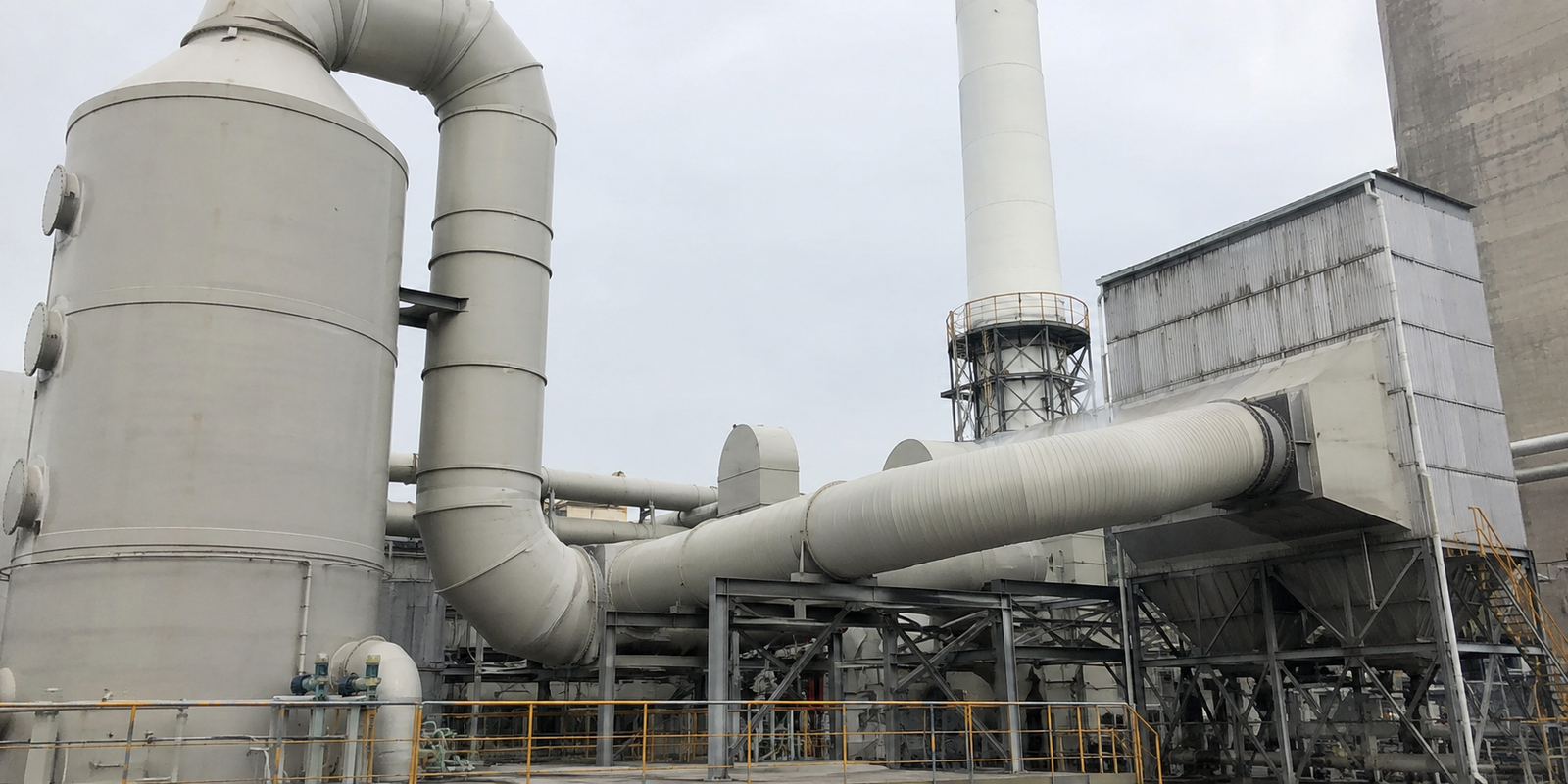
Image credit: Lauri Veerde, Wikimedia Commons, CC BY-SA 4.0.
Superheater tubes in a waste-to-energy boiler cannot be selected from steam temperature and alloy name alone.
The fireside surface may be exposed to deposits containing combinations of chlorine, sulfur, sodium, potassium, zinc, lead, calcium, iron, and other ash-forming elements. These deposits can develop local chemical conditions that are substantially more aggressive than the bulk flue gas.
At the same time, the tube must remain a qualified pressure boundary with adequate wall thickness, creep strength, weldability, toughness, dimensional accuracy, and inspection coverage.
Buyers should specify WTE superheater tubes by defining the actual corrosion circuit, maximum tube-metal temperature, steam conditions, flue-gas chemistry, deposit composition, ash loading, tube position, base-tube material, corrosion-resistant material architecture, pressure-code requirements, fabrication method, cladding or overlay thickness, dilution, NDT, qualification testing, and in-service inspection strategy.
The correct question is not:
“Is Alloy 625 resistant to waste-incineration corrosion?”
It is:
“Which tube construction provides an acceptable pressure boundary and a verifiable corrosion barrier at this exact superheater location?”
Why This Article Focuses on Superheater Tubes
Different sections of a WTE plant experience different environments.
| Plant Area | Main Material Issue |
|---|---|
| Furnace water walls | Flame-side reducing conditions, chlorination, deposits, refractory condition, and local heat flux |
| Screen and generating tubes | Ash impingement, deposits, and intermediate metal temperature |
| Superheater tubes | High metal temperature combined with chloride- and sulfate-rich deposits |
| Economizer | Lower-temperature deposits, condensation risk, and ash erosion |
| Dry flue-gas treatment | Abrasion, salts, and reagent deposits |
| Wet scrubber | Aqueous acid and chloride corrosion |
| Condensate and water systems | Water chemistry and conventional boiler-water corrosion |
A material suitable for a wet scrubber is not automatically suitable for a superheater.
Titanium, for example, may be considered in selected lower-temperature wet flue-gas treatment equipment but should not be treated as a direct substitute for a code-qualified high-temperature superheater pressure tube.
This article addresses the hot boiler pressure surface only.
Deposit Chemistry Matters More Than a Single Flue-Gas Number
Waste composition affects the release of:
- HCl
- NaCl
- KCl
- SO₂
- Zinc compounds
- Lead compounds
- Other volatile and entrained ash species
These species may condense, react, sulfate, melt, or become concentrated in deposits on the tube.
A field study of superheater materials in a WTE plant identified deposits dominated by CaSO₄, KCl, and NaCl, together with lower-melting mixtures involving Zn, Pb, Fe, Na, K, and Ni chlorides.
This has several procurement implications:
- Total chlorine in the waste is not enough.
- HCl concentration in the bulk gas is not enough.
- A deposit-free laboratory oxidation test is not enough.
- A material datasheet for clean air is not enough.
- Deposit chemistry must be assessed at the proposed tube location.
Deposit Data to Request
| Deposit Parameter | Why It Matters |
|---|---|
| Chloride content | Indicates potential chlorination and active oxidation |
| Sulfate content | Influences deposit chemistry and possible sulfation reactions |
| Na and K | Form alkali chlorides and sulfates |
| Zn and Pb | Can contribute to low-melting mixtures |
| Ca | Influences ash structure and sulfate content |
| Fe, Ni, Cr, and Mo | May indicate corrosion products from the tube or coating |
| Deposit loading | Affects chemical inventory and insulation |
| Deposit porosity | Influences gas transport to the metal |
| First melting temperature | Helps identify whether a liquid phase may form |
| Melt fraction | A small liquid fraction may significantly change corrosion |
| Location and exposure time | Deposit chemistry varies through the boiler |
The specification should use deposit samples from the relevant superheater zone rather than relying only on bulk fly-ash composition.
Tube-Metal Temperature Is a Critical Design Input
Flue-gas temperature, steam temperature, and tube-metal temperature are not the same value.
Tube-metal temperature depends on:
- Steam temperature
- Steam-side heat-transfer coefficient
- Heat flux
- Tube wall thickness
- Base and cladding thermal conductivity
- Deposit thickness
- Deposit thermal conductivity
- Local gas temperature
- Gas-flow distribution
- Tube position
- Internal scale
- Transient operation
A deposit can insulate the tube and increase the underlying metal temperature.
The highest tube-metal temperature may therefore occur at a local deposit or flow condition rather than at the location with the highest average steam temperature.
The RFQ Should Define
- Normal metal temperature
- Maximum calculated metal temperature
- Short-duration upset temperature
- Steam inlet and outlet temperature
- Steam pressure
- Heat flux
- Deposit allowance
- Metal-temperature calculation method
- Measurement or validation method
- Thermal cycling and startup frequency
A material qualification performed at 450°C should not be used to approve a location with a credible metal temperature of 525°C.
Why There Is No Universal “Best” Superheater Tube Alloy
High-temperature resistance depends on the ability to maintain a protective surface scale in the actual deposit and gas environment.
However, chloride-bearing deposits can:
- Disrupt protective oxides
- Form volatile metal chlorides
- Transport chlorine through the scale
- Create poorly adherent corrosion products
- Dissolve protective oxides through fluxing
- Concentrate attack at local pits
- Change corrosion during thermal cycling
Higher chromium or nickel can improve performance in some WTE environments, but composition alone does not establish a universal ranking.
Field testing has shown that higher-alloy austenitic steels and nickel alloys may perform better than low-alloy steels while still experiencing localized attack.
The material decision should therefore compare:
- Corrosion rate
- Maximum localized penetration
- Internal attack
- Oxide adhesion
- Damage morphology
- Creep strength
- Code allowable stress
- Weldability
- Inspection reliability
- Repairability
- Availability
Four Main Tube Construction Strategies
1. Code-Listed Ferritic or Austenitic Steel Tube
Examples may include grades covered by ASTM A213/A213M-24.
Possible advantages:
- Established boiler-code data
- Known fabrication methods
- Available creep properties
- Lower raw-material cost
- Easier joining to conventional headers
Possible limitations:
- Fireside corrosion may control life
- Higher-alloy austenitic grades are not immune to chloride deposits
- Extra wall thickness does not prevent localized penetration indefinitely
- Tube shields or coatings may still be required
This strategy may be appropriate where the tube-metal temperature and deposit corrosivity remain within a demonstrated operating envelope.
2. Solid High-Alloy Tube
A solid Alloy 625 tube may be supplied under ASTM B444-23 for seamless product or ASTM B704-23 for applicable welded product.
Possible advantages:
- Corrosion-resistant chemistry extends through the complete wall
- No cladding interface
- Corrosion resistance is not lost immediately after a thin external layer is consumed
- Local machining does not expose a different base material
Possible limitations:
- High cost
- Code acceptance and allowable stress require verification
- Thermal expansion and joining to dissimilar materials require review
- High-temperature chloride deposits can still cause local attack
- Product-standard condition may not match the required boiler condition
- Availability in long bent coils or unusual dimensions may be limited
An ASTM B444 certificate confirms the specified tube product.
It does not by itself confirm that the tube can be used as an ASME Section I pressure part at the proposed design temperature and pressure.
3. Composite or Co-Extruded Tube
A composite tube normally separates two functions:
- Inner tube or core: pressure containment and steam-side strength
- Outer alloy layer: fireside corrosion protection
Possible advantages:
- Structural material can be selected for code strength
- Expensive corrosion-resistant material is concentrated on the fireside
- Outer layer can be thicker and more uniform than some applied coatings
- May provide a controlled metallurgical bond
Possible limitations:
- Bond quality must be verified
- Outer-layer thickness can change during extrusion, drawing, bending, or grinding
- Differential expansion must be evaluated
- Tube ends and transition welds require special design
- Damage to the outer layer can expose the core
- The project must define whether the outer layer receives any structural credit
Composite Tube Requirements
- Core material and standard
- Outer alloy and UNS number
- Nominal and minimum outer-layer thickness
- Layer eccentricity
- Bond integrity
- Interface defects
- Bend thinning
- End preparation
- Transition design
- Heat treatment
- NDT of both pressure wall and bond
- Minimum residual corrosion layer after fabrication
4. Weld-Overlaid Tube
Alloy 625 weld overlay is widely considered for WTE water walls and selected convection-section tubes.
The welding consumable may be classified under AWS A5.14/A5.14M:2026.
Possible advantages:
- Uses a code-qualified structural base tube
- Applies corrosion-resistant material only where needed
- Can be manufactured as protected straight or formed tube sections
- Local repair may be possible
Possible limitations:
- Base-metal dilution changes the deposited chemistry
- Multiple layers may be needed to achieve the required exposed composition
- Thickness can vary at overlaps, starts, stops, and bends
- Porosity, cracks, lack of fusion, and undercut require control
- Grinding may reduce the effective layer
- Local penetration can reach the base tube before uniform average loss appears
- Weld-overlay fatigue and thermal cycling require review
Field research on WTE overlay panels has shown that nickel-based overlays can still experience localized pitting and measurable loss. Alloy 625 overlay should therefore be specified as a controlled corrosion barrier—not as a permanent immune surface.
Solid Alloy, Composite Tube, or Weld Overlay?
| Decision Factor | Solid Alloy Tube | Composite Tube | Weld-Overlaid Tube |
|---|---|---|---|
| Pressure boundary | Complete alloy wall | Mainly structural core | Mainly structural base tube |
| Corrosion layer | Entire wall | Metallurgically bonded outer layer | Deposited weld layer |
| Layer interface | None | Continuous bonded interface | Fusion boundary |
| Dilution | Not applicable | Controlled during manufacture | Major welding variable |
| Thickness uniformity | Tube-wall tolerance | Composite-layer tolerance | Deposition and grinding tolerance |
| Local damage consequence | Remaining wall has same chemistry | Core may become exposed | Base tube may become exposed |
| Fabrication | Tube production and bending | Specialized composite manufacture | Overlay welding and forming |
| Code assessment | Complete alloy must be accepted | Structural core and composite design | Base tube plus overlay design |
| Repair | Alloy welding required | More complex interface repair | Local weld repair may be possible |
| Typical cost structure | Highest alloy usage | Intermediate | Lower alloy volume but more process control |
The correct construction depends on the complete design—not only the alloy price per kilogram.
What Alloy 625 Can and Cannot Do
Alloy 625 contains nickel, chromium, molybdenum, and niobium and is widely used as a corrosion-resistant weld-overlay and tube candidate.
Its potential advantages include:
- Formation of chromium-rich oxide scales
- Better resistance than many low-alloy steels in chlorinating environments
- Useful fabrication and welding characteristics
- Availability in tube and welding-consumable forms
- Useful strength over a broad temperature range
It should not be described as immune to:
- Chloride-rich molten deposits
- Oxide fluxing
- Localized pitting
- Chromium or molybdenum depletion
- Excessive iron dilution
- Thermal cycling
- Ash impact
- Poor welding
- Thin or discontinuous overlay
- Operation above the qualified metal temperature
A 2025 study of Inconel 625 weld overlay in waste-incinerator environments found that it could form protective oxide structures under the investigated conditions, while also identifying dissolution and loss mechanisms involving chromium and molybdenum.
The technically accurate conclusion is:
Alloy 625 may significantly improve WTE fireside protection when correctly applied and qualified, but its performance remains environment-, temperature-, deposit-, and workmanship-dependent.
Why C-276 Is Not an Automatic Upgrade
Alloy C-276 is highly valuable in many aqueous chemical-processing environments.
That does not establish superior performance beneath high-temperature waste-incineration deposits.
The controlling mechanisms differ:
| Aqueous Chemical Service | WTE Fireside Service |
|---|---|
| Liquid composition and pH | Gas plus solid or molten deposit |
| Pitting and crevice corrosion | Chlorination, active oxidation, sulfidation and fluxing |
| Immersion corrosion rate | External scale growth and penetration |
| Electrochemical potential | Deposit phase and oxygen activity |
| Solution temperature | Tube-metal and deposit temperature |
| Molybdenum often benefits reducing-acid resistance | Mo-containing scales may also interact with hot deposits |
C-276, C-22, Alloy 59, or another nickel alloy should be used only when supported by representative WTE exposure data and approved boiler design requirements.
A general corrosion table for hydrochloric or sulfuric acid is not relevant evidence for superheater selection.
Overlay Chemistry and Iron Dilution Must Be Controlled
The exposed overlay chemistry can differ from the welding wire chemistry because molten base metal mixes into the deposited layer.
High iron dilution may:
- Reduce nickel and chromium at the exposed surface
- Change oxide composition
- Increase preferential attack
- Reduce the consistency of field performance
The specification should define:
- Welding consumable classification
- Target deposited-weld chemistry
- Maximum iron or minimum key alloy content at the exposed surface
- Number of layers
- Sampling depth
- Sampling locations
- Analytical method
- Acceptance method after grinding
- Repair-overlay chemistry
Checking only the wire certificate is insufficient.
The deposited surface should be verified after the qualified welding procedure and final finishing.
Overlay Thickness Must Be Defined as a Finished Minimum
A purchase specification should distinguish:
- Nominal deposited thickness
- Minimum as-welded thickness
- Minimum after grinding
- Minimum after bending
- Minimum at overlaps
- Minimum at repair zones
- Minimum required before service
- Minimum retirement thickness
The correct value depends on:
- Expected corrosion loss
- Inspection interval
- Localized attack allowance
- Fabrication loss
- Design life
- Whether any structural credit is permitted
- Ability to detect local pits
A universal Alloy 625 overlay thickness should not be copied from another boiler.
Thickness Mapping Locations
- Straight tube body
- Weld-bead overlap
- Start and stop points
- Circumferential transitions
- Bend extrados
- Bend intrados
- Tube ends
- Attachment areas
- Ground repairs
- Field weld transitions
Average thickness cannot substitute for the minimum local value.
Bends, Ends, and Transitions Require Separate Acceptance
A straight qualified tube may become nonconforming after bending or end preparation.
Bending Can Cause
- Outer-layer thinning
- Inner-layer compression
- Cracking
- Wrinkling
- Interface strain
- Ovality
- Surface damage
- Residual stress
End Preparation Can Cause
- Exposure of the base tube
- Thin corrosion-resistant edges
- Grinding damage
- Unprotected transition zones
- Dissimilar-metal weld complications
The purchase order should define:
- Permitted bend radius
- Required post-bend thickness
- Post-bend PT
- Ovality
- Cross-section qualification
- End-sealing or transition design
- Field-weld procedure
- Corrosion protection after installation
Product Standards and Boiler Codes Perform Different Jobs
| Document | Main Function |
|---|---|
| ASME BPVC Section I, 2025 | Construction rules for applicable power boilers |
| ASME BPVC Section II | Material properties and allowable stress information |
| ASME BPVC Section V | Nondestructive examination framework |
| ASME BPVC Section IX | Welding and brazing procedure and personnel qualification |
| ASTM A213/A213M-24 | Seamless ferritic and austenitic alloy-steel boiler and superheater tubes |
| ASTM B444-23 | Seamless Alloy 625 and related nickel-alloy pipe and tube |
| ASTM B704-23 | Welded nickel-alloy tube |
| AWS A5.14/A5.14M:2026 | Classification of nickel and nickel-alloy bare welding electrodes and rods |
The contract should identify the governing edition.
A tube may satisfy its ASTM product standard while remaining unsuitable for:
- The boiler design pressure
- The design metal temperature
- Required creep life
- The proposed joint
- The corrosion environment
- The applicable jurisdiction
What Should Be Included in the Qualification Program?
Laboratory qualification should reproduce the variables that control fireside corrosion.
Required Inputs
| Variable | Required Definition |
|---|---|
| Base material | Grade, condition, heat treatment and surface |
| Corrosion layer | Solid alloy, composite layer, overlay or coating |
| Deposit | Actual or representative chemical composition |
| Deposit loading | Mass per area and application method |
| Deposit state | Solid, partially molten or molten |
| Gas | O₂, HCl, SO₂, H₂O, CO₂ and other relevant species |
| Metal temperature | Controlled specimen temperature |
| Gas temperature | Separately reported |
| Temperature cycle | Steady exposure plus startup/shutdown where relevant |
| Exposure time | Sufficient to identify scale and local attack |
| Gas flow | Representative velocity and refresh rate |
| Ash impact | Separate test where mechanically important |
| Evaluation | Average loss, maximum penetration, internal attack and scale morphology |
Stronger Qualification Evidence
- Field history from the same WTE unit and location
- Internally cooled field probe at the target tube-metal temperature
- Pilot or full-scale test section
- Laboratory deposit-and-gas exposure
- Generic high-temperature oxidation data
- Alloy datasheet
A test using clean air without deposit should not override actual WTE field evidence.
What Should Be Inspected Before Shipment?
| Inspection Area | Required Evidence |
|---|---|
| Base-tube identity | Grade, heat, standard and condition |
| Pressure wall | Minimum wall, dimensions and required NDT |
| Alloy layer identity | Grade or deposited-weld chemistry |
| Overlay dilution | Surface chemistry or approved deposited-metal analysis |
| Alloy-layer thickness | Full mapping and minimum result |
| Bond or fusion | Qualified inspection method |
| Surface | Cracks, laps, porosity, undercut and grinding damage |
| PT | Final exposed surface and specified repair areas |
| Macrosection | Layer count, fusion, dilution and defects |
| Bends | Thickness, PT, ovality and visual examination |
| Ends | Protected transition and weld preparation |
| Repairs | Location, method, reinspection and chemistry |
| Dimensions | OD, wall, length, straightness and bend geometry |
| Heat treatment | Base tube and composite or overlay requirements |
| Documentation | MTC, NDT, overlay report, chemistry, thickness and conformity |
The inspection plan should identify whether each requirement applies per:
- Heat
- Lot
- Tube
- Bend
- Overlay procedure
- Repair area
- Sample section
What Buyers Should Include in the RFQ
| RFQ Category | Required Information |
|---|---|
| Boiler type | Grate, fluidized bed or other |
| Waste stream | MSW, RDF, industrial waste, biomass mixture and variability |
| Tube location | Superheater stage, row and gas-pass position |
| Steam condition | Pressure, inlet temperature and outlet temperature |
| Tube-metal temperature | Normal, maximum and upset |
| Flue gas | O₂, HCl, SO₂, H₂O, CO and relevant species |
| Deposit analysis | Cl, S, Na, K, Zn, Pb, Ca, Fe and other elements |
| Deposit condition | Loading, first melting temperature and melt fraction where available |
| Ash | Particle size, loading, velocity and soot-blowing exposure |
| Base tube | Grade, standard, condition and minimum wall |
| Material architecture | Solid alloy, composite, co-extruded, overlay or coating |
| Corrosion alloy | Grade and UNS designation |
| Product standard | ASTM, ASME, EN or project specification |
| Code | ASME Section I or another governing code |
| Structural credit | Whether the outer layer is included in pressure design |
| Alloy-layer thickness | Nominal, finished minimum and retirement minimum |
| Dilution | Deposited-metal chemistry and iron limit |
| Bending | Radius, post-bend thickness, ovality and inspection |
| Tube ends | Transition and field-weld design |
| Welding | Procedure, consumable, layer count and heat input |
| NDT | Base tube, overlay, bond, surface and bend inspection |
| Qualification | Laboratory, field-probe or plant-history requirements |
| Corrosion acceptance | Average loss, maximum penetration and morphology |
| Dimensions | OD, wall, length, straightness, bend and quantity |
| Documentation | MTC, WPS/PQR, chemistry, thickness maps, NDT and conformity |
| Inspection | Buyer, TPI, hold points and witness points |
| Delivery | Marking, packaging, protection and schedule |
| Design authority | Boiler OEM, code designer and materials engineer |
A request stating only:
“Alloy 625 tubes for a waste-incineration boiler”
does not provide enough information for a technically reliable quotation.
Common Procurement Mistakes
| Mistake | Why It Is Risky | Better Approach |
|---|---|---|
| Selecting from flue-gas HCl only | Deposit chemistry may be more aggressive | Analyze actual superheater deposits |
| Using steam temperature as metal temperature | Local tube metal may be hotter | Define calculated maximum metal temperature |
| Ranking materials by nickel content | Deposit corrosion is not controlled by nickel alone | Use representative exposure data |
| Assuming Alloy 625 is immune | 625 can pit and lose Cr/Mo under deposits | Define qualification and inspection |
| Selecting C-276 from aqueous corrosion tables | Water-based acid performance is a different mechanism | Use WTE deposit testing |
| Treating ASTM B444 as boiler approval | Product compliance does not complete code design | Verify Section I and Section II requirements |
| Ignoring overlay dilution | Wire chemistry may not equal exposed-layer chemistry | Test deposited surface chemistry |
| Specifying nominal thickness only | Local thin areas may control life | Define finished minimum thickness |
| Ignoring bends | Outer layer may thin or crack | Require post-bend inspection |
| Ignoring tube ends | Base material may become exposed | Define protected transition details |
| Using one coupon for the complete boiler | Deposit and temperature vary by location | Qualify the actual corrosion circuit |
| Inspecting average wall loss only | Local pits may penetrate first | Record maximum localized depth |
| Relying only on clean-air oxidation | Actual deposits can dissolve protective scales | Test gas and deposits together |
| Giving structural credit to cladding by assumption | Overlay may not be qualified as pressure wall | State structural role explicitly |
| Requesting an MTC only | MTC does not verify layer thickness or workmanship | Require the complete fabrication dossier |
Frequently Asked Questions
What is the most common nickel alloy for WTE boiler cladding?
Alloy 625 is a widely evaluated and applied candidate for WTE weld overlay and protected tube systems. Its use should still be supported by the actual deposit chemistry, tube-metal temperature, layer thickness, dilution control and inspection requirements.
Is solid Alloy 625 better than Alloy 625 overlay?
Not universally. Solid material maintains the same chemistry through the wall, while overlay uses less nickel alloy and retains a conventional structural base tube. Cost, code design, thickness, localized attack, fabrication and repair strategy should all be compared.
Can Alloy 625 still corrode in a waste-incineration boiler?
Yes. Field and laboratory research has identified localized attack, oxide fluxing and alloy-element loss under aggressive chloride- and sulfate-containing deposits.
Is C-276 better than Alloy 625 for superheater tubes?
No general conclusion can be made. C-276 performs strongly in many aqueous chemical environments, but that does not automatically establish superior resistance beneath high-temperature WTE deposits.
Can Alloy 825 be used for WTE superheater tubes?
It may be evaluated where supported by field or representative test data. It should not be selected solely because it is a nickel alloy.
Can titanium be used for WTE superheater tubes?
Titanium should not be treated as a direct replacement for a code-qualified high-temperature boiler tube. Its more typical WTE opportunities are in separately evaluated, lower-temperature aqueous flue-gas treatment systems.
Which ASTM standard covers Alloy 625 tube?
ASTM B444 covers applicable cold-worked seamless Alloy 625 pipe and tube. ASTM B704 covers applicable welded nickel-alloy tube. The governing project edition and boiler-code acceptance must also be specified.
Does the corrosion-resistant outer layer count as pressure wall?
Only when the governing design code and approved engineering calculation explicitly permit it. Many overlay systems rely on the base tube as the pressure boundary.
How should overlay thickness be specified?
State the nominal deposited thickness, minimum finished thickness, post-bend minimum, measurement method, mapping locations and retirement criterion.
Why must iron dilution be controlled?
Base-metal iron mixes into the overlay during welding. Excessive dilution can change the exposed alloy chemistry and high-temperature oxidation or corrosion performance.
Should the material be tested with actual ash deposits?
Representative deposits provide stronger evidence than clean-gas testing. Actual deposits should be used where possible, or a synthetic deposit should reproduce the relevant chloride, sulfate, alkali and heavy-metal chemistry.
Is average corrosion rate enough?
No. A material with moderate average loss can still develop a deep local pit that reaches the base tube. Maximum penetration and attack morphology should be reported.
What should buyers send with a quotation request?
Send the tube location, steam conditions, tube-metal temperature, gas chemistry, deposit analysis, base tube, corrosion alloy, product form, layer thickness, code, dimensions, bending, testing, inspection, documents and quantity.
Conclusion
Specifying WTE superheater tubes requires the pressure-boundary design and fireside corrosion protection to be evaluated together.
The core decisions are:
- Which tube location is being protected?
- What deposit forms at that location?
- What is the maximum tube-metal temperature?
- Which material carries the pressure?
- Is the corrosion barrier solid alloy, composite layer or weld overlay?
- What is the minimum finished corrosion-layer thickness?
- How will chemistry, dilution, bond and defects be verified?
- What field or representative test supports the selection?
- How will localized loss be detected during service?
Alloy 625 is an important candidate for WTE superheater protection, but it should not be purchased from the alloy name alone.
The quotation and purchase order should connect:
- Operating environment
- Boiler design code
- Base tube
- Corrosion-resistant layer
- Manufacturing process
- Qualification evidence
- Inspection
- Documentation
- In-service monitoring
For project-approved nickel-alloy tube enquiries, buyers should provide the exact grade, UNS designation, tube construction, base material, dimensions, minimum layer thickness, bending, testing, NDT, certification and packaging requirements.
Emily PIPE can review whether the requested solid nickel-alloy tube, welded tube, dimensions, supplied condition, surface, testing and documentation scope are technically manufacturable.
Final approval of boiler pressure design, composite or overlay construction, WTE corrosion performance and remaining-life criteria should remain with the boiler OEM, authorized code designer and responsible materials or corrosion engineer.