
How Should Buyers Select Alloys for Semiconductor Exhaust Gas Abatement Systems?
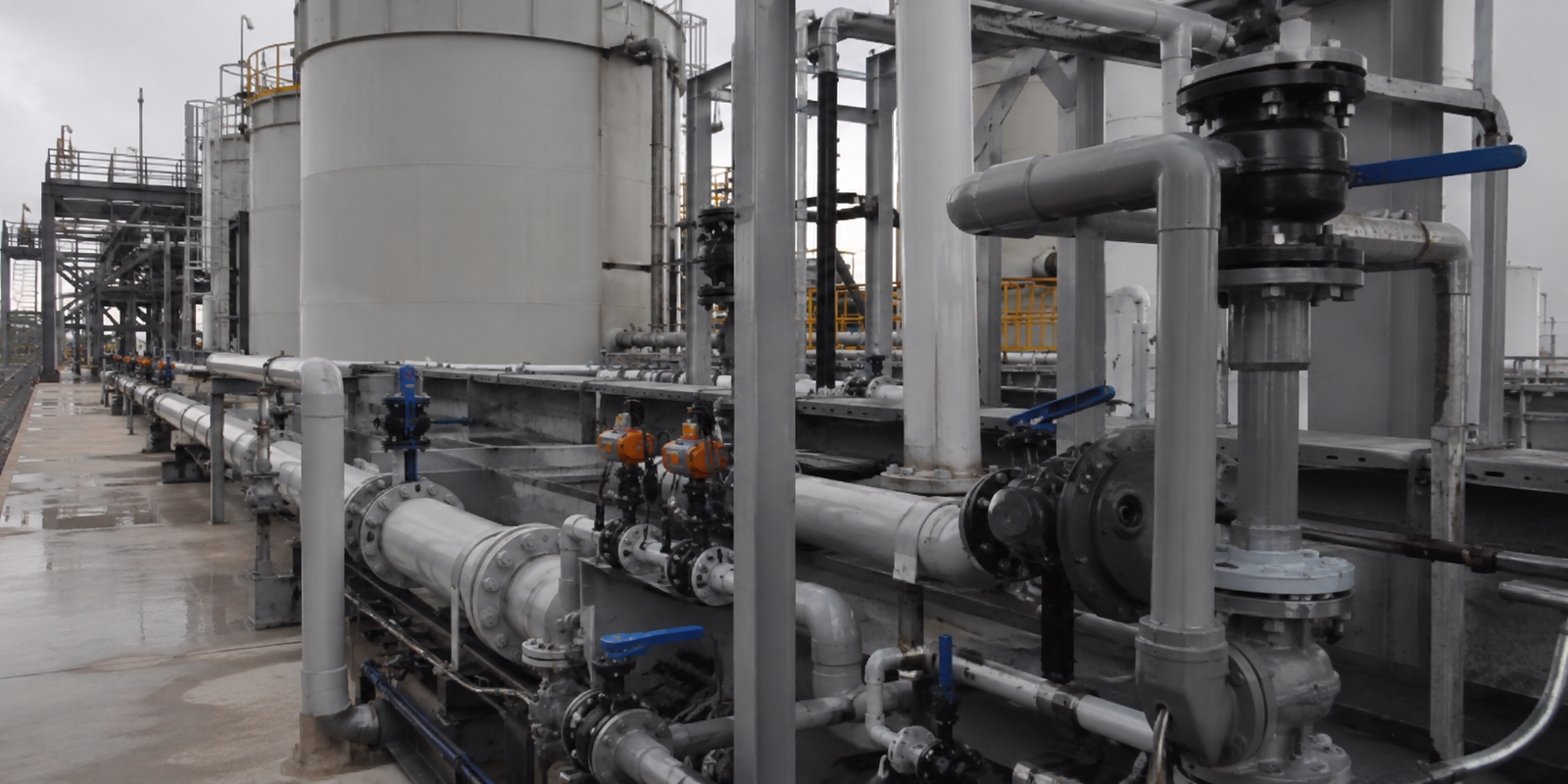
Image credit: NASA Glenn Research Center, Wikimedia Commons, public domain.
Alloy selection for semiconductor exhaust gas abatement systems should begin with the treatment stage—not with a preferred alloy name.
The inlet line, thermal reaction chamber, quench section, wet scrubber, drain system, and downstream exhaust duct may contact completely different combinations of dry gases, high-temperature reaction products, acidic condensate, salts, particles, and cleaning chemicals.
Buyers should define the gas composition, reaction products, moisture, condensation temperature, operating temperature, thermal cycles, deposits, cleaning method, material form, welding, and inspection requirements for each abatement zone. No nickel alloy, stainless steel, or titanium grade is automatically suitable for the complete system.
Why Abatement Stage Controls Material Selection
Semiconductor processes may use or generate gases such as:
- CF₄, C₂F₆, C₃F₈, CHF₃ and c-C₄F₈
- NF₃ and SF₆
- F₂, Cl₂ and ClF₃
- HF, HCl and HBr
- BCl₃, SiCl₄, SiF₄ and WF₆
- NH₃, H₂ and N₂O
- Arsine, phosphine and other specialty gases
The EPA semiconductor industry overview confirms that fluorinated gases are widely used for plasma etching and chamber cleaning. The NIST semiconductor process-gas index also demonstrates the diversity of gases that may enter an exhaust system.
The material decision must therefore identify what reaches each equipment zone after dilution, plasma reaction, combustion, oxidation, quenching, neutralization, and condensation.
Divide the System Into Material Zones
| Abatement Zone | Main Exposure | Main Material Question |
|---|---|---|
| Tool exhaust and foreline | Unreacted gases, reaction by-products, low pressure and deposits | Can the surface resist the actual dry gas and prevent particle generation? |
| Abatement inlet | Mixed gases, temperature changes and possible condensation | Will acids or salts form before treatment begins? |
| Thermal or plasma chamber | High temperature, oxidation, halogenation and thermal cycling | Can the material retain strength and maintain a protective scale? |
| Quench zone | Rapid cooling, condensation and thermal shock | Can the material tolerate both hot gas and newly formed acidic liquid? |
| Wet scrubber | HF, HCl, salts, oxidants, alkali and suspended solids | Which alloy or nonmetallic material fits the actual circulating liquid? |
| Drain and recirculation | Concentrated fluoride, chloride, solids and cleaning chemicals | Can the material resist the maximum accumulated concentration? |
| Downstream duct | Wet gas, droplets, salts and intermittent condensation | Is the metal suitable, or is a polymer or lined system more appropriate? |
A material qualified for the hot reaction chamber should not automatically be specified for the wet scrubber.
Dry Gas and Wet Condensate Are Different Environments
One of the most important distinctions is whether water is present.
Dry or High-Temperature Zone
Possible mechanisms include:
- High-temperature oxidation
- Halogenation
- Formation of volatile metal halides
- Scale cracking or spallation
- Carburization or nitridation
- Thermal fatigue
- Deposit-related attack
Wet or Condensing Zone
Possible mechanisms include:
- General acid corrosion
- Localized corrosion
- Crevice attack
- Fluoride damage
- Chloride attack
- Corrosion beneath deposits
- Weld or heat-affected-zone attack
A material’s hydrochloric-acid immersion data cannot directly qualify it for dry chlorine at high temperature.
The reverse is also true: good oxidation resistance in hot gas does not prove compatibility with condensed HF or HCl.
Preliminary Alloy Screening by Abatement Zone
The following table is a screening guide, not a universal approval list.
| Material | Possible Starting Application | Important Limitation |
|---|---|---|
| 316L stainless steel | Selected cool, dry or mildly corrosive areas | Halide condensate, deposits and weld zones may cause localized attack |
| High-alloy stainless steel | Selected cooler wet halide zones | Performance remains dependent on HF, chloride, pH and temperature |
| Alloy 600 / UNS N06600 | Hot gas tubing and components requiring oxidation resistance | Dry halogens, deposits and condensation still require testing |
| Alloy 601 / UNS N06601 | High-temperature oxidizing reaction zones | High-temperature halogen compatibility is condition-specific |
| Alloy 625 / UNS N06625 | Mixed-duty tubing, bellows, connectors and selected wet zones | It is not automatically resistant to every fluoride or dry-halogen condition |
| Alloy C-22 / UNS N06022 | Selected mixed-acid and oxidizing wet-condensate zones | High-temperature strength and dry-gas compatibility require separate review |
| Alloy C-276 / UNS N10276 | Selected severe wet HF/HCl or mixed-acid conditions | Aqueous resistance does not establish hot dry-halogen performance |
| Alloy 400 / UNS N04400 | Selected project-approved HF service | Oxidizing contaminants and other acids can change performance |
| Titanium Grade 2 or 7 | Selected cool, oxidizing, chloride-containing wet zones | Fluoride and acidic fluoride can damage the titanium passive film |
| Polymer or lined system | Selected wet scrubber, drain and low-temperature ducting | Temperature, permeation, fire, vacuum and mechanical loading must be checked |
Research on titanium passive films shows that fluoride can be substantially more damaging than chloride, particularly in acidic aqueous environments. Titanium should therefore not be selected simply because the exhaust contains the word “chloride” or “fluorine.” See the study on titanium stability in chloride- and fluoride-containing electrolytes.
Which Alloys Fit Hot Reaction Zones?
Thermal, catalytic and plasma systems may expose metallic components to elevated temperature and repeated startup and shutdown.
Samsung describes a semiconductor exhaust-treatment process in which fluorinated gases are decomposed at approximately 750°C before HF is removed in a later scrubber stage. This illustrates why the hot reactor and wet scrubber require separate materials.
For the hot zone, buyers should evaluate:
- Maximum metal temperature
- Temperature uniformity
- Heating and cooling rate
- O₂ concentration
- Halogen concentration
- Reaction products
- Deposits
- Creep or distortion
- Oxide-scale adhesion
- Weld behaviour
Alloy 600, Alloy 601, Alloy 617, or another heat-resistant alloy may be screened where temperature strength and oxidation resistance are important.
However, high chromium and nickel contents do not create immunity to fluorine, chlorine, or metal-halide deposits.
Which Alloys Fit Wet Scrubber Zones?
A wet scrubber can contain a more concentrated liquid than the incoming exhaust suggests.
The circulating liquid may accumulate:
- Fluoride
- Chloride
- Ammonium salts
- Sodium or potassium salts
- Dissolved silicon compounds
- Metal ions
- Suspended particles
- Oxidants
- Neutralization chemicals
The materials review should use the liquid composition at the end of the operating or replacement interval—not only the fresh make-up water.
Possible candidates may include high-alloy stainless steel, Alloy 625, C-22, C-276, Alloy 400, titanium, polymers, or lined construction.
The final choice depends on:
- Free HF
- Total fluoride
- Chloride
- pH
- Oxidation-reduction condition
- Temperature
- Solids
- Cleaning chemicals
- Crevices
- Welds
- Permitted metal contamination
A metal alloy is not always the best option for a low-temperature wet scrubber. Polymer, FRP, or lined construction may be more suitable when its temperature, fire, permeation, and mechanical limits are satisfied.
Condensation Must Be Treated as a Design Condition
Even when the incoming exhaust is described as dry, condensation may occur during:
- Startup
- Shutdown
- Loss of heat tracing
- Quenching
- Gas dilution
- Cold-wall exposure
- Long horizontal runs
- Dead legs
- Equipment standby
The condensate may contain much higher concentrations of HF, HCl, or salts than the bulk gas.
The RFQ should therefore state:
- Gas dew point
- Minimum metal temperature
- Water concentration
- Heat-tracing requirement
- Expected condensate composition
- Drain arrangement
- Maximum stagnant time
- Startup and shutdown procedure
“Dry process gas” is incomplete unless the absence of condensation is demonstrated throughout the operating envelope.
Product Standards Do Not Prove Abatement Compatibility
Relevant nickel-alloy tube standards may include:
- ASTM B167-23 for Alloy 600, 601, 617 and related seamless pipe and tube
- ASTM B444-23 for Alloy 625 seamless pipe and tube
- ASTM B622-23 for C-22, C-276 and other nickel-alloy seamless pipe and tube
These standards verify specified product requirements such as:
- Chemical composition
- Heat treatment
- Mechanical properties
- Dimensions
- Hydrostatic or nondestructive testing
- Workmanship
They do not prove:
- Resistance to the exact exhaust mixture
- Compatibility with condensed HF or HCl
- High-temperature halogen resistance
- Thermal-cycle life
- Welded-joint performance
- Acceptable particle generation
Application approval requires separate exposure and component evidence.
What Testing Should Buyers Request?
| Test Item | Required Information |
|---|---|
| Gas exposure | Complete gas composition, temperature, moisture and duration |
| Condensate test | HF, HCl, fluoride, chloride, pH, oxidants and temperature |
| Thermal cycling | Maximum and minimum temperature, ramp rate and cycles |
| Deposit exposure | Actual or representative salts and process particles |
| Specimen condition | Final alloy, heat treatment, surface and cold work |
| Weld testing | Parent material, weld metal and heat-affected zone |
| Evaluation | Mass loss, maximum depth, pitting, scale and cross-section |
| Particle assessment | Metal or corrosion-product particles released from the surface |
| Cleaning exposure | Actual maintenance and decontamination chemicals |
A short room-temperature immersion test cannot qualify the complete abatement system.
The test should reproduce the specific zone being evaluated.
SEMI Guidelines and Material Specifications Serve Different Purposes
SEMI S6-0618 provides safety performance criteria and test methods for exhaust ventilation connected to semiconductor manufacturing equipment.
It references related documents such as SEMI F5 and SEMI S2.
SEMI S6 is not a material-selection table. The equipment designer must still determine:
- Gas compatibility
- Temperature resistance
- Fire risk
- Pressure or vacuum loads
- Leakage control
- Corrosion allowance
- Cleaning and maintenance requirements
What Buyers Should Include in the RFQ
| RFQ Category | Required Information |
|---|---|
| Process | Etch, deposition, chamber cleaning, epitaxy or another process |
| Abatement type | Burn-wet, plasma-wet, thermal, catalytic, wet scrubber or dry media |
| Equipment zone | Inlet, reactor, quench, scrubber, drain or outlet duct |
| Gas composition | All normal gases and concentrations |
| Reaction products | Expected acids, salts, particles and condensable species |
| Moisture | Normal, maximum and condensation condition |
| Temperature | Normal, maximum, minimum and thermal cycles |
| Pressure | Operating pressure, vacuum and pressure fluctuations |
| Liquid chemistry | HF, fluoride, HCl, chloride, pH, oxidants and solids |
| Cleaning | Chemicals, temperature, frequency and duration |
| Material | Exact alloy and UNS designation |
| Product form | Tube, pipe, bar, plate, bellows or fabricated component |
| Product standard | ASTM, ASME, EN, SEMI or project requirement |
| Condition | Annealed, solution annealed, cold worked or other |
| Dimensions | OD, wall, length, tolerance and quantity |
| Welding | Process, filler, purge and qualification |
| Testing | Gas, condensate, corrosion, thermal-cycle and particle tests |
| NDT | ECT, UT, pressure test and surface examination |
| Documentation | MTC, heat treatment, NDT and qualification reports |
| Approval authority | Equipment OEM, fab owner or materials engineer |
A request stating only:
“Need C-276 tubes for semiconductor exhaust gas”
does not provide enough information for a technically reliable offer.
Frequently Asked Questions
Which alloy is best for semiconductor exhaust abatement?
There is no universal best alloy. The correct material depends on the treatment zone, gas composition, moisture, condensation, temperature, deposits and cleaning chemicals.
Is Alloy 625 suitable for fluorine-containing exhaust?
It may be screened for selected components, but fluorine-containing gas, acidic fluoride condensate and high-temperature fluorination are different environments and require separate evidence.
Is C-276 better than Alloy 625?
Not universally. C-276 may offer advantages in selected wet mixed-acid conditions, while Alloy 625 may provide another balance of strength, fabrication and corrosion resistance.
Can titanium be used in HF scrubbers?
Titanium is not a default material for fluoride or HF. Acidic fluoride can damage its protective oxide film. The actual fluoride chemistry must be tested.
Is stainless steel always unsuitable?
No. Stainless steels may be acceptable in selected cool, dry or controlled wet zones. Halide condensate, deposits and weld areas require careful review.
Does an ASTM certificate prove semiconductor-gas compatibility?
No. It proves compliance with the ordered tube or pipe standard, not performance in the specific abatement environment.
What information is most important for quotation?
Provide the treatment stage, gas composition, reaction products, moisture, temperature, liquid chemistry, alloy, standard, dimensions, welding, testing and documentation requirements.
Conclusion
Alloy selection for semiconductor exhaust gas abatement systems should follow the treatment process.
The main steps are:
- Identify the exact abatement zone.
- Define the incoming gases and reaction products.
- Separate dry hot-gas exposure from wet condensate exposure.
- Establish temperature and condensation limits.
- Select the material for the controlling mechanism.
- Test the final alloy, surface and weld under representative conditions.
- Confirm product standards, dimensions and inspection requirements.
Alloy 600, Alloy 601, Alloy 625, C-22, C-276, Alloy 400, titanium and stainless steel may each be relevant in selected zones.
None should be approved from alloy reputation alone.
For nickel-alloy or titanium tube and bar enquiries, buyers should provide the abatement stage, gas composition, condensate chemistry, temperature, dimensions, alloy, product standard, condition, testing, NDT and documentation requirements.
Emily PIPE can review whether the requested nickel-alloy or titanium tube or bar grade, dimensions, supplied condition, surface, testing and certification requirements are technically manufacturable.
Final material compatibility, equipment safety, exhaust design and abatement performance should remain with the equipment OEM, fab owner and responsible materials engineer.