
How Should Buyers Specify Materials for Plasma Exhaust and Wet Abatement Equipment?
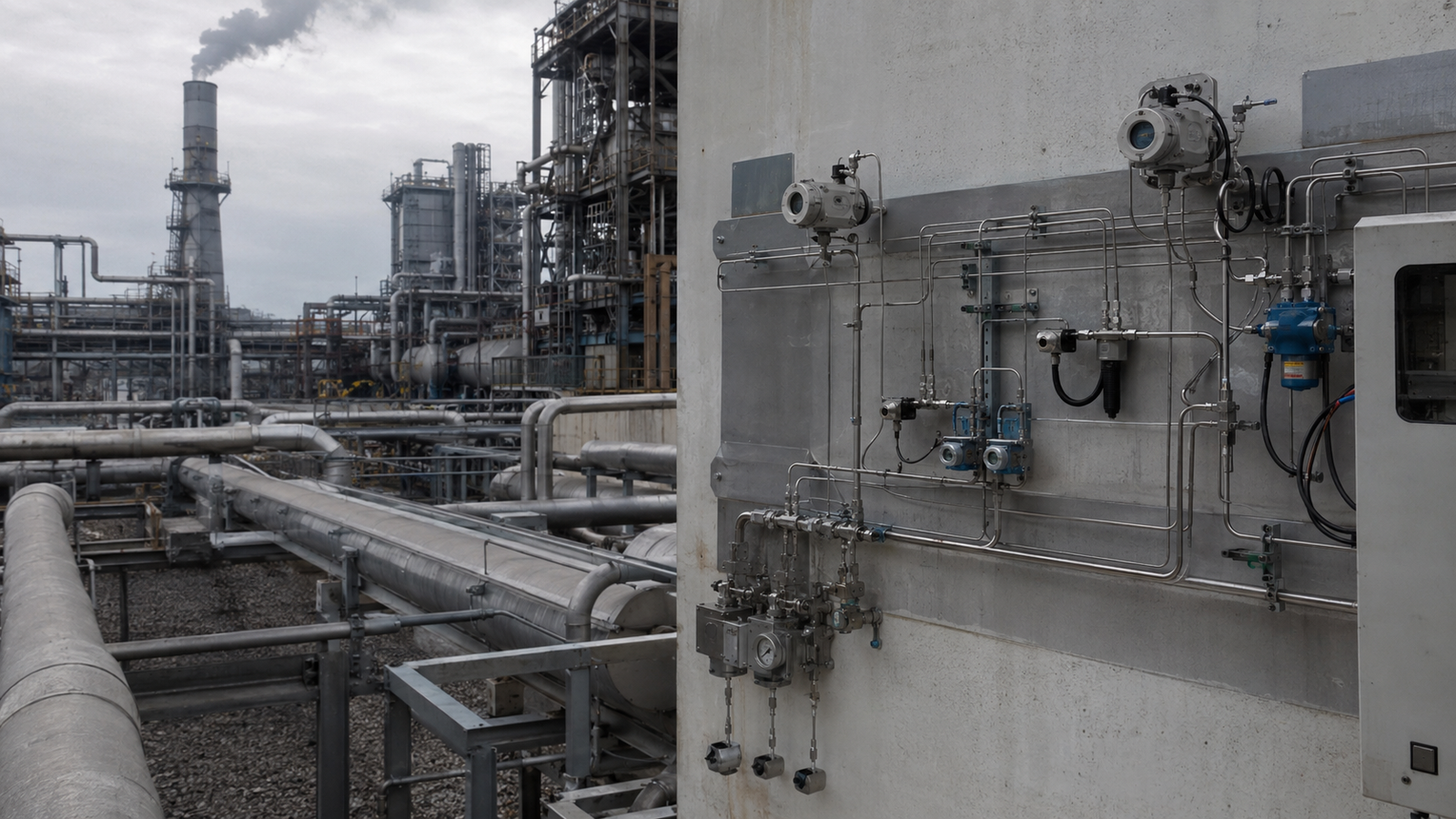
Image credit: Tyankee, Wikimedia Commons, CC0.
Plasma exhaust lines and wet abatement equipment should not automatically use the same material.
The plasma exhaust side may handle dry reactive gases, vacuum, deposits, temperature changes, and thin-wall bellows. The wet abatement side handles circulating liquid containing dissolved fluorides, chlorides, acids, alkali, salts, and suspended solids.
Buyers should specify the two systems separately. Plasma exhaust materials should be selected for the actual gas, moisture, deposits, temperature, vacuum integrity, and particle-release risk. Wet abatement materials should be selected from the maximum liquid concentration, pH, fluoride, chloride, oxidants, temperature, solids, and cleaning chemistry.
Plasma Exhaust and Wet Abatement Are Different Environments
| Requirement | Plasma Exhaust Line | Wet Abatement Equipment |
|---|---|---|
| Main phase | Gas, vapour and deposited solids | Circulating aqueous liquid and wet gas |
| Typical pressure | Vacuum or low pressure | Usually near atmospheric or pump pressure |
| Main risks | Halide attack, deposits, condensation, particles and bellows fatigue | General corrosion, localized attack, crevices, solids and chemical accumulation |
| Temperature | May vary from heated foreline to cold pump exhaust | Usually lower but chemically concentrated |
| Critical components | Foreline, bellows, fittings, pump exhaust and heated pipe | Scrubber vessel, circulation tube, nozzles, drain and recirculation line |
| Main test medium | Representative gas, condensate and deposits | Representative scrubber liquid |
| Main specification error | Selecting from aqueous acid data only | Selecting from dry-gas or oxidation data only |
A material that performs well in a wet HF solution may not resist hot dry fluorine species.
A heat-resistant alloy that performs well in dry exhaust may fail rapidly after HF- or HCl-containing condensate forms.
What Should Be Evaluated for Plasma Exhaust Lines?
EPA confirms that fluorinated gases are energized and dissociated in plasma during semiconductor etching and chamber cleaning. The resulting exhaust may contain unreacted gases, reaction products and entrained deposits.
The plasma exhaust specification should define:
- Complete process-gas list
- Normal and maximum concentrations
- Exhaust temperature
- Minimum surface temperature
- Moisture and condensation potential
- Vacuum level
- Deposited powders and salts
- Cleaning procedure
- Heating or heat tracing
- Pressure and temperature cycles
- Required particle-release limit
Bellows Require Special Attention
Flexible bellows are thin, cyclically loaded and geometrically difficult to drain or clean. Their convolutions can retain moisture and halide deposits.
A 2025 study comparing 316Ti and Alloy 926 bellows in a simulated humid fluoride/chloride environment found:
- Shallower pits on Alloy 926
- Lower chromium and halide emissions from Alloy 926
- Higher particle emissions from 316Ti
See the study on halide corrosion and airborne emissions from semiconductor exhaust bellows.
This does not mean Alloy 926 is suitable for every plasma exhaust line. The result supports evaluating:
- Thin-wall geometry
- Condensation
- Deposit retention
- Corrosion-generated particles
- Fatigue after corrosion
What Should Be Evaluated for Wet Abatement Equipment?
A wet scrubber converts the exhaust problem into a liquid-chemistry problem.
The circulating liquid may accumulate:
- Free HF
- Total fluoride
- HCl and chloride
- Ammonium salts
- Sodium or potassium salts
- Dissolved silicon compounds
- Oxidants
- Neutralization chemicals
- Metal ions
- Suspended solids
The material should be assessed using the maximum expected concentration before liquid replacement or blowdown—not only fresh make-up water.
Required Liquid Data
| Parameter | Why It Matters |
|---|---|
| pH range | Controls acid severity and passive-film stability |
| Free HF | More relevant to some materials than total fluoride alone |
| Total fluoride | Indicates accumulated fluorine-containing species |
| Chloride | Influences localized corrosion |
| Oxidation-reduction condition | Can change alloy performance |
| Temperature | Affects corrosion and polymer limits |
| Solids | Affect deposits, plugging and local wear |
| Cleaning chemicals | May be more aggressive than normal operation |
| Replacement interval | Determines maximum accumulated concentration |
Preliminary Material Comparison
This table supports initial screening only.
| Material | Possible Plasma Exhaust Role | Possible Wet Abatement Role | Main Limitation |
|---|---|---|---|
| 316L | Cool and well-controlled dry sections | Mild, low-chloride liquid | Thin bellows and halide condensate can be vulnerable |
| Alloy 926 / N08926 | Humid halide bellows or tubing candidate | Selected chloride-containing liquid | Not a universal hot dry-halogen material |
| Alloy 600 / N06600 | Heated exhaust and oxidation-resistant components | Limited wet-acid role | Wet mixed-acid resistance may be insufficient |
| Alloy 601 / N06601 | High-temperature oxidizing exhaust zones | Normally not selected for severe wet acid | Dry-halogen compatibility still requires evidence |
| Alloy 625 / N06625 | Bellows, connectors and mixed-temperature tubing | Selected mixed wet service | Not universally resistant to HF or every dry halogen |
| Alloy C-22 / N06022 | Limited hot-gas use after testing | Selected oxidizing mixed-acid liquid | High-temperature strength and gas compatibility require separate review |
| Alloy C-276 / N10276 | Not approved from wet-acid data alone | Candidate for selected severe mixed-acid liquid | Aqueous resistance does not prove plasma-exhaust suitability |
| Titanium Grade 2 or 7 | Limited project-specific use | Selected oxidizing chloride liquid | Acidic fluoride can damage the passive film |
| Polymer or FRP | Limited by vacuum, heat and outgassing | Often relevant for cool wet scrubbers and drains | Temperature, fire, permeation and mechanical limits |
Why Titanium Requires Caution in Wet Fluoride Service
Titanium performs well in many oxidizing chloride-containing liquids because of its protective oxide film.
Fluoride behaves differently.
Research on titanium passive films found that fluoride forms stronger interactions with the titanium surface than chloride, and acidic fluoride can destabilize the passive film. See titanium stability in chloride- and fluoride-containing electrolytes.
Titanium should therefore not be approved from total chloride resistance alone.
The buyer should provide:
- pH
- Free HF
- Total fluoride
- Temperature
- Oxidants
- Crevice conditions
- Galvanic connections
- Cleaning chemistry
Why C-276 Is Not Automatically Best for Plasma Exhaust
Alloy C-276 has strong resistance to many wet mixed-acid environments.
Plasma exhaust may instead involve:
- Dry fluorination or chlorination
- Volatile metal-halide formation
- High-temperature oxidation
- Deposited salts
- Vacuum cycling
- Thin-wall fatigue
- Intermittent condensation
These conditions cannot be represented by a room-temperature hydrochloric-acid corrosion chart.
C-276 may be considered for a wet condensate or scrubber circuit when supported by representative testing. Its use in a hot dry exhaust line requires separate evidence.
Why Alloy 625 Is Not a Universal Compromise
Alloy 625 is often considered because it combines:
- Useful mechanical strength
- Fabricability
- Availability in tube and pipe
- Broad corrosion resistance
- Good weldability
However, the buyer still needs to verify:
- Dry-gas compatibility
- HF or fluoride condensate
- Temperature
- Deposits
- Bellows fatigue
- Weld condition
- Particle release
- Cleaning chemicals
Using the same Alloy 625 specification for a heated foreline and a scrubber drain is not a complete material-selection method.
Product Standards Do Not Prove Process Compatibility
Relevant product standards may include:
- ASTM B167-23 for Alloy 600, 601 and related seamless tube
- ASTM B444-23 for Alloy 625 seamless pipe and tube
- ASTM B622-23 for C-22, C-276 and related seamless pipe and tube
- ASTM B677-26 for Alloy 926 and related seamless pipe and tube
These standards verify the ordered product requirements.
They do not prove:
- Dry plasma-gas resistance
- Wet HF compatibility
- Bellows fatigue life
- Condensation resistance
- Particle-generation performance
- Compatibility with cleaning chemicals
Application qualification remains separate from material certification.
What Testing Should Be Requested?
Plasma Exhaust
- Representative gas composition
- Moisture and condensation cycle
- Maximum surface temperature
- Actual deposits or synthetic salts
- Thermal and vacuum cycling
- Bellows or welded specimen
- Leak and fatigue testing
- Corrosion-product particle analysis
Wet Abatement
- Maximum scrubber-liquid concentration
- Free HF and total fluoride
- Chloride and pH
- Oxidants and neutralization chemicals
- Operating temperature
- Crevice specimen
- Weld and heat-affected-zone specimen
- Maximum penetration and metal-release analysis
The same laboratory test should not be used to approve both environments.
What Buyers Should Include in the RFQ
| RFQ Category | Plasma Exhaust | Wet Abatement |
|---|---|---|
| Equipment | Foreline, bellows, fitting or pump exhaust | Scrubber, recirculation tube, nozzle or drain |
| Process chemistry | All gases and reaction products | Complete circulating-liquid chemistry |
| Moisture | Normal and condensation condition | Water is continuously present |
| Temperature | Gas and minimum wall temperature | Liquid temperature |
| Pressure | Vacuum and pressure cycles | Pump or static pressure |
| Deposits | Species, loading and cleaning | Suspended solids and salt deposits |
| Material | Grade and UNS number | Grade and UNS number |
| Product form | Tube, pipe, bellows or fitting | Tube, pipe, bar or fabricated component |
| Dimensions | OD, wall, length and tolerance | OD, wall, length and tolerance |
| Testing | Gas, deposit, vacuum and fatigue | Immersion, crevice, weld and metal release |
| Documentation | MTC, heat treatment, NDT and leak report | MTC, NDT and corrosion reports |
A quotation request should not state only:
“Need C-276 tubes for a semiconductor scrubber.”
It should identify whether the material is for the dry pump exhaust, quench transition, scrubber circulation line or concentrated drain.
Frequently Asked Questions
Can one alloy be used for both plasma exhaust and wet abatement?
Possibly, but it should not be assumed. The gas-side and liquid-side failure mechanisms require separate validation.
Is Alloy 926 better than 316L for semiconductor exhaust bellows?
A recent simulated halide study found lower pit depth and particle emissions from Alloy 926 than from 316Ti. The result applies to the tested conditions and does not approve Alloy 926 for every exhaust chemistry.
Is Alloy 625 suitable for both systems?
It may be a candidate for both, but the hot dry-gas condition and wet scrubber liquid must be evaluated separately.
Is C-276 the best material for an HF scrubber?
Not automatically. Free HF, fluoride, oxidants, temperature, solids and cleaning chemistry must be defined before approval.
Can titanium be used in a fluoride scrubber?
Only after reviewing pH and fluoride chemistry. Acidic fluoride can destabilize titanium’s passive film.
Does SEMI S6 specify the alloy grade?
No. SEMI S6 provides safety performance criteria for semiconductor equipment exhaust ventilation. It is not a material-selection standard.
What is the most important RFQ information?
State the exact equipment location, phase, gas or liquid composition, moisture, temperature, pressure, deposits, material form, dimensions, testing and documentation requirements.
Conclusion
Plasma exhaust and wet abatement equipment should be specified as two different material environments.
For plasma exhaust, focus on:
- Dry or condensing gas chemistry
- Vacuum integrity
- Deposits
- Temperature
- Bellows fatigue
- Particle release
For wet abatement, focus on:
- Free HF
- Total fluoride
- Chloride
- pH
- Oxidants
- Solids
- Cleaning chemistry
Alloy 926, Alloy 600, Alloy 601, Alloy 625, C-22, C-276, titanium and nonmetallic materials may each be suitable in selected locations.
None should be approved for the complete system from alloy reputation alone.
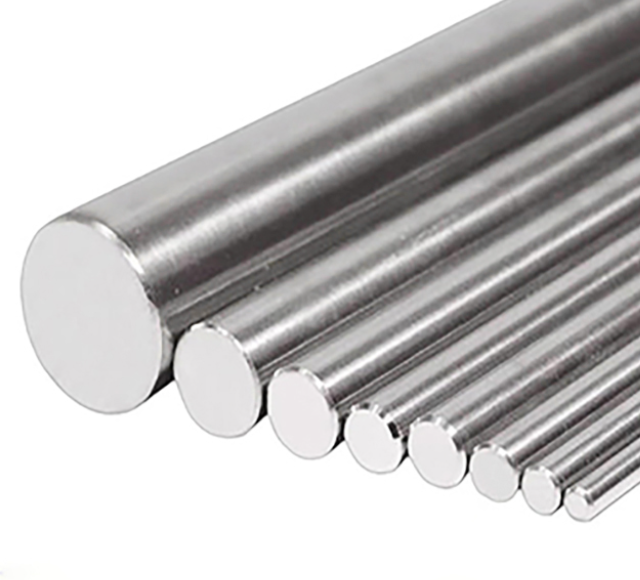
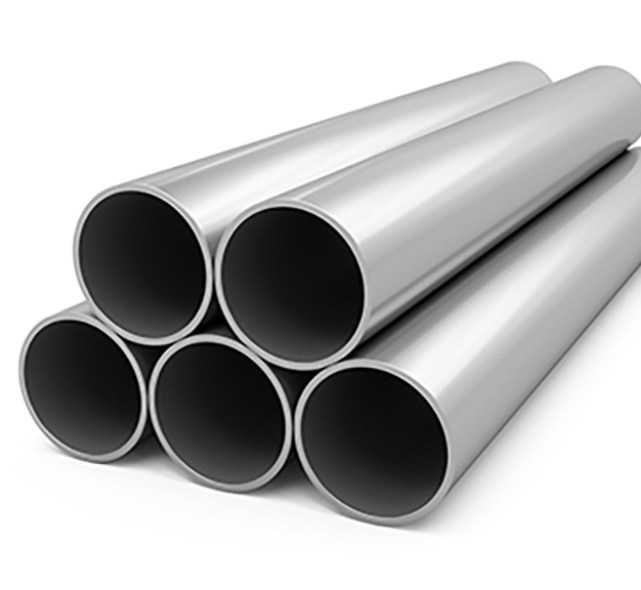
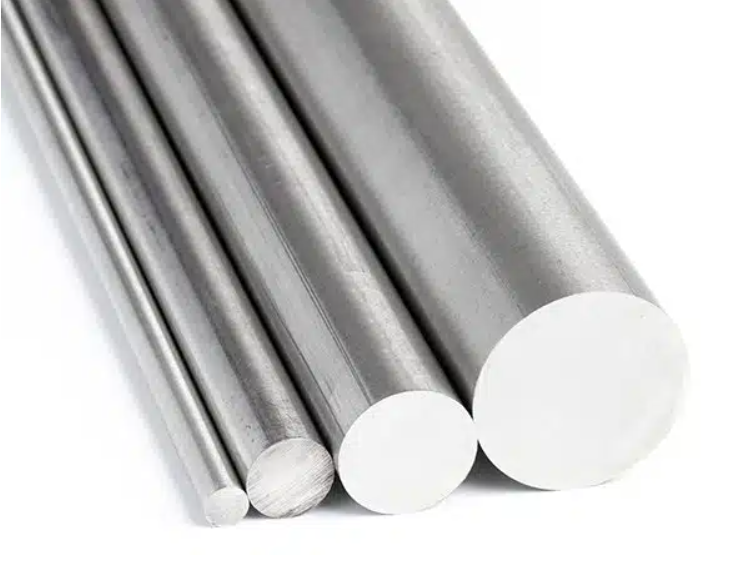
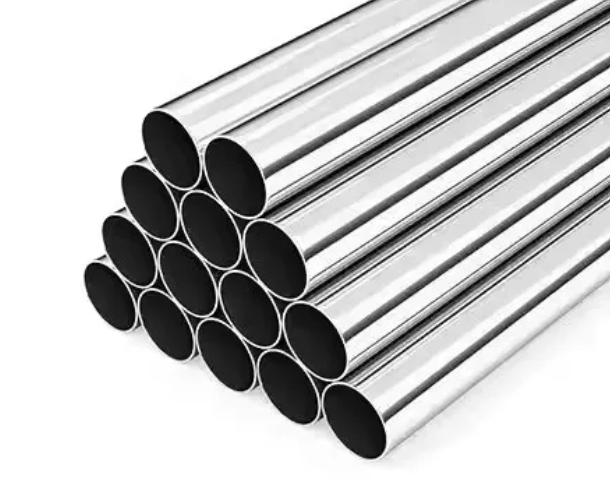
For nickel-alloy or titanium tube and bar enquiries, buyers should provide the exact equipment zone, gas or liquid chemistry, dimensions, material grade, product standard, condition, testing, NDT and documentation requirements.
Emily PIPE can review whether the requested alloy tube or bar grade, dimensions, condition, surface, testing and certification scope are technically manufacturable.
Final material compatibility and equipment approval should remain with the abatement-system OEM, semiconductor-facility owner and responsible materials engineer.