

How Should Buyers Specify Nickel Alloy Tubes for CSP Heat Exchangers?
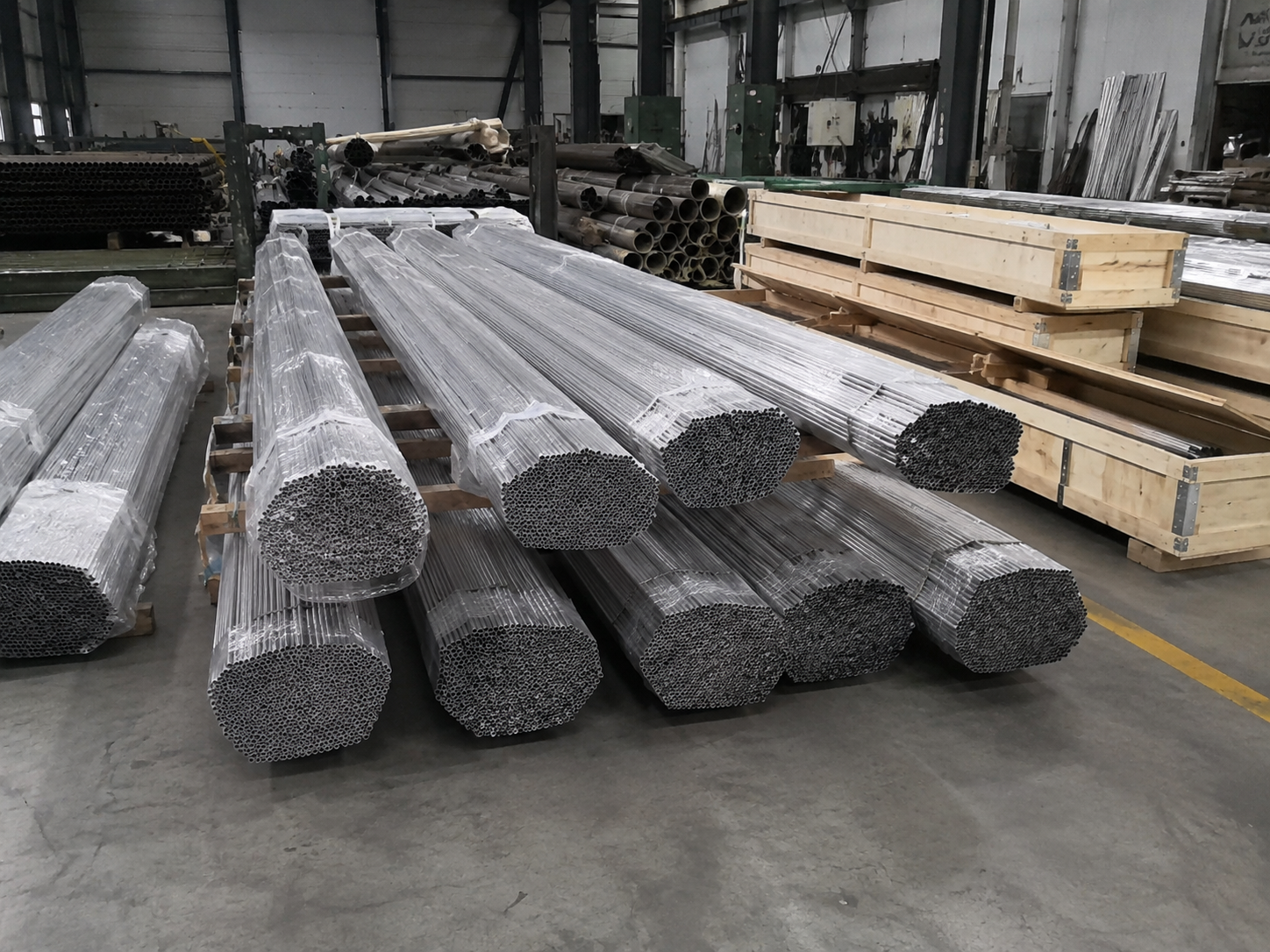
Image credit: Dennis Schroeder / NREL, Wikimedia Commons, public domain.
Nickel alloy tubes for CSP heat exchangers should not be selected from maximum temperature or alloy reputation alone.
A tubular heat exchanger may transfer heat between molten salt and steam, thermal oil, air, or supercritical carbon dioxide. The salt controls corrosion on one surface, while the second fluid may control pressure, oxidation, carbon transfer, or tube-wall stress on the other.
Buyers should specify CSP heat exchanger tubes by defining both fluids, maximum tube-metal temperature, maximum differential pressure, salt impurities, thermal cycles, required design life, alloy condition, tube dimensions, product standard, welding, NDT, and salt-specific qualification evidence.
This guide applies to tubular heat exchangers. Printed-circuit, plate-fin, diffusion-bonded, and additively manufactured exchangers require different product forms and qualification methods.
Define the Heat-Exchanger Duty First
Before comparing alloys, the RFQ should identify:
| Design Input | Required Information |
|---|---|
| Hot-side fluid | Exact salt or heat-transfer fluid |
| Cold-side fluid | Steam, water, oil, air, sCO₂, or another medium |
| Salt chemistry | Full salt composition and mixing ratio |
| Impurities | Water, hydroxides, oxides, oxygen, chlorides, and metal ions |
| Temperature | Normal, maximum, transient, and minimum metal temperature |
| Pressure | Pressure on both sides and maximum differential pressure |
| Thermal cycles | Number, heating rate, cooling rate, and temperature range |
| Flow | Velocity, flow distribution, startup, and shutdown conditions |
| Design life | Operating hours and inspection interval |
| Tube arrangement | Straight, U-bend, coil, or another configuration |
The highest-pressure fluid may not be the molten salt.
For molten-salt-to-sCO₂ heat exchangers, the sCO₂ side can create the controlling pressure differential, while the salt side controls corrosion.
Maximum Tube-Metal Temperature Matters More Than Bulk Salt Temperature
The tube wall may operate above or below the bulk-fluid temperature depending on:
- Heat flux
- Flow distribution
- Fouling
- Tube-wall thickness
- Thermal conductivity
- Local salt stagnation
- Startup and shutdown
- Loss of flow on either side
Material qualification and creep calculations should use the credible maximum tube-metal temperature.
A corrosion result at 550°C should not be used to approve a tube that may locally reach 650°C.
Preliminary Nickel Alloy Tube Screening
The following table provides starting candidates, not final application approval.
| Alloy | Current Tube Standard | Possible Reason to Consider | Main Limitation |
|---|---|---|---|
| Alloy 800H / N08810 | ASTM B407-22 | High-temperature tube with controlled grain size and creep properties | Salt chemistry, welds, and maximum temperature still require qualification |
| Alloy 800HT / N08811 | ASTM B407-22 | Long-term high-temperature strength under an approved condition | Product condition and allowable-stress basis must be specified |
| Alloy 600 / N06600 | ASTM B167-23 | Heat-resistant and fabricable nickel alloy tube | Not automatically suitable for high-temperature chloride salt |
| Alloy 601 / N06601 | ASTM B167-23 | Oxidation-resistant candidate for selected high-temperature duties | Molten-salt compatibility remains environment-specific |
| Alloy 617 / N06617 | ASTM B167-23 | High-temperature strength and creep candidate for advanced CSP | Salt corrosion, code approval, and welding must be verified |
| Alloy 625 / N06625 | ASTM B444-23 | Corrosion resistance, strength, fabrication, and tube availability | Not universally acceptable in nitrate or chloride salts |
| Alloy 230 / N06230 | ASTM B622-23 | High-temperature strength and thermal stability candidate | Tube availability, salt evidence, and code status require confirmation |
| Alloy C-276 / N10276 | ASTM B622-23 | Project-specific candidate where representative data support it | Aqueous acid resistance does not prove molten-salt suitability |
A high nickel or molybdenum content does not create a universal molten-salt ranking.
Alloy 800H/HT vs Alloy 617 vs Alloy 625
Alloy 800H and 800HT
These grades are designed for elevated-temperature service where grain size and heat treatment affect creep and rupture performance.
They may be considered when:
- Long-term creep strength is important
- The tube operates at elevated temperature
- Nitrate or purified chloride compatibility has been demonstrated
- The design code includes the required material condition
The order should distinguish N08810 from N08811. Writing only “Alloy 800” is insufficient.
Alloy 617
Alloy 617 may be considered for advanced high-temperature CSP exchangers where creep strength and thermal stability are important.
It still requires verification of:
- Actual salt compatibility
- Maximum metal temperature
- Design allowable stress
- Weld-metal properties
- Thermal-cycle performance
- Tube availability
High-temperature mechanical strength does not prove corrosion resistance in the selected salt.
Alloy 625
Alloy 625 offers a useful combination of corrosion resistance, mechanical properties, and fabrication.
However, it should not be treated as the default CSP heat-exchanger tube.
An NREL NaCl–LiCl study found Alloy 625 to be the best-performing alloy among the materials tested, but the measured attack was still too high for economical thermal-storage service.
The buyer should separately verify:
- Salt corrosion
- Maximum localized depth
- Long-term creep
- Weld condition
- Tube-wall calculation
- Thermal fatigue
- Applicable code data
“Best in one laboratory comparison” does not mean “acceptable for the project.”
Salt Condition Must Be Included in Tube Qualification
For chloride-salt heat exchangers, salt management can strongly affect tube performance.
The project should define:
- Initial salt purity
- Drying procedure
- Maximum water or hydroxide content
- Purification method
- Redox-control method
- Cover-gas composition
- Sampling frequency
- Off-spec operating limits
Research on purified chloride salts has shown that reducing corrosive impurities can substantially improve the performance of structural alloys.
A tube manufacturer can certify the alloy product, but the system designer must define the salt-control envelope.
Product Standards and Application Approval Are Different
ASTM tube standards generally control requirements such as:
- Chemical composition
- Heat treatment
- Grain size where applicable
- Tensile properties
- Dimensions
- Hydrostatic or nondestructive testing
- Workmanship
- Certification
They do not prove:
- Compatibility with the project salt
- Acceptable creep life
- Thermal-fatigue life
- Suitability for both exchanger fluids
- ASME pressure-vessel compliance
- Welded-joint durability
- Twenty-year service life
Where the exchanger is designed under ASME BPVC Section VIII Division 1, the design authority must confirm the material, allowable stress, joint, fabrication, examination, and testing requirements.
Tube Dimensions Must Follow the Pressure and Thermal Design
The RFQ should define:
- Outside diameter
- Minimum or average wall basis
- Wall tolerance
- Length
- Straightness
- Ovality
- U-bend radius where applicable
- Minimum post-bend wall
- Surface condition
- Tube-end preparation
A thicker wall can increase pressure capacity and corrosion allowance, but it may also increase thermal resistance and thermal stress.
Wall thickness should be calculated from the complete exchanger design rather than copied from another project.
Welding and Tube-to-Tubesheet Joints Require Qualification
The final joint may experience different conditions from the parent tube.
The specification should address:
- Welding process
- Filler metal
- Heat input
- Purge and shielding
- Tube expansion
- Seal weld or strength weld
- Dissimilar-metal joints
- Weld and HAZ corrosion testing
- Post-weld cleaning
- Surface inspection
- Leak testing
A satisfactory tube MTC does not qualify the completed tube-to-tubesheet joint.
What Testing Should Buyers Request?
Standard Product Verification
Depending on the tube standard and purchase order:
- Chemical analysis
- Heat-treatment records
- Grain-size report for relevant grades
- Tensile test
- Dimensional inspection
- Eddy-current or ultrasonic testing
- Hydrostatic test
- Surface inspection
- EN 10204 3.1 certification
CSP-Specific Qualification
| Qualification Item | Required Information |
|---|---|
| Salt exposure | Exact salt and impurity condition |
| Temperature | Maximum representative metal temperature |
| Duration | Sufficient to identify continuing attack |
| Atmosphere | Air, inert gas, or controlled redox condition |
| Specimen | Final tube condition and representative weld |
| Thermal cycling | Representative heating and cooling sequence |
| Evaluation | Mass change, maximum penetration, depletion, and microstructure |
| Flow testing | Required where stagnant tests do not represent the exchanger |
Average mass loss alone may hide localized penetration or subsurface alloy depletion.
What Buyers Should Include in the RFQ
| RFQ Category | Required Information |
|---|---|
| Exchanger type | Shell-and-tube, U-tube, coil, or another tubular design |
| Fluid on each side | Exact salt and secondary fluid |
| Salt composition | Full mixture and impurity limits |
| Salt control | Drying, purification, redox, and cover gas |
| Temperature | Normal, maximum, transient, and minimum metal temperature |
| Pressure | Both sides and maximum differential |
| Thermal cycles | Frequency, temperature range, and ramp rate |
| Material | Exact alloy and UNS designation |
| Product standard | ASTM, ASME, EN, or project specification |
| Condition | Heat treatment and grain-size requirement |
| Dimensions | OD, minimum wall, length, tolerance, and quantity |
| U-bend | Radius, post-bend wall, heat treatment, and inspection |
| Mechanical requirements | Tensile, creep, rupture, or project properties |
| Corrosion test | Salt, temperature, duration, atmosphere, and acceptance |
| NDT | ECT, UT, hydrostatic test, and coverage |
| Tube joint | Tube-sheet material and joining method |
| Surface | ID, OD, cleaning, and oxide requirements |
| Documents | MTC, heat treatment, dimensions, NDT, and test reports |
| Approval authority | Exchanger designer and responsible materials engineer |
A request stating only:
“Need Alloy 625 tubes for a CSP heat exchanger”
does not provide enough information for a technically reliable offer.
Frequently Asked Questions
Which nickel alloy tube is best for CSP heat exchangers?
There is no universal best grade. The correct material depends on both exchanger fluids, salt purity, metal temperature, pressure differential, creep, thermal cycles, and design code.
Is Alloy 625 suitable for molten-salt heat exchangers?
It may be a candidate, but published chloride-salt testing has also shown unacceptable attack under some conditions. Project-specific salt and temperature data are required.
Is Alloy 800HT better than Alloy 625?
They serve different priorities. Alloy 800HT is often considered for long-term high-temperature strength, while Alloy 625 may be considered for a different balance of corrosion resistance and fabrication.
Is C-276 recommended for molten chlorides?
Not from aqueous corrosion data alone. C-276 requires representative molten-salt testing at the actual temperature and impurity condition.
Does ASTM B444 qualify Alloy 625 for CSP service?
No. ASTM B444 qualifies the tube product to the ordered specification. CSP salt compatibility and pressure-vessel design require separate approval.
Should welded joints be included in salt testing?
Yes, where welds or tube-to-tubesheet joints contact the salt. Parent tube, weld metal, and heat-affected zone may behave differently.
What information is essential for quotation?
Provide both fluids, salt impurities, metal temperature, pressure differential, alloy, standard, tube dimensions, condition, corrosion testing, NDT, joint design, and quantity.
Conclusion
Nickel alloy tubes for CSP heat exchangers should be specified from the complete exchanger duty.
The buyer must connect:
- Both process fluids
- Salt chemistry and purity
- Maximum tube-metal temperature
- Maximum differential pressure
- Long-term creep requirements
- Thermal cycling
- Alloy and heat-treatment condition
- Tube dimensions and joints
- Salt-specific corrosion evidence
- Product and pressure-code requirements
Alloy 800H/HT, Alloy 600, Alloy 601, Alloy 617, Alloy 625, Alloy 230, and other grades may each be relevant to particular designs.
None should be approved from alloy reputation alone.
For nickel alloy tube enquiries, buyers should provide the exact alloy, UNS designation, tube standard, dimensions, condition, quantity, salt chemistry, temperatures, pressures, NDT, corrosion-test requirements, and documentation scope.
Emily PIPE can review whether the requested nickel alloy tube grade, size, length, condition, surface, testing, certification, and packaging requirements are technically manufacturable.
Final exchanger design, alloy approval, creep assessment, molten-salt qualification, and tube-to-tubesheet joint approval should remain with the heat-exchanger designer and responsible materials engineer.
.jpg)