
What Material Challenges Must Be Solved in Supercritical CO2 Power Systems?
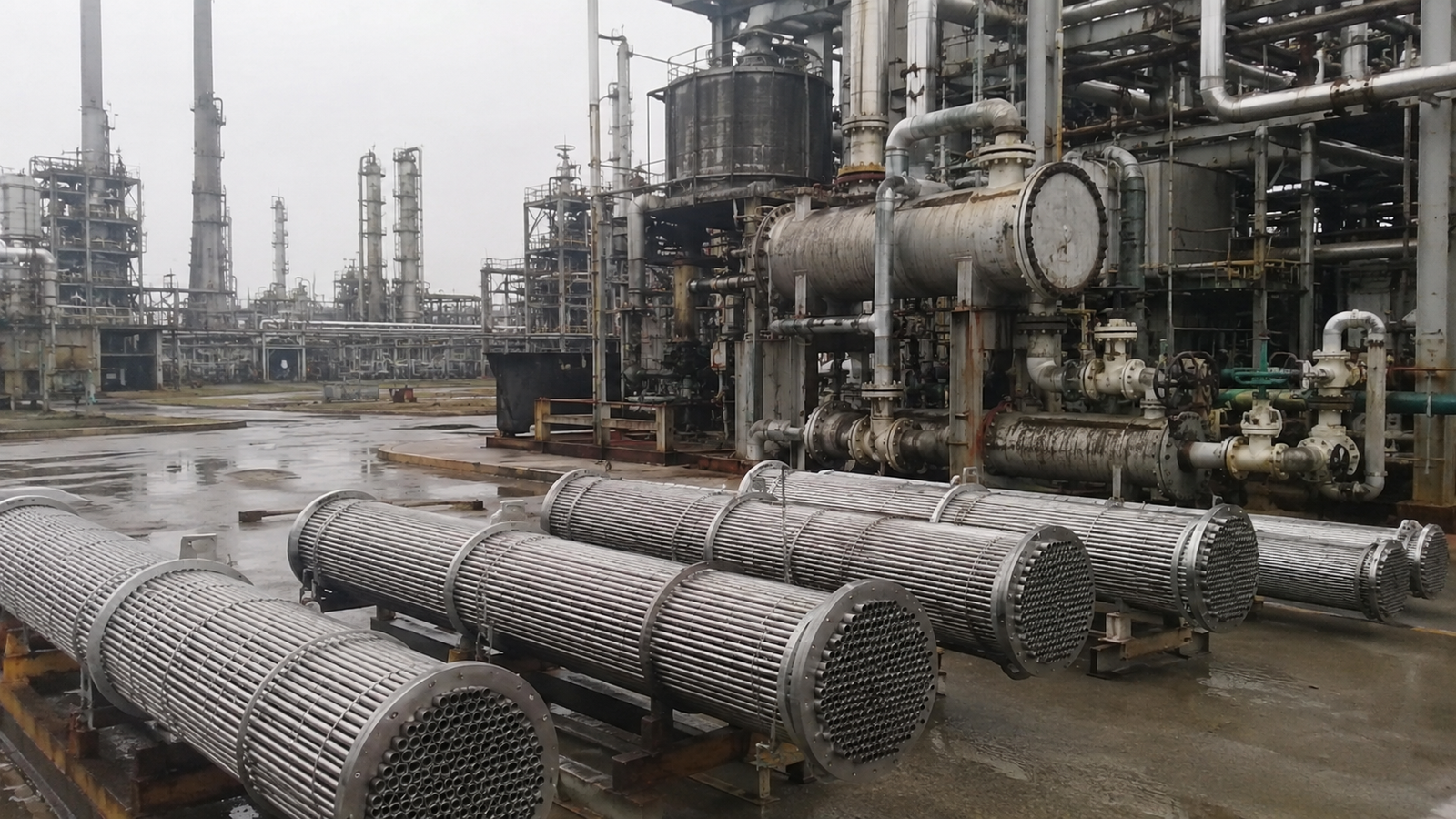
Image credit: Commissariat à l'énergie atomique, Wikimedia Commons, public domain.
Supercritical CO₂ power systems combine high pressure with elevated temperature, long operating hours and repeated thermal cycles.
The main material problem is not simply that CO₂ becomes “more corrosive” after crossing its critical point. Materials must simultaneously resist pressure stress, creep, creep–fatigue, high-temperature oxidation, carbon ingress, impurities and changes at welds or bonded joints.
Material selection should therefore be based on the complete temperature, pressure, impurity, loading and manufacturing envelope. Room-temperature strength, air-oxidation data or a standard material certificate cannot establish long-term suitability for an sCO₂ power cycle.
This article concerns high-temperature sCO₂ power systems. It does not address aqueous wet-CO₂ pipeline corrosion.
1. High Pressure and Corrosion Must Be Evaluated Separately
CO₂ becomes supercritical above its critical temperature and pressure. Its high density allows compact turbomachinery and heat exchangers, but also creates demanding pressure-boundary requirements.
High pressure directly affects:
- Tube and pipe wall calculations
- Vessel and recuperator stresses
- Joint loading
- Turbine and compressor casing design
- Pressure-cycle fatigue
- Leak consequences
It does not follow that higher CO₂ pressure always produces proportionally higher oxidation.
An ORNL long-term study comparing selected alloys in atmospheric-pressure CO₂ and 30 MPa sCO₂ at high temperature found no significant pressure effect on oxidation under those specific test conditions.
The practical rule is:
Use the design code to assess pressure strength, and separate sCO₂ exposure data to assess environmental compatibility.
2. Creep and Creep–Fatigue Control the Hot End
At elevated temperature, materials can deform gradually under stresses below their room-temperature yield strength. This time-dependent deformation is creep.
The highest-risk locations may include:
- Primary heaters
- High-temperature recuperators
- Turbine inlet piping
- Turbine components
- Hot headers and manifolds
Material approval should consider:
- Maximum metal temperature
- Design stress
- Required operating hours
- Creep-rupture strength
- Allowable creep deformation
- Startup and shutdown cycles
- Load-following operation
- Weld and heat-affected-zone properties
Room-temperature tensile strength is not sufficient.
A material with strong corrosion resistance may still be unsuitable if its long-term creep strength requires an impractical wall thickness.
Thermal cycling also introduces creep–fatigue interaction. The project should therefore evaluate sustained high-temperature loading and repeated temperature changes together.
3. High-Temperature sCO₂ Attack Is Not Ordinary Wet Corrosion
High-temperature dry sCO₂ exposure is generally evaluated through mechanisms such as:
- Oxide-scale growth
- Breakaway oxidation
- Internal oxidation
- Carburization
- Decarburization
- Alloy-element depletion
- Oxide cracking or spallation
- Sulfidation when sulfur impurities are present
Terms such as aqueous pitting and crevice corrosion should not be used as the default explanation for every high-temperature sCO₂ failure.
Chromium-containing alloys may form a protective Cr₂O₃-rich scale. Performance then depends on whether that scale remains continuous, adherent and sufficiently slow-growing.
Lower-alloy steels can form thicker iron-rich duplex scales. A study of Grade 92 steel in sCO₂ identified oxide growth and subsurface carburization after exposure at 450°C and 550°C.
For thin-wall tubing or compact heat-exchanger channels, even modest oxide growth or subsurface depletion may consume a meaningful fraction of the usable section.
4. Impurities Can Change the Material Ranking
The expected CO₂ composition depends on the cycle.
Indirectly Heated Closed Cycle
The working fluid may be maintained at relatively high purity, but possible contaminants still include:
- O₂
- H₂O
- Lubricant or seal-system carryover
- Construction debris
- Residual cleaning chemicals
- Air introduced during maintenance
Direct-Fired Cycle
The recycled CO₂ stream may also contain controlled quantities of:
- H₂O
- O₂
- SO₂ or other sulfur species
- CO
- NOx-related species
- Combustion-derived contaminants
An ORNL study of steels in 30 MPa sCO₂ found that adding O₂ and H₂O increased the formation of iron-rich oxides on austenitic steels and increased carbon content at 650°C.
A NETL study of nickel alloys found that SO₂-containing CO₂ produced complex temperature-dependent behaviour. Some alloys experienced failure of their protective chromia scale, internal sulfide formation and increased carburization.
The RFQ should therefore define:
- Normal CO₂ purity
- Maximum H₂O
- Maximum O₂
- Sulfur-species limits
- Startup and shutdown composition
- Cleaning and commissioning condition
- Duration of off-spec exposure
“High-purity CO₂” is not a complete material specification.
5. Parent-Material Data Do Not Qualify Welds and Joints
The final component may contain:
- Fusion welds
- Heat-affected zones
- Dissimilar-metal welds
- Diffusion-bonded joints
- Brazed joints
- Additively manufactured material
- Cold-worked thin channels
- Local repairs
These areas may have different:
- Grain size
- Precipitate distribution
- Residual stress
- Chromium availability
- Creep strength
- Oxidation behaviour
This is especially important for compact recuperators, where thin channels and diffusion-bonded interfaces combine high pressure with large thermal gradients.
Qualification specimens should represent the actual manufacturing route. A polished coupon cut from parent plate cannot qualify a diffusion-bonded or welded exchanger core.
Preliminary Material-Family Screening
| Material Family | Possible Application Range | Main Challenge to Verify |
|---|---|---|
| 9–12Cr ferritic-martensitic steels | Selected lower- or intermediate-temperature sections | Duplex oxide growth, carburization, weld behaviour and temperature limit |
| Austenitic stainless steels | Selected intermediate-temperature components | Breakaway oxidation, impurities, creep and thermal cycling |
| Alloy 800H/800HT | High-temperature tubes and piping where creep strength is required | Exact condition, grain size, sCO₂ compatibility and weld properties |
| Alloy 617 | High-temperature pressure components and heat exchangers | Creep–fatigue, joining, oxidation and code acceptance |
| Alloy 230 | High-temperature structural or exchanger candidate | Product-form availability, oxidation lifetime and joining |
| Alloy 282/740H | High-strength advanced-cycle candidates | Heat treatment, weldability, product form and long-term qualification |
| Alloy 625 | Candidate where corrosion resistance and fabrication are important | Creep requirement, temperature limit and impurity-specific exposure |
| Protective coatings | Possible extension of lower-cost substrates | Coating defects, diffusion, thermal cycling and substrate property changes |
No family should be ranked from chromium or nickel content alone.
The required alloy may also change between the cooler, recuperator, heater and turbine sections of the same cycle.
What Evidence Should Support Material Approval?
| Evidence | What the Report Should State |
|---|---|
| Exposure environment | CO₂ pressure, temperature and complete impurity composition |
| Duration | Total hours and interruption history |
| Thermal cycling | Cycle length, ramp rate and number of cycles |
| Specimen condition | Grade, heat treatment, surface and cold work |
| Joint condition | Parent material, weld, HAZ or bonded interface |
| Oxidation | Scale thickness, composition and adhesion |
| Internal attack | Carburization, oxidation, sulfidation and depletion depth |
| Mechanical properties | Tensile, creep, fatigue or toughness after exposure |
| Local damage | Maximum depth rather than mass change alone |
| Test relevance | Relationship between test and actual component conditions |
Short exposure tests can support initial screening. They should not be presented as direct proof of a multi-decade service life.
Product Standards and Design Codes Have Different Roles
Examples of current nickel-alloy tube standards include:
- ASTM B407-22 for Alloy 800H/800HT and related seamless pipe and tube
- ASTM B167-23 for Alloy 600, 601, 617 and related seamless pipe and tube
- ASTM B444-23 for Alloy 625 seamless pipe and tube
- ASTM B622-23 for Alloy 230 and several other nickel-alloy pipe and tube grades
These standards control the ordered product requirements.
They do not establish:
- sCO₂ corrosion life
- Component creep life
- Welded-joint performance
- Pressure-cycle fatigue
- Suitability for direct-fired impurities
- Approval under the project design code
Depending on the component, the project may invoke ASME B31.1-2024, the 2025 ASME Boiler and Pressure Vessel Code, or another governing standard.
The design authority must confirm the permitted material, allowable stress and fabrication route.
What Buyers Should Include in the RFQ
| RFQ Category | Required Information |
|---|---|
| Cycle type | Indirect, direct-fired, recompression or other |
| Component | Tube, pipe, bar, header, recuperator part or turbine component |
| CO₂ pressure | Normal, maximum and transient |
| Metal temperature | Minimum, normal, maximum and excursion |
| Impurities | H₂O, O₂, sulfur species, CO and other contaminants |
| Operating life | Required hours and inspection interval |
| Cycles | Startup, shutdown and load-change frequency |
| Mechanical load | Pressure, sustained stress, vibration and fatigue |
| Material | Exact grade and UNS designation |
| Product form | Tube, pipe, bar, forging, plate or bonded core |
| Condition | Heat treatment, grain size and cold work |
| Dimensions | OD, wall, diameter, length and tolerance |
| Welding or bonding | Process, filler, joint type and qualification |
| Exposure test | Pressure, temperature, impurities, duration and acceptance |
| Mechanical test | Tensile, creep, fatigue or post-exposure properties |
| NDT | UT, ECT, pressure testing and joint examination |
| Documentation | MTC, heat treatment, NDT and qualification reports |
| Design authority | Party responsible for final material approval |
A request stating only:
“Need nickel-alloy tubes for an sCO₂ power system”
does not provide enough information for a technically reliable offer.
Frequently Asked Questions
Are nickel alloys always required in sCO₂ power systems?
No. Ferritic-martensitic or austenitic steels may be suitable in selected lower-temperature sections. Nickel alloys are more likely to be evaluated as temperature, creep demand or environmental severity increases.
Does higher CO₂ pressure always increase corrosion?
No. Pressure increases mechanical loading, but its effect on oxidation is material- and condition-dependent. Published tests have not shown a universal linear pressure–corrosion relationship.
Is pure dry sCO₂ noncorrosive?
It may be relatively unreactive at low temperature, but high-temperature exposure can still produce oxidation, carburization and alloy-element depletion.
Is Alloy 625 the best material?
No. Alloy 625 offers a useful balance of corrosion resistance and fabrication, but the hottest components may be controlled by long-term creep, creep–fatigue or another alloy-specific requirement.
Can air or steam oxidation data be used?
They can support preliminary screening but cannot replace representative sCO₂ testing. Oxide composition, carbon transfer and impurity effects may differ.
Does an MTC prove sCO₂ suitability?
No. The MTC verifies the reported properties of the supplied material. Environmental and component qualification require separate evidence.
What information is most important for quotation?
Provide the component, pressure, metal temperature, impurity limits, design life, cycles, exact alloy, condition, dimensions, welding, testing and documentation requirements.
Conclusion
The main material challenges in supercritical CO₂ power systems are:
- High-pressure structural loading
- Long-term creep
- Creep–fatigue from thermal cycling
- High-temperature oxidation
- Carburization and alloy depletion
- Impurity-dependent scale failure
- Weld and bonded-joint behaviour
The supercritical state alone does not determine material performance.
Reliable selection requires the operating environment, mechanical design and manufacturing route to be evaluated together.
For nickel-alloy tube or bar enquiries, buyers should provide the exact alloy, UNS designation, product form, dimensions, heat treatment, CO₂ pressure, temperature, impurity limits, test requirements, NDT and documentation scope.
Emily PIPE can review whether the requested nickel-alloy tube or bar dimensions, condition, surface, testing, certification and packaging requirements are technically manufacturable.
Final material selection, pressure design, creep assessment, sCO₂ qualification and component approval should remain with the responsible system designer and materials engineer.