
Alloy 20 vs Incoloy 825: Which Is Better for Sulfuric Acid Service?
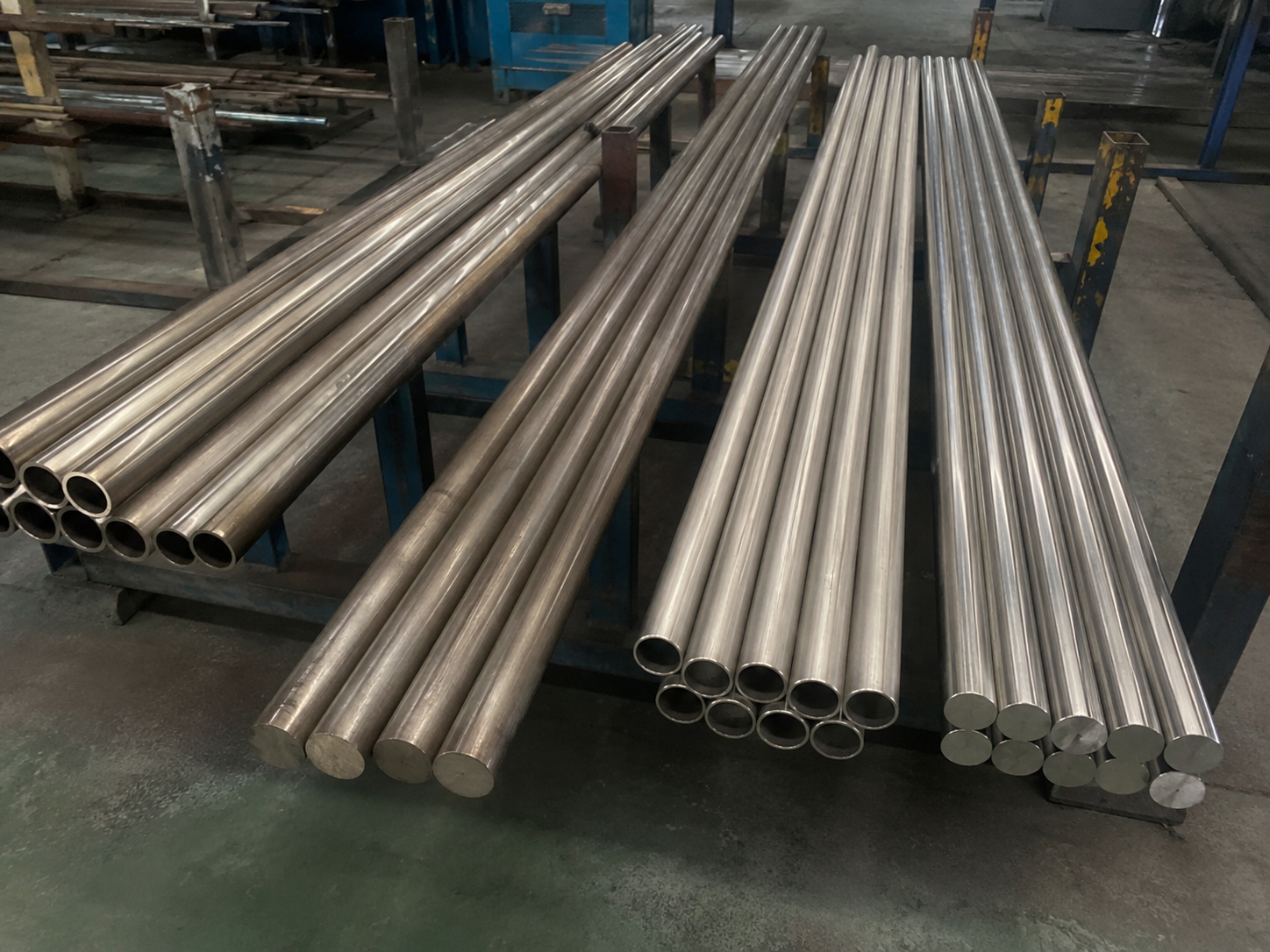
Image credit: PennyBrowns23651, Wikimedia Commons, CC BY-SA 4.0.
Alloy 20 and Alloy 825 are both nickel–iron–chromium–molybdenum–copper alloys used in sulfuric acid equipment.
Neither is universally better.
Alloy 20 can be a practical choice when sulfuric acid is the dominant corrosive medium and the concentration and temperature remain inside a verified operating window. Alloy 825 is generally the stronger starting candidate when the process has wider temperature or concentration variations, mixed acids, chloride contamination, or greater concern about stress-corrosion cracking.
Final approval should be based on actual corrosion data for the complete process fluid.
Alloy 20 vs Alloy 825: Quick Answer
| Service Condition | More Appropriate Starting Candidate |
|---|---|
| Stable, sulfuric-acid-dominant service | Alloy 20 or Alloy 825, based on isocorrosion data |
| Wide concentration or temperature range | Alloy 825 |
| Sulfuric acid mixed with phosphoric acid or other chemicals | Often Alloy 825, subject to testing |
| Chloride contamination or SCC concern | Often Alloy 825, but localized corrosion must still be checked |
| Fixed equipment historically designed around Alloy 20 | Alloy 20 may remain suitable |
| Hot concentrated sulfuric acid | Neither should be approved without specific data |
| Oleum or fuming sulfuric acid | Neither is a default selection |
| Tube order requiring a current active ASTM standard | Alloy 825 has a clearer current specification route |
The choice should not be based on nickel content alone.
What Is the Main Difference Between Alloy 20 and Alloy 825?
Alloy 20 is UNS N08020.
Alloy 825 is UNS N08825 and is commonly marketed under the Incoloy 825 name.
| Element | Alloy 20 / N08020 | Alloy 825 / N08825 | Practical Significance |
|---|---|---|---|
| Nickel | 32–38% | 38–46% | Supports resistance to reducing acids and chloride SCC |
| Chromium | 19–21% | 19.5–23.5% | Supports passive-film formation |
| Molybdenum | 2–3% | 2.5–3.5% | Improves resistance to localized and reducing-acid attack |
| Copper | 3–4% | 1.5–3% | Improves resistance in sulfuric-acid environments |
| Stabilizer | Niobium plus tantalum | Titanium | Helps control weld-related intergranular corrosion |
| Iron | Balance | Balance | Structural base of both alloys |
Alloy 20 contains more copper and was developed specifically around sulfuric-acid service.
Alloy 825 contains more nickel and usually slightly more chromium and molybdenum. This generally gives it a broader corrosion-resistance profile beyond pure sulfuric acid.
Which Alloy Has Better Sulfuric Acid Resistance?
There is no concentration-only answer.
Sulfuric acid corrosivity changes with:
- Acid concentration
- Temperature
- Aeration
- Flow velocity
- Water dilution
- Ferric or cupric ions
- Chlorides and fluorides
- Organic contaminants
- Process shutdowns
- Crevices and deposits
Published comparative data generally show Alloy 825 providing a somewhat wider sulfuric-acid resistance envelope than Alloy 20.
However, this does not mean Alloy 825 is required for every application.
Alloy 20 may remain technically and commercially appropriate when:
- The acid composition is well controlled.
- The temperature remains inside a verified range.
- Chloride contamination is low.
- Existing plant experience supports the grade.
- The required product form and fabrication route are available.
- Corrosion testing confirms an acceptable rate.
The correct comparison should use an isocorrosion diagram or representative test data for the actual acid composition and temperature.
Do Not Select From Acid Concentration Alone
A statement such as:
“The system contains 40% sulfuric acid.”
is incomplete.
The buyer should also state:
- Normal temperature
- Maximum temperature
- Startup temperature
- Maximum acid concentration
- Minimum acid concentration
- Water-addition points
- Acid dilution events
- Flow velocity
- Stagnant periods
- Aeration
- Chloride and fluoride levels
- Oxidizing contaminants
Dilution can move the process into a more corrosive concentration range.
A tank containing concentrated acid during normal operation may encounter substantially different conditions during washing, startup or water ingress.
When Is Alloy 20 a Reasonable Choice?
Alloy 20 can be considered when sulfuric acid is the main corrosion concern and the operating envelope is well established.
Possible applications include:
- Sulfuric acid piping
- Acid storage and transfer equipment
- Heat-exchanger components
- Pumps and valves
- Acid-production equipment
- Demister and separator components
- Chemical and pharmaceutical process systems
Its higher copper content supports sulfuric-acid resistance, while niobium stabilization helps retain corrosion resistance after proper fabrication.
Alloy 20 should not be selected only because it is described as a “sulfuric acid alloy.”
The project must still verify:
- Maximum corrosion rate
- Weld performance
- Chloride contamination
- Crevice conditions
- Temperature excursions
- Product-standard availability
When Is Alloy 825 the Stronger Candidate?
Alloy 825 is often the stronger starting candidate when the environment extends beyond controlled sulfuric acid.
This may include:
- Variable acid concentration
- Mixed sulfuric and phosphoric acid
- Chloride-contaminated acid
- Reducing and oxidizing conditions in the same process
- Greater SCC concern
- Wider operating-temperature changes
- Equipment exposed to several process fluids
- Projects requiring currently active pipe or tube standards
Its higher nickel content supports resistance to chloride stress-corrosion cracking, while molybdenum, copper and chromium provide resistance across reducing, oxidizing and localized-corrosion conditions.
Alloy 825 can still experience pitting or localized attack when chlorides, sulfur species, deposits or temperature become severe.
It is not immune to mixed-service corrosion.
How Do Impurities Change the Choice?
Chlorides
Chlorides can introduce pitting, crevice corrosion and stress-corrosion cracking risks.
Alloy 825 usually provides the stronger SCC margin, but neither alloy should be approved from nickel content alone.
Confirm:
- Chloride concentration
- Temperature
- Oxygen
- Crevices
- Deposits
- Tensile stress
Oxidizing Ions
Ferric ions, cupric ions and other oxidizing contaminants can change the electrochemical condition of sulfuric acid.
They may support passivation under some conditions or increase attack under others.
Test the actual process mixture rather than pure laboratory sulfuric acid.
Fluorides
Fluoride contamination can destabilize passive films and change material rankings.
Neither Alloy 20 nor Alloy 825 should be selected for fluoride-containing sulfuric acid without representative testing.
Organic Contaminants
Solvents, reaction products and organic acids can affect wetting, deposits and redox conditions.
The complete process composition should be included in the material review.
What About Hot Concentrated Acid and Oleum?
Neither Alloy 20 nor Alloy 825 should be treated as a universal material for:
- Hot concentrated sulfuric acid
- Sulfur trioxide
- Oleum
- Fuming sulfuric acid
- Rapidly changing acid concentration
These services may require other metallic materials, nonmetallic linings or process-specific construction.
Selection should be supported by:
- Isocorrosion curves
- Plant history
- Long-duration testing
- Weld testing
- Maximum localized-attack limits
General sulfuric-acid marketing claims are not sufficient.
Product Standards Require Special Attention
Current standard status differs significantly between the two alloys.
| Product | Alloy 20 | Alloy 825 |
|---|---|---|
| Seamless pipe and tube | ASTM B729-20 was withdrawn in 2026 with no replacement | ASTM B423-22 is active |
| Welded tube | ASTM B468-10(2020) was withdrawn in 2025 with no replacement | Project-specific welded-tube standard must be confirmed |
| Bar and wire | ASTM B473-24 | ASTM B425-26 |
| Forged flanges and valve parts | ASTM B462-26 includes UNS N08020 | Confirm the applicable project or product standard |
The withdrawal of ASTM B729 does not automatically make previously manufactured Alloy 20 tube unusable.
It does mean that a new RFQ should not simply state:
“ASTM B729, latest edition.”
The purchase order should instead identify:
- The accepted legacy edition
- Project-specific technical requirements
- Chemical composition
- Heat treatment
- Mechanical properties
- Dimensions
- Hydrostatic or NDT requirements
- Certification
- Approval by the design authority
For pressure equipment, the purchaser should also verify the applicable ASME or local design-code requirements.
Welding and Fabrication Must Be Included
Alloy 20 is niobium-stabilized, while Alloy 825 is titanium-stabilized.
Stabilization helps reduce weld-related intergranular corrosion, but it does not eliminate the need for a qualified welding procedure.
The specification should define:
- Welding process
- Filler metal
- Heat input
- Interpass temperature
- Purging and shielding
- Weld cleaning
- Repair-weld limits
- Weld and HAZ corrosion testing
- Final NDT
The filler metal should be selected by the equipment fabricator and responsible materials engineer.
A filler suitable for one alloy or mixed-metal joint should not be copied into another project without qualification.
What Corrosion Testing Should Buyers Request?
ASTM G31-21(2025) provides guidance for laboratory immersion corrosion testing.
It does not provide a universal acceptance rate for sulfuric-acid equipment.
The project should define:
| Test Variable | Required Information |
|---|---|
| Acid concentration | Normal, minimum and maximum |
| Temperature | Normal and maximum |
| Impurities | Chloride, fluoride, ferric ions and process contaminants |
| Aeration | Aerated, deaerated or process-specific |
| Duration | Sufficient to identify continuing attack |
| Flow | Static, agitated or flowing |
| Specimen | Parent material, weld and HAZ |
| Surface | Representative production condition |
| Evaluation | Average corrosion rate and maximum localized depth |
| Acceptance | Project-defined maximum values |
Short-term testing in pure acid should not override actual plant experience or representative mixed-fluid testing.
What Buyers Should Include in the RFQ
| RFQ Category | Required Information |
|---|---|
| Acid concentration | Normal, minimum and maximum |
| Temperature | Normal, maximum, startup and cleaning |
| Impurities | Chloride, fluoride, iron, copper and organics |
| Aeration | Oxygen or inert-gas condition |
| Flow | Velocity, agitation and stagnant periods |
| Equipment | Pipe, tube, heat exchanger, bar, valve or tank component |
| Material | UNS N08020 or UNS N08825 |
| Product standard | Current, legacy or project-specific specification |
| Condition | Stabilized annealed, annealed or project-defined |
| Dimensions | OD, wall, diameter, length and tolerance |
| Welding | Process, filler and qualification requirements |
| Corrosion test | Solution, temperature, duration and acceptance |
| NDT | ECT, UT, hydrostatic or surface examination |
| Documentation | MTC, heat treatment, NDT and corrosion reports |
| Quantity | Pieces, length or total weight |
| Approval authority | Equipment designer or materials engineer |
A request stating only:
“Need sulfuric-acid-resistant alloy tube.”
does not provide enough information to compare Alloy 20 and Alloy 825 reliably.
Frequently Asked Questions
Is Alloy 20 better than Alloy 825 for sulfuric acid?
Not universally. Alloy 20 is closely associated with sulfuric-acid service, but Alloy 825 generally provides a wider corrosion-resistance envelope. The final decision depends on concentration, temperature and impurities.
Is Alloy 20 suitable for 40% sulfuric acid?
It may be suitable at certain temperatures, but the concentration alone is insufficient. Maximum temperature, contaminants and flow conditions must also be checked.
Is Alloy 825 suitable for concentrated sulfuric acid?
It may perform in selected concentrated-acid conditions, but it should not be approved for hot concentrated acid or oleum without specific data.
Which alloy is better when chlorides are present?
Alloy 825 is usually the stronger starting candidate because of its higher nickel and molybdenum contents. Pitting and crevice corrosion must still be evaluated.
Which alloy is better for welding?
Both can be welded successfully using qualified procedures. Alloy 20 is niobium-stabilized and Alloy 825 is titanium-stabilized, but weld metal and HAZ compatibility still require verification.
Is ASTM B729 still active?
No. ASTM B729-20 was withdrawn in 2026 without a replacement. New orders should define an accepted legacy edition or a complete project specification.
What is the current standard for Alloy 825 seamless tube?
ASTM B423-22 is the active specification for applicable UNS N08825 seamless pipe and tube.
Can an MTC prove sulfuric-acid compatibility?
No. An MTC verifies the supplied material against the ordered product specification. Process compatibility requires separate corrosion evidence.
Conclusion
The Alloy 20 versus Alloy 825 decision should follow the actual sulfuric-acid operating envelope.
Choose Alloy 20 as a candidate when:
- Sulfuric acid is the dominant medium.
- Concentration and temperature are stable.
- Existing data support the operating window.
- Chloride and mixed-chemical risks are limited.
Choose Alloy 825 as the stronger starting candidate when:
- Concentration or temperature varies.
- Mixed acids or contaminants are present.
- Chloride SCC is a concern.
- A broader corrosion-resistance margin is needed.
- A current active seamless tube standard is required.
Neither alloy should be purchased from concentration alone.
For Alloy 20 or Alloy 825 tube and bar enquiries, buyers should provide the acid concentration, maximum temperature, impurities, material grade, product standard, condition, dimensions, corrosion testing, NDT and documentation requirements.
Emily PIPE can review whether the requested alloy tube or bar grade, dimensions, condition, testing and certification requirements are technically manufacturable.
Final corrosion approval, equipment design and welding qualification should remain with the responsible equipment designer and materials or corrosion engineer.